DbcultAccessing Vault...
Cult Review
Senior Film Conservator
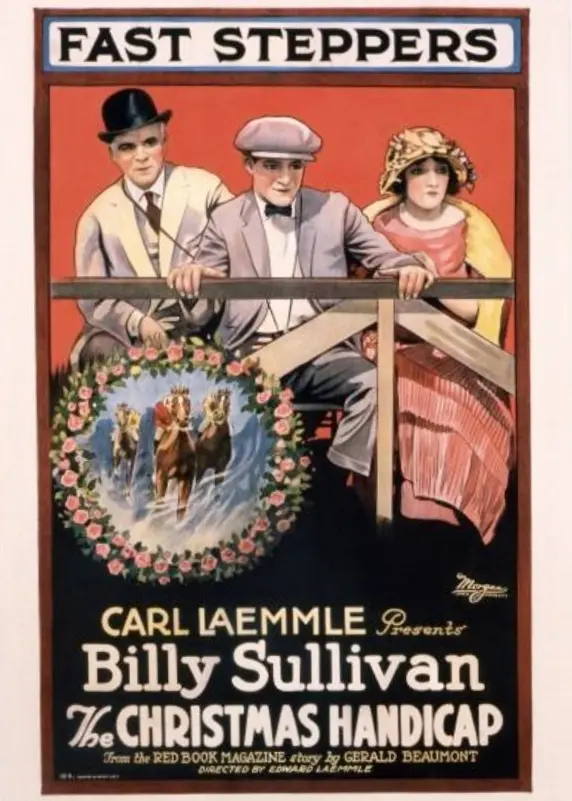
The year 1923 stands as a pivotal monolith in the history of the moving image, a time when the visual language of cinema was shedding its primitive skin and donning the sophisticated garments of narrative complexity. Within this fertile soil, The Christmas Handicap emerged, directed with a keen eye for the rhythmic pulse of the racetrack. While many contemporary viewers might dismiss silent-era sports films as mere curiosities, this work demands a more rigorous interrogation. It is a film that captures the zeitgeist of a post-war America obsessed with the speed of the machine and the grace of the animal, much like the automotive obsession found in Double Speed.
At its core, the film is a character study masquerading as a sporting event. Billy Sullivan, whose physicality on screen is nothing short of transcendent, embodies the role of the jockey with a desperation that feels palpable even through the grainy textures of preserved celluloid. Unlike the more whimsical or fantastical elements found in Capitan Groog and Other Strange Creatures, there is a grounded, almost tactile reality to the stable scenes here. The smell of hay and the steam from a horse's nostrils are almost conjured by the cinematography, which utilizes the natural light of the outdoors to create a stark contrast with the shadowy interiors of the betting parlors.
The writing, credited to Scott Darling and Gerald Beaumont, avoids the trap of simplistic moralizing. Instead, it leans into the gray areas of the human condition. We see a protagonist who is flawed, perhaps even broken by previous failures. This sense of social and moral weight reminds one of the heavy themes explored in Damaged Goods, though 'The Christmas Handicap' opts for a more optimistic, holiday-infused resolution. The 'handicap' of the title is not merely a weight assigned to a horse, but the emotional baggage each character carries into the final act.
The casting of Cesare Gravina is a stroke of brilliance. His face, a map of lived experience, provides the film with its emotional anchor. While Shannon Day offers a performance of quiet strength that rivals the best work in Tess of the D'Urbervilles, it is the interplay between the veteran actors and the youthful energy of Sullivan that drives the narrative forward. Sullivan doesn't just ride; he communicates through his posture, a stoicism that masks a roiling sea of anxiety. This isn't the slapstick athleticism of Sleepy Sam, the Sleuth; this is the high-stakes movement of a man who knows his entire future rests on the placement of a hoof.
The film’s pacing is a masterclass in tension. It builds slowly, allowing the audience to become acquainted with the intricacies of the racing world. We are introduced to the villains—played with delicious menace by Duke R. Lee—not as caricatures, but as systemic obstacles. The corruption of the track is presented as a looming shadow, much like the existential dread found in The Tiger. Yet, the film remains accessible, never veering too far into the avant-garde or the impenetrable.
One must discuss the editing during the final race sequence. For 1923, the cutting is remarkably modern. There is a primitive version of the montage that creates a sense of breathless speed. This isn't the static, stage-bound filmmaking seen in some of the lesser-known shorts like El rompecabezas de Juanillo. Instead, the camera seems to move with the horses, capturing the mud flying from the track and the grit on the jockeys' faces. It’s a visceral experience that prefigures the modern sports blockbuster.
The thematic resonance of the Christmas setting provides a layer of irony and hope. In a world of cold transactions and hard-hearted gamblers, the spirit of the season acts as a catalyst for transformation. It’s a softer touch than the harsh realities of Havsgamar, yet it maintains a certain dignity. The film understands that for the working-class characters involved, a win at the track isn't just about money; it's about the restoration of honor.
When comparing 'The Christmas Handicap' to its contemporaries, one notices a distinct lack of the cynicism found in The Price of Her Soul. While both films deal with the cost of ambition, 'The Christmas Handicap' is fundamentally more humanistic. It shares more DNA with the rugged individualism of The Ranch Romeo, though it swaps the dust of the frontier for the dirt of the racetrack. There is a sense of community among the stable hands and the families that is heartening, a stark contrast to the isolation depicted in Die Verführten.
The film also avoids the sheer absurdity found in Canyon of the Fools. It stays within its lane, perfecting the racing drama rather than trying to subvert it entirely. This focus allows for a deeper exploration of the characters' internal lives. We see the toll that the industry takes on the human spirit, a theme that echoes through the more mature works of the era like Lucciola.
Billy Sullivan was a star whose light has perhaps dimmed in the collective memory of modern cinephiles, but 'The Christmas Handicap' serves as a potent reminder of his magnetism. His ability to convey complex emotions without the aid of dialogue is a testament to the lost art of silent acting. He possesses a rugged charm that isn't as polished as the leading men of the 1930s, but it's far more authentic. His performance here is a thrill in itself, much like the titular excitement of the film Thrills.
The supporting cast, particularly Bert Woodruff as the aging horseman, adds a layer of sentimentality that never feels cloying. Woodruff’s performance is a bridge to an even older era of performance, providing a historical texture to the film. When he interacts with Sullivan, we see a passing of the torch, a common trope in sports cinema that is handled here with genuine grace. It’s a far cry from the heightened danger of Flirting with Terror, opting instead for a quiet, resonant dignity.
In the grand architecture of silent cinema, 'The Christmas Handicap' might be seen as a minor pillar, yet it is a necessary one. It represents the craftsmanship of the studio system before it became a behemoth. It shows how a simple story, well-told and excellently performed, can survive the passage of a century. The film’s ability to balance the technical demands of racing sequences with the emotional demands of a redemption arc is nothing short of impressive.
As the final credits would have rolled (if they had survived in their original form), the audience is left with a sense of catharsis. The underdog has triumphed, not through magic or luck, but through grit and the support of a chosen family. It’s a timeless message that transcends the specificities of 1923. For any serious student of film history, or for those who simply appreciate a well-crafted drama, 'The Christmas Handicap' is an essential viewing experience. It reminds us that even in the darkest winters of our lives, there is always a race to be won, a handicap to be overcome, and a chance for a new beginning under the soft glow of the holiday spirit.
Reviewer's Note: The preservation of such films is vital. Seeing the work of artists like Darling and Beaumont allows us to trace the lineage of modern storytelling back to its most sincere roots.
IMDb —
1921
Community
Log in to comment.