DbcultAccessing Vault...
Cult Review
Senior Film Conservator
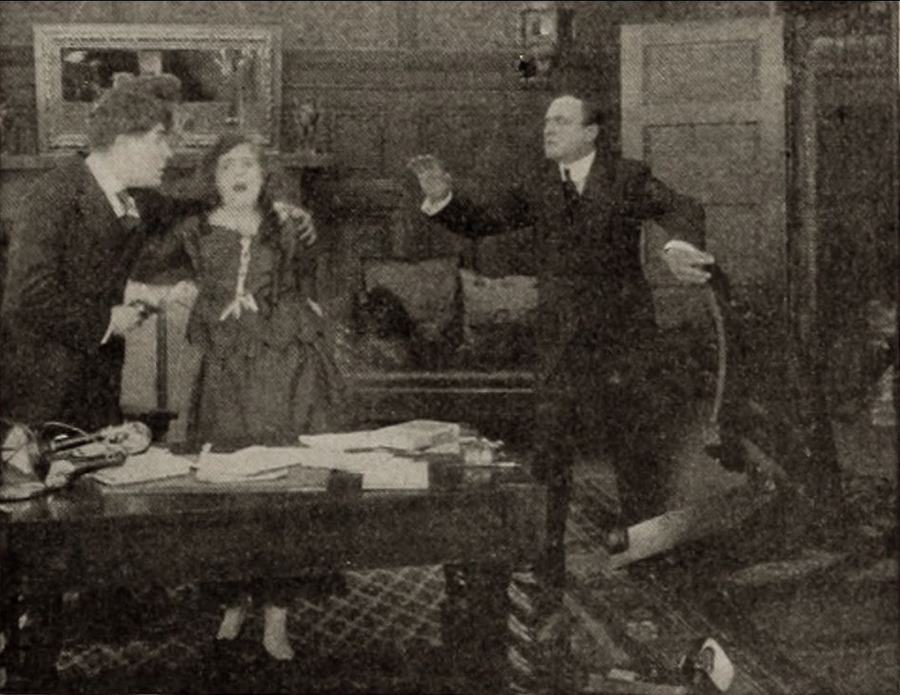
To witness the 1916 rendition of The City is to observe the very moment when the American silent cinema shed its pantomime skin and embraced the jagged, uncomfortable edges of modern realism. Directed with a surprisingly modern sensibility and penned by the legendary Clyde Fitch and Theodore Wharton, this film is far more than a cautionary tale about the perils of the big city; it is a surgical dissection of the hereditary nature of vice. Unlike the more sentimental explorations of familial strife found in Divorce and the Daughter, 'The City' refuses to grant its protagonists the comfort of victimhood. Instead, it posits that the urban environment is an impartial catalyst that merely accelerates the inevitable decay of a hollow foundation.
The narrative begins in the claustrophobic confines of Middleburg, a town that feels less like a home and more like a tomb for the ambitious Rand family. The patriarch, George Rand Sr. (played with a stern, imposing gravity by Riley Hatch), is the bedrock of the community, yet his sudden demise serves as the inciting incident for a radical shift in geography and morality. His son, George Rand Jr. (Thurlow Bergen), fueled by a hubristic desire to conquer the New York political landscape, leads his mother and sisters into the heart of the concrete labyrinth. It is here that the film’s visual language begins to truly shimmer. The Wharton brothers utilize the contrast between the pastoral and the industrial not as a binary of 'good vs. evil,' but as a shift from 'concealment to exposure.'
While Thurlow Bergen provides a solid, if somewhat traditional, anchor for the film’s political subplots, the true kinetic energy of the production emanates from the arrival of George Hannock. In a performance that predates the method-acting intensity of later decades, the character of Hannock—a drug-addicted, blackmailing secretary with a hidden biological link to the Rand family—injects a sense of genuine peril into the proceedings. His presence in the Rand household acts as a slow-acting poison. When compared to the more straightforward villainy seen in The Beast, Hannock is a much more complex antagonist; he is both a predator and a byproduct of the patriarch’s secret transgressions.
The tension reaches a fever pitch as the city’s demands for transparency collide with the family’s desperate need for secrecy. The film’s handling of Hannock’s morphine addiction is remarkably frank for 1916, eschewing the moralizing tone found in The Taint in favor of a visceral, almost documentary-like portrayal of withdrawal and frenzy. This is not merely 'theatrical' acting; it is an early experiment in psychological horror. The scenes where Hannock confronts George Jr. are framed with a tightness that suggests the walls of their lavish New York apartment are closing in—a stark contrast to the wide-open, albeit stagnant, vistas of their former provincial life.
Visually, 'The City' is a triumph of the Wharton Studio’s technical prowess. The use of natural light and the integration of actual New York locations provide a gritty authenticity that was often lacking in contemporary productions like Arms and the Woman. There is a specific sequence involving a car accident that, for its time, was a marvel of stunt work and editing, serving as a metaphor for the family’s loss of control. The camera doesn't just record the actors; it stalks them through the hallways of power and the back alleys of despair.
The female cast members, particularly Betty Borden and Elsie Esmond, are given more agency than one might expect. Their descent into the vapid social circles of the city is portrayed with a sharp, satirical edge. While The Coquette dealt with the social ramifications of female behavior, 'The City' looks at the psychological toll of trying to maintain a facade of respectability while the very ground beneath one's feet is shifting. The sisters are not merely decorative; they are the barometers of the family’s moral atmospheric pressure.
The third act of 'The City' is where the film transcends the boundaries of standard melodrama. The revelation of the incestuous undertones between Hannock and Cicely Rand is handled with a harrowing delicacy. It is a moment of pure Greek tragedy transplanted into the American Gilded Age. The pacing here is relentless, mirroring the frantic heartbeat of a man whose life is disintegrating in real-time. Where films like Sealed Orders rely on external espionage and plot machinations to drive suspense, 'The City' finds its horror in the DNA of its characters.
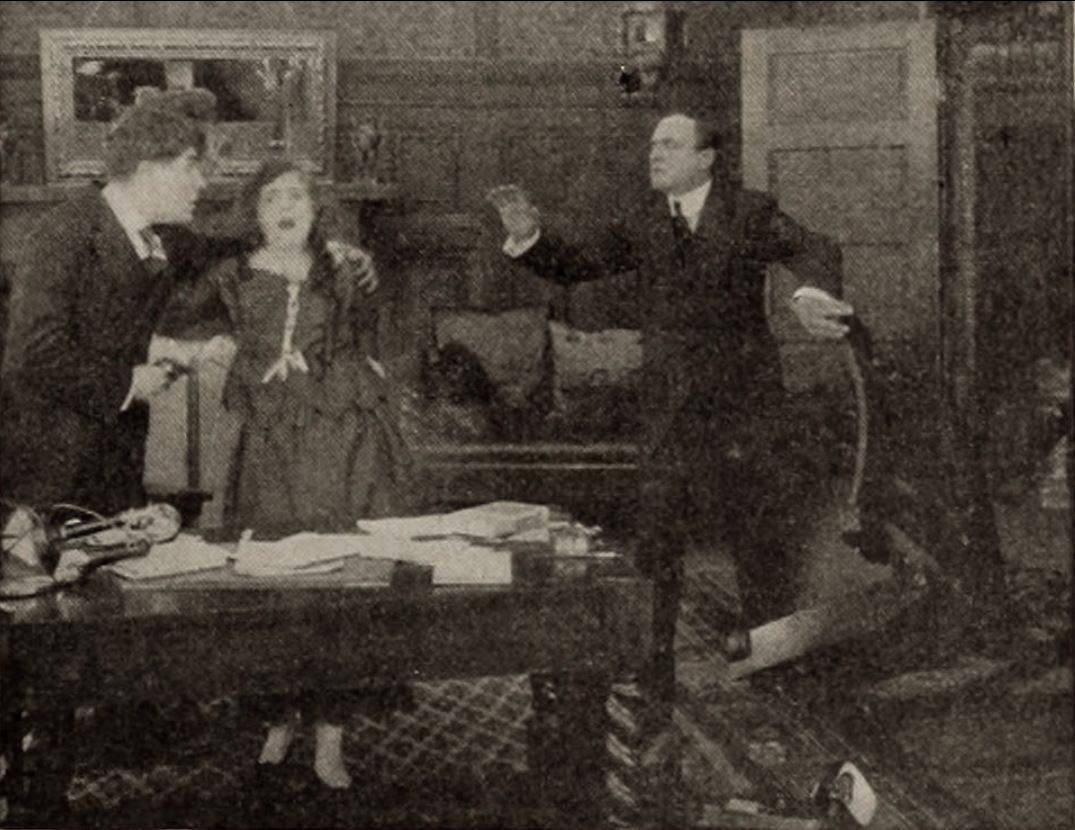
The dialogue—conveyed through sparse but impactful intertitles—strips away the flowery language of the era. 'The City doesn't make you anything; it just finds out what you are,' remains one of the most potent lines in silent cinema history. It serves as the film’s thesis statement, echoing through the empty rooms of the Rand mansion like a curse. The final confrontation between George Jr. and Hannock is a masterclass in blocking and shadow, utilizing the depth of the frame to emphasize the distance between the characters' public personas and their private realities.
To understand the impact of 'The City,' one must acknowledge the role of the Wharton Studio in Ithaca, New York. Far from the burgeoning sun-drenched lots of Hollywood, the Whartons were creating a distinctively East Coast brand of cinema—one that was grayer, more intellectual, and deeply rooted in the theatrical traditions of Broadway. This film is the pinnacle of that aesthetic. It shares a certain DNA with Joseph in the Land of Egypt in its interest in the corruption of the innocent, but it swaps out the biblical scale for a contemporary intimacy that feels far more dangerous.
The film also stands as a fascinating bridge between the 19th-century stage and the 20th-century screen. Clyde Fitch, who died before the film was made, was known for his 'well-made plays,' but the Whartons managed to 'un-stage' the material. They took the claustrophobic energy of the theater and exploded it across the screen, using the camera to go where the stage could not—into the dilated pupils of an addict, into the chaotic rush of a city street, and into the silent, shattered face of a man who has lost his soul.
In the grand pantheon of silent cinema, 'The City' is often overshadowed by the epic scope of Griffith or the slapstick genius of Keaton. However, for those who seek a cinema of ideas and raw emotional honesty, it is an essential text. It lacks the escapist whimsy of Lime Kiln Club Field Day or the adventurous spirit of The Chechako, but it offers something far more enduring: a mirror. It asks the audience to look past the neon lights and the towering skyscrapers and to examine the foundations upon which their own lives are built.
The performances of F.W. Stewart and Allan Murnane further solidify the film’s ensemble strength, ensuring that even the minor characters feel like lived-in residents of this unforgiving world. Even when compared to international dramas of the same period, such as Der Ruf der Liebe, 'The City' feels uniquely American in its obsession with success and its terror of failure. It is a film about the cost of moving forward and the impossibility of leaving the past behind.
Ultimately, 'The City' is a haunting experience. It concludes not with a tidy resolution, but with a sense of exhausted clarity. George Rand Jr. may survive the wreckage of his ambitions, but he is fundamentally altered, stripped of the illusions that once sustained him. This is a film that understands that the greatest tragedies are not those that end in death, but those that end in the realization of one's own mediocrity. For the modern viewer, it remains a potent reminder that while technology and fashions change, the human heart—and the cities it builds to house its desires—remains as complex and compromised as ever. It is a towering achievement of the silent era, deserving of a place alongside The Supreme Temptation and A Mother's Confession as a foundational pillar of American dramatic storytelling.
A relic of Ithaca’s cinematic golden age, 'The City' remains an uncompromising look at the shadows that dance behind the curtains of the elite.
IMDb 5.7
1931
Community
Log in to comment.