DbcultAccessing Vault...
Cult Review
Senior Film Conservator
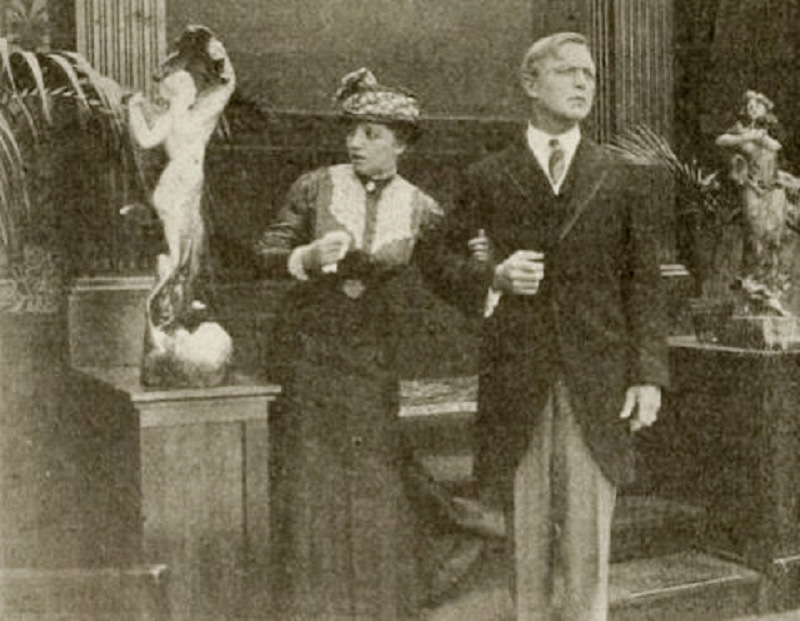
Picture a film that smells of wet clay and kerosene, where every iris-in feels like a hand cupped around a guttering candle—The Country Mouse is that lantern.
Released in March 1914 by the mustily named American arm of Selig Polyscope, this one-reeler—long misfiled as a bucolic trifle—detonates with more sociopolitical shrapnel than most three-hour prestige sagas of the era. Hobart Bosworth, pulling triple duty as writer, co-star, and Svengali-like shepherd, snatches rural radicalism from the editorial page and grafts it onto celluloid myth.
Forget the pastoral syrup the title evokes; the narrative is a sedimentary record of power. Act I: the porch, a liminal space between domesticity and the public road, functions as proto-social-media echo chamber. Billy’s tirades against freight-rate gouging are not quaint barnyard grousing—they’re insurgent manifestos, the kind that would, in another medium, become the Populist Party stump speeches rocking the Great Plains.
Act II: the Common, a democratic commons literally collapsing under corporate slide decks (Marshall’s graphs of “progress”). Bosworth blocks the scene like a boxing ring: low-angle shots of Billy towering over seated crowds, Marshall shot from above to shrink him, a visual dialectic of legitimacy. When the nomination erupts, the camera jerks—an early, probably accidental, handheld jolt that feels like history fracturing.
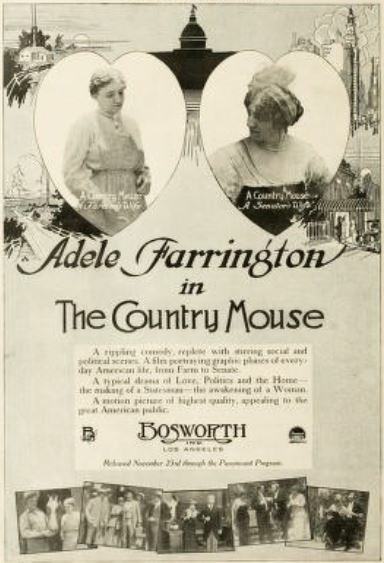
Act III: the Capitol, a mausoleum of marble where ideals go to be embalmed. Note the costume trajectory: Billy’s linsey-woolsey suit swapped for claw-hammer coat, Addie’s gingham devoured by chiffon. The film’s moral fulcrum tilts on sartorial semiotics—what you wear votes before your mouth does.
Critics lazily label Addie’s makeover a Cinderella sop, but Bosworth’s script seeds the gown with thorns. Her blank-check moment—signifying fiscal agency rare for farm wives in 1914—prefigures the consumer-credit revolution. Yet the mirror scene, where she scarcely recognizes her lacquered doppelgänger, is played for terror, not triumph. The film anticipates The Lure of New York’s department-store sirens, but here the commodity self is a Trojan horse wheeled into the very bedroom where political pillow talk happens.
Myrtle Marshall, meanwhile, is no mere vamp; she’s the railroad’s unofficial whip, weaponizing heterosexual jealousy to steer legislation. The triangle—Myrtle/Billy/Addie—mirrors the era’s corporate lobbying playbook: seduce, divide, conquer. When Addie weaponizes her own desirability at the ball, she flips the lobbyist script, becoming the Trojan mouse inside the halls of power.
Shot by Roy H. Klaffki, the cinematography weds Griffith’s rural vistas to a nascent Germanic chiaroscuro. Interiors at the Capitol are keyed low, faces half-swallowed by shadow, suggesting institutional maw. Exterior farm scenes brim with white glare, the Kansas sun bleaching out detail until humans resemble scarecrows—an apt prefiguration of The Life of General Villa’s documentary-styled battle glare.
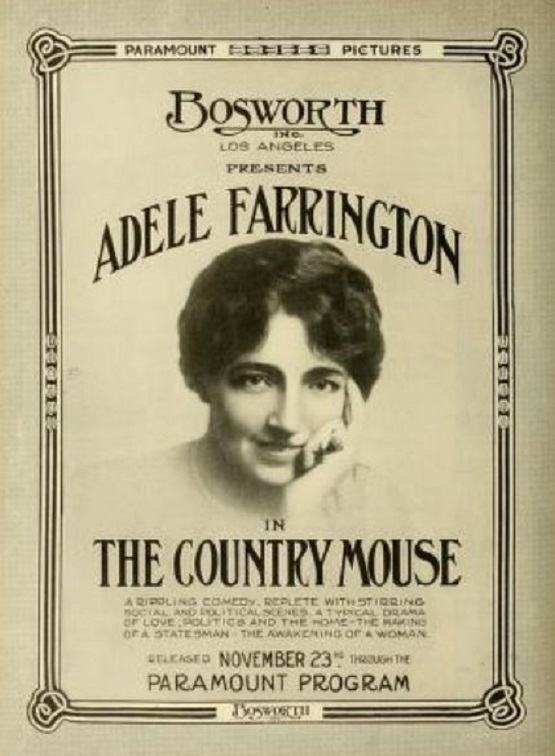
Intertitles, often scrawled in a faux-rough type, eschew the flowery verbosity of contemporaries like Pyotr Velikiy. Instead we get telegraphic punches: “Rates rise. Bread shrinks.” The minimalism feels almost modernist, a rural answer to Marinetti’s Futurist manifestos—oddly fitting given the same year saw Drama v kabare futuristov No. 13.
Rhea Haines as Addie toggles between mousiness and majesty without the aid of a single close-up—Selig rarely punched in tighter than medium shot. Watch her hands: they start knotted like apple-tree bark, then float like lilies post-makeover, only to clench again when she overhears lobbyists plotting. It’s silent-era Method acting avant la lettre, predating Sapho’s more histrionic gender warfare.
Marshall Stedman’s George Marshall exudes oleaginous charm—every smile a contract, every handshake a lien. His physical vocabulary—leaning forward pelvis-first, hat brim always angled to occlude the eyes—renders him a capitalist Mephisto. The confrontation on the speaker’s platform is a ballet of competing masculinities: Billy’s arms akimbo, Marshall’s hands clasped behind back as if handcuffed by his own entitlement.
Archival records indicate Selig supplied exhibitors with a cue sheet urging “La Marseillaise” for Billy’s nomination, followed by a schottische for the harvest fête. Modern festival restorations (Il Cinema Ritrovato 2019) commissioned a minimalist folk score—banjo, fiddle, pump organ—that keens like wind through wheat, underlining the film’s agrarian lament without nostalgic goo.
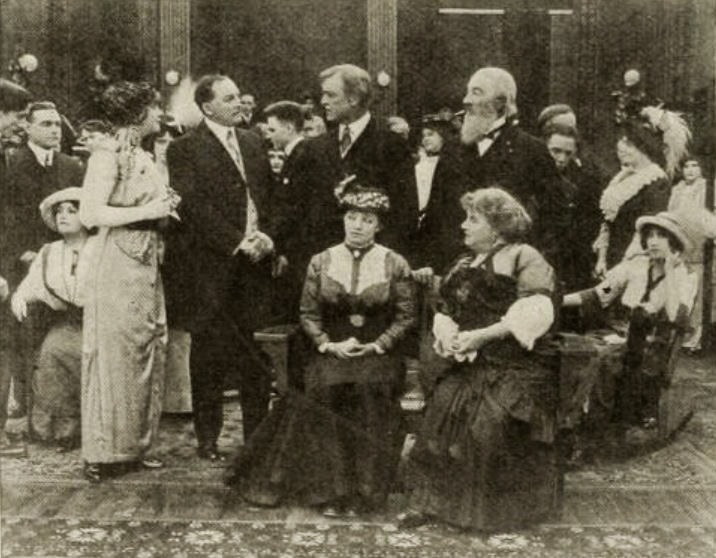
Orality itself becomes a character: Billy’s porch rhetoric, Marshall’s oily cadences, Addie’s whispered self-rebukes. The silence between intertitles vibrates with unspoken ballots, a reminder that in 1914 the body politic was literally voiceless for half its adult population—something A Militant Suffragette was simultaneously picketing to change.
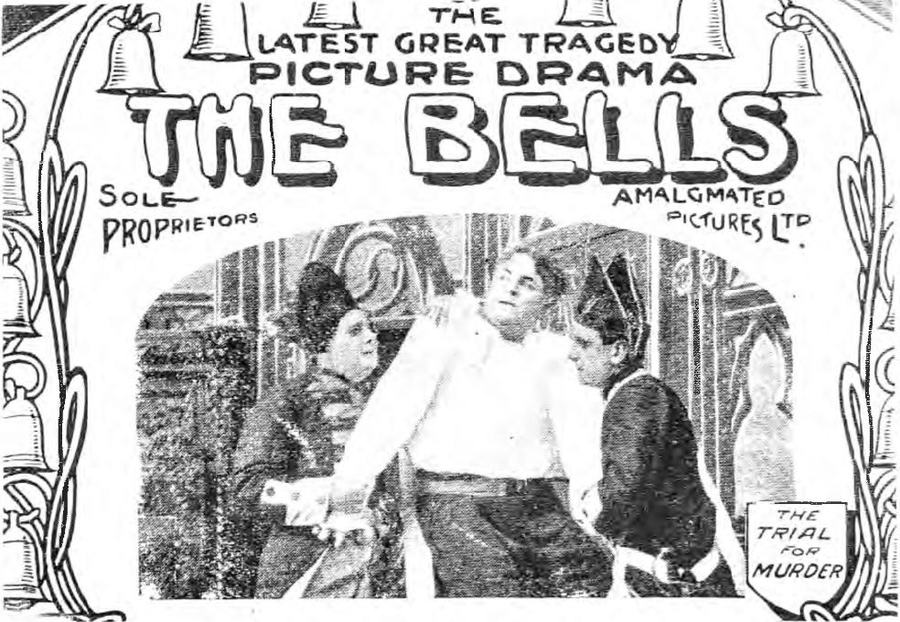
Stacked beside Der Millionenonkel’s Viennese opulence or The Traitress’s urban jungle, The Country Mouse offers a dialectical inversion: wealth is the interloper, poverty the moral baseline. Where Legion of Honor glamorizes patriotic self-sacrifice, Bosworth’s film treats political office as potential contagion, the Capitol a Petri dish where prairie integrity may mutate into cosmopolitan callousness.
Yet the film refuses primitivist nostalgia. Note the tango lesson coda: Addie leading, Billy stumbling—a visual manifesto for adaptive partnership, not rustic stasis. It’s a softer echo of The Root of Evil’s money morals, but with a marital reconciliation pirouette rather than tragic downfall.
A 4K restoration from a 35mm nitrate print languishes in the vaults of the Cinémathèque Française, awaiting rights clearance—the sort of corporate limbo Billy would have railed against. Bootleg rips circulate among silent-film forums, marred by watermarks and Variable Density audio buzz. Streamers’ algorithms, drunk on feature-length dopamine, skip this 24-minute gem; only specialty Blu-ray label Grapevine Memories has hinted at a crowdfunding campaign.
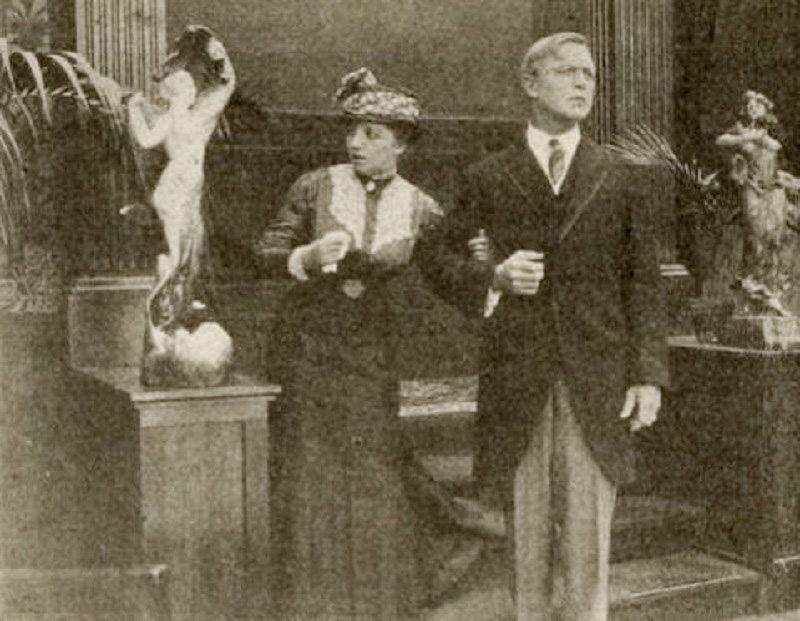
Contemporary trade sheets (Motography, April 1914) praised its “wholesome humor” while missing the anti-trust barbs. By the 1960s, archivist William K. Everson championed it in campus retrospectives as “a Populist pamphlet in celluloid corset.” Today, feminist film scholars cite Addie’s double identity as a precursor to the masquerade tradition running from Queen Kelly to Working Girl.
On Letterboxd the film hovers at 3.6 stars—a criminal under-evaluation born of scarcity. One user writes: “It’s like watching democracy get a corset-laced wedgie.” Another tags it #rural-noir, a taxonomy that fits snugly beside The County Chairman’s graft-laden shenanigans.
The Country Mouse is a pocket-watch-sized civics lesson that anticipates Citizens United, the rural-urban ideological schism, and the perennial American fantasy that one honest voice can outshout money. Its optimism feels almost radical in 2024: not the naïveté that virtue alone prevails, but the subtler conviction that identity—like Addie’s wardrobe—can be strategically mutable without becoming morally hollow.
So seek it, badger archivists, sign petitions, haunt crowdfunding sites. Because somewhere in a Paris vault, 24 minutes of nitrate still flicker—like Addie’s lantern guiding Billy through the Capitol’s marble maze—waiting for a projector beam to set them ablaze again.
IMDb —
1920
Community
Log in to comment.