DbcultAccessing Vault...
Cult Review
Senior Film Conservator
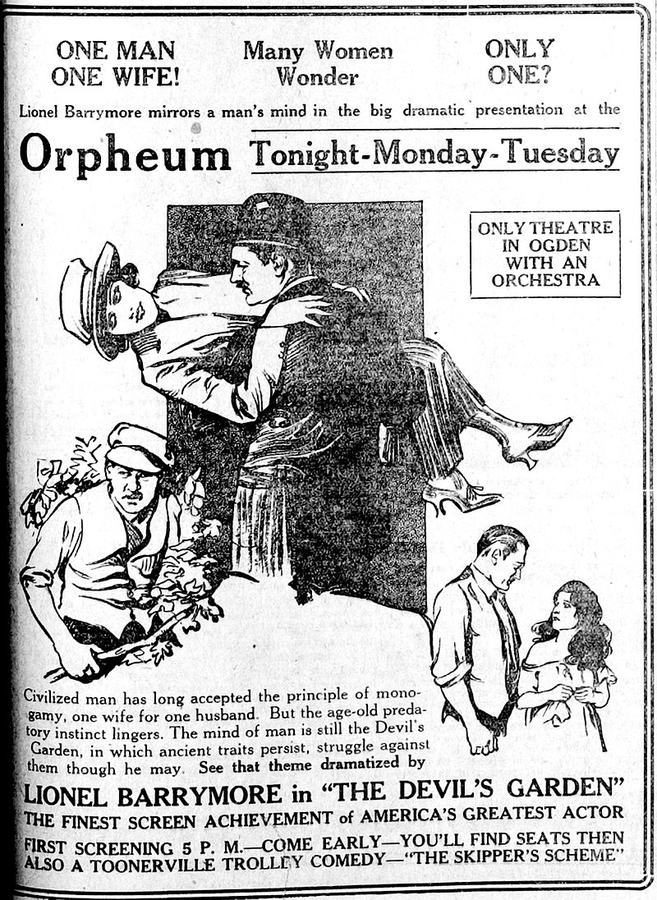
The silent era of cinema is often erroneously characterized by modern audiences as a period of simplistic pantomime and binary morality. However, Kenneth S. Webb’s 1920 magnum opus, The Devil’s Garden, stands as a defiant rebuttal to such reductionist views. This film, a stark adaptation of William Babington Maxwell’s controversial novel, delves into the murky waters of sexual politics, class-based exploitation, and the psychological disintegration of a man pushed to the brink of madness. It is a work that feels startlingly contemporary in its cynicism, eschewing the saccharine sentimentality of its contemporaries to present a portrait of a marriage built on the shifting sands of a moral compromise.
At the center of this maelstrom is Lionel Barrymore, an actor whose presence in the 1920s was already synonymous with a brooding, intellectual intensity. In The Devil’s Garden, Barrymore portrays William Dale not as a hero, but as a victim of his own uxorious devotion and the rigid structures of the British class system. His performance is a masterclass in internal conflict; we see the gradual calcification of his spirit as he realizes the price paid for his professional security. Unlike the more flamboyant performances in The Trey o' Hearts, Barrymore utilizes a restrained physicality that makes his eventual eruption into violence all the more jarring. He captures the essence of a man who has lost his soul to save his skin, a theme mirrored in the equally somber The Warning.
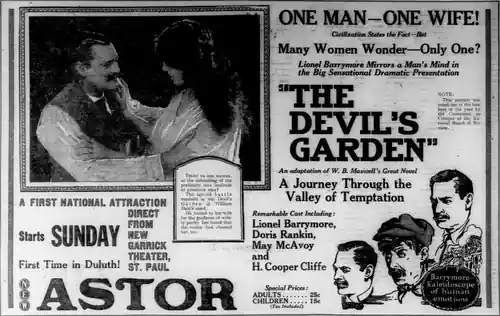
Doris Rankin, Barrymore’s real-life wife at the time, brings a devastating vulnerability to the role of Mavis Dale. Her portrayal is devoid of the theatrical gesturing that plagued many actresses of the era. Instead, she offers a nuanced depiction of a woman trapped between her love for her husband and the predatory demands of the powerful. The chemistry between Rankin and Barrymore is palpable, lending a genuine sense of tragedy to their domestic dissolution. When compared to the female protagonists in Faith, Rankin’s Mavis is far more grounded in the harsh realities of her social standing, making her ultimate sacrifice feel less like a plot device and more like a desperate, tragic necessity.
The narrative engine of The Devil’s Garden is the quid pro quo that initiates the tragedy. The film doesn't shy away from the inherent power imbalance between the employer and the employee. This is not a simple story of adultery; it is a story of systemic coercion. The employer, played with a chilling sense of entitlement by H. Cooper Cliffe, represents the 'devil' of the title—not a supernatural entity, but the predatory nature of those who wield economic power. This theme of moral erosion in the face of poverty is a recurring motif in silent cinema, often seen in works like A Model's Confession, yet Webb’s direction provides a more claustrophobic and personal lens.
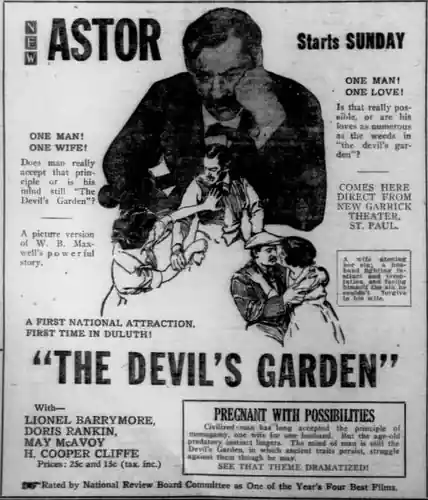
The film’s title serves as a potent metaphor for the domestic sphere. The 'garden' should be a place of growth and innocence, but here it is infested with the weeds of resentment and secrets. The screenplay by Violet Clark and Kenneth S. Webb carefully constructs the escalating tension, ensuring that when William finally discovers the truth, the audience is fully immersed in his sense of betrayal. The murder of the rival is not portrayed as a moment of triumph, but as the final seal on William’s own spiritual damnation. This existential dread is something we also find in the thematic underpinnings of The Other's Sins, where the past acts as an inescapable shadow over the present.
Kenneth S. Webb’s direction is remarkably sophisticated for 1920. He utilizes shadows and framing to accentuate the psychological states of his characters. The interiors of the Dale household feel increasingly cramped as the secrets grow, creating a visual synecdoche for the characters' mental entrapment. Webb avoids the flat, stagey lighting of earlier productions, opting instead for a proto-noir aesthetic that heightens the film’s sense of foreboding. This visual depth is comparable to the atmospheric tension found in The House of Whispers, though applied here to a more realistic, domestic drama.
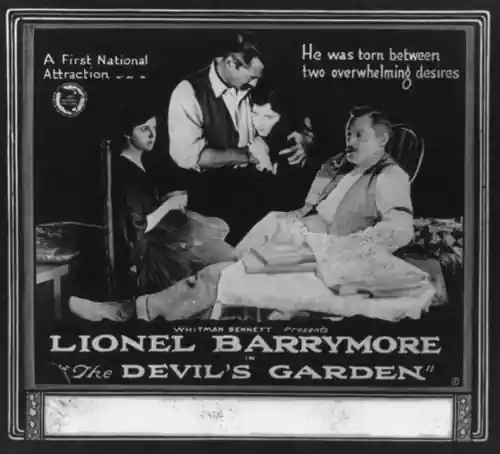
The pacing of the film is deliberate, allowing the audience to sit with the discomfort of the situation. Webb understands that the true horror of The Devil’s Garden lies not in the act of murder, but in the long, agonizing lead-up to it. The use of intertitles is sparse but effective, allowing the actors' expressions to carry the narrative weight. This reliance on visual storytelling places it leagues ahead of more didactic films like The Sins of the Mothers, which often felt more like a sermon than a cinematic experience.
When viewing The Devil’s Garden in the context of its era, one cannot help but notice the stark contrast between its grim realism and the more escapist fare of the time. While films like Italy's Flaming Front focused on the external conflicts of the Great War, Webb’s film turns the camera inward to the internal wars of the soul. It shares a certain DNA with the European psychological dramas of the period, such as Die Augen der Schwester, reflecting a global shift toward exploring the darker recesses of the human condition in the wake of global upheaval.
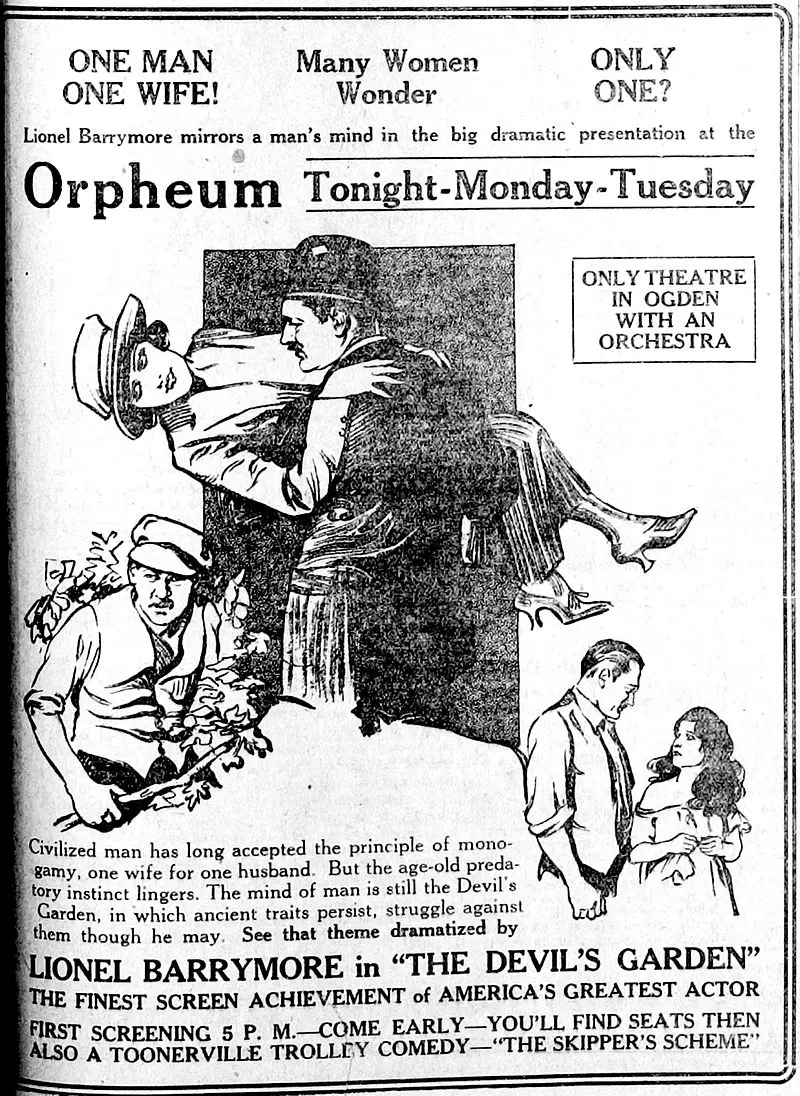
The film also challenges the traditional 'fallen woman' trope. Mavis is not punished for her transgression in the way characters often are in melodramas like A Mother's Sin. Instead, the focus remains squarely on the husband’s reaction and his descent into a murderous obsession. This shift in perspective makes the film feel remarkably progressive, even as it adheres to the tragic conventions of its genre. It questions the very nature of 'sin,' suggesting that the true evil lies in the exploitation of the weak by the strong—a sentiment echoed in the social critiques of New Love for Old.
Why has The Devil’s Garden slipped from the collective memory of cinephiles? Perhaps it is because of its uncompromising bleakness. In an era that increasingly favored the upbeat and the spectacular, a film about the slow death of a marriage and the crushing weight of guilt was a difficult sell. Yet, for the modern viewer, this is precisely what makes it so compelling. It lacks the artifice that dates so many other silent films. The themes of sexual harassment in the workplace and the psychological toll of poverty remain as relevant today as they were in 1920.
The film’s climax, while violent, is treated with a somber gravity that avoids sensationalism. It is a moment of inevitable catharsis that leaves the characters—and the audience—utterly drained. There are no easy answers provided, no clean moral resolutions. Even the ending, which attempts to offer a glimmer of redemption, feels overshadowed by the magnitude of what has occurred. This ambiguity is a hallmark of great art and is something that elevates this film above standard melodramas like Chernaya lyubov or the more simplistic La loca del monasterio.
In the pantheon of Lionel Barrymore’s career, this role should be considered among his finest. It demonstrates his ability to convey complex, conflicting emotions with a subtlety that was rare for the time. Likewise, Kenneth S. Webb deserves recognition as a director of significant vision, capable of weaving together social commentary and psychological horror into a seamless whole. While lighthearted shorts like Hustling for Health offered audiences a temporary reprieve from reality, The Devil’s Garden forced them to confront it head-on.
Ultimately, The Devil’s Garden is a film about the fragility of the human ego and the devastating consequences of a world that values property over people. It is a dark, brooding, and deeply affecting piece of cinema that deserves to be rediscovered and discussed alongside the greats of the silent era. It is a reminder that even in the earliest days of the medium, filmmakers were capable of exploring the most profound and painful aspects of our shared existence with grace, intelligence, and a hauntingly beautiful visual style.
Final Verdict: A visceral, uncompromising masterpiece of early psychological drama.
IMDb —
1929
Community
Log in to comment.