DbcultAccessing Vault...
Cult Review
Senior Film Conservator
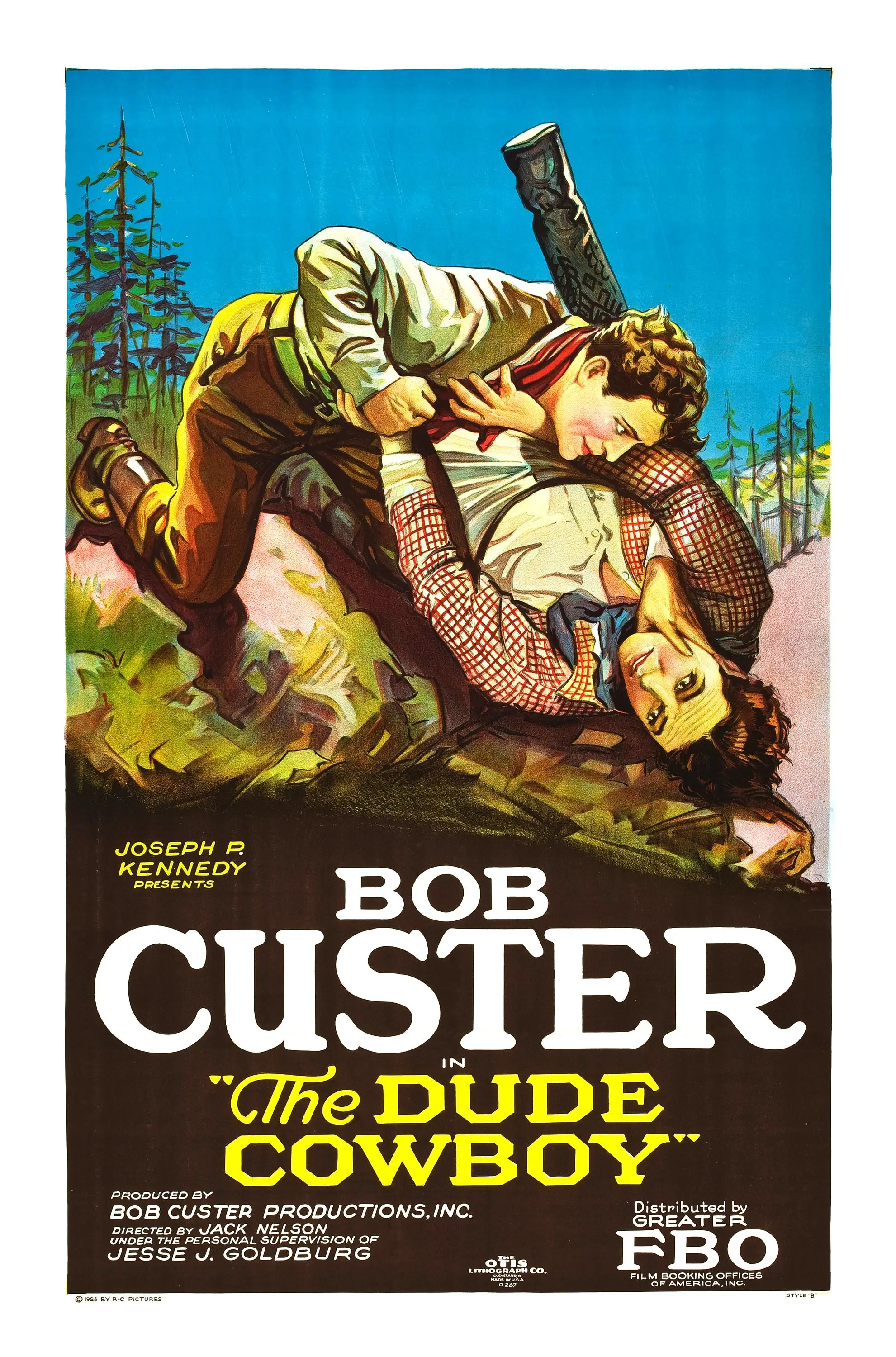
Is The Dude Cowboy worth your time in the modern era? Short answer: Yes, but only if you have a refined palate for the specific brand of 'mistaken identity' slapstick that defined the mid-1920s B-Western circuit.
This film is essentially a playground for Bob Custer, designed for audiences who enjoy seeing a rugged hero look slightly ridiculous before inevitably saving the day. It is not for those who demand the grit of a John Ford masterpiece or the complex morality of modern Revisionist Westerns.
1) This film works because it successfully blends the 'fish-out-of-water' comedy trope with traditional western action, a hybrid that was surprisingly rare before the late silent era.
2) This film fails because the tonal shift between the lighthearted chauffeur scenes and the heavy-handed foreman betrayal feels like two different movies stitched together.
3) You should watch it if you are a fan of Bob Custer’s physical performance or if you want to see how silent cinema handled the transition from horse-and-buggy culture to the automotive age.
Yes, it is worth watching for its historical charm. The film provides a fascinating look at the mid-20s obsession with 'dudes'—wealthy easterners or socialites playing at being cowboys. By having a real cowboy play a fake chauffeur playing a fake cowboy, the movie offers a meta-commentary on the genre itself. It is a brisk, entertaining piece of fluff that doesn't overstay its welcome.
The 1920s was a decade of massive transition for the American West, both in reality and on celluloid. By 1926, the frontier was closed, and the 'cowboy' was becoming a commercialized icon. In The Dude Cowboy, Bob Custer leans into this commercialization. His character’s willingness to abandon his status for a girl—played with a charming, wide-eyed sincerity by Flora Bramley—highlights a shift toward romantic-comedy elements within the genre.
Compare this to more serious fare of the time, such as The Northern Code. While that film dealt with the harsh realities of the frozen north, The Dude Cowboy treats the ranch as a stage for social maneuvering. It’s less about the land and more about the look. One specific scene that stands out is when Custer first attempts to handle the steering wheel of the car. His exaggerated fumbling is a classic piece of physical comedy that reminds me of the work seen in Hands Up! (1926), which also used the Western setting as a backdrop for levity.
However, Custer is no Buster Keaton. While his physical comedy is serviceable, he lacks the 'Great Stone Face's' precision. He relies more on his rugged good looks and the inherent absurdity of a man of his stature wearing a chauffeur's cap. It works. But it’s flawed. The humor is broad, aimed at the cheap seats of 1926, and some of it has curdled into predictability nearly a century later.
Every comedy needs a straight man, and every Western needs a villain. Bruce Gordon provides the latter as the crooked foreman. The tension in the film arises from a very specific dramatic irony: the audience knows the chauffeur is the boss, the girl doesn't, and the villain doesn't. This creates a three-way friction that keeps the middle act from sagging.
There is a particularly effective sequence in the ranch house where the foreman begins to exert his 'authority' over the new chauffeur. Gordon plays the role with a sneering entitlement that makes his eventual downfall deeply satisfying. It’s a trope we’ve seen in countless films, from the melodramatic Nelly Raintseva to the family dramas like Parentage, but it finds a unique home here in the dust of the corral.
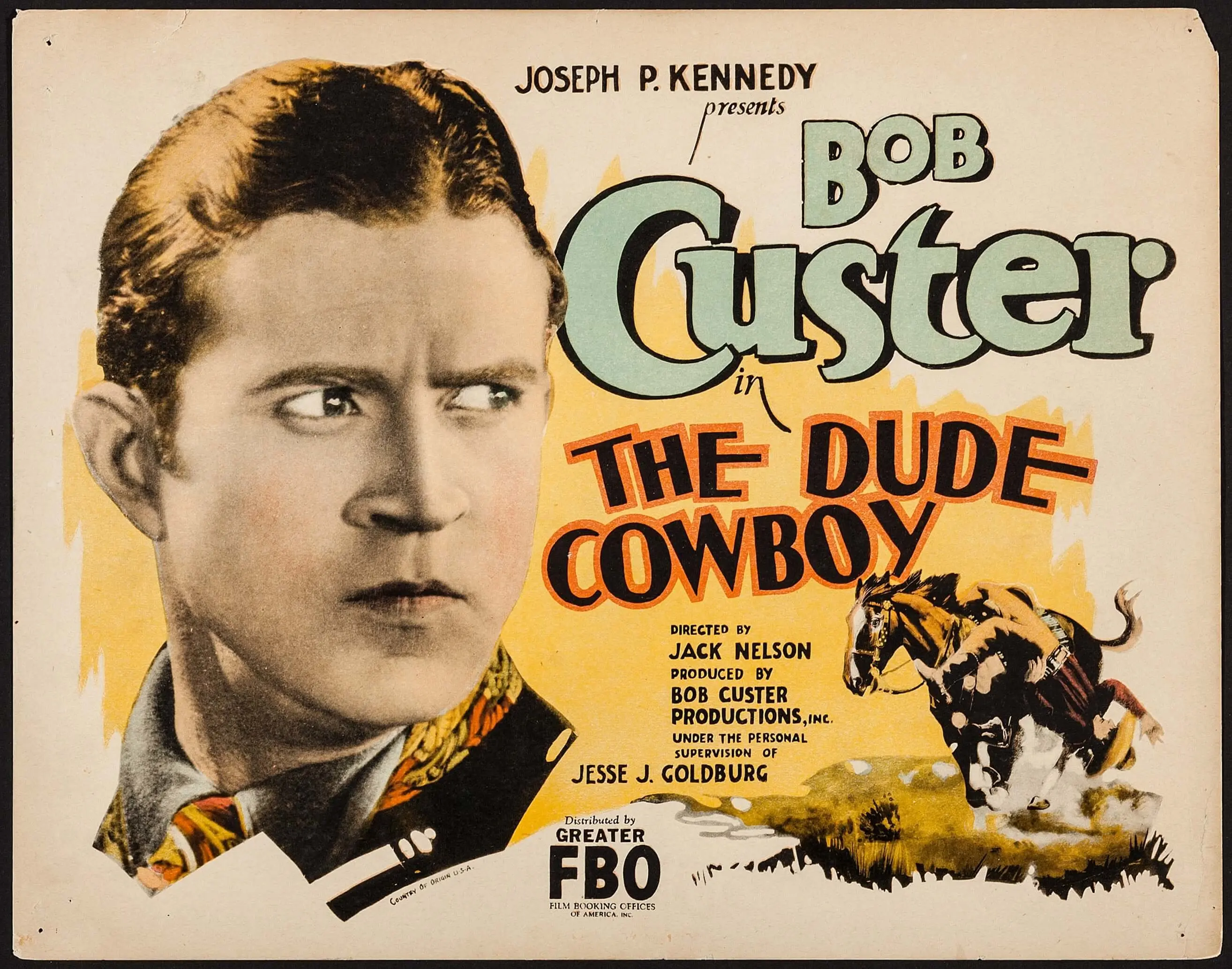
The foreman represents the 'old' West—brutal, opportunistic, and lawless—while Custer’s character, even in his 'dude' disguise, represents the 'new' West: wealthy, technological, and slightly ridiculous. This clash is the thematic engine of the film, even if the writers, Paul M. Bryan and James Ormont, didn't necessarily intend for it to be that deep. It’s a film about the anxiety of modernization.
Visually, the film is a product of its time, but that’s not a slight. The outdoor photography captures the vastness of the ranch with a clarity that many low-budget productions of the era lacked. The lighting in the interior scenes, particularly the confrontation in the barn, uses shadows to heighten the stakes. It isn't quite as experimental as something like The Flames of Johannis, but it shows a professional competence that keeps the story moving.
The pacing is where the film occasionally stumbles. The setup—the meeting and the decision to become a chauffeur—is handled with lightning speed. However, the second act involves a lot of repetitive 'near-misses' where Custer's true identity is almost revealed. It starts to feel like a one-note joke. If you’ve seen Sally of the Sawdust, you know how these 1920s comedies can sometimes stretch a simple premise until it’s transparent. The Dude Cowboy isn't quite that guilty, but it flirts with the line.
"The film's greatest strength is its refusal to take the Western hero seriously, right up until the moment it absolutely has to."
The direction is straightforward, which is exactly what a B-Western needs. There are no flashy tracking shots or avant-garde editing techniques. Instead, we get clean compositions that allow the actors' expressions to do the heavy lifting. In a silent film, the face is the dialogue, and Flora Bramley’s expressive reactions provide a necessary emotional anchor for Custer’s antics.
The writing by Bryan and Ormont is clever in its structure, even if the dialogue cards are occasionally a bit too on-the-nose. They understand the mechanics of the 'secret identity' plot. It’s the same kind of narrative engine found in Rip Van Winkle or Lille Dorrit—characters out of time or out of place, trying to navigate a world that doesn't see them for who they truly are.
The film also avoids some of the heavy moralizing found in other 1920s films like Where Are My Children?. It doesn't want to teach you a lesson; it just wants to show you a cowboy in a funny hat. There is something refreshingly honest about that lack of pretension.
While The Dude Cowboy hasn't maintained the legendary status of films like Cassidy or The End of the Game, it remains a vital piece of the Western evolution. It predicted the 'Singing Cowboy' and 'Gentleman Cowboy' archetypes that would dominate the 1930s and 40s. It suggested that the cowboy didn't always have to be a lonely drifter; he could be a man of means, a man of humor, and a man of the modern world.
Even in its weaker moments, like the somewhat clumsy climax where the 'chauffeur' has to suddenly become a gunfighter, the film maintains a sense of fun. It’s the kind of movie that would have been paired with a short like Don't Weaken (1920) to provide an afternoon of pure escapism. It doesn't ask much of the viewer, and in return, it provides a solid, entertaining ride.
Ultimately, The Dude Cowboy is a successful, if slight, entry into the silent Western canon. It is a film that understands its own absurdity and leans into it. Bob Custer proves he has the range to handle both the lasso and the laugh, and the film serves as a perfect time capsule of an era when the West was becoming a myth even as the cameras were rolling. It’s not a masterpiece, but it’s a damn good time. If you can find a clean print, it’s a journey back to a simpler, sillier frontier.
IMDb —
1923
Community
Log in to comment.