DbcultAccessing Vault...
Cult Review
Senior Film Conservator
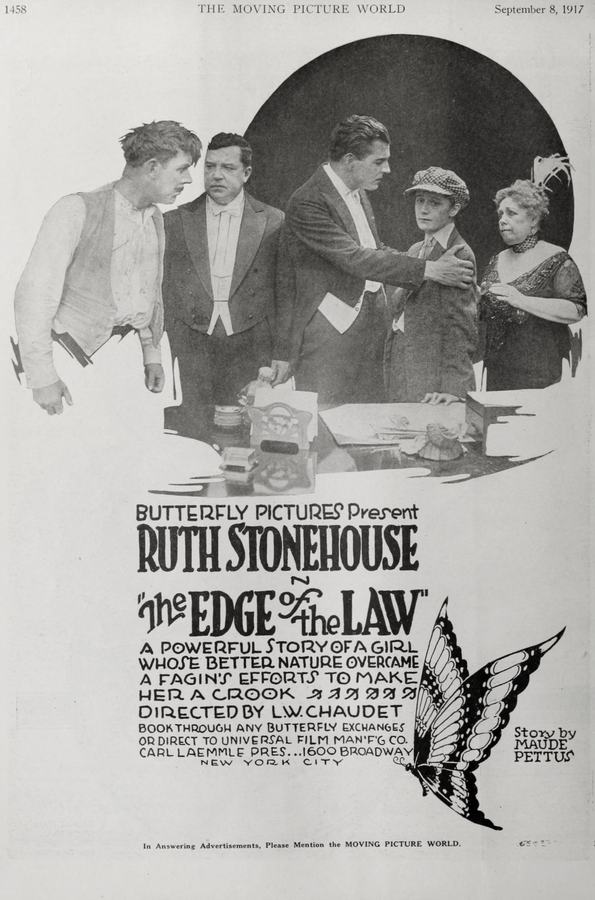
The silent era of cinema frequently grappled with the dichotomy between innate virtue and environmental corruption, a theme that finds its most poignant expression in the 1917 drama The Edge of the Law. Directed with a surprising degree of nuance for its time, the film serves as a vehicle for the luminous Ruth Stonehouse, whose portrayal of Nancy Glenn—alternately known as the pickpocket 'Spider'—transcends the melodramatic conventions of the period. Unlike the more straightforward morality plays of its contemporaries, such as The Quitter, this film delves into the psychological weight of deception and the agonizing process of self-actualization within a society that offers little quarter to the reformed transgressor.
The opening sequences introduce us to Pop Hogland’s school for crooks, a setting that evokes the grittier elements of urban decay found in The Tiger. Here, Nancy is an anomaly. Her failure as a pickpocket is not presented as a lack of dexterity, but rather as a fundamental incompatibility with the predatory ethos of her surroundings. When she is forced into a boyish disguise, the film flirts with gender subversion, a common yet effective trope of the era that underscores her displacement from traditional social roles. The 'Spider' persona is a cage, one that she eventually shatters through the literal and figurative collision of an automobile accident.
The introduction of Pliny Drew, the graduate swindler, provides a stark contrast to Nancy’s burgeoning conscience. Jack Dill plays Drew with a serpentine charm that makes him a formidable antagonist. His presence represents the tether to Nancy’s past—a gravitational pull toward the 'edge of the law' that threatens to derail her ascension into the light. This dynamic of the past haunting the present is a recurring motif in silent cinema, often explored with less subtlety in films like The Wrong Door.
The central conceit of the film—Nancy’s feigned amnesia—is handled with a delicate touch. While modern audiences might find the 'lost memory' trope hackneyed, in the context of 1917, it served as a powerful metaphor for the desire to erase one’s history. For Nancy, the amnesia is not merely a survival tactic; it is a psychological sanctuary. In the home of Ralph Harding, played with earnest chivalry by Lloyd Whitlock, Nancy is allowed to inhabit a version of herself that is untainted by the larcenous tutelage of Pop Hogland. This domestic idyll, however, is built on a foundation of mendacity, creating a tension that permeates the second act.
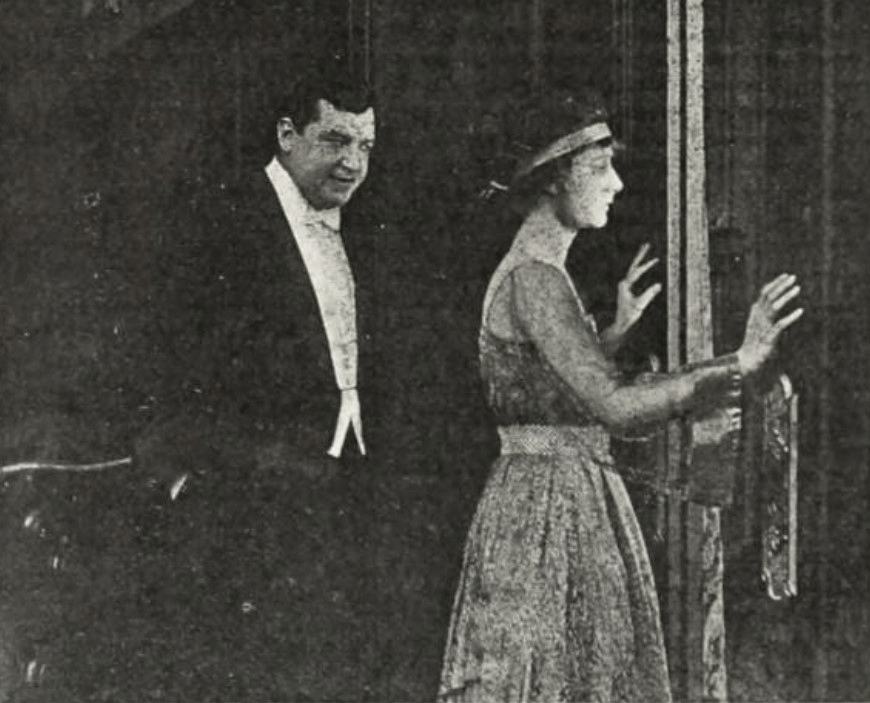
The interaction between Nancy and Ralph’s mother, portrayed by Lydia Yeamans Titus, adds a layer of emotional complexity. The maternal acceptance Nancy receives is the catalyst for her ultimate transformation. It is no longer about avoiding the police; it is about protecting the sanctity of a family that has offered her unconditional love. This shift from self-preservation to altruism marks the film’s moral climax, distinguishing it from the more fatalistic narratives found in The Moment Before.
The third act heightens the stakes with Pliny Drew’s arrival and his attempt to involve Ralph in a fraudulent mining scheme. The 'mining swindle' was a staple of early 20th-century plotlines, often used to symbolize the corrupting influence of unearned wealth. Here, it serves as the final test for Nancy. To save Ralph, she must expose Pliny, but in doing so, she must also expose herself. The sacrifice of her security for his financial and moral safety is a masterstroke of dramatic irony. The very thing she feared—the revelation of her criminal past—becomes the instrument of her redemption.
The pacing of this sequence is frantic, utilizing the cross-cutting techniques that were becoming increasingly sophisticated in the late 1910s. One can see echoes of the structural tension found in The Trey o' Hearts, though The Edge of the Law remains more grounded in character-driven stakes than pure serial thrills. The confrontation between Nancy and Pliny is not just a battle of wits, but a clash of ideologies: the unrepentant predator versus the penitent survivor.
Visually, the film benefits from the cinematography of the era, which utilized natural light and shadow to heighten the emotional register of the scenes. The transition from the claustrophobic, dimly lit dens of the underworld to the airy, sun-drenched interiors of the Harding estate mirrors Nancy’s internal journey. The use of close-ups on Ruth Stonehouse allows the audience to track the minute shifts in her psyche—the flicker of guilt, the warmth of burgeoning love, and the steely resolve of the final act. Her performance is far more restrained than the theatrical gesticulations often associated with silent film, suggesting a modern sensibility that would later be perfected in masterpieces like Joan of Arc.
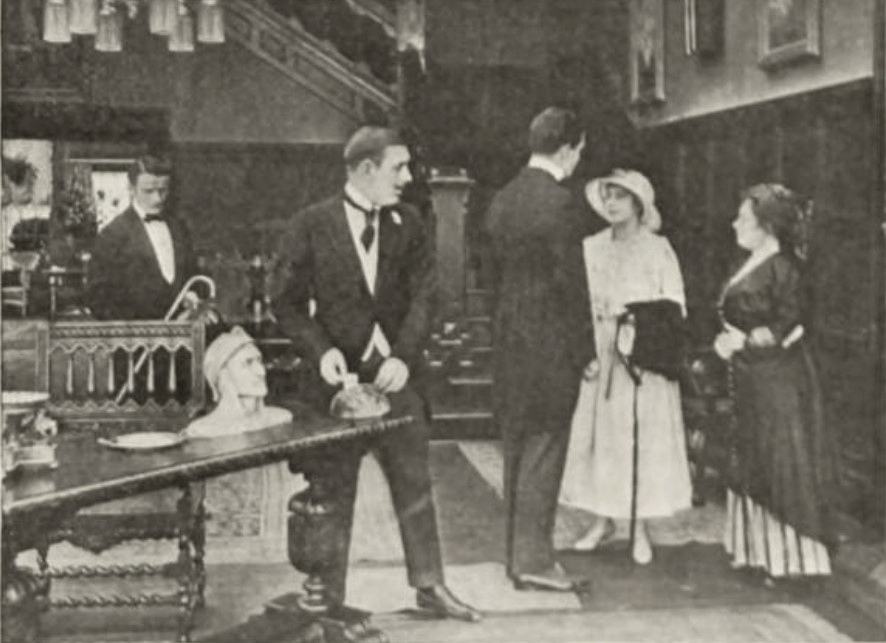
The writing, credited to Harvey Gates and Maude Pettus, avoids the pitfalls of excessive title cards, allowing the visual storytelling to carry the narrative weight. This economy of language forces the actors to convey complex moral quandaries through expression alone. While not as avant-garde as Spiritisten, the film exhibits a confident grasp of narrative structure that keeps the 1500-word-equivalent runtime engaging and resonant.
In the final analysis, The Edge of the Law is a testament to the enduring power of the redemption arc. It posits that the 'edge' of the law is not a line one crosses and can never return from, but rather a liminal space where character is forged. Ralph’s eventual forgiveness of Nancy is not merely a convenient happy ending; it is a recognition of her agency. He does not forgive her because she was a victim of circumstance, but because she chose to do the right thing when the cost was highest. This nuance is often missing in contemporary films that favor black-and-white morality over the shades of grey explored here.
When compared to the fantastical elements of His Majesty, the Scarecrow of Oz or the rugged masculinity of A Man and His Mate, The Edge of the Law stands out for its intimate focus on female identity and ethics. It shares a certain thematic DNA with Her Father's Gold, yet it excises the melodramatic fluff in favor of a more grounded, human story. Even when held against the mystery-thriller elements of Seven Keys to Baldpate, Stonehouse’s film feels more emotionally taxing and ultimately more rewarding.
Conclusion: A Silent Gem Worth Rediscovering
For the modern cinephile, The Edge of the Law offers more than just a historical curiosity. It is a sophisticated exploration of the facades we wear and the courage required to strip them away. Ruth Stonehouse delivers a performance of quiet intensity that anchors the film, ensuring that Nancy Glenn’s journey from the 'Spider' of the slums to a woman of integrity remains as compelling today as it was over a century ago. It is a vital chapter in the evolution of the crime drama, preceding the psychological depth of later works like The Wolf Man or the existential dread of The Man Who Couldn't Beat God. In the vast landscape of silent cinema, this film remains a beacon of narrative clarity and emotional truth, proving that while the law may have edges, the human capacity for change is limitless.

IMDb 7.1
1935
Community
Log in to comment.