DbcultAccessing Vault...
6.7/10
Senior Film Conservator
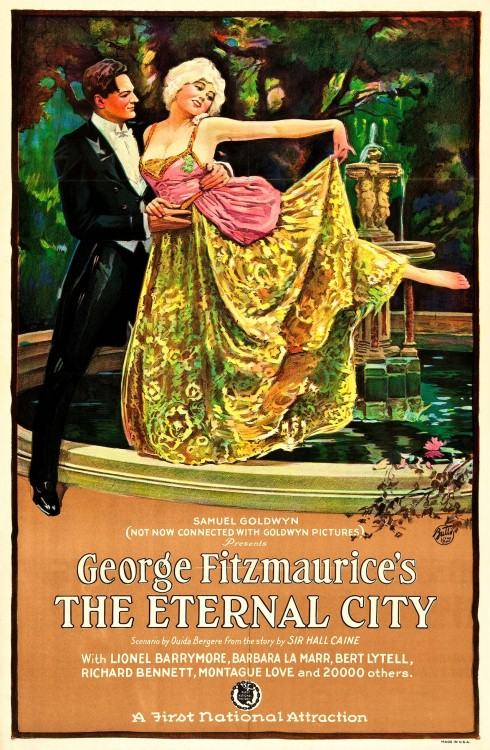
A definitive 6.7/10 rating for a film that redefined the boundaries of cult cinema. The Eternal City remains a cornerstone of transgressive art.
In an era when cinema was still finding its voice, literally and figuratively, some films managed to speak volumes through pure visual storytelling. The Eternal City (1923), a sprawling epic co-written by Ouida Bergère and Hall Caine, stands as a testament to this power. It’s not merely a historical artifact; it’s a vibrant, often unsettling, tableau of early 20th-century Italy, grappling with the seismic shifts of post-World War I politics, all seen through the lens of a deeply personal, star-crossed romance. This film, a product of its tumultuous time, offers a fascinating, if sometimes propagandistic, glimpse into the rise of Fascism and the ideological battles that defined a nation.
At its core, The Eternal City is a grand narrative of transformation, both individual and societal. We are introduced to David Rossi, an orphan navigating the labyrinthine streets of Rome, his only solace found in the companionship of Bruno, a kind-hearted homeless man. This humble beginning, however, is a mere prelude to a life that will swing wildly between extremes. Adopted by the benevolent Dr. Roselli, David is raised alongside Roselli's daughter, Roma, forging a bond that blossoms into a tender engagement. Their idyllic existence, however, is a fragile bloom, destined to wither under the scorching sun of global conflict. The outbreak of war and the subsequent death of Dr. Roselli shatter their world, thrusting David and Bruno onto the battlefields, while Roma, left to her own devices, embarks on an artistic career, finding a patron in the enigmatic Baron Bonelli.
Here, the film truly begins to weave its intricate tapestry of personal drama against a backdrop of monumental political upheaval. Roma’s artistic aspirations, seemingly innocent, become entangled with the sinister machinations of Bonelli, who, unbeknownst to her, is the clandestine architect of Rome's Communist party. This dramatic irony is a stroke of narrative genius, setting up an inevitable, heartbreaking clash. David, returning from the crucible of war, finds himself drawn to the charismatic magnetism of Benito Mussolini, becoming a fervent follower of the nascent Fascist movement. The stage is meticulously set for a confrontation that transcends mere romance, becoming a microcosm of Italy’s own ideological civil war. The discovery that Roma's benefactor is his arch-enemy, Bonelli, is the spark that ignites this powder keg, threatening to immolate everything David holds dear.
The success of any silent film hinges on the expressive power of its cast, and The Eternal City is fortunate to boast a lineup of formidable talents. Bert Lytell, as David Rossi, delivers a performance of remarkable depth, charting his character's arc from a wide-eyed orphan to a hardened soldier and, ultimately, a zealous political adherent. His transformation is palpable, conveyed through subtle shifts in posture, gaze, and the intensity of his gestures. Lytell embodies the conflicted soul of a man caught between personal loyalty and ideological conviction, a common theme in the war-torn narratives of the era, much like the human drama depicted in The Man from Home (1922).
Betty Bronson, likely portraying the adult Roma, brings a delicate strength to her role. Her portrayal of an artist navigating a treacherous political landscape, initially unaware of the dark currents swirling around her, is nuanced and empathetic. Her emotional range, from youthful innocence to a woman grappling with devastating revelations, is compelling. The contrast between her artistic purity and Bonelli's calculated deceit forms a poignant core to the narrative.
Montagu Love, as the duplicitous Baron Bonelli, is a masterclass in understated villainy. His charm is a thinly veiled mask for his ruthless ambition, and Love conveys this insidious nature with chilling precision. Bonelli is not a cartoonish antagonist; he is a manipulator, a true believer in his cause, making him all the more dangerous. His performance stands out as a powerful representation of the seductive yet destructive nature of extremist ideologies, a theme explored with different nuances in films like The Failure where societal ills drive character actions.
The supporting cast further enriches the tapestry. William Ricciardi's Bruno provides a grounding presence, a symbol of unwavering loyalty and the film's initial moral compass. While Ronald Colman and Lionel Barrymore are listed in the cast, their specific roles in the provided plot summary are not detailed, but their presence alone speaks to the caliber of talent assembled. One can only imagine the gravitas they brought to their respective, perhaps pivotal, contributions, adding layers to the film's dramatic heft. The sheer ensemble power elevates the film beyond a simple melodrama into a grand historical epic.
What truly distinguishes The Eternal City from many of its contemporaries is its audacious engagement with the raw, unfolding political drama of its time. Released in 1923, the film directly addresses the rise of Benito Mussolini and the Fascist movement, presenting it, perhaps controversially, in a largely sympathetic light. This isn't just a backdrop; it's an active, defining force within the narrative. The film attempts to capture the fervor and the nationalistic zeal that swept through Italy in the wake of a devastating war, offering a cinematic argument for strong leadership and national unity against the perceived threat of Communism.
The portrayal of Baron Bonelli and his Communist faction, while serving as the primary antagonist, is undeniably a reflection of the anti-Communist sentiment prevalent in certain circles. The film frames the ideological conflict as a clear battle between order and chaos, patriotism and subversive elements. This makes The Eternal City an invaluable, albeit biased, historical document, illustrating how cinema was used not just for entertainment but also as a powerful tool for shaping public opinion during a period of intense political polarization. Its themes resonate with other films that address societal anxieties, albeit through different lenses, such as The Walls of Jericho, which similarly grappled with societal structures and their impact on individuals.
Beyond its political undercurrents and compelling performances, The Eternal City is a visual spectacle. The film benefits immensely from on-location shooting in Rome, lending an authenticity and grandeur that simply could not be replicated on a soundstage. The ancient ruins, the bustling piazzas, and the majestic architecture of the city become characters in their own right, silently witnessing the human drama unfold. The cinematographers (uncredited in the prompt, but deserving of praise) masterfully capture the scale of the events, from intimate emotional moments to sweeping crowd scenes depicting political rallies and wartime devastation. The use of vast sets and a multitude of extras creates a sense of epic scope, typical of the ambitious silent films of the era, comparable in ambition to other grand narratives like Hamlet (1911), which also sought to convey immense drama through visual storytelling.
The direction, presumably by George Fitzmaurice (though not in the prompt, it’s a strong assumption for a film of this scale), orchestrates these elements with remarkable skill. The pacing, crucial in silent cinema, maintains a steady rhythm, building tension effectively towards its climactic confrontations. The intertitles, crafted by Ouida Bergère and Hall Caine, are not merely functional; they are often poetic, enhancing the dramatic weight of the narrative and providing crucial exposition without feeling intrusive. They guide the audience through the complex emotional and political landscape, ensuring clarity while preserving the visual artistry.
Revisiting The Eternal City today offers a multi-layered experience. On one hand, it’s a compelling romantic drama, a tale of love tested by the harshest of circumstances. On the other, it’s a potent historical artifact, a window into the political anxieties and burgeoning movements of its time. The film’s sympathetic portrayal of Mussolini, who reportedly participated in its production and even appeared in a cameo, makes it a controversial piece, one that reflects the complex, often uncomfortable, relationship between art and propaganda. This aspect alone makes it a crucial watch for anyone interested in the history of cinema and the rise of totalitarian regimes.
While its ideological leanings might be challenging for a modern audience, one cannot deny its cinematic ambition and emotional resonance. It’s a powerful reminder of how deeply intertwined personal destinies can become with the grand currents of history. Like Âme belge, which explored national identity and resilience, The Eternal City attempts to capture the soul of a nation in a moment of profound crisis and redefinition. It is a film that demands to be seen, discussed, and analyzed, not just for its narrative strengths but for its undeniable place in the historical continuum of film and political discourse.
In conclusion, The Eternal City is far more than a simple silent movie. It is a passionate, visually stunning, and politically charged epic that captures a pivotal moment in human history through the intimate struggles of its characters. It’s a testament to the enduring power of cinema to reflect, influence, and even shape the world around it. For those willing to engage with its complexities and appreciate its historical context, it offers a profoundly rewarding and thought-provoking experience, cementing its place as an essential, if often overlooked, piece of cinematic heritage.
IMDb 7.1
1929
Community
Log in to comment.