DbcultAccessing Vault...
Cult Review
Senior Film Conservator
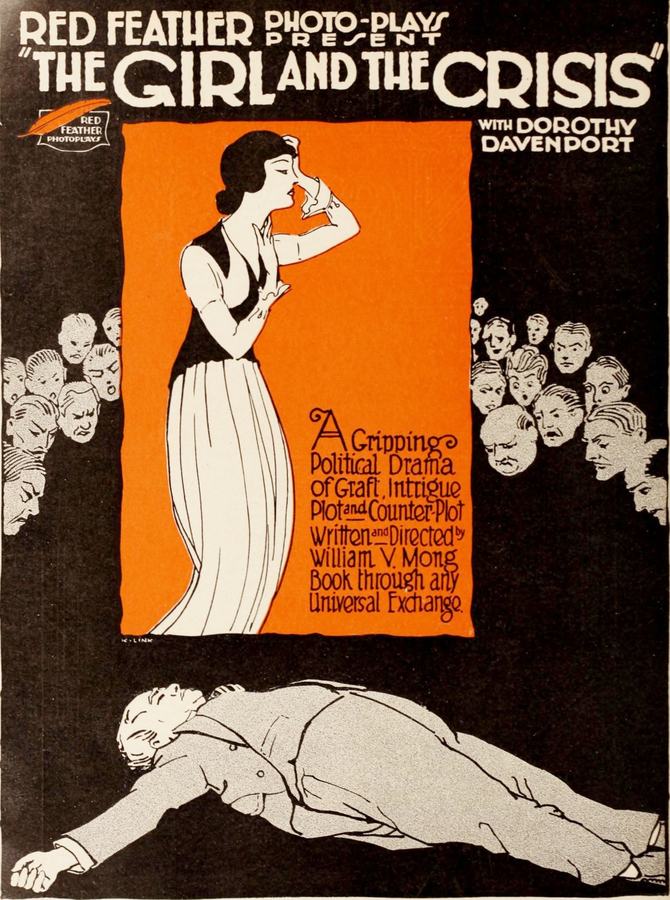
In the pantheon of early American cinema, few films navigate the treacherous waters of political ethics and domestic tragedy with as much fervor as William V. Mong’s 1917 opus, The Girl and the Crisis. This is not merely a relic of the silent era; it is a blistering examination of the cost of progress and the fragility of the social contract. At its core, the film juxtaposes the civilizing force of the Wilmot Reservoir—a project of Promethean proportions—against the primal, desperate rage of those it displaces. It is a work that feels eerily contemporary in its depiction of graft, mob mentality, and the heavy crown of leadership.
The cinematic landscape of 1917 was often preoccupied with moral binaries, yet Mong introduces a refreshing ambiguity here. Jacob Wilmot, portrayed with a stern but not unkind gravitas, is the architect of a future that requires the destruction of the past. The reservoir is a symbol of utility, yet for the citizens of Old Town, it is an existential threat. The film excels in capturing the atmospheric tension of this standoff. Unlike the more pastoral struggles seen in Emmy of Stork's Nest, the conflict in The Girl and the Crisis is industrial and visceral.
The introduction of Jere Yaukey and his cohort of political leeches adds a layer of cynicism that elevates the film above standard melodrama. These are not cartoonish villains; they are opportunists who understand that chaos is a ladder. They manipulate the genuine grievances of the Old Town residents, turning a legitimate property dispute into a violent insurrection. The sequence where a shed of dynamite is detonated serves as a powerful visual metaphor for the shattering of civil discourse. It is a moment of pure, unadulterated kinetic energy that rivals the high-stakes tension found in The Ships That Meet.
Charles Perley’s portrayal of Oliver Barnitz is a masterclass in the silent era’s 'noble lead.' However, the script provides him with a far more complex trajectory than his contemporaries. When he is thrust into the role of Governor following a shocking act of political violence, the film shifts its focus to the psychological burden of power. The assassination of the Governor by Poole is a narrative pivot that echoes the historical gravity of Julius Caesar, albeit transposed to the gritty reality of early 20th-century American governance.
Poole’s motivation—killing a man to install a better one—is a chilling exploration of the 'ends justify the means' philosophy. His cry of "Let justice be done though the heavens fall" is the film’s thematic heartbeat. It poses a question that remains relevant: can a legitimate government be born from an illegitimate act? Oliver’s subsequent struggle over whether to pardon Poole is not just a plot point; it is a profound inquiry into the nature of institutional integrity. This moral quagmire is reminiscent of the philosophical depth found in Dostoevsky-inspired works like Crime and Punishment.
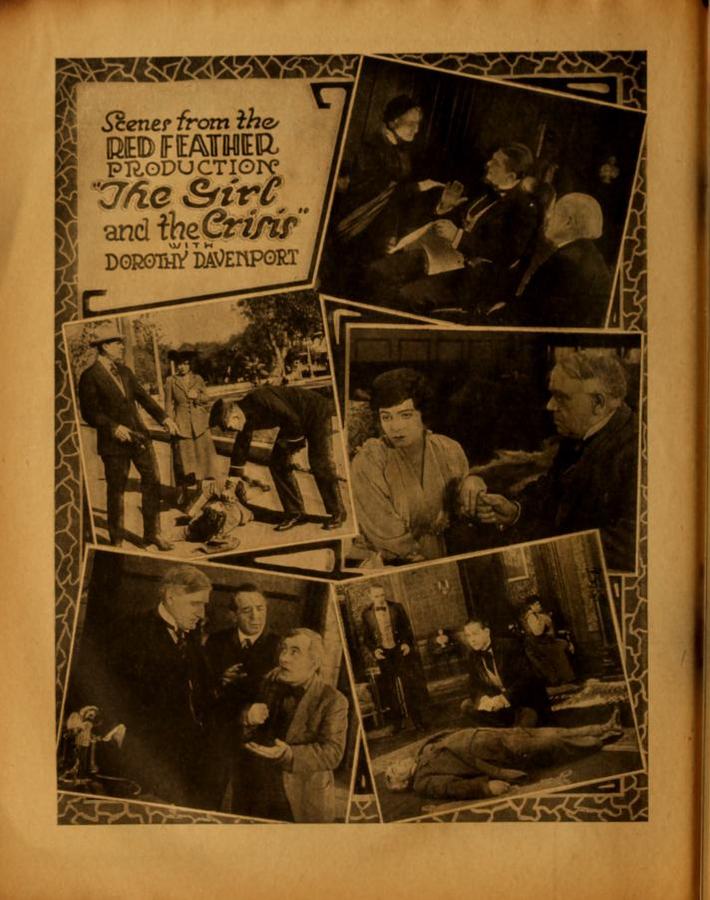
Just as the film cements its status as a political thriller, it veers into the territory of domestic tragedy. The revelation that Ellen and Oliver are half-siblings—sharing the same mother but different fathers—is a classic trope of the era, yet it is handled with a sense of impending doom. This revelation, delivered by Jacob Wilmot, adds a layer of 'forbidden' tension to the earlier scenes of their budding friendship. It reframes their entire relationship through a lens of biological determinism, a theme often explored in The Blood of His Fathers.
Dorothy Davenport, as Ellen, provides the emotional anchor for this subplot. Her performance is nuanced, moving away from the 'damsel in distress' archetype to become a woman caught between the legacy of her father and the burgeoning conscience of her brother/lover-figure. The film’s handling of this secret prevents it from becoming a mere soap opera; instead, it serves to isolate Oliver further, stripping away his personal support systems just as his professional life reaches a crisis point. It is a narrative strategy that mirrors the high-society entanglements of The Countess Charming, but with significantly higher stakes.
One of the most technically impressive and narratively daring segments of the film is Oliver’s nightmare. In a state of total exhaustion and moral fatigue, he dreams of a world where his father murders Wilmot, and he is forced to execute his own flesh and blood. This sequence is a startling departure from the film’s otherwise grounded realism. It utilizes shadows and distorted perspectives that predate the full flowering of German Expressionism. The psychological intensity of this dream is comparable to the surrealist undertones of The Mysteries of Myra or the haunting imagery of Das Phantom der Oper.
The dream serves as the catalyst for Oliver’s final decision. It is a manifestation of his deepest fear: that the law is a heartless machine that will eventually consume everything he loves. His prayer upon waking is a moment of rare vulnerability for a screen hero of this period. It humanizes the office of the Governor, showing the man beneath the title, struggling with the impossible demand of being both a son and a sovereign.
Visually, The Girl and the Crisis is a testament to the sophistication of 1917 cinematography. The location shooting at the reservoir site provides a sense of scale that studio sets could never replicate. The wide shots of the 'Old Town' riots are choreographed with a chaotic precision that makes the viewer feel the heat of the conflict. The use of natural light, especially in the outdoor sequences, lends a documentary-like quality to the proceedings, reminiscent of the realism found in Panama and the Canal from an Aeroplane.
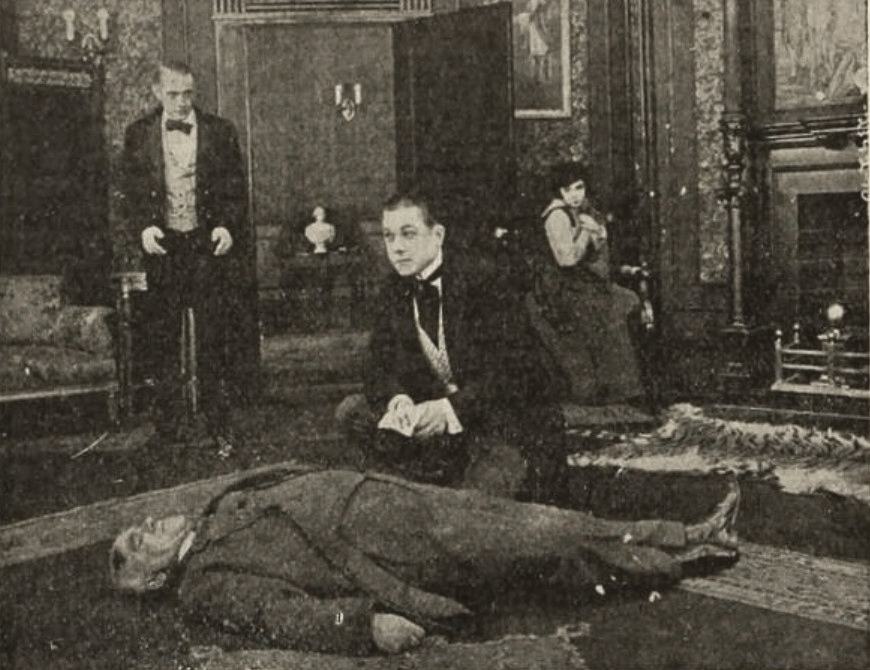
The editing, too, is remarkably modern. The cross-cutting between the racing car carrying Oliver and his companions to the State House and the Governor’s office creates a palpable sense of urgency. This 'race against time' motif was a staple of the era, but Mong uses it here to underscore the political stakes rather than just for physical thrills. It is a more mature application of the techniques seen in Jack and Jill or the frantic pacing of Das Abenteuer eines Journalisten.
The film’s conclusion is both a relief and a tragedy. Oliver finally makes the choice to release Poole, choosing mercy over the rigid adherence to a law that was only made possible by the prisoner's crime. However, the 'Deus ex Machina' of Poole’s heart failure before the pardon can be enacted is a poignant touch. It spares Oliver the political fallout of a pardon while simultaneously denying Poole the redemption of freedom. It is a bittersweet ending that avoids the easy sentimentality often found in East Lynne or L'enfant prodigue.
Ellen’s final words to Oliver—that she could never have forgiven him had the execution proceeded—solidify the film’s stance on the primacy of human connection over abstract legalism. It is a powerful closing statement for a film that spent its runtime exploring the machinery of the state. It suggests that while the reservoir may bring water to the desert, it is the capacity for forgiveness that sustains the human spirit.
The Girl and the Crisis is a multifaceted gem of the silent era. It successfully blends the 'social problem film' with the 'political thriller' and the 'family melodrama' without losing its narrative focus. William V. Mong’s direction is confident, and his script (under the same name) is intellectually rigorous. While some of the plot contrivances, such as the sibling reveal, may feel dated to modern audiences, the core questions the film asks about justice, power, and sacrifice remain as sharp today as they were over a century ago.
For those interested in the evolution of cinematic storytelling, this film is essential viewing. It bridges the gap between the simple morality plays of early cinema and the complex, shades-of-grey narratives that would define the Golden Age. It is a film that demands to be seen not just as a historical curiosity, but as a living, breathing piece of art that still has much to say about the 'crisis' of the human condition. It stands alongside other heavyweights of the period like Should a Woman Tell? and The Dead Alive as a pinnacle of silent dramatic achievement.
Reviewer Note: This analysis is based on the surviving narrative structures and historical records of the 1917 production. The interplay of political graft and the visceral riot sequences remains a high-water mark for the Universal Film Manufacturing Company during this era.
IMDb 5.9
1934
Community
Log in to comment.