DbcultAccessing Vault...
Cult Review
Senior Film Conservator
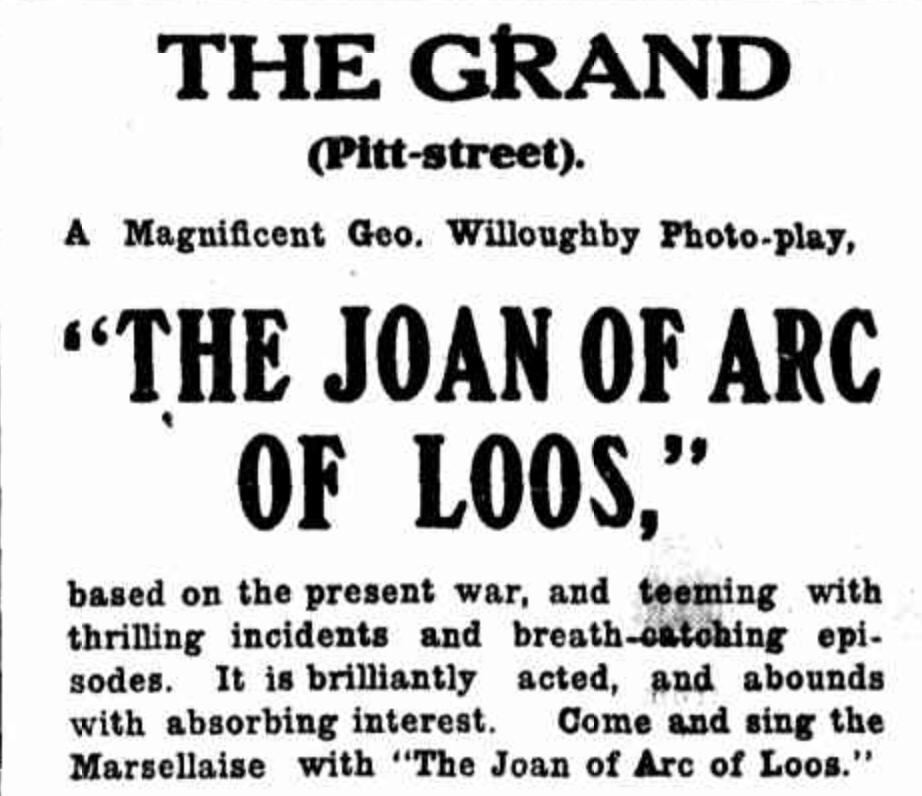
Stepping back into the annals of early cinema, one often encounters narratives that, despite the limitations of their medium, resonate with a profound emotional truth. The Joan of Arc of Loos, a film whose very title evokes both historical gravitas and mythic heroism, stands as a stark and moving testament to the indomitable human spirit forged in the crucible of the First World War. Released at a time when the echoes of conflict still reverberated through society, this picture, penned by the insightful Herbert Ford, doesn't merely recount events; it endeavors to capture the very soul of a generation under siege, filtered through the lens of a singular, extraordinary individual. It’s a work that eschews the bombastic for the deeply personal, finding its heroism not in grand gestures but in acts of quiet, desperate courage.
The film plunges us headlong into the grim reality of the Western Front, specifically the harrowing environs surrounding the Battle of Loos. Here, the bucolic French countryside has been transformed into a moonscape of trenches, barbed wire, and perpetual artillery barrages. It is within this landscape of utter desolation that we meet Marie Dubois, portrayed with an affecting blend of vulnerability and nascent strength by Beatrice Esmond. Esmond’s performance is a masterclass in silent film acting, conveying volumes with a mere glance, a trembling hand, or a resolute set of the jaw. Her Marie is not a figure born of martial lineage or strategic genius; she is, at first, simply a survivor, a young woman whose existence has been upended by the cataclysmic events unfolding around her village. The early scenes meticulously establish her fear, her initial paralysis in the face of such overwhelming destruction, a stark contrast to the almost mythical figure she is destined to become.
The narrative arc, meticulously crafted by Ford, follows Marie's inexorable journey from bystander to active participant, driven by an escalating series of personal tragedies and a burgeoning sense of moral responsibility. We see her aiding the wounded in makeshift field hospitals, her face streaked with dirt and tears, yet imbued with an unwavering determination. These moments are rendered with a stark realism that must have been profoundly impactful for contemporary audiences, many of whom had direct experience with the war's horrors. The film doesn't shy away from the brutality, but rather frames it as the inescapable backdrop against which human compassion and resilience must necessarily manifest. This unflinching portrayal of suffering, yet without wallowing in gratuitous gore, aligns it with the emotional honesty found in films like The Final Judgment, where moral consequence is depicted with similar gravity, albeit in a different context.
The turning point arrives with a dramatic urgency that propels the story into its titular homage. A crucial Allied communication line is severed during a fierce German offensive, isolating a British regiment and leaving them vulnerable to annihilation. The urgency is palpable, conveyed through rapid cuts and the desperate expressions of officers like Captain Davies (Arthur Greenaway), who embodies the stoic, burdened leadership of the era. Greenaway, with his commanding presence and nuanced expressions, effectively portrays the immense pressure weighing on those charged with men's lives. It is in this moment of profound crisis that Marie, witnessing the despair and the imminent threat, makes her pivotal decision. Her choice to brave the shelled landscape, to carry a vital message across no-man's-land, is portrayed not as a sudden, impulsive act, but as the culmination of her developing moral fortitude. It is a moment reminiscent of the defiant spirit found in A Fight for Freedom; or, Exiled to Siberia, where a protagonist’s personal risk-taking becomes a potent symbol of resistance against overwhelming odds.
The sequence depicting Marie's perilous journey is a masterclass in silent film suspense. The director utilizes long shots to emphasize the vast, exposed wasteland she must traverse, punctuated by close-ups that capture her fear, her determination, and the sheer physical toll of her endeavor. The sound of explosions, though absent, is powerfully suggested through visual cues – the trembling ground, the flying debris, the frantic expressions of soldiers watching from their trenches. This segment of the film is where the 'Joan of Arc' moniker truly solidifies. She is not leading armies, but her individual act of courage, witnessed by desperate men, becomes a powerful symbol, an embodiment of hope and defiance against an seemingly insurmountable enemy. Clive Farnham, as Sergeant Miller, a battle-hardened veteran who initially dismisses Marie but later becomes her staunch admirer, provides a grounded perspective, his transformation mirroring the soldiers' collective shift from cynicism to renewed inspiration. Farnham's gruff exterior slowly cracks, revealing a profound respect for Marie's bravery.
The ensemble cast, a veritable who's who of the era's character actors, lends immense weight to the narrative. Fred Knowles and Harry Halley, playing common soldiers, offer a poignant glimpse into the camaraderie and terror of the front lines, their reactions serving as a barometer for the audience's own emotions. Winter Hall, as a weary but resolute padre, provides a spiritual anchor, his quiet prayers and comforting gestures underscoring the film's deeper themes of faith and resilience in the face of existential threat. The nuanced portrayals ensure that even the smallest roles contribute significantly to the film’s rich tapestry, preventing the story from becoming solely about one heroic figure, but rather a collective experience touched by her actions. This collaborative spirit in storytelling, where supporting characters enrich the central theme, can be seen in other complex narratives of the era, such as The Deep Purple, which explores the interconnected fates of various individuals within a larger, unfolding drama.
Herbert Ford's screenplay is remarkable for its ability to weave together grand historical drama with intimate personal struggle. He understands that the epic scale of war is ultimately defined by individual experiences of fear, loss, and courage. The dialogue cards, though sparse, are impactful, often delivering lines that encapsulate the pathos or the fierce resolve of the characters. The pacing is deliberate, allowing the emotional weight of each scene to fully land, building tension towards Marie's heroic dash and the subsequent rallying of the troops. The film's conclusion, rather than offering a simplistic 'happy ending,' opts for a more resonant triumph of the spirit, showing how Marie's actions, while not single-handedly winning the war, undeniably turned the tide of a specific, critical engagement and, more importantly, rekindled hope in the hearts of despairing men. This focus on moral victory over conventional triumph resonates with the thoughtful storytelling found in The Legacy of Happiness, which similarly explores the enduring impact of selfless acts.
Cinematically, The Joan of Arc of Loos employs techniques that, while conventional for its time, are executed with exceptional skill. The use of natural light in many of the outdoor scenes lends an authentic, almost documentary-like quality to the war-torn landscapes. The camera work, while often static, knows precisely when to move, employing tracking shots to follow Marie's progress or subtle pans to reveal the vastness of the battlefield. The editing, particularly during the battle sequences, is surprisingly dynamic, using cross-cutting to build suspense between Marie's journey and the desperate fighting in the trenches. This visual storytelling ensures that the audience is fully immersed in the unfolding drama, feeling the urgency and danger as acutely as the characters on screen. Comparisons can be drawn to the visual ambition of films like The Valley of the Moon, which similarly used its setting as a character and utilized cinematography to evoke a strong sense of place and atmosphere.
The film's thematic depth is one of its most compelling aspects. Beyond the obvious narrative of heroism, it delves into questions of gender roles in wartime, the nature of courage, and the psychological toll of conflict. Marie's journey challenges preconceived notions of who can be a hero, demonstrating that valor is not exclusive to men in uniform. Her strength is not physical might, but an unwavering moral compass and a profound empathy. This exploration of unconventional heroism finds echoes in films like Charity, which often explored the virtuous actions of individuals outside traditional power structures. Furthermore, the film subtly critiques the senselessness of war while simultaneously celebrating the human capacity for goodness even in the darkest of times. It’s a delicate balance that few films, even today, manage to strike with such grace.
The performances of the supporting cast further enrich this thematic tapestry. Jean Robertson, as a sympathetic village elder, provides a voice of wisdom and traditional strength, grounding Marie's extraordinary actions in the fabric of her community. Austin Milroy, portraying a disillusioned but ultimately decent soldier, represents the ordinary man pushed to his limits, whose spirit is rekindled by Marie’s example. These nuanced portrayals prevent the film from descending into simplistic propaganda, instead offering a more complex, humanistic view of the war and its impact. The authenticity of these performances, even in the exaggerated style of silent cinema, speaks to the emotional truth that the filmmakers sought to convey. This commitment to character depth, even for secondary figures, is something that elevates this film above many of its contemporaries, much like the intricate character studies found in As a Man Sows, which delved into the moral complexities of its protagonists.
The enduring power of The Joan of Arc of Loos lies in its timeless message. It reminds us that heroism isn't solely the domain of legends or historical figures, but can emerge from the most unexpected places, from the most ordinary individuals, when confronted with extraordinary circumstances. It's a powerful narrative about finding courage within oneself, inspiring others, and clinging to hope even when all seems lost. The film's impact on its contemporary audience must have been immense, offering not just entertainment, but a mirror reflecting their own struggles and aspirations in a world irrevocably altered by conflict. Its legacy is one of poignant storytelling and a profound belief in the human spirit's capacity for redemption and defiance. While not as widely known today as some other silent epics, its quiet power and emotional resonance make it a vital piece of cinematic history, deserving of renewed attention and appreciation. Its exploration of moral fortitude in the face of immense pressure aligns it with the profound character studies seen in The Man of Shame or The Broken Promise, where individual choices define destiny.
Moreover, the film's depiction of the battlefield is remarkably detailed for its time, considering the logistical challenges of filming such extensive sequences. The trenches, the shell-pocked terrain, the uniforms – all contribute to an immersive experience that transports the viewer directly into the heart of the conflict. This commitment to verisimilitude, even within the confines of a silent film, underscores the filmmakers' dedication to honoring the gravity of their subject matter. It's a stark contrast to some more fantastical adventure films of the era, positioning The Joan of Arc of Loos as a serious dramatic work with historical aspirations. The intensity of its combat scenes, while perhaps stylized by modern standards, conveyed an undeniable sense of peril, allowing audiences to grasp the sheer physical and psychological strain endured by soldiers. This dedication to portraying military life with a degree of authenticity can be compared to the efforts seen in films like Shannon of the Sixth, which also aimed to depict the realities of military service and sacrifice.
The subtle interplay between the despair of the soldiers and Marie's unwavering resolve is perhaps the film's greatest achievement. It’s not a story of a single heroic act in isolation, but rather the ripple effect of that act on an entire community and a beleaguered fighting force. The film masterfully illustrates how a flicker of hope, ignited by one individual, can spread like wildfire, reigniting the will to fight, to survive, and to believe in a future beyond the trenches. This profound understanding of human psychology, of the power of inspiration, elevates the film beyond a simple war drama into a compelling study of resilience and the transformative power of empathy. It's a narrative that, in its quiet power, stands shoulder to shoulder with other classics that explore the profound impact of individual actions on collective fate, such as Paradise Lost, which explores epic struggles through deeply personal lenses, or even The Banker's Daughter, where a single person's choices unravel a complex web of consequences. Ultimately, The Joan of Arc of Loos remains an eloquent and powerful cinematic statement on the extraordinary courage found in ordinary people during humanity's darkest hours.
IMDb 5.6
1931
Community
Log in to comment.