DbcultAccessing Vault...
Cult Review
Senior Film Conservator
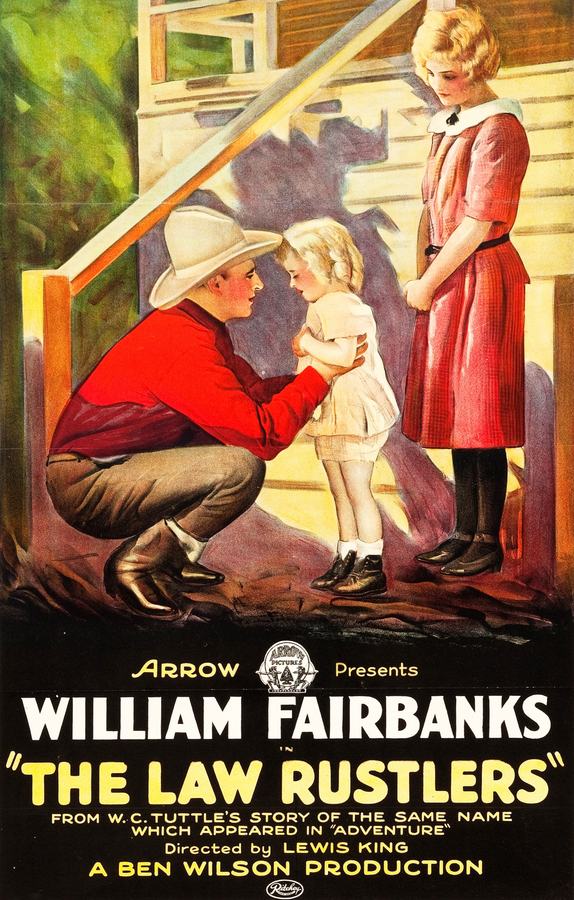
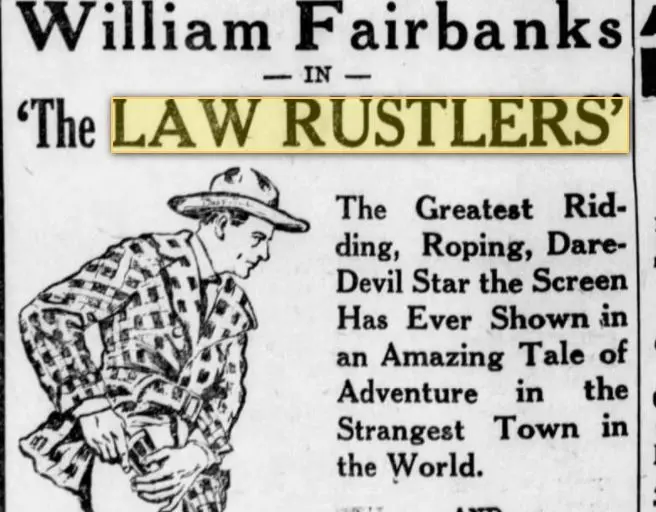
Stepping back into the cinematic landscape of 1923, one encounters a fascinating tapestry of nascent storytelling, where the visual narrative reigned supreme and the power of suggestion often outstripped explicit dialogue. Among these early gems, The Law Rustlers emerges as a quintessential silent Western, a stark portrayal of frontier justice and the perennial struggle against corruption. It isn't merely a historical curiosity; it's a foundational text for understanding the archetypes that would come to define an entire genre. This film, directed by Ben F. Wilson and penned by W.C. Tuttle, plunges us headfirst into a world where law is a malleable concept, often twisted by the unscrupulous, and salvation frequently rests on the shoulders of the stalwart few.
The premise of The Law Rustlers is deceptively simple, yet it unfurls with a compelling moral urgency. We are introduced to Phil Stanley, portrayed with a quiet, resolute strength by William Fairbanks, and his companion, Harry Hartley, brought to life by the ever-reliable Edmond Cobb. Their journey toward the promised land of Alaska is abruptly diverted when they stumble upon a remote settlement. This isn't the idyllic community often envisioned in the pioneering spirit; rather, it's a town held hostage, its very soul corroded by a cabal of ruthless scoundrels. These are not merely petty criminals but the self-appointed leaders, wielding their authority with an iron fist, their decrees born of greed and self-interest rather than any semblance of genuine governance. The film wastes no time in establishing this oppressive atmosphere, painting a vivid, if silent, picture of a populace living under the shadow of arbitrary power.
The immediate response of these corrupt officials to the arrival of Stanley and Hartley is telling: banishment. The outsiders, unburdened by the town's history of intimidation, represent an unpredictable element, a potential disruption to the carefully constructed edifice of control. But our heroes, embodying the rugged individualism and inherent sense of justice so characteristic of the Western mythos, refuse to be cowed. Their defiance is not merely an act of stubbornness; it is a moral imperative, a silent declaration that some lines cannot be crossed. This refusal sets in motion the narrative's central conflict, transforming a simple journey into a crucible for justice. Here, the film echoes the fundamental tension seen in many silent dramas of the era, where individual integrity often clashes with systemic malevolence, albeit with a uniquely American frontier flavor. It’s a far cry from the lighthearted antics of a film like What Next?, which revels in comedic misunderstandings, instead opting for a more serious, almost allegorical, confrontation with the dark side of human nature.
William Fairbanks, as Phil Stanley, delivers a performance that, while typical of the era's leading men, carries a certain gravitas. He is the quintessential strong, silent type, his resolve communicated through his posture, his unwavering gaze, and his decisive actions. In a medium devoid of spoken dialogue, the actor's physical presence and ability to convey emotion through subtle gesture become paramount. Fairbanks excels in projecting an aura of quiet authority, making his defiance against the town's rulers feel earned and authentic. He's not a boisterous hero, but a man of principle, whose actions resonate louder than any words could. This stoicism, a hallmark of many Western protagonists, finds a compelling early expression here, distinguishing him from perhaps more overtly charismatic or comedic figures of the time, such as those found in Three Ages, where physical comedy and grand spectacle take center stage.
Edmond Cobb, as Harry Hartley, provides a crucial counterpoint to Fairbanks's steadfastness. Cobb, a prolific character actor known for his extensive work in Westerns and serials, imbues Hartley with a grounded realism. He’s the loyal companion, the voice of caution, perhaps even the slightly more pragmatic one, whose presence serves to humanize Stanley and anchor the narrative. Their dynamic, though lacking verbal sparring, is clear: a partnership built on trust and shared moral conviction. The silent film era often relied on such clear-cut character dynamics to convey relationships swiftly, and Cobb’s nuanced portrayal ensures Hartley is more than just a background figure.
The true linchpin of the film's resolution, however, is Glory, played with a compelling blend of vulnerability and nascent strength by Ena Gregory. It is Glory, a resident of the oppressed town, who embodies the suffering of the community and acts as the catalyst for meaningful change. Her decision to undertake the perilous journey to summon the sheriff from a neighboring town is the turning point, a testament to her courage and the collective yearning for liberation. Gregory's performance, relying heavily on expressive facial work and purposeful movement, conveys the urgency and desperation of her mission. Her character's agency is particularly noteworthy for the period, moving beyond the passive damsel in distress to become an active participant in her own rescue and that of her community. This empowered portrayal offers an interesting contrast to some female roles in dramas like The Innocence of Lizette or Madame Peacock, where societal constraints or personal tragedies often define the female experience more profoundly than active heroism.
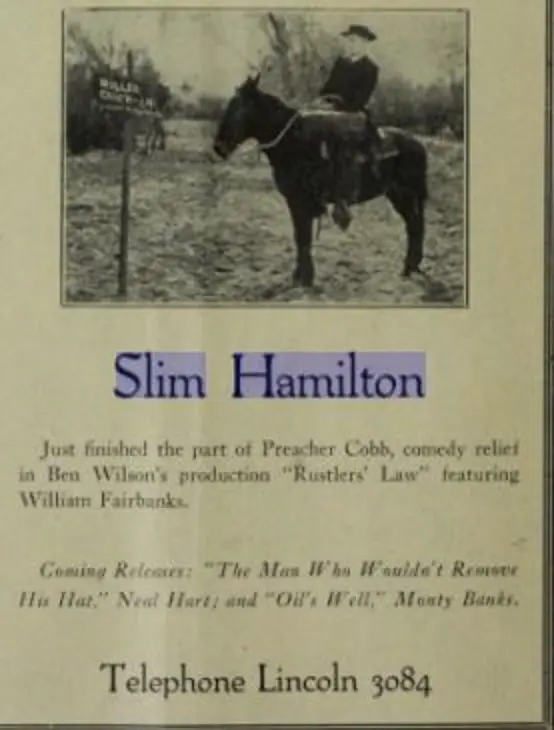
The antagonists, a collective of nefarious figures including those played by Mark Hamilton, Joseph W. Girard, Ashton Dearholt, Wilbur McGaugh, and Claude Payton, are painted with broad strokes, as was common in silent cinema. They are the personification of unchecked power, their villainy conveyed through menacing glares, domineering postures, and the swift, unjust application of their self-proclaimed authority. While perhaps lacking complex motivations, their collective presence effectively establishes the oppressive force against which our heroes must contend. Their portrayal is less about individual psychology and more about embodying the systemic corruption that threatens the frontier ideal, a stark moral conflict similar in its directness to the struggle against a singular, formidable foe in action films like The Red Viper, though here the 'viper' is a multi-headed hydra of local tyranny.
Ben F. Wilson's direction, while adhering to the conventions of early 1920s filmmaking, demonstrates a clear understanding of the genre's demands. The pacing is deliberate, allowing the audience to absorb the visual information and emotional beats without the distraction of dialogue. Wilson skillfully uses wide shots to establish the vast, often desolate landscapes, emphasizing the isolation of the town and the formidable nature of the journey Glory undertakes. Close-ups are employed sparingly but effectively to highlight moments of intense emotion or decision, drawing the viewer into the characters' internal struggles. The action sequences, while not as elaborate as later Westerns, are competently staged, conveying the urgency and danger inherent in a confrontation between armed men.
W.C. Tuttle's screenplay, for its part, is a masterclass in concise narrative. In an era where intertitles carried significant weight, Tuttle crafts a story that is easy to follow, morally unambiguous, and emotionally resonant. The plot unfolds logically, building tension through the initial conflict, the heroes' defiance, Glory's dangerous mission, and the eventual climax. While the characters are archetypal, they serve the story's larger purpose: to champion justice and illustrate the triumph of good over evil. The narrative structure, focusing on a clear goal and a formidable obstacle, is a testament to effective storytelling, a stark contrast to the often more meandering or introspective narratives found in European dramas of the same period, such as A kölcsönkért csecsemök, which might explore familial complexities rather than direct action.
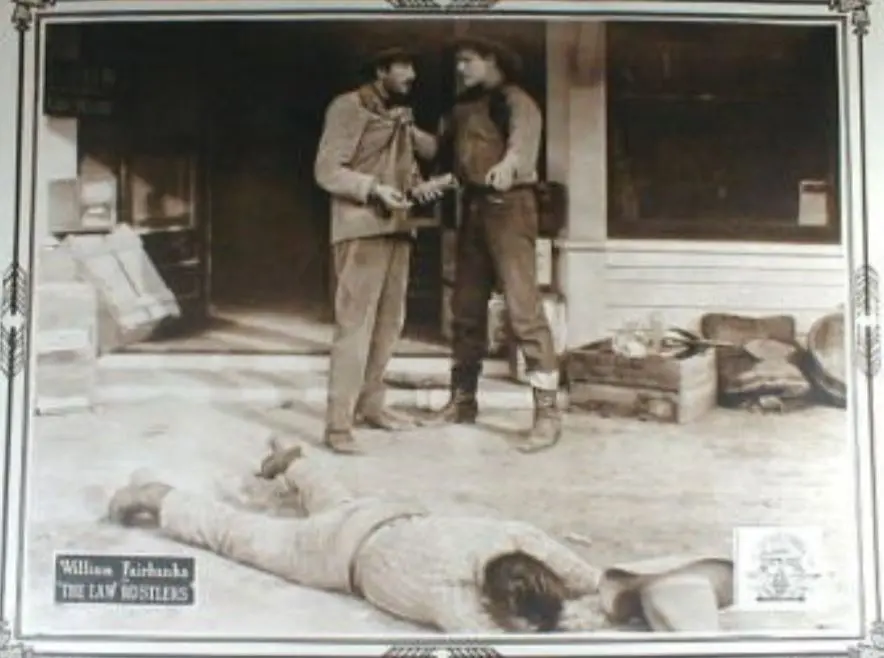
The cinematography of The Law Rustlers, while perhaps not groundbreaking for its time, effectively captures the rugged beauty and inherent dangers of the American West. The dusty streets of the beleaguered town, the expansive horizons, and the stark contrast between civilization and wilderness are all rendered with a functional artistry. The film leverages natural light and practical sets to create an immersive, if somewhat idealized, depiction of the frontier. The visual storytelling extends to the costumes and props, which, though simple, contribute to the authenticity of the setting. The worn hats, the rugged attire, the horses, and the period-appropriate firearms all ground the narrative in its specific time and place. This attention to visual detail was crucial in silent cinema, where every frame had to convey meaning without spoken explanation. The raw, unvarnished look of the film, in its own way, captures a certain truth about the frontier experience, much like the documentary-style capture of an event like the Willard-Dempsey Boxing Contest captures a specific moment in time with its unadorned reality.
The atmosphere cultivated throughout the film oscillates between palpable tension and a glimmer of hope. The initial scenes in the corrupt town are steeped in a sense of foreboding, the silent actors conveying their fear and resentment through their expressions and interactions. This oppressive mood slowly gives way to the urgency of Glory's mission, and finally, the triumphant arrival of the sheriff, bringing with him the promise of order. The film uses these shifts in atmosphere to guide the audience through its moral landscape, making the eventual victory of justice feel earned and satisfying. This carefully constructed emotional journey, relying on visual cues and the audience's empathy, is a hallmark of effective silent film direction.
The Law Rustlers, while not a blockbuster on the scale of a Cecil B. DeMille epic or a Charlie Chaplin comedy, holds its own as a significant entry in the early Western canon. It contributes to the mythos of the American frontier, where individual courage and the collective will of a community could overcome tyranny. It reinforces the themes of self-reliance, the importance of law and order, and the relentless pursuit of justice that would become cornerstones of the genre for decades to come. For film historians and enthusiasts of silent cinema, it offers a valuable glimpse into the formative years of a uniquely American narrative form.
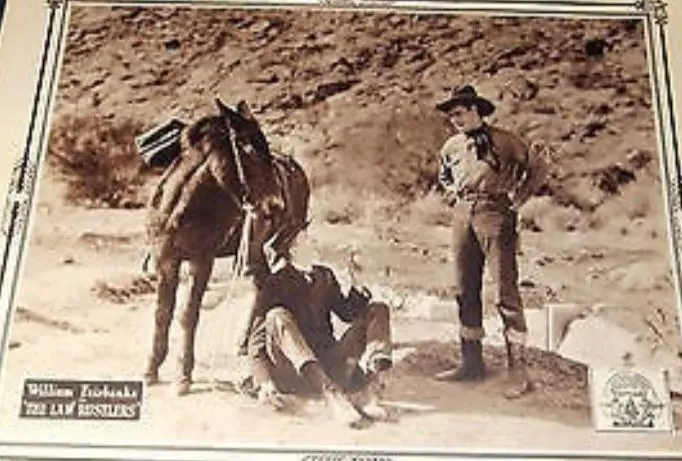
The film's straightforward moral compass and its clear delineation between good and evil are indicative of popular entertainment of the era. Audiences sought escapism and reassurance, and films like The Law Rustlers delivered narratives where virtue was ultimately rewarded. It stands in contrast to more complex social commentaries like The Making of an American, which delved into immigrant experiences, or the intricate human dramas found in The Trufflers, which might have explored more ambiguous moral territories. Instead, The Law Rustlers offers a comforting, if idealized, vision of justice prevailing in a harsh world.
The climax, with the sheriff's timely arrival and the subsequent arrest of the town council, is a satisfying resolution, upholding the narrative promise of justice. It reaffirms the belief that even in the most lawless corners of the frontier, a higher authority can and will eventually prevail. This final act of restoration, rather than being a mere plot device, serves as a powerful thematic statement: that the foundational principles of a just society are resilient, even when challenged by the darkest impulses of human nature. The film, therefore, is not just an adventure story; it's a moral fable, rendered with the expressive power unique to silent cinema.
In conclusion, The Law Rustlers may not possess the grandiosity of a historical epic or the intricate character development of a drawing-room drama, but its significance lies in its honest, unvarnished portrayal of a classic Western conflict. It is a testament to the enduring appeal of simple virtues: courage, justice, and community. For those wishing to understand the bedrock upon which the Western genre was built, or simply to experience a compelling tale from a bygone cinematic era, this film offers a valuable and engaging journey. It reminds us that even without spoken words, the universal language of human struggle and triumph can resonate across nearly a century, proving that a well-told story, regardless of its technological vintage, remains timeless.
IMDb —
1924
Community
Log in to comment.