DbcultAccessing Vault...
6.2/10
Senior Film Conservator
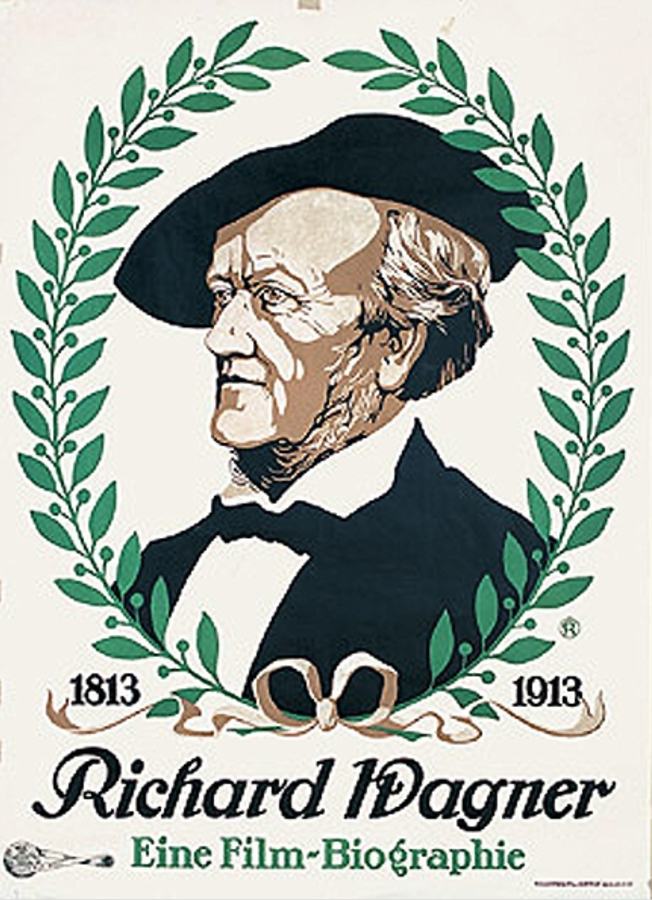
A definitive 6.2/10 rating for a film that redefined the boundaries of cult cinema. The Life of Richard Wagner remains a cornerstone of transgressive art.
Imagine a film that hears colour and sees harmony—a 1913 fever-dream in which the cosmos itself seems to overture.
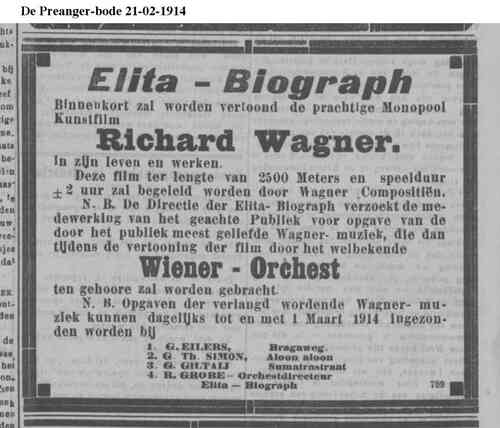
William Wauer’s The Life of Richard Wagner arrives like a missing reel from an alternate history of cinema, one where celluloid was invented not to photograph horses but to trap chord progressions in mid-air. The result is an intoxicating paradox: a silent movie about a man who re-invented the loudness of the world.
Forget linear chronology; Wauer structures the biography as a cyclical prelude and postlude, mirroring the Ring’s own obsession with eternal return. Act I: the child Richard, face smudged with printer’s ink, steals harmonium chords from church sermons—his small hands animated at 16 fps so that every finger twitch becomes a quaver on some cosmic stave. Act II: adolescent rebellion staged inside a candle factory, wax dripping onto manuscript paper like liquid discords. Act III: Parisian squalor rendered through hand-tinted blues that anticipate Les Misérables by two years, the gutters shimmering with absinthe-green light.
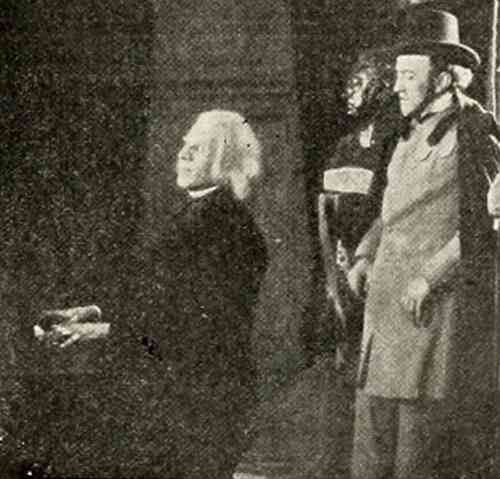
By the time we reach Dresden’s uprising, Wauer abandons montage for musical montage: overlapping dissolves of barricades and ballroom chandeliers, as if history itself can’t decide whether to waltz or revolt. Giuseppe Becce—who not only plays Wagner but also composed the original score—conducts the orchestra pit like a man possessed, his baton a magician’s wand that turns gunpowder into glockenspiel.
Close-ups linger until the face becomes topographical: Becce’s cheekbones ridge like Alpine ranges, nostrils flare like craters of Vesuvius. Olga Engl’s Mathilde drifts through frame in soft-focus nimbus, her veil a sustained high C that refuses to resolve. When the camera finally confronts King Ludwig II—played by Ernst Reicher with porcelain fragility—it tilts upward until chandeliers morph into constellations, suggesting monarchy as cosmic accident.
Shadow work rivals the later expressionism of The Student of Prague. Wagner’s silhouette elongates across palace walls, then splits into multiple selves that argue in dumbshow over key signatures. It’s as if Caligari’s cabinet has been re-purposed into a tuning box.
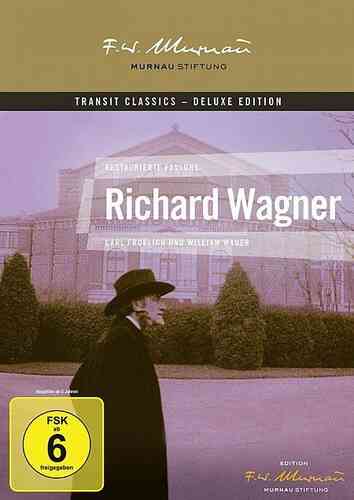
Most silent films use title cards as narrative crutches; here they function like recitative, often rhyming in iambic pentameter. One card, superimposed over a moonlit Lake Lucerne, reads: “I drown in cobalt syllables / where every ripple rhymes with Isolde’s liebestod.” The typography itself swells, letters kern tighter until the word “liebestod” becomes a visual orgasm, ink bleeding off the edge of the frame.
Hand-coloured prints survive in the Bundesarchiv, and they reveal a chromatic code: yellow for artistic inspiration, sea-blue for political peril, dark orange for erotic transgression. When Wagner first hears the diminished seventh that will open Tristan, the screen floods with alternating pulses of orange and blue—an early experiment in op-colour psychology.
Compare this chromatic ambition to the monochrome docility of From the Manger to the Cross (1912) or the pastoral tinting of The English Lake District; Wauer is already pointing toward a cinema where hue carries semantic weight.
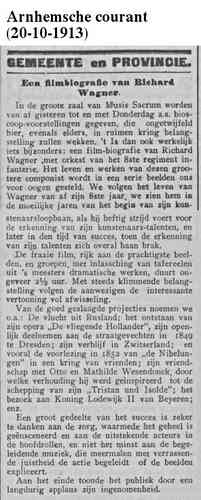
Contemporary exhibitors received a “sound script” instructing orchestra to cease playing during certain scenes, letting ambient projector noise imitate the void Wagner called “the roar of the universe.” Audiences of 1913 reportedly gasped at this negative space, a precursor to John Cage’s 4′33″ by four decades.
Rhythmic cross-cutting foreshadows the contrapuntal montage of Strike (1925). During the Zurich exile, footage of Wagner sketching motifs alternates with Cosima von Bülow (Manny Ziener) reading Schopenhauer, the cadence of edits matching the 5/4 meter of the impending Meistersinger prelude. You don’t just watch the scene; you count it.
Casting Giuseppe Becce—an actual composer who would later score Parsifal (1922)—creates a mise-en-abyme: the performer composing while composing the performer. Becce’s off-screen ambition leaks into his acting; every glower feels autobiographical, every triumphant grin a prophecy of his own later celebrity. The result is uncanny: you sense the man testing chord progressions behind his eyes.
Female characters refuse to remain mere muse-mannequins. Olga Engl’s Mathilde demands narrative space, her letters to Wagner appearing as overlays that literally obscure his orchestral sketches—suggesting erotic inspiration as palimpsest. Cosima’s eventual entrance is shot from a low angle that crowns her the true Sieglinde, while Richard becomes the wanderer condemned to seek her fire.
Context matters: released only a year before the assassination that would ignite the Great War, the film’s obsession with Teutonic myth doubles as nationalist fever dream. Yet Wauer complicates the ideology: Ludwig’s castles appear as bankrupt sand-castles, and the final Bayreuth curtain is torn by a gust of wind, revealing scaffolding—art as fragile propaganda.
Where The Life and Passion of Jesus Christ (1903) sought transcendence through pious tableaux, Wauer pursues immanence through chromatic tremor. Where Napoleon (1927) would later drown history in montage, this 1913 precursor drowns montage in music.
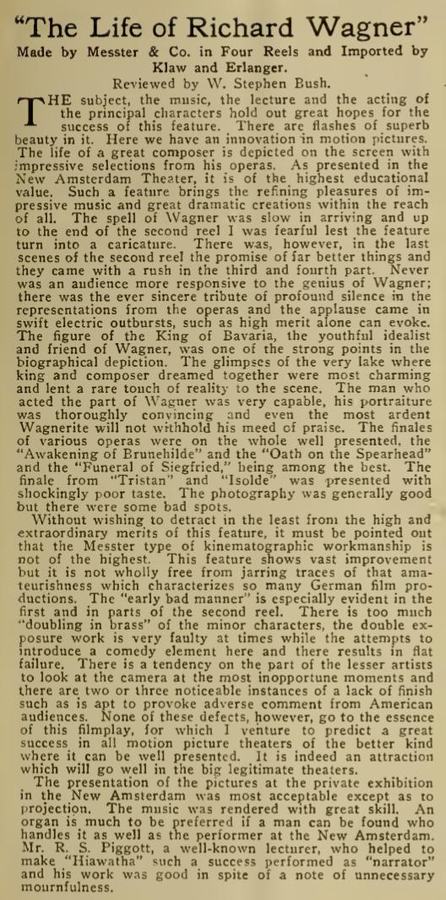
No masterpiece is immaculate. Budget constraints reduce the Dresden riot to a dozen extras bumping into painted flames. The young Wagner’s “travels” are rendered via stock Alpine footage recycled from Germinal. And the make-up department ages Becce by simply powdering his sideburns grey, creating inadvertent comic relief.
Current restorations battle the problem of tint fading: the once-luminous yellow of inspiration now resembles nicotine stain. Digital 4K transfers struggle to replicate the two-colour harmony of orange-blue without simulating modern teal-and-orange cliché. The Bundesarchiv’s decision to include both the 1913 intertitles and 1921 re-release cards—Wauer shortened the runtime after critics found it “too operatic”—creates a branching version that scholars can toggle like alternative cadenzas.
Stream the film today and you’ll detect pre-echoes of Amadeus’s jealous genius trope, of Immortal Beloved’s tormented romantics, even of Whiplash’s blood-on-drumkit sadism. Yet none of those descendants dares the central gamble: to make the audience feel synesthetic, to let eyes taste overture.
Watch it with headphones playing Becce’s reconstructed score, and you’ll swear the digital pixels vibrate at 440 Hz. Watch it in absolute silence, and you’ll still hear the future tuning itself. Imperfect, insurgent, and incandescent, The Life of Richard Wagner is not just a biopic; it is a birth cry of modern culture—an artwork that turns its subject’s arrogant credo, “I am not a musician, I am music,” into flickering, unforgettable light.
—for cinephiles who refuse to separate soundtrack from soul
IMDb —
1928
Community
Log in to comment.