DbcultAccessing Vault...
5.8/10
Senior Film Conservator
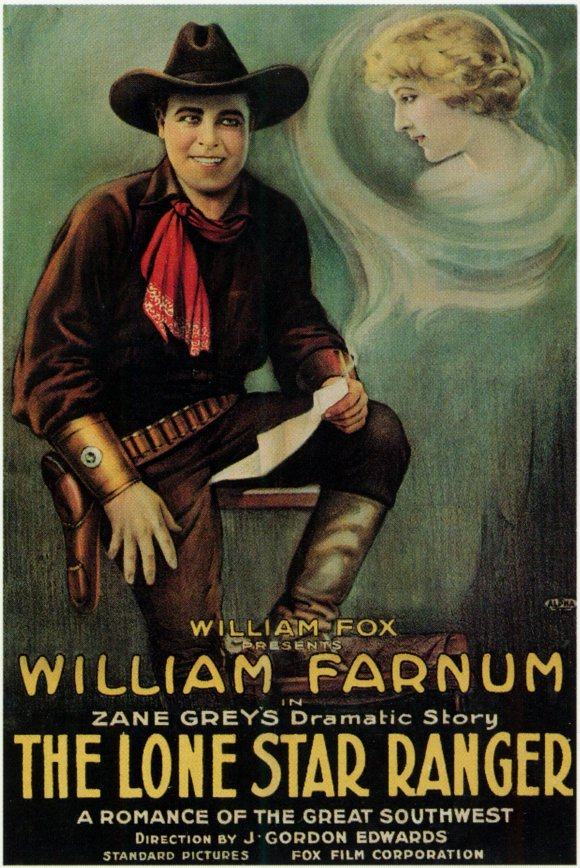
A definitive 5.8/10 rating for a film that redefined the boundaries of cult cinema. The Lone Star Ranger remains a cornerstone of transgressive art.
The Genesis of the Cinematic Western Hero
Before the Western genre became a codified assembly of tropes, films like The Lone Star Ranger (1919) functioned as raw, experimental explorations of American identity. Directed with a rugged sensibility that mirrors the harsh landscapes it portrays, this adaptation of Zane Grey’s seminal work stands as a cornerstone of silent era storytelling. The film does not merely present a tale of good versus evil; it examines the heavy psychological toll of the badge and the gun. William Farnum, an actor of immense physical presence and emotive gravitas, portrays Steele not as an invincible titan, but as a man haunted by the ghost of his murdered friend, Captain Neil. This sense of personal stakes elevates the film above the standard procedural dramas of its time, such as the more serialized The Red Ace, providing a prototype for the brooding protagonists that would later define the noir-inflected Westerns of the 1940s.
A Visual Language of Dust and Shadow
The cinematography in this 1919 production utilizes the natural illumination of the Texas-Mexico border to create a sense of stark realism. Unlike the stylized, almost theatrical interiors found in European dramas like Die Frau mit den Karfunkelsteinen, the visual palette here is one of grit and expansive horizons. The camera lingers on the isolation of the ranch, emphasizing the distance between the characters and the reach of formal law. This isolation is crucial to the narrative tension; when Steele enters the Longstreth domain in disguise, the visual framing often places him in the shadows, a literal and metaphorical outsider looking into a fractured family dynamic. The use of deep focus, albeit primitive compared to later decades, allows for a secondary layer of storytelling where the threat of the rustlers is always looming in the background of seemingly peaceful domestic scenes.
The Duality of Cyrus Longstreth
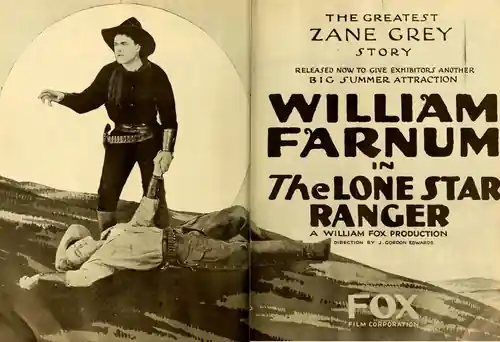
Perhaps the most compelling element of the script by Charles Kenyon is the characterization of Cyrus Longstreth. Played with a nuanced blend of paternal warmth and existential dread by Charles Clary, Longstreth represents the moral ambiguity of the frontier. He is a man who built an empire on blood and theft but finds himself yearning for the respectability that his daughter, Ray, represents. This conflict—the desire to shed a criminal past in favor of a legacy of honor—is a recurring motif in Zane Grey’s oeuvre. While contemporary films like The Men She Married focused on the social scandals of the urban elite, The Lone Star Ranger grounds its drama in the primal struggle for land and survival. Longstreth’s victimization by his own subordinates, Lawson and Brome, serves as a cautionary tale about the impossibility of controlling the chaotic forces one unleashes for profit.
Ray Longstreth and the Feminine Influence
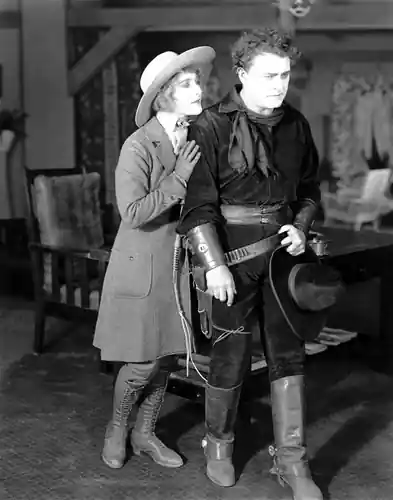
Louise Lovely’s portrayal of Ray Longstreth is far more than the standard 'damsel in distress' trope often found in silent cinema. Her return from the East acts as the catalyst for the film's moral realignment. She is the embodiment of civilization and moral clarity, her presence alone forcing her father to confront the ugliness of his rustling operations. The chemistry between Lovely and Farnum is palpable, built not on grand romantic gestures but on shared moments of vulnerability. Steele’s promise to Ray—that he will spare her father—is the pivotal moment where the lawman’s rigid code of ethics is softened by human empathy. This shift from a purely retributive justice to a more restorative one marks a significant evolution in the Western hero's psyche, contrasting with the more rigid moral structures seen in films like The Yellow Dog.
The Antagonist as a Mirror
Jeff Lawson, portrayed by G. Raymond Nye, serves as the dark mirror to Steele. Both men are defined by their skill with a firearm and their attraction to Ray, but while Steele uses his prowess to uphold a fragile order, Lawson uses his to maintain a reign of terror. The blackmailing of Longstreth by Lawson and Bully Brome adds a layer of noir-ish intrigue to the plot, suggesting that the greatest threats to the frontier are not the external 'renegades' but the internal rot of greed and ambition. The rivalry between Steele and Lawson is expertly paced, building toward a final duel that is both inevitable and cathartic. Unlike the melodramatic resolutions of Maman poupée or the existential despair of Destiny: or, the Soul of a Woman, the climax here is a decisive, violent affirmation of the Ranger’s purpose.
Technical Mastery and Pacing
For a film produced in 1919, the editing is remarkably sophisticated. The intercutting between Steele’s undercover investigations and the rustlers' machinations creates a propulsive rhythm that keeps the audience engaged throughout its runtime. The action sequences, particularly the rescue of Ray and the final rout of the gang, exhibit a level of stunt work and choreography that was cutting-edge for the era. The production values reflect Fox’s commitment to the Western as a prestige genre, a commitment that would pave the way for the epic sweeps of the 1920s. While some might find the pacing slower than modern blockbusters, there is a deliberate intentionality to every frame. The film takes its time to establish the atmosphere of the borderlands, making the eventual explosions of violence feel earned rather than gratuitous, a quality often missing in more frantic contemporary works like The Broadway Sport.
The Cultural Context of 1919
To fully appreciate The Lone Star Ranger, one must consider the historical moment of its release. The United States was emerging from the shadows of World War I, and there was a palpable national hunger for stories of rugged individualism and the restoration of order. The Texas Ranger, as a figure, represented a uniquely American form of heroism—one that was autonomous, skilled, and deeply rooted in the land. This film tapped into that zeitgeist, offering a vision of justice that was both personal and institutional. It provides a fascinating contrast to international cinema of the same year, such as the Japanese-themed Die Japanerin or the Hungarian Drótostót, which were grappling with their own cultural identities in a rapidly changing world. Steele’s journey from a vengeful friend to a married protector of the peace mirrors the nation’s own desire to transition from wartime conflict to domestic stability.
Legacy and Final Thoughts
Ultimately, The Lone Star Ranger is more than just a relic of the silent era; it is a vital piece of cinematic history that continues to resonate. The themes of loyalty, the burden of the past, and the possibility of redemption are universal, transcending the specificities of its 1919 production. William Farnum’s performance remains a masterclass in silent acting, conveying a complex internal world through subtle shifts in posture and expression. The film’s influence can be seen in every Western that followed, from the works of John Ford to the revisionist takes of the 1970s. It stands alongside other significant films of the period, like Più forte del destino or The Boomerang, as a testament to the power of early cinema to capture the human condition. Whether viewed as a thrilling adventure or a serious character study, this Zane Grey adaptation remains an essential experience for any serious cinephile. It is a reminder that while the technology of filmmaking has evolved, the core elements of a great story—conflict, character, and a sense of place—are timeless.
The final image of Steele and Ray leaving the town together is not just a 'happy ending' in the traditional sense; it is a symbolic departure from the violence of the frontier toward a future built on the foundations of the law Steele fought to uphold. It is a moment of hard-won peace that feels entirely justified by the trials they endured. For those who wish to explore the roots of the American myth, The Lone Star Ranger is an indispensable map of the territory, much like how Cuauhtémoc or A Friend of the People map their own respective cultural terrains. It remains a towering achievement in the career of William Farnum and a definitive high point for the early Western genre.
IMDb —
1931
Community
Log in to comment.