DbcultAccessing Vault...
6.6/10
Senior Film Conservator
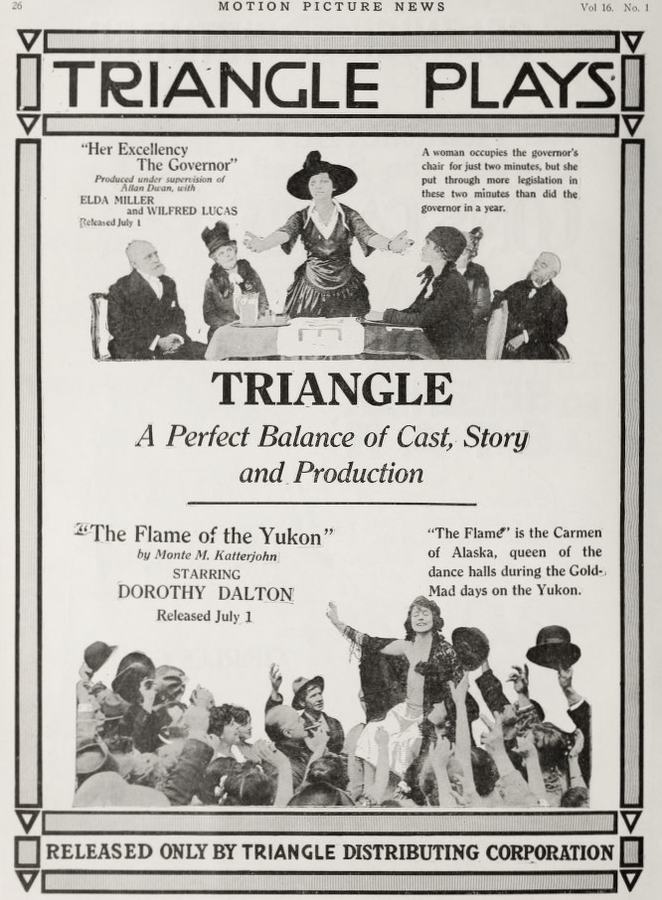
A definitive 6.6/10 rating for a film that redefined the boundaries of cult cinema. Her Excellency, the Governor remains a cornerstone of transgressive art.
In the cinematic landscape of 1917, a year defined by global upheaval and the burgeoning consciousness of the American electorate, Her Excellency, the Governor emerges as a startlingly prescient artifact. Directed with a keen eye for the claustrophobic nature of political backrooms, the film dissects the corrosive influence of party 'machines'—those Byzantine networks of patronage and corruption that dominated the era. At its heart, the film is not merely a political procedural but a psychological battleground between the convenience of power and the burden of integrity.
The protagonist, James Barclay (Regan Hughston), is a man whose soul is caught in a slow-motion collapse. His election is a hollow victory, a gift from a political boss whose strings are tied tightly around Barclay’s wrists. This dynamic serves as a chilling precursor to the themes we see in later works like The Stolen Play, where the theft of agency is central to the tragedy. Barclay is a man of potential, yet his ambition acts as a blindfold, preventing him from seeing the human cost of his obsequiousness.
Hedda Hopper, long before she became the feared doyenne of Hollywood gossip, delivers a performance of remarkable gravitas as Sylvia Marlowe. Marlowe is the film’s moral north star. In an era where female characters were often relegated to the roles of ingenue or victim—much like the fragile archetypes in De forældreløse—Sylvia is a beacon of jurisprudential steel. She is a lawyer who understands that the law is not a static set of rules but a living tool for social evolution.
Her refusal to marry Barclay is the film’s first major subversion of genre expectations. It is a rejection of the 'trophy wife' destiny, a statement that personal happiness cannot be built upon a foundation of ethical compromise. When Barclay vetoes the child labor bill, a moment that mirrors the social struggles depicted in Proletardrengen, Sylvia realizes that to change the system, she must enter its gears. Her run for Lieutenant Governor is portrayed not as a whim, but as a tactical necessity.
The middle act of the film shifts from domestic policy to international intrigue, reflecting the anxieties of 1917 America. The introduction of a German agent who buys off the local political boss adds a layer of existential threat to the proceedings. The boss’s attempt to kill an army appropriation bill is the ultimate test for Barclay. Here, the film explores the concept of the 'pushed man'—a character who, like the protagonist in The Bruiser, must decide if he is a man or merely a muscle for hire.
Barclay’s cowardice in this moment is palpable. He is paralyzed by the very machine that built him. It is a fascinating study in the psychology of the 'machine politician'—a figure who is so used to taking orders that the concept of independent action feels like a form of vertigo. The film cleverly contrasts his inertia with Sylvia’s kinetic energy. She doesn't just wait for him to do the right thing; she engineers the circumstances that make the right thing possible.
The climax of Her Excellency, the Governor is a masterclass in legislative suspense. Sylvia’s plan to have Barclay leave the state so she can assume executive powers is a stroke of narrative genius. It bypasses the need for a traditional confrontation, opting instead for a 'legal ambush.' This sequence is handled with a sophistication that rivals the dramatic tension found in Jim the Penman, focusing on the power of the signature and the weight of the seal of office.
“The act of signing the bill is not just a legislative victory; it is Sylvia’s declaration of independence from the patriarchal political structures that sought to contain her.”
When Barclay returns, his initial fury is a vestigial reaction of his bruised ego. However, the film avoids a simplistic ending. His reconciliation with Sylvia is not a surrender of his masculinity, but an evolution of his character. He finally sees the 'governor' in her, and more importantly, he sees the man he could become if he follows her lead. This redemption arc is far more satisfying than the darker transformations seen in Das Bildnis des Dorian Gray, offering a glimmer of hope for the American political soul.
Visually, the film utilizes the static camera of the 1910s to create a sense of formal dignity. The interiors of the governor’s mansion are shot with a focus on depth, emphasizing the distance between Barclay and Marlowe. The lighting, while primitive by modern standards, effectively uses shadows during the clandestine meetings between the political boss and the German agent, creating a noir-ish atmosphere long before 'noir' was a defined term. This visual language of secrecy is also present in Under Kærlighedens Aag, where the visual environment reflects the moral constraints of the characters.
The writing by Robert Shirley deserves immense credit for its pacing. In an era where many films suffered from 'stagey' dialogue titles, the intertitles here are sharp and purposeful. They don't just explain the plot; they reveal character. The dialogue between Sylvia and the political boss is particularly biting, showcasing a woman who is intellectually superior to her male counterparts and isn't afraid to let them know it. This level of sharp-witted female characterization is a refreshing change from the more whimsical tones of Pretty Mrs. Smith or Susie Snowflake.
When we compare Her Excellency, the Governor to contemporary films like Husband and Wife, the distinction lies in the stakes. While the latter focuses on the domestic sphere, the former elevates the domestic conflict to a matter of national security. The 'husband and wife' dynamic here is filtered through the lens of the state, making their personal reconciliation a metaphor for political healing. Furthermore, the film’s exploration of betrayal and the subsequent search for justice echoes the themes of The Avenging Trail, though Sylvia’s 'vengeance' is enacted through the law rather than the gun.
Even in the more fantastical or comedic realms of 1917, such as The Royal Imposter or The Merry Jail, we see a recurring fascination with roles and masks. Barclay wears the mask of a leader while being a follower; Sylvia wears the mask of a subordinate while being a leader. The film’s brilliance lies in the moment these masks are discarded, revealing the true nature of their wearers. It avoids the cynicism of A Suspicious Wife, opting instead for a vision of partnership based on mutual respect and shared ethical standards.
Her Excellency, the Governor stands as a testament to the power of political cinema to reflect and shape the values of its time. It is a film that refuses to settle for easy answers, acknowledging the complexity of the 'machine' while insisting on the possibility of individual agency. Hedda Hopper’s Sylvia Marlowe remains one of the most compelling female figures of the silent era—a woman who didn't just want a seat at the table, but the power to change what was being served.
For the modern viewer, the film offers a fascinating glimpse into a world where the battles for child labor laws and national defense were fought with the same fervor as today’s political debates. It reminds us that the struggle between the 'machine' and the 'conscience' is a perennial one, and that sometimes, the only way to save the governor is to become the governor. This is a must-watch for anyone interested in the history of feminist cinema or the evolution of the political thriller. It is as robust and relevant today as it was over a century ago.

IMDb 6.1
1926
Community
Log in to comment.