DbcultAccessing Vault...
Cult Review
Senior Film Conservator
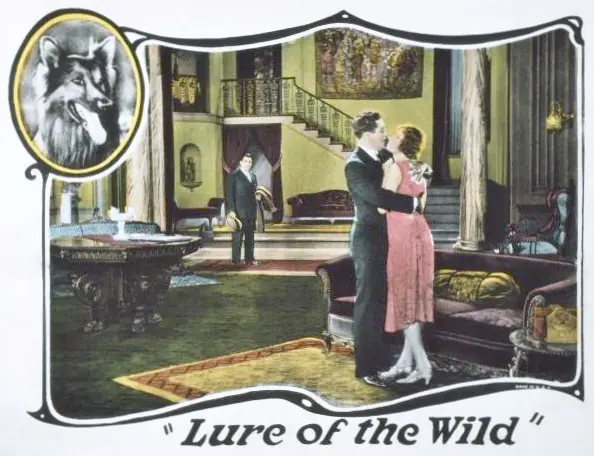
The 1920s represented a peculiar crossroads for American cinema, an era where the burgeoning sophistication of narrative structure began to clash—and harmonize—with the raw, untamed aesthetics of the 'Northwestern' genre. The Lure of the Wild (1925) stands as a quintessential artifact of this period, a film that utilizes the vast, indifferent expanses of the Canadian wilderness as a mirror for the turbulent internal landscapes of its protagonists. Unlike the urban-centric dramas of its time, such as The Common Law, which focused on the rigid social stratifications of high society, this production strips humanity down to its most primal components: fear, fidelity, and the instinctual drive for protection.
The film opens with a sequence that feels almost claustrophobic in its domestic intensity. Jim Belmont, played with a simmering, tragic vulnerability by Alan Roscoe, is not a villain, but a victim of his own inability to perceive truth through the fog of jealousy. This psychological anchor is crucial. It differentiates the film from more simplistic outdoor adventures. The suspicion of Agnes’s infidelity with Gordon Daniels (the oily Richard Tucker) is the catalyst that drives the narrative into the wild, suggesting that the 'wild' is not merely a geographic location, but a state of mind born from broken trust.
When Jim flees with Cuddles (Billie Jeane Phelps), the cinematography shifts. The frame expands to capture the daunting scale of the North. Here, the film shares a spiritual kinship with The Belgian, where the environment serves as an active participant in the characters' suffering. The wilderness is not merely a backdrop; it is an antagonist, a judge, and eventually, a sanctuary. The transition from the soft-focus interiors of the city to the sharp, high-contrast vistas of the forest marks the transition from social artifice to existential reality.
One cannot discuss The Lure of the Wild without acknowledging the profound performance of Lightning the Dog. In an era where animal actors were often relegated to mere spectacle or comic relief, Lightning provides a performance of remarkable gravitas. As Shep, he carries the moral weight of the film. When Jim falls to Murdock’s treachery, the dog’s transition from pet to protector is handled with a lack of sentimentality that is refreshing even by modern standards.
The sequence where Shep leads the young Cuddles to Poleon Dufresne’s cabin is a masterclass in pacing. There is a palpable sense of stakes that rivals the urban mysteries found in Mysteries of Paris. Shep’s intelligence is framed not as a magical attribute, but as a byproduct of a symbiotic relationship with the land—a stark contrast to the human characters who are constantly betrayed by their own intellect and emotions. This 'noble beast' trope is explored with far more nuance here than in contemporary works like The Shrine of Happiness, where domesticity is often portrayed as an easy, almost effortless achievement.
Jane Novak’s Agnes is a character of immense fortitude. In the mid-1920s, many films, such as A Woman of No Importance, dealt with the social ruin of women accused of impropriety. The Lure of the Wild, however, chooses a different path. Agnes is not a tragic figure seeking redemption; she is an innocent woman seeking justice. Her journey into the wilderness to find her child is a rejection of the patriarchal judgment that sent her husband into exile. Novak plays the role with a steeliness that belies the 'damsel' archetype often found in films like Sweet Kitty Bellairs.
Her arrival at Poleon’s cabin brings the film’s disparate elements into a singular focus. The chemistry between Novak and Mario Carillo (Poleon) is understated, built on mutual respect for the harshness of their surroundings rather than the flighty romanticism seen in The Emotional Miss Vaughn. This groundedness makes the eventual union of Agnes and Poleon feel earned, a necessary consolidation of strength against the encroaching darkness of Daniels’ obsession.
Richard Tucker’s Gordon Daniels is a villain of the most insidious sort—a man whose malice is fueled by ego rather than necessity. His pursuit of Agnes into the North is the ultimate act of hubris. He believes that his wealth and cunning, which served him so well in the city, will protect him in the wild. This thematic clash—the corruption of the city versus the purity of the wilderness—is a recurring motif in 1920s cinema, also glimpsed in The Bigamist.
The climax of the film, featuring the confrontation between Daniels and Shep, is a stunning piece of action choreography. As Shep drives Daniels off a cliff, the film provides a visceral catharsis. It is a moment of natural justice that transcends human law. The death of the antagonist is not a murder, but a purging. The cliffside, a liminal space between the earth and the abyss, serves as the perfect setting for the final erasure of the urban rot that Daniels represents. This resolution is far more satisfying than the contrived happy endings often found in lighter fare like The Golf Bug or the whimsical Engelein.
From a technical perspective, the film excels in its use of natural lighting. The way the sun filters through the dense canopy of the Canadian woods creates a dappled, dreamlike quality that heightens the tension during the film’s more suspenseful moments. The editing, handled with a keen eye for rhythmic builds, ensures that the film never drags, a common pitfall for many silents of this duration. It lacks the surrealist flourishes of Az egyhuszasos lány, but it makes up for it with a steadfast commitment to realism.
The interplay between the child actor Billie Jeane Phelps and the dog is particularly noteworthy. There is a genuine bond visible on screen that cannot be faked, providing the film with its emotional heartbeat. While films like The Gaiety Girl relied on spectacle and charm, The Lure of the Wild relies on the visceral connection between its characters and their environment. Even the more occult-tinged dramas like Voodoo Vengeance or the high-stakes trials of The Crucial Test struggle to match the sheer, unadorned power of the film’s final act.
Ultimately, The Lure of the Wild is a testament to the power of silent storytelling. It manages to convey complex themes of fidelity, vengeance, and the redemptive power of nature without a single word of spoken dialogue. It is a film that demands to be watched not as a relic of a bygone era, but as a living, breathing piece of art that still has much to say about the human condition. The final image of the new family unit—Agnes, Poleon, Cuddles, and the ever-watchful Shep—is a poignant reminder that while the 'lure of the wild' can lead to tragedy, it can also provide the foundation for a life built on truth and resilience.

IMDb 7
1933
Community
Log in to comment.