DbcultAccessing Vault...
Cult Review
Senior Film Conservator
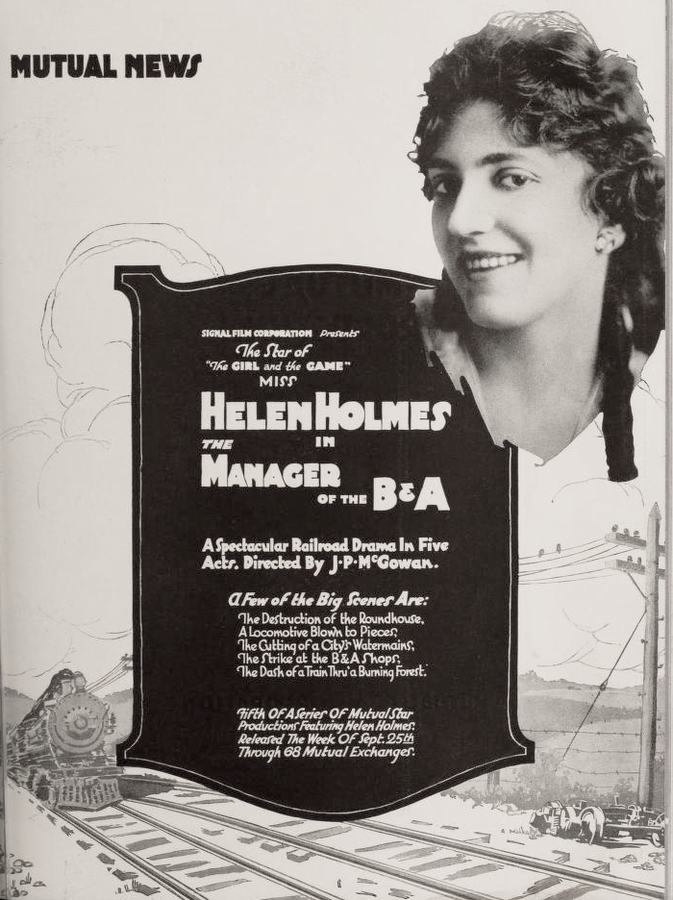
In the nascent years of American cinema, the railroad was more than a mere mode of transportation; it was the pulsing artery of a nation’s ambition. The Manager of the B & A, directed with a keen eye for industrial grit, serves as a quintessential artifact of this era. It is a film that doesn't merely depict a story but captures the friction between the old world of complacent bureaucracy and the new world of relentless mechanical progress. While modern audiences might find the silent medium restrictive, there is a visceral kineticism here that transcends the lack of spoken dialogue.
The film opens with a sequence that establishes the stultifying atmosphere of the Buckhorn and Antioch branch under Thomas Emory. Emory represents the vestigial remains of a pre-industrial mindset—one where 'negligence in office' is not just a personal failing but a systemic rot. When General Corning, the president of the B & A, arrives like a deus ex machina on his private train, the contrast between the high-level corporate hierarchy and the local operational failure is palpable. Unlike the revolutionary fervor seen in Sergei Eisenstein’s Strike, which focuses on the collective power of the proletariat, this film centers on the individualistic meritocracy that would come to define the American Dream.
Dan Oakley, played with a rugged sincerity by the cast, is the antithesis of the 'shiftless' regime. He is a man of the earth and the engine, a 'minor superintendent' whose worth is proven through action rather than lineage or paperwork. His promotion over the head of Gordon Holt is the catalyst for the film’s central conflict. It is a classic narrative trope—the outsider disrupting the status quo—but here it is infused with the genuine anxiety of a changing workforce. Oakley’s introduction of 'new blood' and the elimination of 'banker’s hours' is a direct assault on the comfortable mediocrity of the town of Antioch.
One of the most fascinating aspects of The Manager of the B & A is its portrayal of the media and labor relations. Griffith Ryden, the leader of the Labor Party, and the editor of the Antioch Herald serve as the primary antagonists, yet their motivations are rooted in a recognizable social reality. They represent the resistance to the dehumanizing pace of industrial efficiency. While the film clearly sides with Oakley’s 'making it pay' philosophy, it doesn't entirely shy away from the 'hunger and dissatisfaction' that follow a strike. This nuanced tension reminds one of the social dramas explored in The Master of the House, where domestic and professional spheres collide with devastating emotional weight.
The strike itself is not merely a background event but the crucible in which the characters' true natures are forged. The 'personal bitterness' between Ryden and Oakley is exacerbated by the presence of Constance Emory. Helen Holmes, who portrays Constance, brings a level of complexity to the role that was often missing in the 'damsel in distress' archetypes of the 1910s. Constance is the bridge between the old regime and the new, her sympathies swaying with the winds of her father’s influence and her own growing admiration for Oakley’s fortitude. This romantic triangle elevates the film from a dry industrial procedural to a human drama with genuine stakes.
Where The Manager of the B & A truly distinguishes itself is in its climactic sequences. The silent era was defined by its willingness to perform genuine, life-threatening stunts, and this film is no exception. The cutting of the water pipes, leading to the explosion of an over-heated engine boiler, is a masterclass in early practical effects. The sheer scale of the destruction provides a visual punctuation to the narrative's mounting pressure. It is a moment of pure cinematic catharsis, reminiscent of the high-stakes peril found in The Adventures of Kathlyn or the frantic escapes in Bushranger's Ransom, or A Ride for Life.
However, the piece de resistance is the journey through the 'roaring forest fire.' The imagery of a 'puny train' being licked by 'tongues of flame' is not just a metaphor for Oakley’s struggle against the town’s enmity; it is a stunning technical achievement. Filming such a sequence in 1914 required a level of bravery and logistical planning that modern CGI-heavy productions often lack. As Oakley drives the locomotive through the inferno to fetch aid, the screen practically radiates heat. This is cinema at its most primal—man against nature, machine against the elements. It provides a level of immersion that rivals the atmospheric tension of The Strangler's Grip.
It would be remiss not to mention the significance of Helen Holmes in this production. As one of the early 'serial queens,' Holmes was known for her athletic prowess and her ability to handle herself in dangerous situations. While The Manager of the B & A positions Oakley as the primary hero, Holmes’s Constance is far from a passive observer. Her presence on the screen commands attention, and her eventual promise to become Oakley’s 'partner for life' feels less like a surrender and more like a merger of equals. Her influence on the genre can be seen in other works of the time, such as The Yankee Girl, which similarly explores the agency of women in high-stakes environments.
Looking back at The Manager of the B & A, one can see the seeds of the modern corporate thriller. It deals with themes that are still relevant today: the disruption of industry by technology, the volatility of labor relations, and the role of the individual in a massive corporate machine. The film’s resolution, while perhaps overly neat by today's standards, offers a satisfying conclusion to the chaotic energy it unleashes. Oakley wins not just through his physical bravery, but through his unwavering commitment to his work—a sentiment that echoed the burgeoning American industrialism of the early 20th century.
When compared to the more abstract or philosophical works of the era, such as The Book of Nature or the dark psychological depths of The Devil, The Manager of the B & A stands out for its groundedness. It is a film of iron, steam, and sweat. It doesn't ask the audience to contemplate the mysteries of the universe; it asks them to respect the man who keeps the trains running on time. This pragmatic focus makes it an essential watch for anyone interested in the history of labor on film or the evolution of the action hero.
In the grand tapestry of silent cinema, The Manager of the B & A may not have the surrealist flair of Dämon und Mensch or the high-society intrigue of The Woman in the Case, but it possesses a raw, unvarnished power. It is a testament to the era's ability to turn the mundane realities of the workplace into a theater of life and death. The film’s legacy is found in every subsequent movie that pits a principled protagonist against a corrupt or complacent system. It is a reminder that even in a world of silence, the roar of an engine and the crackle of a forest fire can speak volumes about the human spirit.
Whether you are a historian of the railroad or a connoisseur of early action cinema, this film offers a wealth of material to analyze. From its portrayal of 'shiftless work' to its high-octane finale, The Manager of the B & A remains a compelling journey. It captures a moment in time when the future was being forged in the heat of a boiler, and the only way to move forward was to drive straight through the fire.
IMDb —
1921
Community
Log in to comment.