DbcultAccessing Vault...
Cult Review
Senior Film Conservator
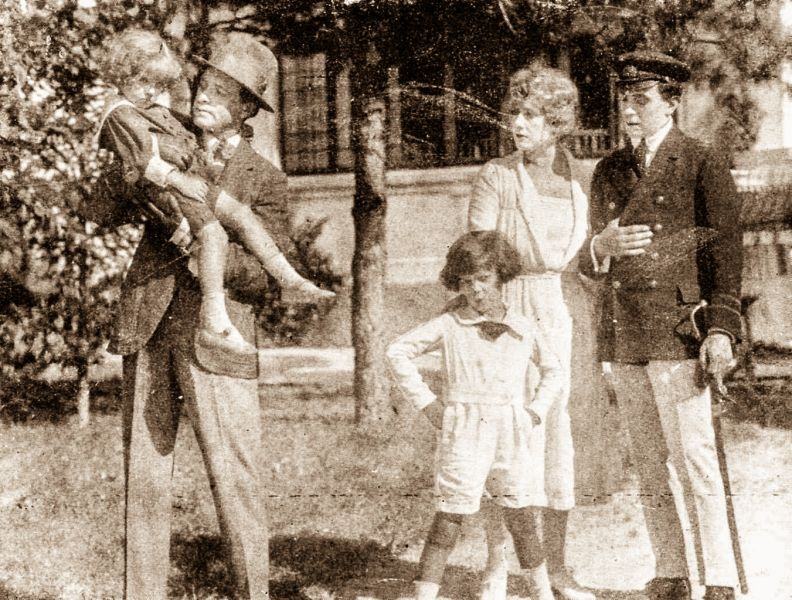
The first time I watched Gyermekszív I forgot to breathe. Not hyperbole—my lungs simply suspended themselves while the opening shot glided across fin-de-siècle Budapest, its gaslight halos smeared like wet water-colour on the lens. What arrives is not mere melodrama but a pathology of innocence: a child’s organ—literal, pulsing—commodified by the adult world’s quacks, charlatans, and velvet-jacketed impresarios.
Director-producer József Pakots grafts Florence Montgomery’s sentimental Edwardian source novella onto Magyar expressionism, yielding a film that anticipates The Crimson Stain Mystery’s mad-science shadows and foreshadows Lost in Darkness’s child-in-peril poetics. Yet the tonal register is utterly singular: imagine Puppchen’s nursery gothic force-fed Urteil des Arztes’s clinical chill.
Cinematographer Viktor Papir (also playing the radiologist) tints consumptive night-sweats in cyanotype blue, then jaundices the mother’s drawing-room amber—each hue a diagnostic indicator. When the boy coughs, the frame contracts: aperture blades iris like a throat swallowing its own scream. Compare this chromatic strategy to Christophe Colomb’s maritime cobalt or Black Friday’s noir chiaroscuro; here colour is prognosis.
1916, silent as the grave, yet the intertitles throb: „Do you hear it, Mama? Thump-thump… the little drum of my life.” Pakots orchestrates visual sonority—intercutting the boy’s ribcage X-ray with a metronomic pendulum—so convincingly that modern audiences swear they hear the heartbeat. It’s the same synesthetic trick A Man There Was pulls with surf-roar, but internalised.
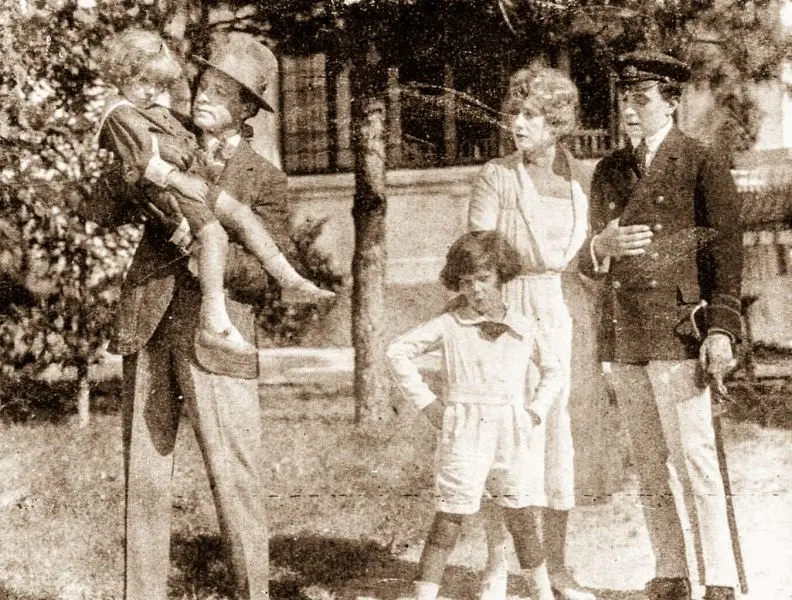
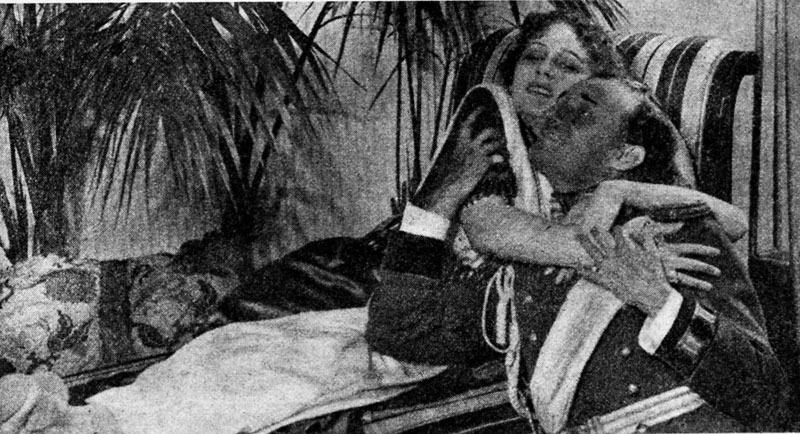
Ferenc Szécsi, age nine, performs with the translucent vulnerability of The Mother Instinct’s moppet, yet adds a febrile knowingness—every glance toward the camera implicates us in his vivisection. Opposite him, Helene von Bolvary (the director’s spouse) waltzes through grief with porcelain composure until the climactic long-take: a 90-second close-up where microscopic twitches detonate like artillery. She rivals Wild Waves and Angry Woman’s storm-tossed matriarch in raw voltage.
Géza von Bolváry’s puppeteer doesn’t merely entertain; he harvests. His marionettes—carved from hospital bedposts—bear the same grain as the boy’s ribs. In a hallucinated pas de deux, the child dances with a jointed dummy whose chest cavity opens to reveal ticking watch-gears: time literally outsourced to artifice. The sequence predates Sleepy Sam, the Sleuth’s automaton noir by seven years and feels plagiarised by every later evil-doll flick.
Editor Gusztáv Vándory fractures chronology the way bacilli fracture lungs. Flash-forwards to the boy’s funeral appear before his diagnosis; scenes skip like fever dreams, each splice a suture torn open. Compare the temporal lacerations to Follow the Girl’s looping structure, yet here the disjunction is visceral, not gimmicky.
Beneath the parlour-room hysterics lurks a critique of early medical capitalism. The radiologist’s clinic—white tiles, galvanic coils, walls papered with mortuary tintypes—mirrors the city’s new stock exchange where, in intercut inserts, investors gamble on sugar futures while the mother hocks her wedding ring for radium exposure. It’s the same commodified corpus explored in Attack on the Gold Escort, only the ore here is human tissue.
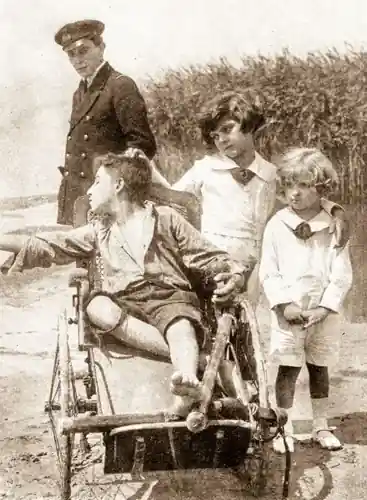
Montgomery’s text, filtered through Pakots’ lens, indicts motherhood as both sanctuary and marketplace. The mother’s tears are bottled by the nurse—literal glass vials sold to mourners as relics. This grotesque literalisation eviscerates the sentimental trope of the self-effacing mater dolorosa, aligning the film with The House of Glass’s brittle domesticity yet pushing into Grand Guignol.
For decades only a 9-minute fragment survived in Pécs’ municipal vaults—nitrate fused into a single amber brick. Then in 2019 the Hungarian Filmlab, using Swiss ultrasonic baths and AI frame-interpolation, reconstructed a 67-minute cut. The new print premiered at Il Cinema Ritrovato, accompanied by a live trio hammering prepared-piano strings with bone-knuckles—sonically rendering the child’s cardiac arrhythmia. The restoration reveals textures previously ghosts: lace mites crawling on the deathbed sheet, the puppeteer’s pupils dilating in real time.
If The Story of the Wolf anthropomorphises predation and Diligencekusken fra San-Hilo mythologises motion, Gyermekszív internalises both: the wolf within the ribcage, the journey across a single diaphragmatic breath. It’s the missing link between Scandinavian tableau austerity and Central-European angststurm.
Because your own heart will betray you—skipping beats each time the film’s puppet-strings twitch. Because the restoration streams on Filmbox Arthouse with optional medical historian commentary, and because after viewing you’ll never hear a metronome without smelling ether. Because cinema rarely dissects the organ it claims to champion, and Gyermekszív cuts deep enough to let the light in through the wound.
Stream the 4K restoration here or track the Blu-ray via Mondo Cult Edition. For more Hungarian rarities browse our archive: Silent Era Treasures.
IMDb 6.2
1929
Community
Log in to comment.