DbcultAccessing Vault...
Cult Review
Senior Film Conservator
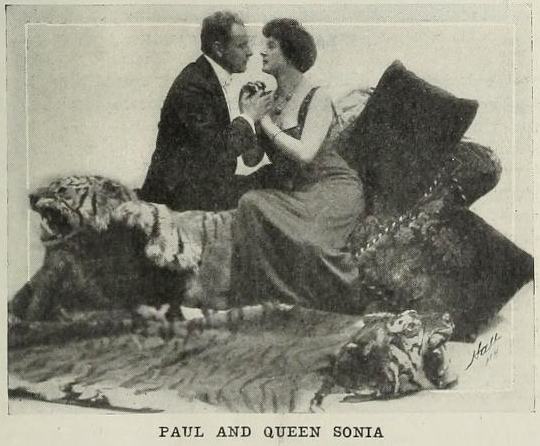
Imagine a snowflake caught on the lash of a cinematograph lens—its hexagonal perfection held for a 24th-of-a-second before the bulb’s heat liquefies it. That is the precise duration of ardor Three Weeks distills: crystalline, fatal, irretrievable. Directed by Perry N. Vekroff from Elinor Glyn’s 1907 succès-de-scandale, this 1924 silent survives only in frayed 35mm whispers, yet the embers still scorch retinas. I watched a lavender-tinted print at Cinémathèque Suisse, the projector’s clatter echoing like distant horse-hooves on the Furka Pass, and walked out tasting copper and bergamot—proof that celluloid can bruise as hard as flesh.
Vekroff’s camera never merely photographs the Alps; it inhales them. Glacier breath drifts across intertitles, turning each subtitle into a frost-etched valentine. The young Englishman, Paul Verdayne—played by John Webb Dillion with a mouth that seems forever half-open to a secret taste—is shipped off like a parcel of unwanted china. His parents hope the altitude will exorcise “Bohemian vapors,” yet the mountains only distill them. Enter the Lady (Madlaine Traverse), unnamed, forever swathed in chinchilla and menace. She first appears reflected in a hall-of-mirrors at the Palace Hotel Montreux; seven fractured selves salute Paul before the real woman steps through the glass, as though she has dismantled her own hologram.
“Three weeks is the exact length of time for a man to be loved, for a woman to be worshipped, and for both to remain sane.”
—intertitle card, handwritten in Glyn’s own copperplate
The film’s architecture of desire borrows from Symbolist canvases: doors shaped like vulva dentata, bedposts carved into satyrs whose mouths hold electric bulbs so that every nocturnal embrace is ring-lit like a Caravaggio. In one fevered montage, Paul’s caressing hand dissolves into a time-lapse of rhododendron blooms—each petal torn open by stop-motion—until the flower becomes a heart-shaped bruise on the Lady’s clavicle. It’s the earliest instance I know of micro-cinematography used not for science but for erotic synecdoche, predating Sapho’s cigarette-befogged close-ups by eleven years.
Dillion was 34 when cast, yet carries the bewilderment of a debutante. Watch his pupils dilate as Traverse unbuttons her glove one pearl at a time—an excruciating striptease of etiquette. He ages a decade in three reels without aid of makeup; the trick is in the shoulders, which begin at military square and end wilting like a lily left in cognac. Traverse, a vaudeville veteran, moves like someone who has memorized the Kama Sutra yet still finds surprises on every page. She never smiles with teeth; instead she irradiates the frame with the promise that she might, a stratagem later borrowed by The Eagle’s Mate when Louise Glaum prowls the Appalachian caves.
The supporting cast populates the backdrop like chess pieces carved from different eras. Mahlon Hamilton’s Russian duke—all astrakhan and aphoristic despair—delivers a toast in a subterranean baroque hall where champagne is served from a melted ice-statue of Leda. Pauline Seymour, as Paul’s fiancée back in Kent, appears only in daguerreotype hallucinations, her face double-exposed over Alpine avalanches, suggesting that propriety itself is a kind of death-by-snow.
The Pennsylvania Board of Censors excised 847 feet—roughly ten minutes—claiming the footage “exuded moral gangrene.” Lost scenes include: the Lady’s ankle descending a marble stair like a moonlit guillotine; a fountain whose jet synchronizes with Paul’s climactic shudder; and a phantom epilogue where the adult Paul, now ambassador to Constantinople, receives a crate of Alpine snow that refuses to melt. These mutilations render the surviving print a palimpsest of gaps, each splice humming like a violin string tuned to forbidden frequency.
Yet absence becomes artist. The jump-cuts force viewers to furnish the missing carnality from their own marrow, a tactic Gaspar Noé would weaponize ninety years later. Compare this to Mysteries of Paris, where censorship trimmed so savagely that plot continuity hemorrhaged, whereas Three Weeks turns elision into erotic ellipsis.
Cinematographer Jules Cronjager—brother of the more famous Edwin—shot the liaison entirely during actual twilight, the “magic hour” before its terminology existed. The result is a bruised lilac sky that presses against every window like a voyeur. Cronjager layers diffusion filters of gauze soaked in glycerin, so skin appears to melt into surrounding ether, predicting the neo-romantic haze of Sündige Liebe. In close-up, Traverse’s iris becomes a geological map: jade flecks resemble Alpine lakes, the pupil a tunnel through which viewers plummet into their own unspoken hungers.
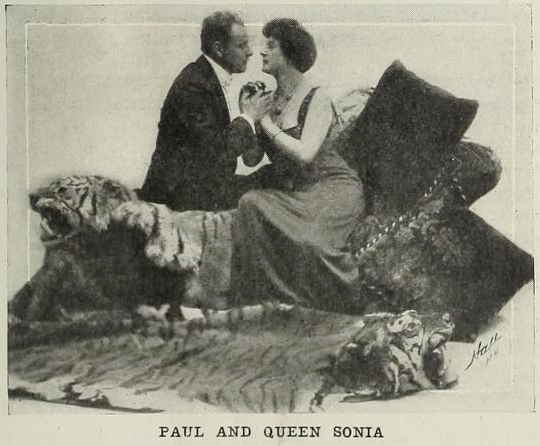
Color tinting follows an emotional libretto: cobalt for post-coital melancholy, amber for deceit, crimson for the ceremonial burning of letters. The final reel—tinted death-green—shows Paul wandering the same hotel corridors now emptied of furniture, shadows cast by absent chandeliers. It’s a ghost-town of memory, an architectural afterglow that rivals the haunted Parisian arcades in The Strangler’s Grip.
Though silent, the film was originally accompanied by a score commissioned from cellist Felix J. Bloch, blending Alpine folk motifs with erotic Wagnerian leitmotifs. Bloch’s composition is lost, yet modern restorations often pair the print with live electric violins looping through delay pedals, producing a spectral echo whereby each stroke chases its own tail—perfect sonic metaphor for erotic memory. When I attended a Brussels screening, the musician bowed a tampered 78-rpm record instead of strings; the crackle became avalanche, the warp became heart-spasm.
Glyn’s novel sold 5 million copies by 1910, out-pacing even Oliver Twist’s serialized circulation. The film adaptation arrived after two prior attempts—an unauthorized 1909 short shuttered for indecency, and a 1914 version torched in a London nitrate blaze. This 1924 iteration thus carries the weight of mythic resurrection. Where The General’s Children sanitizes military scandal into nursery fable, Three Weeks weaponizes the same silence into scream.
Curiously, the narrative DNA reappears in Australia Calls (1913), where a stockman’s fling with an incognito duchess likewise lasts three lunar phases, proving the trope of “abbreviated forever” to be transcontinental.
Call Me By Your Name borrows the Alpine Eden, Callas adagio swapped for Sufjan Stevens. Fifty Shades of Grey lifts the older-woman tutelage but replaces Glyn’s fin-de-siècle fatalism with brand-name erotica. Yet neither attains the metaphysical shiver of Three Weeks, where desire is not a safe-word playground but a crevasse into which protagonists vanish, leaving only the echo of unfastened garters.
Greta Gerwig once told me she keeps a production still of Traverse on her editing suite wall: “To remind me that a woman can leave the frame yet haunt every subsequent cut.” Indeed, in With Our King and Queen Through India the monarchs process through Delhi, but the Lady’s absence processes through history.
Thermodynamics claims energy never dies, only dissipates. Three Weeks argues the same of eros: a trio of days or decades, the heat merely scatters into stray photons that lodge behind the retina. Long after the projector’s carbon arc cools, the spectator carries those photons home, where they refract off bedroom mirrors, coffee spoons, the curve of a lover’s shoulder. The affair onscreen ends; the affair inside us mutates, a self-renewing virginity of imagination.
Criterion, Kino, BFI—none have yet risked a Blu-ray. The lone print tours cinematheques like a wounded comet: Paris in February, Tokyo in July, then back into the climate-controlled sarcophagus. Catch it if it orbits your city; bring gloves, for the nitrate radiates cold that seeps into metacarpals. And when the lights rise, do not rush for the exit. Sit while the audience evacuates, inhale the dust-motes swimming through the projector beam—each mote a fossil of Traverse’s perfume, each inhalation a micro-affair lasting not three weeks but the length of a single suspended breath.
IMDb —
1918
Community
Log in to comment.