DbcultAccessing Vault...
Cult Review
Senior Film Conservator
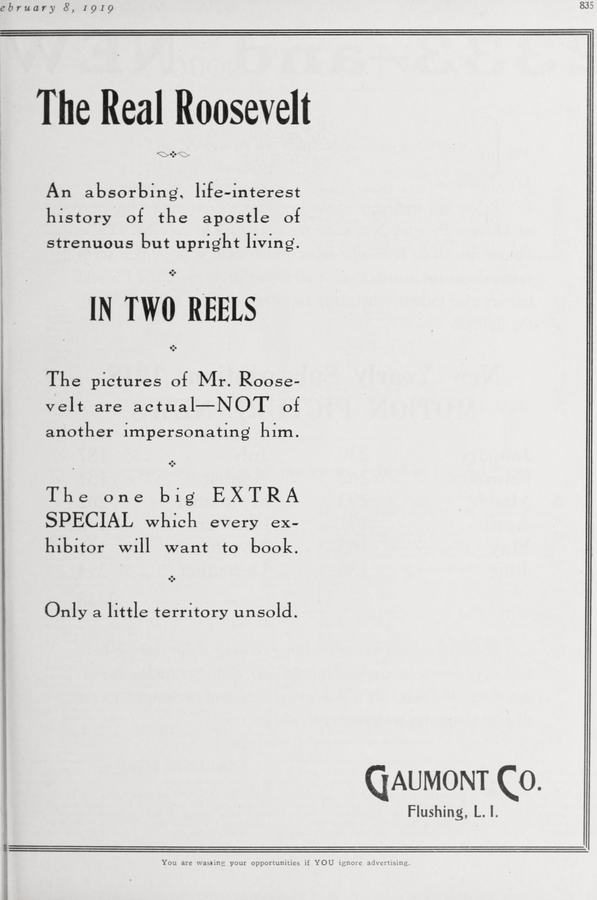
To gaze upon The Real Roosevelt in our contemporary era of digital perfection is to witness a ghost of American vitality wrestling with the limitations of early nitrate stock. This 1917 production isn't a film in the modern sense of a structured narrative; it is an excavation of a personality so massive it threatens to burst the frame. By the time this compilation reached audiences, Theodore Roosevelt was already a living legend, and the medium of cinema was his most potent hagiographer. The flickering imagery provides an almost tactile proximity to the man, offering a visceral connection that no history book could ever replicate.
The film’s primary strength lies in its raw, unadulterated energy. Unlike the choreographed action found in Smashing Through, the movement here is spontaneous and erratic. We see Roosevelt not as an actor playing a part, but as a man who viewed the world as his stage. His gestures are expansive, his walk a deliberate stride that suggests a man forever in a hurry to meet the future. The visual texture of the film, marred by the inevitable scratches of time, only adds to its authenticity. It feels like a transmission from a lost civilization, one where leadership was inextricably linked to physical prowess and public oratory.
In many ways, the film serves as a precursor to the modern political documentary. It understands the power of the image to bypass the intellect and strike directly at the emotions. While a film like The Fighting Brothers might rely on melodrama to convey its themes of conflict and resolution, The Real Roosevelt relies on the sheer magnetism of its subject. Every frame is saturated with Roosevelt’s idiosyncratic charm—the squinting eyes behind the spectacles, the aggressive set of his jaw, and the way he seems to lean into the camera as if trying to speak through the screen.
To understand the impact of this film, one must place it alongside the fictional narratives of its day. In 1917, cinema was exploring the depths of social morality in works like The Hope Chest or the ethical dilemmas presented in The Victory of Conscience. Yet, Roosevelt’s life story, as presented here, contains more inherent drama than most screenplays of the era. He represents the ultimate 'self-made' archetype that American cinema has always obsessed over, a theme explored with far less subtlety in The Only Son.
The editing of 'The Real Roosevelt' is surprisingly modern in its frantic pace. It doesn't linger; it pulses. There is a sequence involving his outdoor expeditions that mirrors the rugged aesthetics of The Strong Way, yet it carries the additional weight of historical reality. We aren't watching a hero; we are watching the *concept* of heroism being forged in real-time. This distinction is crucial. While Her New York attempted to capture the urban zeitgeist through fiction, this documentary captures the man who, in many ways, defined the American century that was just beginning to unfold.
From a technical perspective, the film is a fascinating artifact. The cinematography is functional, yet there are moments of accidental brilliance. The way light hits Roosevelt’s face during an outdoor rally creates a natural chiaroscuro that many directors of the time, such as those behind The Ticket of Leave Man, would have spent hours trying to replicate with artificial lighting. The graininess of the 35mm stock acts as a veil, softening the edges of reality and elevating the man into the realm of myth.
There is also an inherent melancholy in watching this film. Knowing that Roosevelt would pass away only two years after its release lends every smile and every vigorous wave a sense of tragic irony. It is a celluloid memento mori. Unlike the whimsical adventures of The Adventures of Kitty Cobb, there is nothing lighthearted about the legacy being preserved here. This is a serious attempt to capture the essence of power. Even when the film touches on lighter moments, such as Roosevelt interacting with children or nature, there is a sense of purpose that feels almost overwhelming.
The structure of the film is episodic, moving from his early days to his presidency and his post-presidential explorations. This non-linear approach to biography was quite revolutionary for the time. It eschews the theatricality found in Secret Service for something more grounded. There is no need for a 'MacGuffin' or a complex plot when the central figure is this compelling. The film understands that the audience is there for Roosevelt, and it delivers him in abundance.
We see echoes of the same 'man against the world' trope that would later dominate films like The Man Who Won. However, Roosevelt’s victories were not written by a screenwriter; they were enacted on the world stage. The film captures his 'Rough Rider' persona with a grit that makes contemporary political advertisements look sanitized and hollow. It is a testament to the power of the camera to document truth, even when that truth is being presented through a lens of admiration.
In 1917, the world was in the throes of a global conflict that would redefine borders and ideologies. 'The Real Roosevelt' acted as a stabilizing force for the American psyche. While German cinema was producing works like Das rosa Pantöffelchen, American screens were increasingly filled with imagery of national strength. Roosevelt embodied that strength. He was the antithesis of the 'weakness' often portrayed in social dramas like She Couldn't Grow Up.
The film also touches upon the natural world, a key component of Roosevelt's legacy. The sequences involving the wilderness are breathtaking in their simplicity. They lack the stylized artifice of Sea Sirens, opting instead for a documentary realism that highlights the vastness of the American landscape. It is here that we see the 'Real' Roosevelt—a man who found solace in the silence of the woods, far from the roar of the crowds. This duality of the public orator and the private naturalist is what gives the film its depth.
Ultimately, The Real Roosevelt is a triumph of archival curation. It reminds us that cinema’s first duty was to witness. While films like Ten of Diamonds explored the complexities of human relationships through fiction, this film explores the complexity of a single human being through the accumulation of moments. It is a mosaic of a life lived at full throttle.
The restoration of such films is vital, for they are the only way we can truly look into the eyes of the past. When Roosevelt looks into the lens, there is a defiance there, a challenge to the future to live up to the standards he set. It is a haunting experience, made all the more potent by the knowledge of what would follow in the decades after his death. The film doesn't just show us a president; it shows us the birth of the American celebrity, the moment when politics and entertainment first truly merged into a single, inseparable entity.
As a piece of art, it is imperfect. The pacing is uneven, the intertitles are sometimes overly hagiographic, and the technical quality varies wildly. But these are minor quibbles when weighed against its historical significance. It is a foundational text of the documentary genre, a raw and powerful expression of identity that remains as compelling today as it was over a century ago. To watch it is to be reminded of a time when the world felt larger, when leaders were larger than life, and when the flickers of a projector could bring a legend back to life, if only for an hour.
The film leaves us with a lingering image of Roosevelt in his later years, still possessed of that same fire that carried him up San Juan Hill. It is a fitting end to a visual journey that captures the soul of a man who refused to be still. In the pantheon of early cinema, The Real Roosevelt stands as a unique achievement—a film that doesn't just tell a story, but preserves a spirit. It is essential viewing for anyone interested in the intersection of history, politics, and the nascent power of the moving image. It is, quite simply, a masterpiece of the archival form, a flickering testament to a man who was, in every sense of the word, real.
IMDb —
1933
Community
Log in to comment.