DbcultAccessing Vault...
Cult Review
Senior Film Conservator
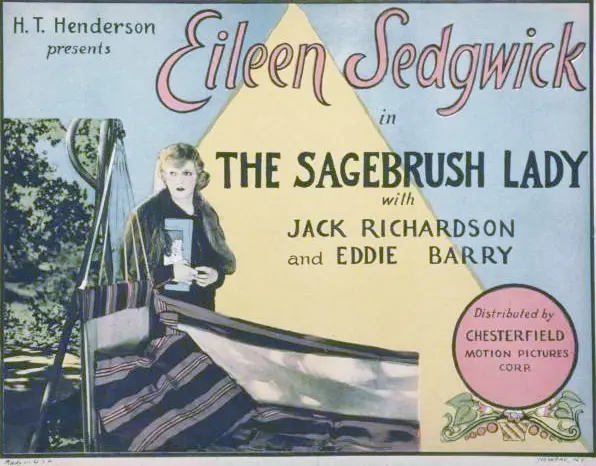
Is The Sagebrush Lady worth watching today? Short answer: yes, but with significant caveats that demand a certain cinematic palate. This 1922 silent western is a fascinating, if undeniably dusty, artifact for dedicated film historians, silent era aficionados, and anyone with a keen interest in the foundational elements of the genre.
It is absolutely not for casual viewers expecting modern pacing, intricate character development, or high-fidelity visuals. Approach it as a historical document, a window into early Hollywood, rather than a piece of contemporary entertainment, and you might find its rustic charm surprisingly compelling.
This film works because of its unpretentious commitment to classic Western tropes, delivering a straightforward narrative with a surprising amount of action for its era.
This film fails because its narrative shortcuts and two-dimensional characters feel profoundly underdeveloped by today's standards, often relying on melodramatic shorthand.
You should watch it if you are a devoted fan of silent cinema, a Western genre enthusiast tracing its roots, or a student of film history eager to experience the craft of early filmmaking firsthand.
Stepping into The Sagebrush Lady is akin to opening a time capsule, a grainy, flickering portal to 1922. This isn't just a film; it's a historical artifact, a testament to the nascent language of cinema. Understanding its context is paramount, as judging it by modern metrics would be both unfair and unproductive.
The early 1920s were a period of rapid evolution for the Western genre. Filmmakers were still figuring out how to tell stories with moving pictures, often borrowing heavily from stage melodrama and dime novels. The Sagebrush Lady embodies many of these characteristics, presenting a world of clear-cut heroes and villains, where moral ambiguities are largely absent.
The film, like many of its contemporaries, was likely produced quickly and economically, designed for an audience hungry for escapism. Its charm, if you can find it, lies in this very simplicity, a raw, unfiltered glimpse at storytelling before the advent of sound complicated everything.
One might even argue that the limitations of silent film forced a certain purity of visual storytelling. Every gesture, every intertitle, had to count. While often exaggerated, these elements form a unique language that modern audiences, accustomed to dialogue, often struggle to interpret.
It's easy to dismiss the acting as over-the-top, or the plot as simplistic. But to do so is to miss the point. This is foundational cinema, a blueprint for countless Westerns to follow, including more polished works like A Girl of the Timber Claims or even later, more complex narratives.
Carle Cooly's script for The Sagebrush Lady is a masterclass in narrative economy, albeit one born more of necessity than artistic choice. The plot, concerning a government agent infiltrating a rustling gang and falling for the local ranch owner, is as straightforward as a dusty trail. There’s no wasted motion, no lingering subplots. This directness can be refreshing.
Henry Hayden, played by William Steele, arrives in disguise, his mission clear. His identity as an agent is surprisingly well-kept, primarily because the film doesn't dedicate much screen time to developing secondary characters who might pose a threat to his cover. The rustlers are simply 'the bad guys,' their motivations broadly sketched.
The romantic entanglement between Hayden and Paula Loring (Eileen Sedgwick) unfolds with an almost startling efficiency. Paula's decision to claim Hayden as her fiancé to save him from a lynching mob is a classic melodramatic device, a convenient plot turn that instantly binds them. It’s a moment of high drama, yet it feels less like a genuine emotional connection and more like a narrative shortcut.
This is where the film’s simplicity becomes a weakness. The emotional arc feels unearned, the transition from stranger to husband almost transactional. One might argue this reflects the practicalities of frontier life, where alliances formed quickly out of necessity, but it leaves modern viewers wanting more depth.
The villain, Tom Doyle, and his foreman are archetypes rather than characters. Their schemes are transparent, their eventual downfall inevitable. There's no real suspense in their machinations, only the anticipation of Hayden's inevitable triumph. This isn't a film about moral complexity; it's about the victory of good over evil, plain and simple.
However, the film's brevity ensures that the plot never truly drags. Each scene serves a singular purpose, moving the story forward with an almost relentless pace. In an era where films could easily meander, The Sagebrush Lady maintains a surprising focus, a quality many modern blockbusters could learn from.
The acting in The Sagebrush Lady is a fascinating study in silent film performance. Without dialogue, actors relied entirely on exaggerated facial expressions, broad gestures, and body language to convey emotion and intent. This style, often mocked today as 'over-the-top,' was a highly sophisticated craft in its time.
William Steele as Henry Hayden embodies the stoic, capable Western hero. His performance is understated for a silent film, relying on a steady gaze and deliberate movements rather than histrionics. He projects a quiet authority, a sense of competence that grounds the character. When he disarms the foreman during the kidnapping attempt, his movements are precise, conveying efficiency without a single word.
Eileen Sedgwick, as Paula Loring, brings a welcome vitality to the screen. Her expressions are more varied, conveying fear, determination, and budding affection. The scene where she fabricates their engagement to the angry mob is particularly effective; her wide eyes and urgent gestures sell the desperate lie, making it believable within the film's melodramatic framework.
Ben Corbett, likely playing Tom Doyle's foreman, delivers a more overtly villainous performance, all sneers and menacing postures. He is the physical threat, the brute force antagonist. While lacking nuance, his presence is undeniably impactful, a stark contrast to Steele's controlled hero.
One unconventional observation: the very 'primitive' nature of silent acting, forcing actors to externalize every emotion, paradoxically creates a universal language that transcends cultural barriers. A scowl is a scowl, a tear is a tear, regardless of spoken tongue. This purity of expression is something modern, dialogue-heavy cinema often loses, relying too much on words when a simple glance could suffice.
However, this reliance on exaggerated physical cues can also make it difficult for modern audiences to connect emotionally. The subtleties of human interaction, so often conveyed through vocal tone or a flicker of the eye in sound film, are absent. This makes the characters feel more like archetypes than fully realized individuals, a common trait of early cinema.
The direction in The Sagebrush Lady, while uncredited, reflects the prevailing techniques of early filmmaking. The camera is largely static, often positioned at a medium distance, capturing full figures and allowing the actors' physicality to drive the scene. Close-ups are used sparingly, usually for dramatic emphasis or to highlight a crucial detail, like a note or a weapon.
The cinematography, considering the technological limitations of 1922, is functional. There's a clear attempt to capture the vastness of the Western landscape, even if the print quality available today often obscures the finer details. Shots of horses thundering across the plains, while not as dynamic as those in later Westerns, establish the setting effectively.
Lighting is straightforward, often relying on natural light for outdoor scenes and practical, broad illumination for interiors. There's little of the sophisticated chiaroscuro or nuanced mood lighting that would define later cinematic periods. This gives the film a stark, almost documentary-like quality at times.
Editing is primarily linear, focusing on clear transitions between scenes. The action sequences, particularly the kidnapping attempt and the final confrontation with the rustlers, are edited for clarity, ensuring the audience understands the sequence of events. While not groundbreaking, the editing is competent and serves the narrative well.
One debatable opinion: the very lack of complex camera movements and intricate editing forces the viewer to focus on the story and the performances in a way modern cinema, with its constant visual stimuli, rarely does. It's a more contemplative, perhaps even demanding, viewing experience.
For example, during the scene where Paula saves Hayden from the lynchers, the camera remains fixed, allowing the viewer to absorb the full tableau of the angry crowd and Paula's frantic gestures. There's no rapid cutting to heighten tension; the tension is built through the blocking and the actors' movements within the frame. It's an old-school approach that still works.
The pacing of The Sagebrush Lady is distinctly a product of its era. It's not slow by silent film standards, but it will feel deliberate, almost languid, to anyone accustomed to contemporary cinema. Scenes unfold at a measured pace, allowing for the full expression of gestures and the reading of intertitles.
Action sequences, while present, lack the frenetic energy of modern blockbusters. The focus is more on the narrative progression than on visceral thrills. The horse chases are functional, the fistfights staged with a theatrical flair. It works. But it’s flawed.
The tone is classic Western melodrama. There's a clear distinction between good and evil, moments of peril, and an ultimately triumphant resolution. Humor, if present, is broad and situational, often derived from the villains' bumbling attempts or the hero's cleverness. There's a certain earnestness to it all, a lack of cynicism that is quite refreshing.
The intertitles play a crucial role in establishing tone and conveying information. They are often declarative, sometimes poetic, guiding the audience through the narrative. For instance, an intertitle might simply state, 'The shadow of the rustlers falls heavy over the valley,' immediately setting a mood of foreboding.
Compared to more experimental silent films like The Sorrows of Love, The Sagebrush Lady adheres firmly to established storytelling conventions. It's a comfort watch for those familiar with the genre's early grammar, a predictable but satisfying journey for its intended audience.
The abruptness of the romance, where Hayden and Paula move from strangers to engaged to married almost by happenstance, is a tonal choice that prioritizes plot resolution over character development. It's a common trope in early cinema, reflecting a time when narrative efficiency often trumped psychological realism.
Yes, for specific audiences, this film holds value.
It is a significant piece of silent Western history.
Film students will find its techniques instructive.
Silent film enthusiasts will appreciate its straightforward charm.
Casual viewers will likely find it slow and dated.
Its primary worth is academic and historical, not purely entertainment.
The Sagebrush Lady is not a hidden masterpiece, nor is it a film that will resonate with a broad contemporary audience. It is, however, a surprisingly robust example of early silent Western cinema, delivering exactly what its original audience expected: a clear narrative of good versus evil, a dash of romance, and some frontier action. Its strength lies in its unpretentious simplicity and its value as a historical document.
For the dedicated cinephile or the academic studying the evolution of film, this is an essential watch. It provides valuable insight into the narrative conventions, acting styles, and technical limitations that shaped the very foundation of Hollywood. It allows us to appreciate how far cinema has come, and perhaps, to reflect on what has been lost in the pursuit of constant innovation.
For everyone else? Approach with caution, a willingness to adjust your expectations, and perhaps a strong cup of coffee. It’s an exercise in cinematic archaeology, not a casual Friday night flick. It serves its purpose, but its appeal is niche, an acquired taste for the truly devoted. If you're looking for something more universally engaging from the era, you might consider something like Around the World in 80 Days for a different kind of adventure, or even later European silent films like El Verdugo for more artistic flair.
Ultimately, The Sagebrush Lady is a film that demands historical empathy. It’s a dusty old photograph, not a vibrant living portrait. But for those who appreciate the texture and story behind the faded image, there’s a quiet satisfaction to be found.
IMDb 2.4
1915
Community
Log in to comment.