DbcultAccessing Vault...
Cult Review
Senior Film Conservator
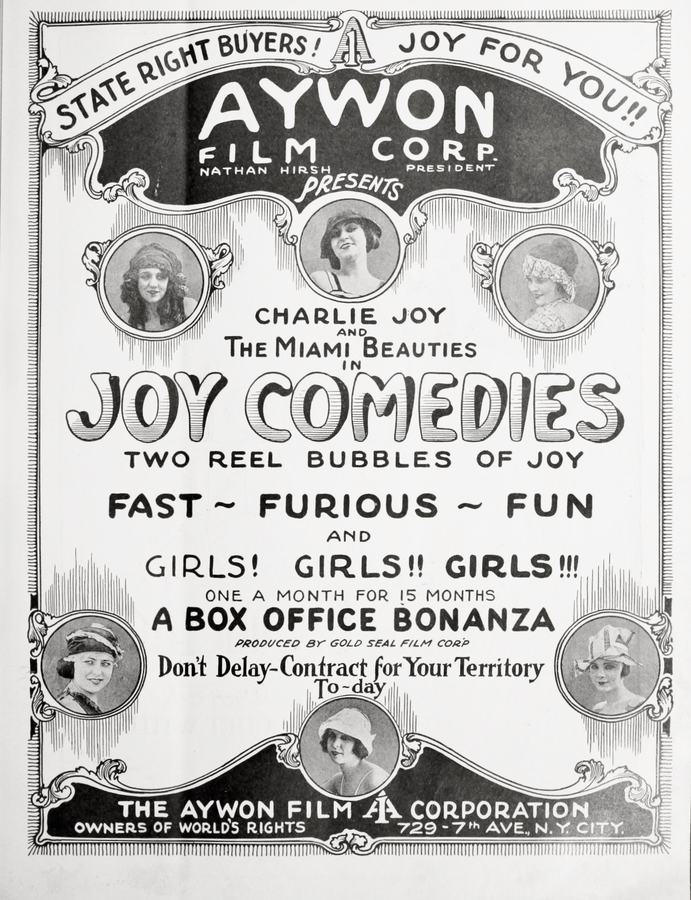
Charlie Joy’s Three of a Kind is less a motion picture than a tarot deck hurled into a projector beam—every frame lands face-up, leering with half-truths you swear you’ve dreamed in other lives. Shot on grainy 35 mm soaked in sodium-lit blues and cigarette-ochres, the film refuses linearity the way a cat refuses bathwater; instead it loops, folds, and bisects itself until chronology becomes another con game dealt by the magician’s nimble fingers.
The unnamed metropolis here is equal parts Burn ’Em Up Barnes’ racetrack adrenaline and The Reign of Terror’s guillotine shadows, but Joy tilts the lens until boulevards become Möbius strips. Streets terminate in brick walls plastered with missing-person posters that, on closer inspection, bear the faces of the very trio we’re following. Cinematographer Lila “Lee” Navarro keeps her shutter open a hair longer than comfort allows; headlights smear into comet tails, faces blur into ghosts, and the viewer begins to suspect the film stock itself is sweating.
Charlie Joy the actor—yes, he directs himself—plays the magician “Fox” with the slippery charm of a man who has already sold his own reflection and is now haggling for yours. Watch his pupils in the diner scene: they dilate the moment the jukebox flips from Patsy Cline to free-jazz, as if noise were currency he’s collecting. Opposite him, Rosa de la Cruz’s chanteuse “Lark” never sings on-key; she sings off-legacy, her vibrato fraying like old film leader. When she finally unleashes the fabled high-C that supposedly cracks crystal, Joy mutes the soundtrack—an audacious cheat that forces us to lean forward and supply the note from memory, making her voice our phantom. Meanwhile, veteran character actor Silas root embodies “Mute” with such stillness that when he does finally sketch, the charcoal squeaks like a nail on psyche.
The mix is a felony in progress: clinking spoons syncopate with distant sirens, heartbeats duck under floorboards, and—most unnerving—every gunshot is replaced by the thwip of a deck being shuffled. The result turns violence into sleight-of-hand; you feel murdered but can’t locate the wound. Composer Glimmer Tines samples both slot-machine chimes and cathedral organs, then stretches them until they share a wavelength, so redemption and ruin arrive wearing the same sonic perfume.
Joy’s script (co-written under the pseudonym “J. Doe #4”) posits identity as a bus transfer you can only use once. Characters swap driver’s licenses like baseball cards; the magician’s Polaroid of a dead child turns up later tucked into Lark’s garter, the face now belonging to a living girl in the background of Mute’s sketch. Even the aspect ratio mutates—1.85:1 for “reality,” 2.39:1 for myth, 4:3 for the loop—so the rectangle itself becomes unreliable testimony. Compare this to The Man Who Turned White, where race was the mutable shell; here the pea under the cup is you, the spectator, and the film never lets you claim your winnings.
Navarro’s palette is a crime scene. The aforementioned dark orange appears only when characters lie: Fox’s tie during his false confession, the maraschino cherry Lark plops into her coffee, the sodium flare above the exit that promises daylight but delivers another corridor. Yellow is memory—subway tiles, old Kodak borders, the bruise under Lark’ eye—yet every time it surfaces, the accompanying sound drops 3 dB, as if remembrance were slightly quieter than the present. Sea blue haunts Mute’s sequences: subway windows, sketchbook margins, the flicker inside the Optician’s latex gloves. It is the color of futures that have already been traded away.
Where Three Hours Late played tardiness for slapstick and Mid-Channel used marital limbo, Three of a Kind weaponizes repetition itself. Its closest spiritual sibling is The Struggle Everlasting, yet while that film externalized conscience into dueling angels, Joy traps morality inside a kaleidoscope and then asks us to swallow the shards.
When the credits roll, the projector’s scratch loops back to the opening frame—only now the diner jukebox is unplugged and the waitress’s tray holds three Polaroids: Fox, Lark, Mute, each face crossed out with a single charcoal X. The implication: every future screening is another spin of the loop, every ticket purchased an invitation to occupy your own vacant stool. Joy refuses closure the way a magician refuses to reveal the last trapdoor; to explain would be to break the spell, and spells, once broken, can’t be re-sold.
This is not a film you enjoy; it is a film that collects the price of your admission twice—once at the box office, once in your dreams. It will send you home speaking in second-person, checking your own reflection for forged pupils. Months later, when you find a playing card tucked behind your ear or taste maraschino in a drink you didn’t order, you’ll realize the con is still running. And you will want back in, because the only thing more terrifying than being conned is being told you’re no longer worth the grift.
Five stars out of whatever constellation hasn’t yet been rebranded.
IMDb 5.8
1935
Community
Log in to comment.