DbcultAccessing Vault...
Cult Review
Senior Film Conservator
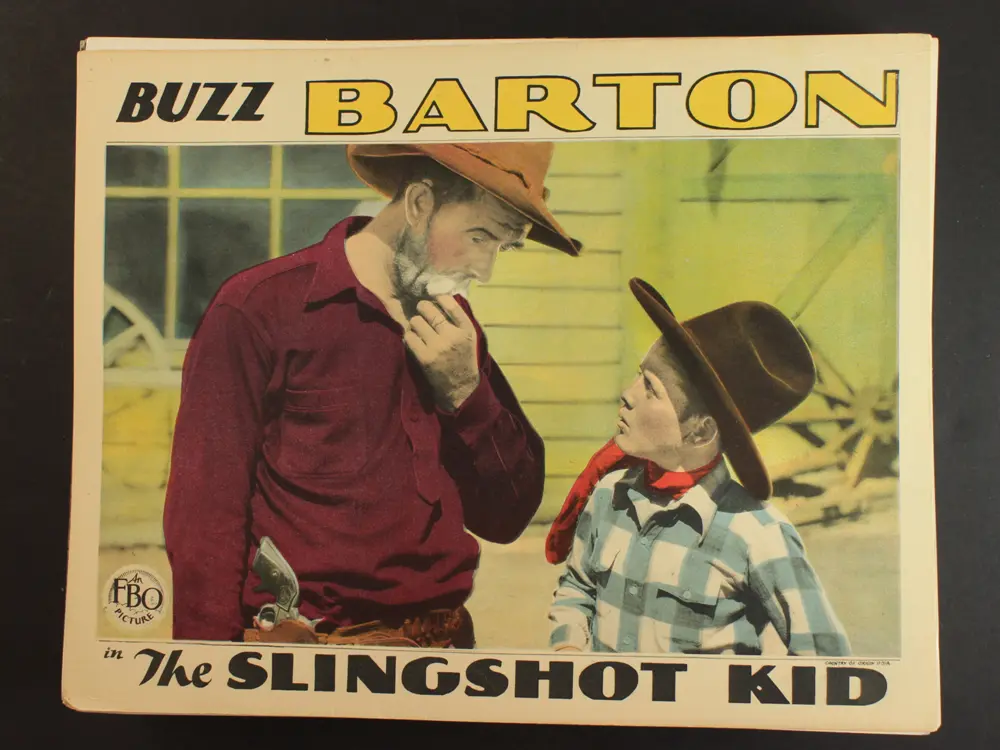
Is The Slingshot Kid a forgotten gem of the silent era or merely a curiosity for film historians? Short answer: It is a fascinating, if occasionally clunky, artifact that works best as a showcase for Buzz Barton's unique physical talents, though it lacks the narrative weight of the era's more serious dramas.
This film is for the viewer who appreciates the 'B-Western' aesthetic and wants to see how early Hollywood marketed child stars as legitimate action heroes. It is NOT for those who demand complex character arcs or modern pacing.
1) This film works because... Buzz Barton possesses a natural, unforced charisma that makes the central gimmick of a slingshot-wielding hero feel surprisingly plausible within the film's internal logic.
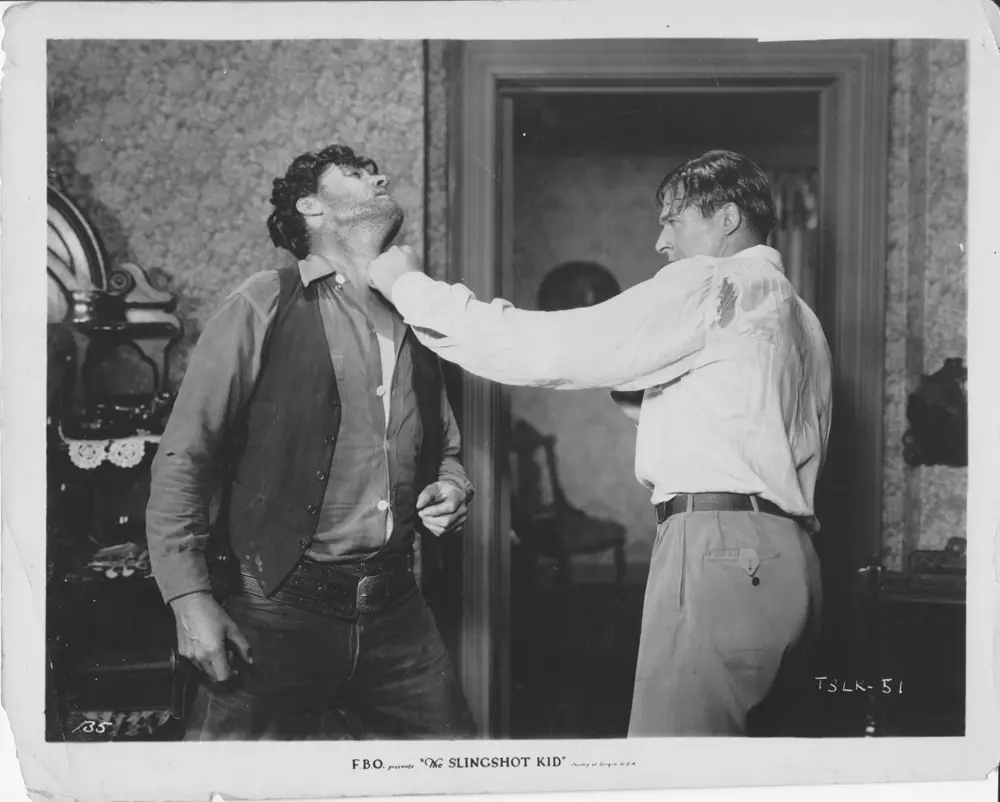
2) This film fails because... the supporting cast, particularly the villains, are painted with such broad, stereotypical strokes that there is never any genuine sense of peril for our protagonist.
3) You should watch it if... you are interested in the evolution of the Western genre or want to see a rare example of a 1920s action film that successfully centers a child without becoming overly sentimental.
The Slingshot Kid is worth watching if you have an interest in the history of the 'Boy Wonder' subgenre of Westerns. It provides a distinct contrast to the more polished, adult-driven narratives of the time. While it lacks the technical sophistication of a film like Dick Turpin's Ride to York, its energy is infectious and its lead performance is genuinely impressive.
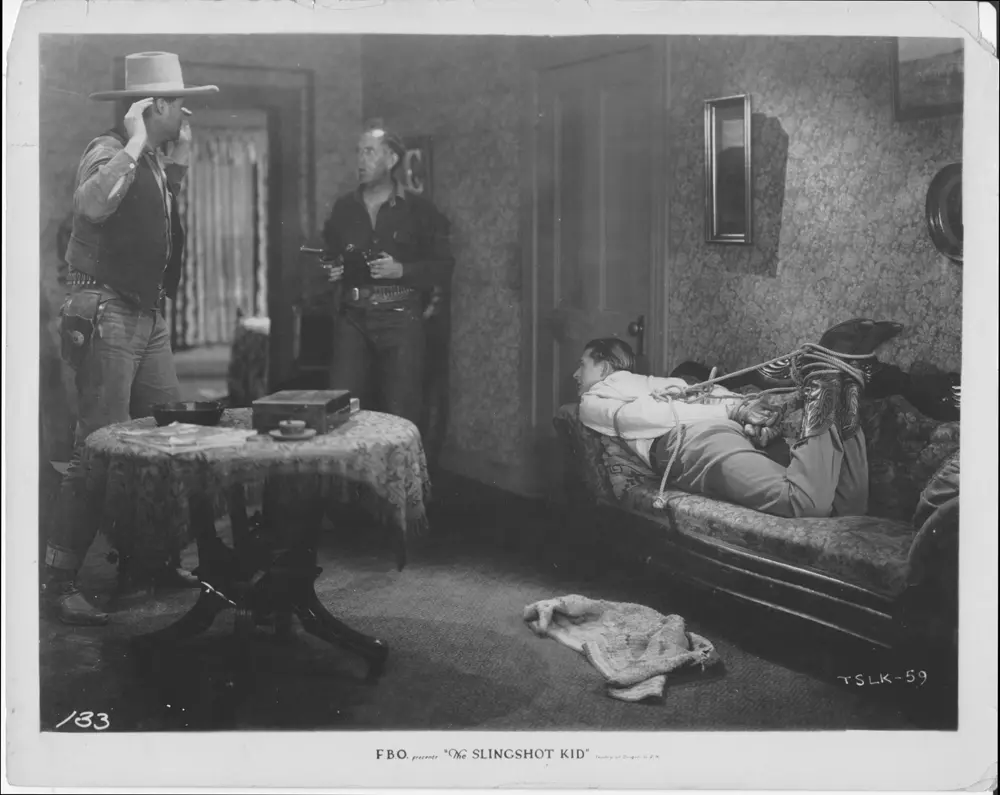
Buzz Barton was not your typical child actor. Unlike the polished, stage-managed kids of the early talkies, Barton feels like a product of the dirt and the saddle. In The Slingshot Kid, his performance is defined by motion. He doesn't just ride a horse; he inhabits it. This physical presence is what prevents the film from descending into parody. When he pulls back that slingshot, there is a focused intensity in his eyes that rivals the steely glares of William S. Hart or Tom Mix.
The boy is better than the script. While the dialogue intertitles are often functional and dry, Barton’s physical comedy and stunt work provide a necessary spark. There is a specific scene involving a barn loft where Barton must navigate a series of beams to avoid a pair of henchmen. The choreography here is surprisingly tight, echoing the kinetic energy found in Alice Cuts the Ice, though with a decidedly more rugged edge.
Under the guidance of the writing team of Jean DuPont Miller, John Twist, and Oliver Drake, the film moves at a breakneck pace. It avoids the long, ponderous landscape shots that defined many silent Westerns, opting instead for medium shots that emphasize action. The pacing is relentless, almost to a fault. There are moments where a beat of emotional resonance is sacrificed for another chase or another demonstration of slingshot prowess.
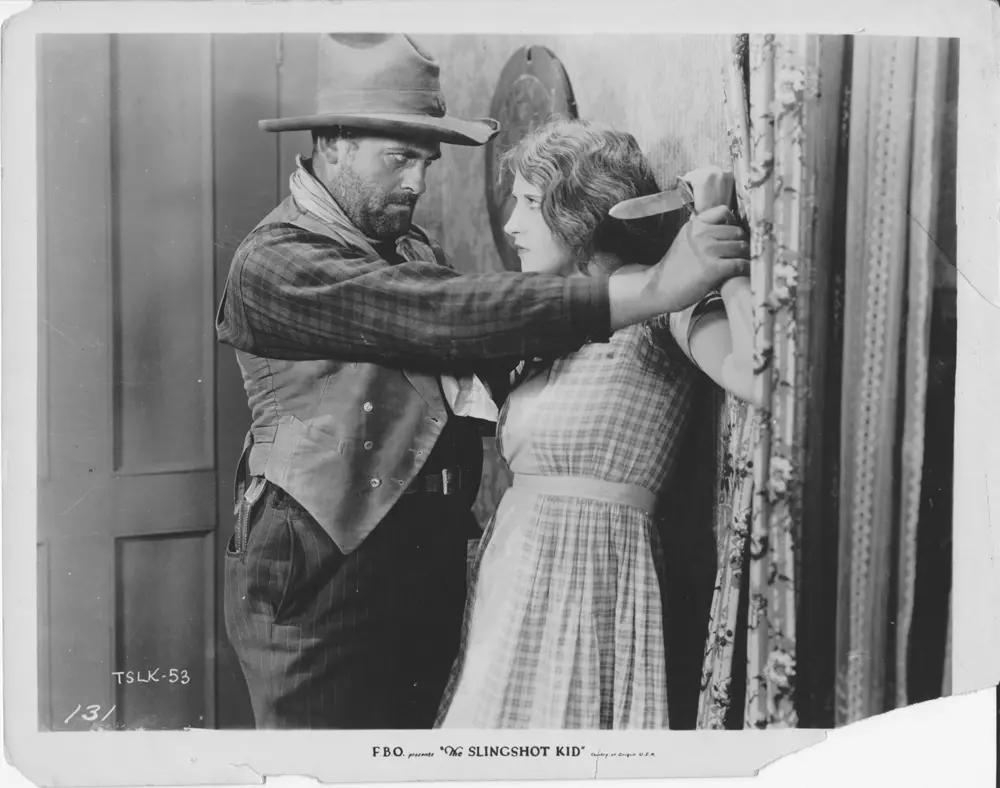
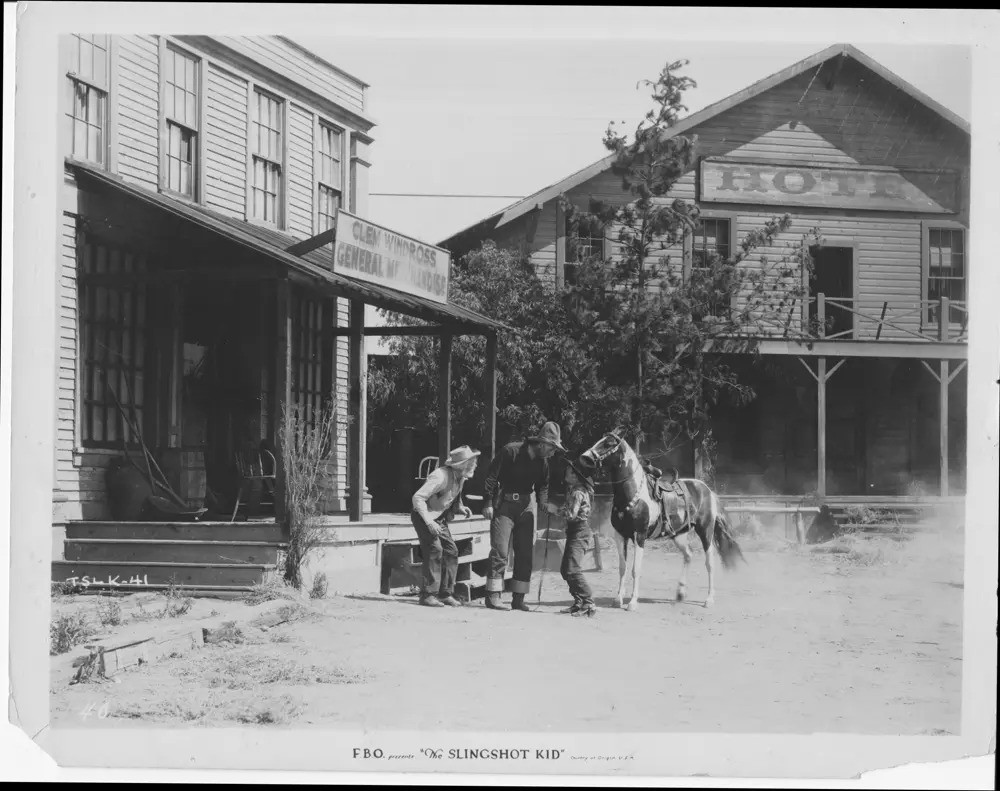
The cinematography is utilitarian. It doesn't strive for the artistic heights of Rhythmus 23, but it captures the harshness of the California locations with a clarity that helps ground the more fantastical elements of the plot. The lighting is harsh, the shadows are deep, and the dust feels real. This groundedness is essential because it balances the absurdity of a child taking down grown men with a handful of pebbles.
One might expect the slingshot to be a minor detail, but the film treats it with the same reverence a samurai film treats a katana. There is a sequence halfway through the film where Barton’s character is cornered in a canyon. Instead of a standard shootout, we get a tactical display of projectile physics. He uses the slingshot to create distractions, to disarm, and eventually to incapacitate.
It works. But it’s flawed. The film occasionally asks for too much suspension of disbelief, particularly when a small stone seems to have the stopping power of a .45 caliber bullet. However, within the context of 1920s Saturday matinee entertainment, it’s a brilliant piece of branding. It differentiates Barton from every other cowboy on the FBO (Film Booking Offices of America) roster.
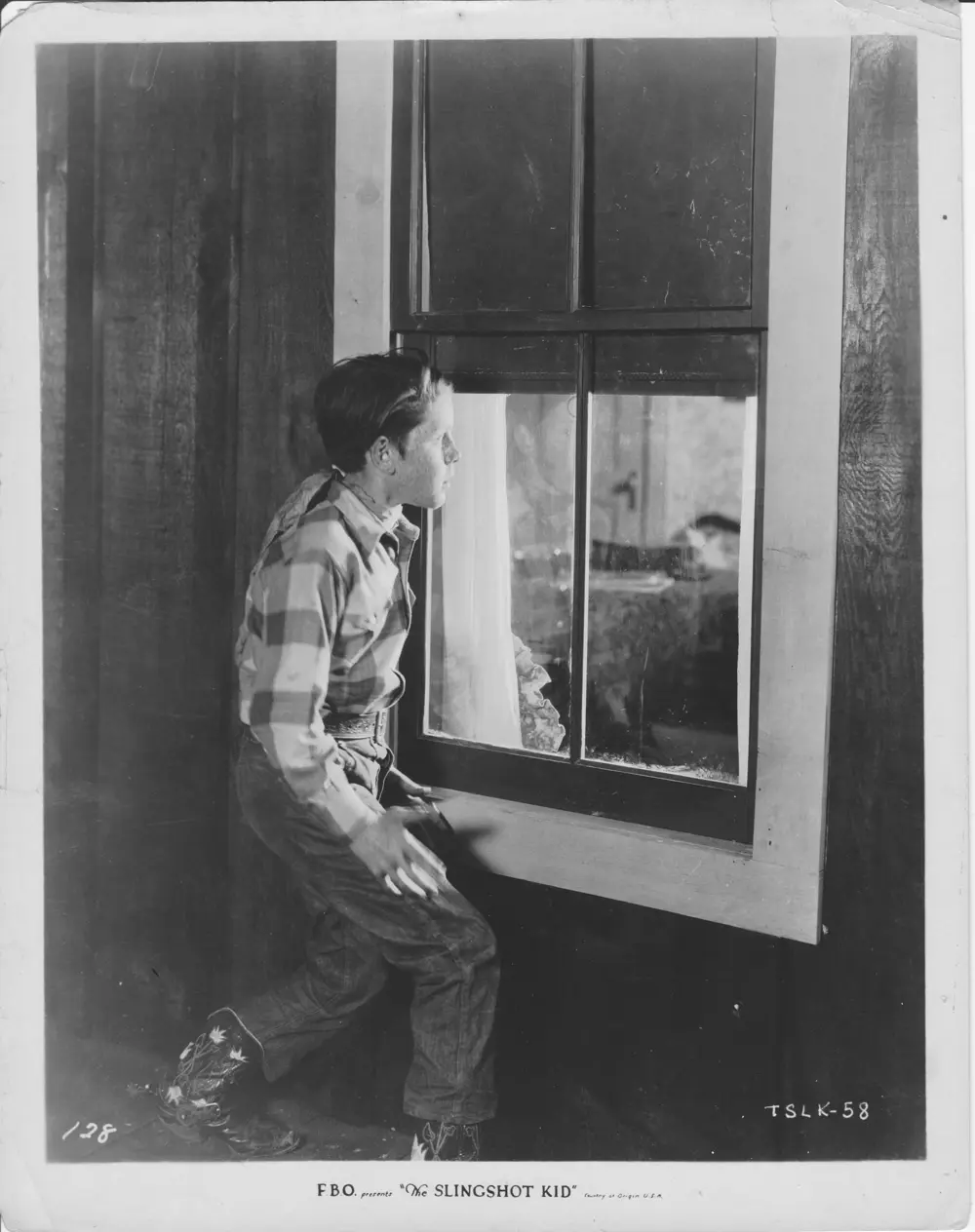
Jean Fenwick and Jay Morley provide the necessary adult scaffolding for Barton to climb on, but they aren't given much to do. Fenwick, in particular, is relegated to the 'damsel in distress' role that was already becoming a tired trope by 1927. Compared to the more nuanced female roles in films like Sally in Our Alley, her character feels like an afterthought.
The villains, led by Arnold Gray, are pantomime-level evil. They lack the psychological depth found in contemporary dramas like Guilt. Their motivations are purely financial, which is fine for a B-Western, but it prevents the film from reaching any level of thematic complexity. The conflict is purely external; there is no internal struggle for anyone involved.
Pros:
- High-energy performance by a unique child star.
- Excellent location scouting and outdoor photography.
- A creative departure from standard gun-based Western combat.
- Short runtime makes it an easy watch for silent film beginners.
Cons:
- Thin plot with predictable outcomes.
- One-dimensional villains.
- Some of the intertitles haven't aged particularly well in terms of humor.
When placed alongside other 1927 releases like The Midnight Guest or South Sea Love, The Slingshot Kid feels decidedly more populist. It isn't trying to be art; it's trying to be a thrill ride. It shares some DNA with the slapstick energy of The Plumber, particularly in how Barton uses his environment to outsmart his larger opponents. However, it maintains a level of Western sincerity that prevents it from becoming a full-blown comedy.
It is interesting to note that while films like Feline Follies were pushing the boundaries of animation, and Daigujin was exploring different cultural narratives, The Slingshot Kid was doubling down on the most American of myths: the lone hero on the frontier. The fact that the hero is twelve years old is the only real subversion on offer.
The Slingshot Kid is a punchy, athletic piece of entertainment that showcases a star who deserved more historical recognition than he ultimately received. Buzz Barton is a revelation of physical acting, even if the world around him is built of cardboard and clichés. It doesn't have the emotional depth of The Cost, but it has more heart than many of its big-budget contemporaries.
Ultimately, the film succeeds as a piece of kinetic art. It reminds us that before cinema was about dialogue, it was about the beauty of a body in motion—whether that body was jumping off a moving stagecoach or accurately firing a pebble at a villain's forehead.
If you can overlook the simplistic morality and the repetitive nature of the chases, there is a lot to love here. It is a snapshot of a time when the Western was king, and even a kid with a slingshot could rule the box office. It's not a masterpiece, but it is a hell of a lot of fun.
IMDb 5.5
1934
Community
Log in to comment.