DbcultAccessing Vault...
Cult Review
Senior Film Conservator
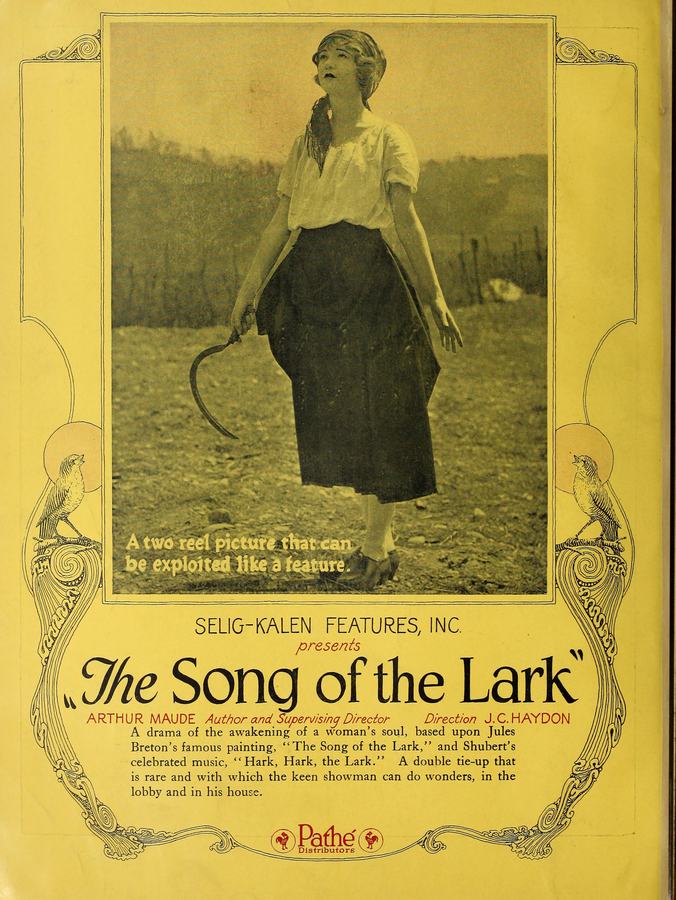
Stepping back into the hallowed, often forgotten, halls of early cinema, one occasionally unearths a gem whose thematic resonance transcends the passage of time. Such is the case with Arthur Maude's 'The Song of the Lark,' a film that, even in its silent grandeur, speaks volumes about the eternal struggle between artistic aspiration and the mundane realities of existence. This isn't merely a tale of a girl who can sing; it's a profound, often heart-wrenching, exploration of identity, sacrifice, and the relentless pursuit of one's true calling against a backdrop of societal expectation and personal yearning. The narrative, penned by Maude himself, is remarkably nuanced for its era, delving into the intricate psychological landscape of its protagonist, Elara, with an almost startling depth.
From the very first frames, we are immersed in the bleak, monochromatic world of a mining town, a stark visual metaphor for the constricted life Elara is destined to endure. The contrast between her ethereal vocal gifts and the gritty realism of her surroundings is immediately palpable, establishing a central tension that propels the entire story. Hubert Douce, in his portrayal of Professor Dubois, embodies the archetypal mentor figure with a gentle gravitas, his weathered face reflecting a lifetime of dedication to music, and a quiet understanding of the rare talent he has discovered. His belief in Elara is the initial spark, a flickering flame against the encroaching darkness of her circumstances, providing the nascent hope necessary for her to even contemplate a different path. This dynamic, the wise elder recognizing untapped potential, is a classic trope, yet here it feels fresh, imbued with a genuine warmth that anchors Elara’s nascent dreams in something tangible.
The arrival of Georges Renavent’s Monsieur Valois acts as the catalyst, a disruptor of Elara's predictable existence. Renavent imbues Valois with a fascinating blend of charisma and calculated ambition, making him neither a clear villain nor an unambiguous savior. He represents the glittering, yet perilous, world Elara longs to enter, a world where talent is both celebrated and exploited. His offer of training in the grand opera houses is a siren song, irresistible yet fraught with unspoken dangers. This pivotal moment forces Elara to confront an agonizing dilemma: her profound loyalty to her struggling family, whose very survival seems tethered to her presence, versus the insistent call of her artistic destiny. It's a universal conflict, brilliantly articulated without a single spoken word, relying instead on Doris Coram's expressive performance as Elara, whose face becomes a canvas for her internal turmoil.
Adding another layer of complexity is the character of Thomas, portrayed by Richard Bold. Thomas is the embodiment of the life Elara might have, a steadfast, loving presence representing stability and comfort. Their burgeoning romance is depicted with a tender melancholy, highlighting the profound personal cost of Elara’s chosen path. Bold’s performance conveys a quiet strength and a resigned understanding, making Thomas a sympathetic figure rather than a mere obstacle. The film masterfully uses these relationships to illustrate the multi-faceted nature of sacrifice, suggesting that artistic greatness often demands a renunciation of conventional happiness. This thematic depth elevates 'The Song of the Lark' beyond a simple rags-to-riches narrative, transforming it into a poignant meditation on the human condition.
Once in the metropolis, Elara's journey intensifies, transforming from a dream into a grueling test of endurance. The film vividly portrays the harsh realities of the cutthroat artistic world, a stark contrast to the romanticized ideals of her provincial upbringing. Her rustic origins become a source of both vulnerability and strength; while she struggles to adapt to the rigorous demands and sophisticated social circles, her innate authenticity shines through. This struggle for acceptance and validation in an alien environment is a powerful narrative thread, echoing the broader immigrant experience or anyone striving to break free from their given circumstances. The film’s depiction of the opera world, with its opulent costumes and grand sets, is visually stunning, yet it never shies away from revealing the ruthless ambition simmering beneath the surface.
Doris Coram, in a dual role as Elara and the jealous rival Madame Celeste, delivers a performance of remarkable range. Her portrayal of Celeste is a masterclass in silent antagonism, her nuanced expressions conveying a potent mix of professional jealousy and personal insecurity. Celeste’s insidious attempts to undermine Elara serve as a crucial external conflict, externalizing the internal doubts and fears Elara herself harbors. It's a classic antagonist setup, but one executed with a subtlety that avoids caricature. Valois, too, reveals his more morally ambiguous colors, pushing Elara to compromise her artistic integrity for commercial success. This ethical dilemma is central to the film's message: what price is one willing to pay for fame? Is artistic purity an achievable ideal, or must it always be tarnished by the demands of the market?
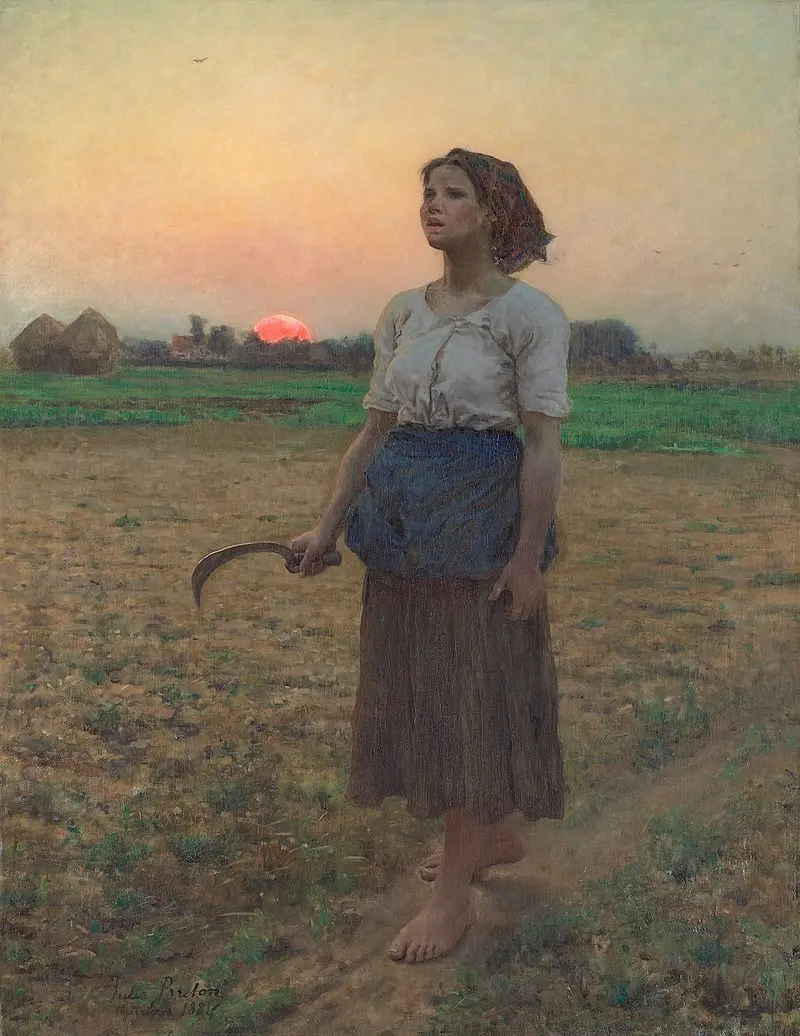
The dramatic apex of 'The Song of the Lark' arrives with Elara's grand debut, a moment charged with immense anticipation and existential weight. Here, all the threads of her journey converge. The film masterfully builds tension towards this climax, making the audience acutely aware of the stakes involved. Elara stands at a precipice, faced with a defining choice: to perform a popular, simplified aria that guarantees her immediate fame but betrays the very essence of her artistic soul, or to embrace a complex, emotionally demanding piece that truly showcases her unique voice, risking alienation from the fickle public and the wrath of her demanding impresario. This dilemma is not merely about a song; it's about integrity versus expediency, a timeless struggle that resonates deeply with anyone who has ever pursued a passion against commercial pressures.
The film’s resolution, or rather, its powerful culmination, rests entirely on this performance. The 'Song of the Lark' itself becomes more than just a musical piece; it transforms into a potent metaphor for Elara’s unyielding spirit, her fragile beauty, and her unwavering commitment to her authentic voice in the face of overwhelming adversity. The silent era’s reliance on visual storytelling and the expressive power of its actors truly shines here, as the audience is left to interpret the nuances of Elara’s choice through her expressions and body language. It's a testament to the power of cinema that such profound emotional depth can be conveyed without a single spoken word, relying instead on the universal language of human emotion.
Arthur Maude's direction, while perhaps not as widely celebrated as some of his contemporaries, demonstrates a keen understanding of cinematic storytelling. He utilizes contrasting visual motifs—the oppressive darkness of the mining town versus the dazzling, yet isolating, grandeur of the opera house—to underscore Elara’s emotional journey. The use of close-ups on the actors' faces, particularly Coram's, allows for an intimate connection with her character's internal struggles. The pacing, though deliberate, builds steadily, creating a sense of inevitable momentum towards Elara's ultimate destiny. One might draw parallels to the stark social realism found in films like The Clutch of Circumstance, which similarly explores individuals grappling with forces beyond their control, albeit perhaps with a more overtly melodramatic bent. However, 'The Song of the Lark' maintains a certain poetic grace even in its grimmest moments.
The performances across the board are commendable, particularly given the constraints of silent film acting. Hubert Douce brings a quiet dignity to Professor Dubois, a character who could easily have been a mere plot device but instead feels like a fully realized individual. Georges Renavent’s Valois is a study in calculated charm, his shifting allegiances creating constant tension. Richard Bold’s Thomas, while less central to the urban narrative, provides a poignant reminder of what Elara forsakes, his silent longing a powerful counterpoint to her soaring ambition. Doris Coram, however, is the film’s undeniable anchor. Her ability to convey complex emotions—hope, despair, determination, vulnerability—with such clarity and conviction is truly remarkable. Her dual role, playing both the protagonist and her rival, showcases an impressive versatility that elevates the film significantly. It’s a performance that holds its own against more widely recognized silent era actresses, demonstrating a depth of craft that deserves greater recognition.
While 'The Song of the Lark' may not possess the sprawling epic scope of some of its contemporaries, or the overt comedic charm of something like A Pair of Sixes, its strength lies in its focused, character-driven narrative. It’s a film that understands the internal landscape of its protagonist with a rare sensitivity. The themes explored—the pursuit of passion, the pain of sacrifice, the battle for artistic authenticity—are timeless and universally relatable. In an era often characterized by simpler narratives, Maude’s film dares to delve into the psychological complexities of its characters, making it a surprisingly modern viewing experience. It invites introspection, prompting audiences to consider their own compromises and aspirations.
'The Song of the Lark' stands as a powerful testament to the idea that true art demands more than just talent; it demands an unwavering commitment to one's inner voice, even when that voice is challenged by external pressures. Elara's journey from the obscurity of a mining town to the dazzling, yet often superficial, world of opera is a microcosm of the artist's struggle. It raises pertinent questions that remain relevant today: Can artistic integrity survive the demands of commerce? How much of oneself must be sacrificed on the altar of ambition? These are not easy questions, and the film, commendably, does not offer simplistic answers. Instead, it invites the audience to ponder these dilemmas alongside Elara, experiencing her triumphs and tribulations with genuine empathy.
Comparing it to other silent era films, one can see its unique position. While a film like The Royal Pauper might explore themes of identity and social standing, 'The Song of the Lark' anchors its exploration squarely in the realm of artistic vocation. It lacks the overt adventure of Pirates of the Air or the whimsical escapism of Toonerville's Fire Brigade, opting instead for a grounded, emotionally resonant drama. It finds its kinship more in the psychological intensity of works like The Key to Yesterday, where character motivations drive the narrative forward with compelling force. The film's enduring appeal lies in its universal themes and its sensitive portrayal of human struggles, making it a valuable piece of cinematic history that continues to speak to contemporary audiences.
In conclusion, 'The Song of the Lark' is far more than a period piece; it is a timeless narrative about the indomitable human spirit, the sacrifices inherent in pursuing a dream, and the eternal quest for authenticity. Arthur Maude, along with his talented cast, crafted a film that resonates deeply, long after the final frame flickers to black. It’s a poignant reminder that some melodies, once heard, echo in the soul indefinitely, urging us to listen to our own inner 'song of the lark.' For anyone interested in the rich tapestry of early cinema, or indeed, in stories that explore the profound depths of artistic ambition, this film is an absolute must-see. Its legacy is not just in its historical context, but in its powerful, universal message that continues to inspire and challenge viewers to this day. The artistry on display, from the nuanced performances to the evocative cinematography, ensures that this silent drama sings a story that is anything but quiet.
IMDb —
1934
Community
Log in to comment.