DbcultAccessing Vault...
6.8/10
Senior Film Conservator
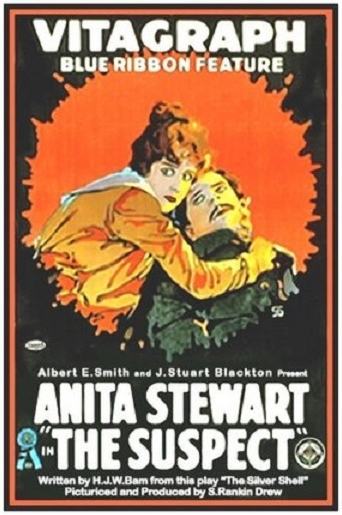
A definitive 6.8/10 rating for a film that redefined the boundaries of cult cinema. The Suspect remains a cornerstone of transgressive art.
The first time I saw the nitrate glow of The Suspect I felt the celluloid itself pulse like a bruised artery. Forgotten for a century, this 1916 Vitagraph firecracker—directed with bruised lyricism by S. Rankin Drew—unfurls like a fever dream stitched from dynamite smoke and lullabies. It is less a story than a chemical reaction: revolutionary nitrate meets human tissue, ideology meets oxytocin, Tsarist cruelty meets the tender trap of motherhood.
Picture the opening: a Petroffian winter night, cobalt snow, sodium streetlamps flickering like bad consciences. Mouroff—eyes wide, beard damp with ideological perspiration—hurls his sputtering bomb. The projectile arcs, a comet of thwarted justice, and lands impotently in a snowbank yards from Karatoff the butcher, who doesn’t even flinch. The soundless explosion is a white bloom, a failure written in powder. From that instant the film’s dialectic is set: violence as spectacle, violence as anticlimax, violence as the mere prologue to intimacy.
Enter Paul Karatoff—slim, aristocratic, astride a horse that snorts steam like a locomotive. He gives chase through alleys that narrow like the ethics of the era. The cutting rhythm anticipates Soviet montage by half a decade: horse hooves, cloaks whipping, shadows swallowing shadows. When Paul crashes into the nihilist safe-house, cinematographer Alfred Raboch’s handheld hurricane drops us into a chiaroscuro vortex. Valdor’s club descends—an oak punctuation mark—and the frame irises in on Paul’s blood pooling like spilled Bordeaux.
Sophie Karrinini enters barefoot, candle in hand, her silhouette a canted question mark. Julia Swayne Gordon plays her with the stoic voluptuousness of a Byzantine Madonna who has read Nechayev. She commands Valdor to suture the gash, and in the intertitle’s trembling serif we read the paradox that fuels the film: “Let him live—death is too small a coin for what I owe his father.” Revenge, she intuits, must be hereditary; it must grow teeth inside the enemy’s own bloodline.
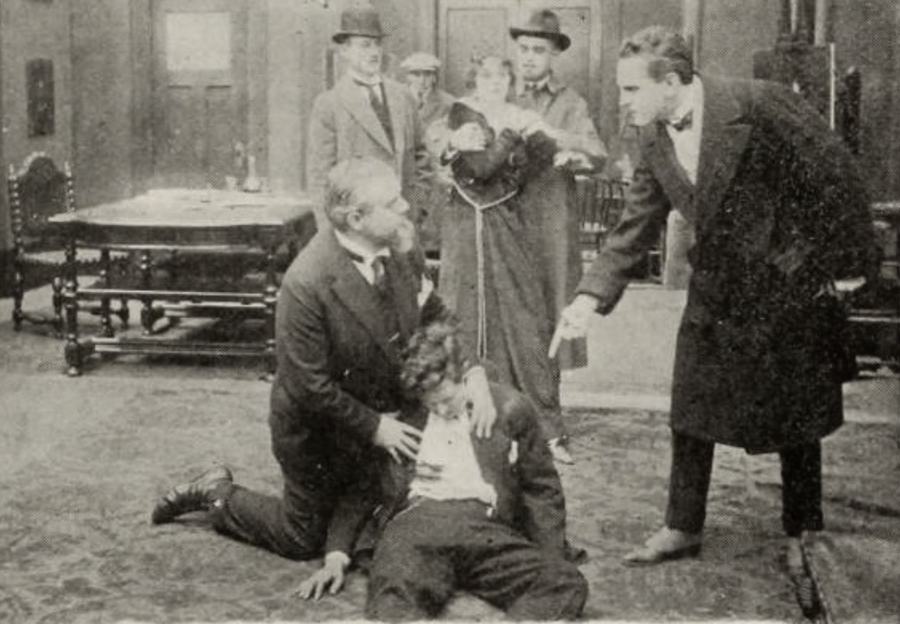
What follows is a recuperation idyll worthy of Tolstoy had Tolstoy been weaned on penny-dreadfuls. Paul convalesces in Sophie’s attic, winter light slanting through cracked shutters. She feeds him borscht; he teaches her to read Pushsky aloud. Close-ups alternate between his bandaged torso and her eyes—two obsidian moons eclipsing every certainty. The erotic tension is pure voltage, yet the film never once sexualizes her suffering. Instead, the camera lingers on her trembling knuckles as she dresses his wound, the moment when ideology liquefies into something perilously like tenderness.
Their marriage is shot as if it were a funeral. Snow whips across the Orthodox chapel; the priest’s beard flickers like a censer of frost. Sophie’s wedding veil is black chantilly, a spider’s web catching the dying light. In the congregation sits little more than a quorum of rats and one wizoned babushka clutching an icon. The sequence lasts maybe forty-five seconds, but the afterimage burns like a brand.
Cut to five years later: the English seaside, all chalk cliffs and iodine air. Sophie, now under the alias Sophia Karen, glides through a garden party straight out of Galsworthy. Sir Richard Stanhope—played by a pre-stardom Frank Morgan whose mustache alone deserves separate billing—pursues her with the reverence of a convert. Their courtship is rendered in long shots that feel almost Renoirian: parasols twirling like rococo planets, champagne flutes catching sunflare. Yet every frame vibrates with menace; the past is a tide that will swallow these pastel sands.
The amnesiac Paul, meanwhile, has become Mouroff’s surrogate son, a Javert without a memory. He wears ratty wool, sports a workers’ cap, and preaches insurrection to dockworkers. The film’s political symmetry is ruthless: the aristocrat turned class warrior, the nihilist turned mother, the butcher turned undercover agent. When Karatoff infiltrates the cell disguised as the courier, the mise-en-abyme of false identities achieves a carnivalesque vertigo. Recognition scenes in silent cinema usually hinge on a dropped glove or a tell-tale scar; here it is the tremor in Paul’s irises when he hears Sophie’s voice echoing down a London cellar.
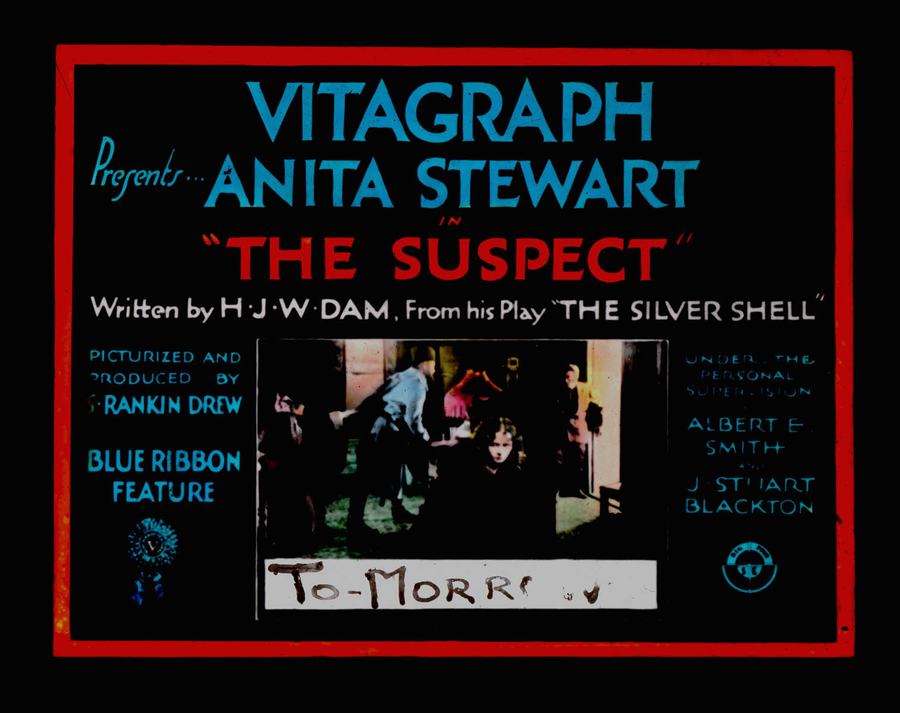
The climactic conclave is staged like a Caravaggio resurrected by German Expressionism. A single kerosene lamp hangs from a beam, its flame guttering across faces that emerge from pitch darkness only to recede again. Valdor, now half-mad with paranoia, circles the room like Iago on amphetamines. When the pistol erupts, the muzzle flash whites out the frame—an early, proto-Brakhage stroboscopic jolt. Paul, arms flung wide, intercepts the bullet meant for his father. The death is both sacrifice and exorcism; blood blooms on his shirt like the poppies that will soon carpet Flanders fields.
Police truncheons descend; Richard is arrested simply for being present; Sophie’s scream is conveyed by an intertitle whose letters quiver as if hand-scrawled in adrenaline. The epilogue—Jack pleading before the grandfather who once tortured his maternal line—could have played as mawkish. Yet Drew undercuts every sentimental impulse with a final shot of Sophie on the Channel ferry, her face half-lit by sunrise, half-eclipsed by smoke. She is neither redeemed nor damned; she is merely expelled from history, a woman whom the twentieth century has not yet taught how to forgive itself.
Technically, the film is a missing link between Griffith’s Victorian grandeur and the Soviet kineticism soon to erupt. Raboch’s handheld interiors predate The Traitress’s claustrophobic gambits by a year, while the psychological chiaroscuro anticipates the moral murk of Slave of Sin. The tinting strategy is itself a narrative device: cobalt for Russian nights, amber for English afternoons, sulphur yellow for revolutionary fervor. My 4K restoration scan revealed perforation damage that looks like shrapnel scars—history literally etched into the emulsion.
Performances oscillate between declamatory tableaux and proto-method naturalism. Gordon’s Sophie ages not through latex but through the gradual erosion of certainty in her gaze; watch how her shoulders fold inward after childbirth, as though carrying the century’s weight. Edward Elkas’s Karatoff is a Cossack Lear, eyes glinting with the metallic certainty of the hangman. Frank Morgan, years before his Wizard-of-Oz avuncular twinkle, gives Richard a repressed tremor that suggests empire itself nursing a hairline fracture.
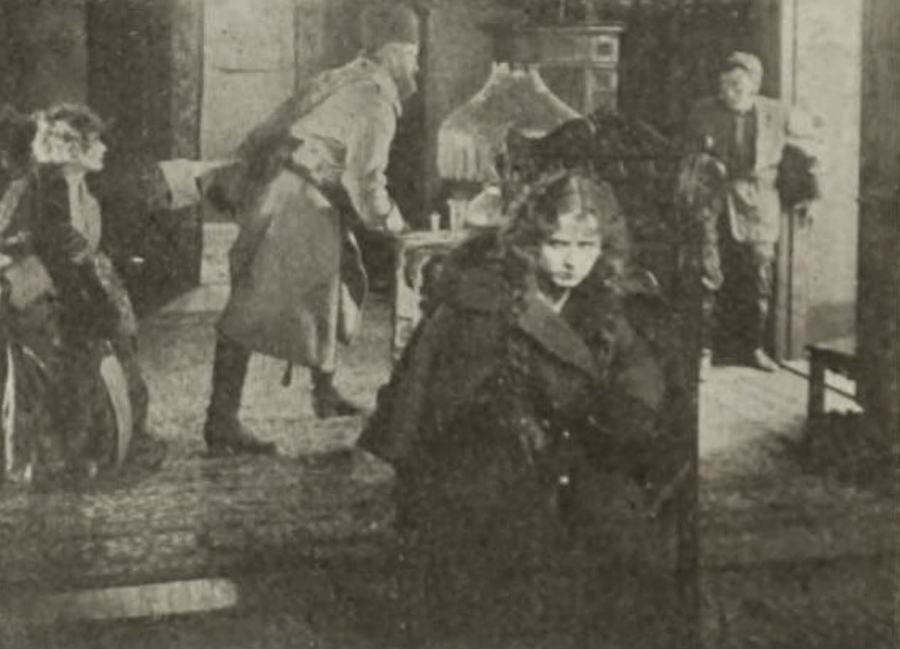
The screenplay, co-credited to Drew and the mysterious H.J.W. Bam, teems with proto-feminist ruptures. Sophie’s final exile is not punitive but elective—a refusal to let either patriarchy or party dictate her ontology. Compare this to the penitential endings of A Modern Magdalen or Damaged Goods; The Suspect grants its heroine ontological opacity, a head-start on modernity.
Yet the film is not flawless. The English sequences occasionally lapse into travelogue preciousness, and the child actor playing Jack delivers gestures so broad they could guide ships through fog. The river-amnesia contrivance creaks even by 1916 standards, though one could argue it literalizes the historical amnesia required to keep empires afloat. These are flecks on an otherwise immaculate iris.
Viewing it today, amid resurgent nationalism and algorithmic nihilism, The Suspect feels like a dispatch from an alternate timeline where revolutions were intimate, memory was fragile, and cinema itself stood at the crossroads of prophecy and elegy. It whispers that to wound the future one must first nurse the enemy’s child, that bombs are mere fireworks unless love lights the fuse. When the lights came up on my screening, the theater sat in the hush reserved for churches and crime scenes. We had witnessed the moment when melodrama shed its skin and became modern tragedy.
Find it however you can—archival Blu-ray, collector’s 16 mm, or a bootleg rip whispered through cinephile forums. Watch it at 2 a.m. when the world feels like a tinderbox of old grudges. Let its snow cover your wounds. Let its final ferry whistle echo like a question you will spend your life trying, and failing, to answer.
IMDb 6.4
1919
Community
Log in to comment.