DbcultAccessing Vault...
Cult Review
Senior Film Conservator
Is The Vulgar Yachtsman a lost gem of the silent era? Short answer: yes, but only if you harbor a deep appreciation for the unrefined, bone-crunching physics of 1920s slapstick comedy. This film is an essential watch for enthusiasts of the 'Ton of Fun' trio and those who study the evolution of mechanical trick photography, but it is certainly not for viewers who demand narrative nuance or modern sensibilities regarding body-focused humor.
The film operates on a plane of pure kinetic energy, where the story is merely a delivery system for a series of escalating disasters. It lacks the poetic grace of Chaplin or the architectural precision of Keaton, opting instead for a raw, visceral brand of comedy that feels surprisingly modern in its absurdity. It is a loud film in a silent medium, screaming with the sound of crunching metal and splashing water.
To understand why this film persists in the memory of silent cinema historians, one must look at the way it treats the physical world. Unlike the pastoral settings of Under the Greenwood Tree, The Vulgar Yachtsman is obsessed with the destruction of modern machinery. It asks a simple question: how much can a human—or a boat—endure before it breaks?
1) This film works because the mechanical stunts, particularly the steamroller collision, are executed with a fearless disregard for equipment that provides a genuine thrill.
2) This film fails because it relies too heavily on the repetitive 'weight' gag, which loses its punch after the third or fourth iteration.
3) You should watch it if you want to see Gale Henry, one of the most underrated physical comedians of the era, perform a high-stakes rescue sequence.
The central appeal of the film lies in the chemistry of Frank Alexander, Hilliard Karr, and 'Kewpie' Ross. While other films like Here He Comes focus on individual agility, The Vulgar Yachtsman focuses on collective mass. The opening sequence is a masterpiece of trick photography. When their 'trick automobile' meets a steamroller, the car doesn't just dent; it disintegrates in a way that feels like a precursor to the cartoon logic of the 1940s. It works. But it’s flawed in its pacing.
The directing (attributed to the standard slapstick factories of the time) utilizes wide shots to emphasize the scale of the destruction. There is a specific moment where the trio stands amidst the wreckage of their car, looking entirely unbothered. This lack of consequence is the hallmark of the 'Ton of Fun' style. It’s a subversion of the high-stakes drama found in Perils of the Coast Guard, replacing peril with a shrug and a new purchase.
Once the action moves to the wharves, the film hits its stride. The explosion of the first yacht is a surprisingly high-budget effect for a slapstick short. It isn't a small puff of smoke; it’s a full-scale pyrotechnic display that suggests the producers were more interested in spectacle than script. This aligns with the visual experimentation seen in Kino-pravda no. 4, albeit in a much more populist, less intellectualized form.
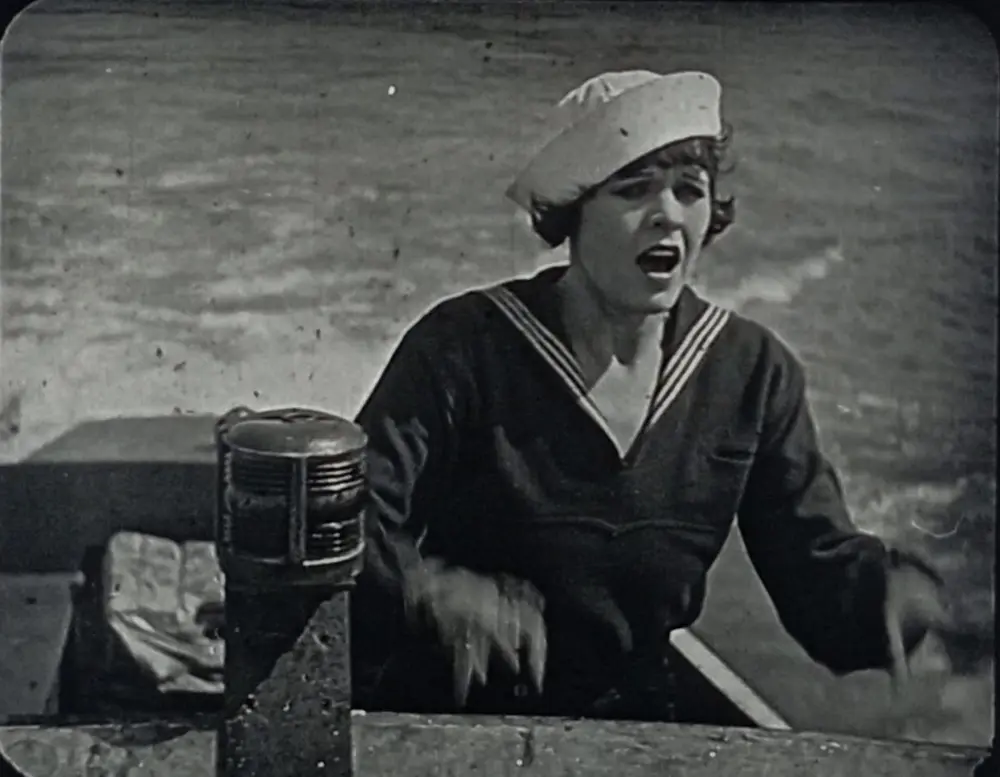
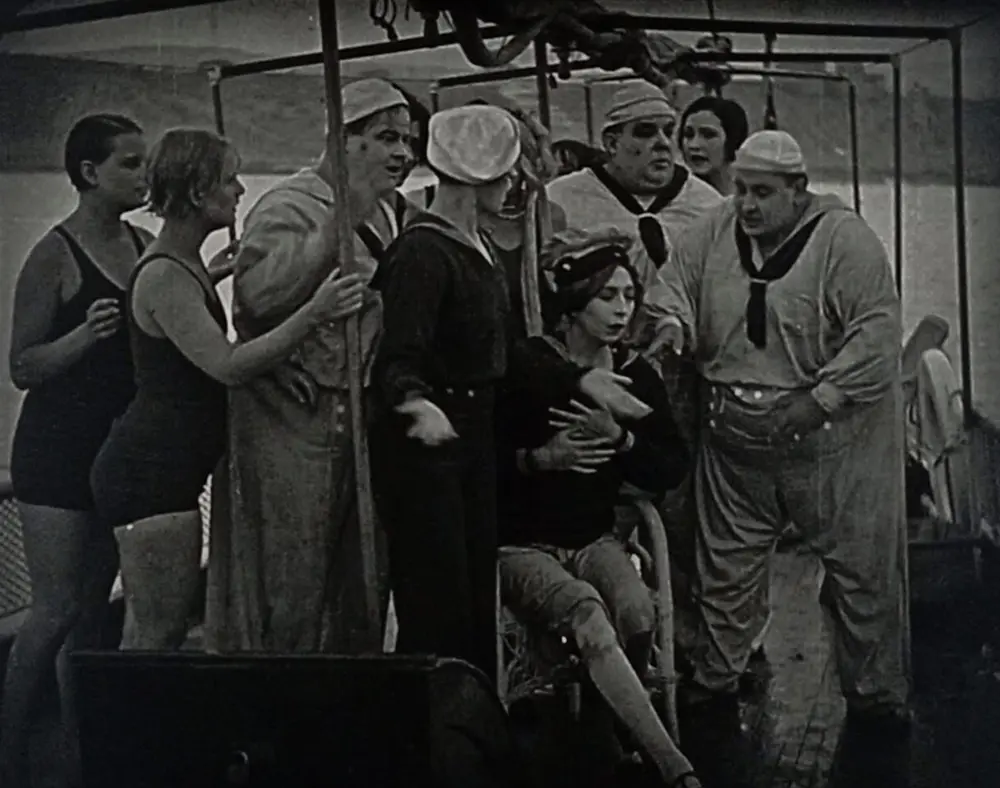
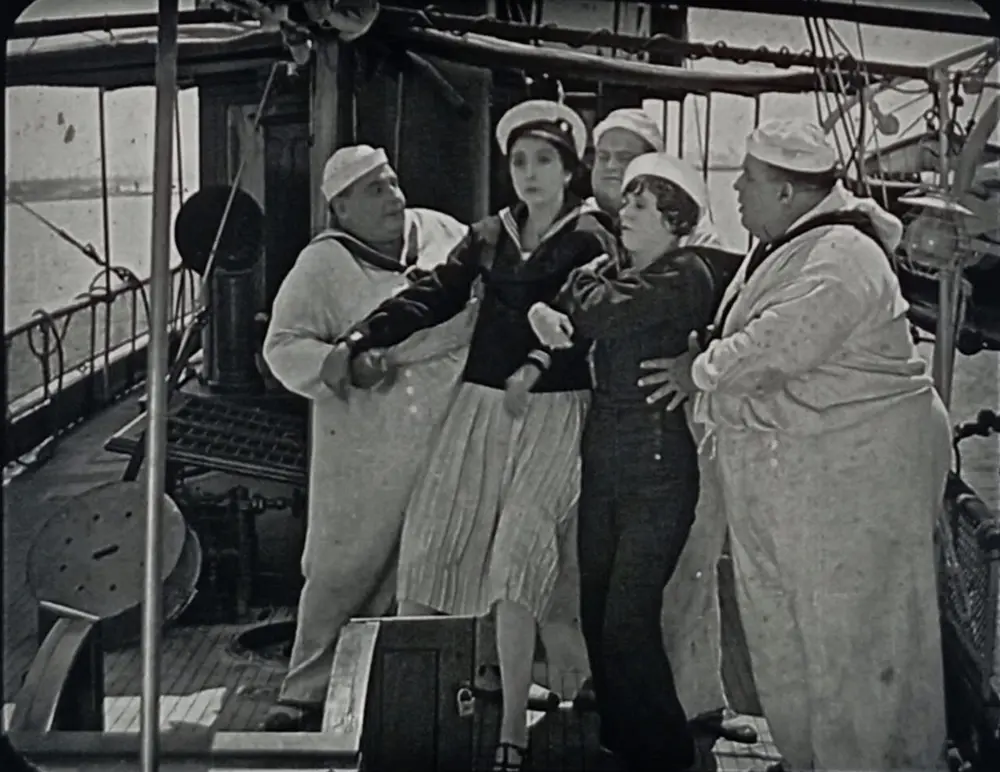
The introduction of Gale Henry and Lois Boyd shifts the energy. Gale Henry, with her long, angular frame, provides a perfect visual contrast to the three leads. Her performance during the seasickness sequence is a masterclass in facial contortion. As the boat tilts violently from side to side—a practical effect achieved by actually rocking the set or the vessel—Henry’s physical commitment to the bit is what saves the middle act from becoming stagnant. When she eventually falls overboard, the film transitions from a comedy of manners to a high-speed chase.
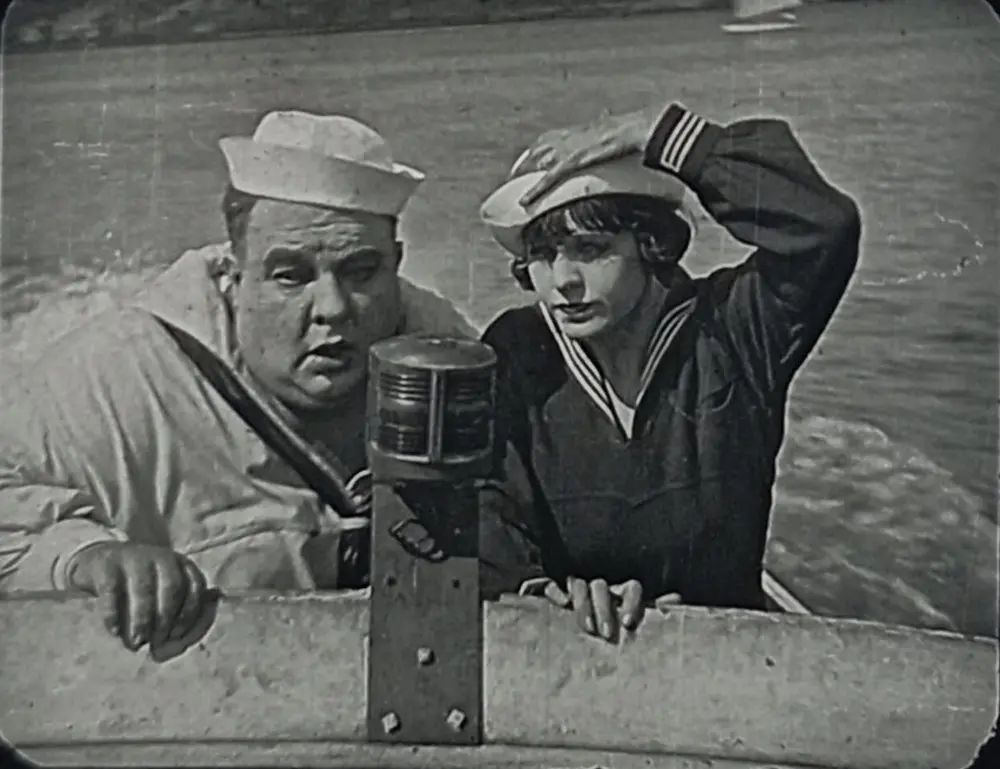
The final third of the film is a barrage of motorboat stunts. The cinematography here is surprisingly dynamic, with cameras mounted on moving vessels to capture the spray and the speed. This level of technical ambition is rarely credited to these 'low-brow' comedies. The editing rhythm accelerates, mimicking the racing pulse of the characters. We see boats upsetting, exploding, and performing 'trick stunts' that rival the action in Three Jumps Ahead.

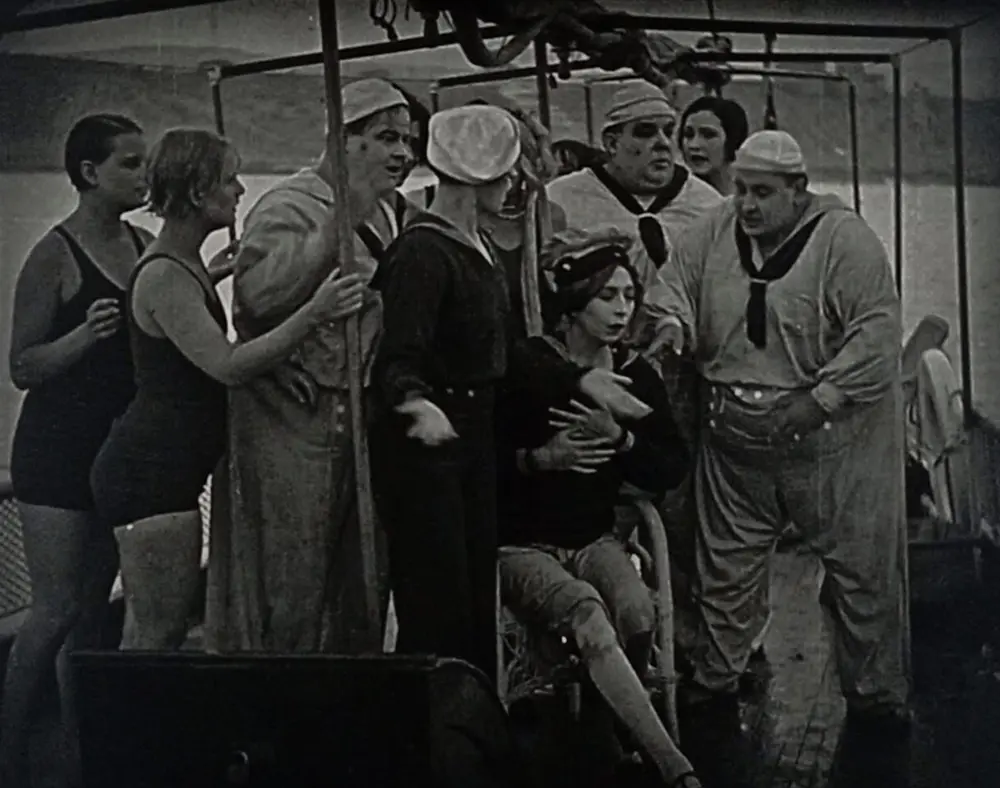
One specific observation that often goes unnoticed is the film's use of deep space. During the rescue scene, while the foreground is occupied by the bumbling trio, the background often features real maritime activity, giving the film a documentary-like texture that grounds the absurdity. This contrast between the 'fake' slapstick and the 'real' ocean creates a unique tension that keeps the viewer engaged.
Yes, The Vulgar Yachtsman is worth watching because it represents a specific, uninhibited era of filmmaking where the gag was king. It doesn't have the emotional depth of The Burning Soil, but it has a manic energy that is infectious. It’s a film that celebrates the resilience of the human body and the fragility of expensive machines.
Pros:
High-quality practical effects and explosions.
Excellent use of Gale Henry’s comedic timing.
Fast-paced final act with impressive maritime stunts.
A fascinating look at 1920s trick photography.
Cons:
The humor is very one-note regarding the protagonists' size.
Some of the transition shots feel hurried and poorly lit.
The search for the doctor plot point feels like a tacked-on excuse for more stunts.
The Vulgar Yachtsman is a loud, messy, and ultimately delightful example of silent slapstick. It doesn't aim for the stars; it aims for the water, and it hits it with a massive splash. While it lacks the narrative complexity of It Is the Law, it makes up for it with sheer audacity. If you can move past the dated 'three fat men' trope, you will find a film that is technically proficient and genuinely exciting. It’s a chaotic maritime romp that deserves a spot in the conversation about 1920s action-comedy. It’s simple. It’s vulgar. It works.

IMDb 6.9
1930
Community
Log in to comment.