DbcultAccessing Vault...
Cult Review
Senior Film Conservator
London’s fog still clings to Robert Daubrais’s topcoat when he learns that Paris has birthed a final, inconvenient heartbeat—an afterthought infant who slashes his expectancy by half. The telegram paper trembles like a guilty thing; the estate’s marble corridors echo with coins that now jingle for two instead of one. Director Michel Carré lets the news arrive off-camera: we see only Daubrais’s pupils dilate into twin black coins, reflecting a gas-jet that feels positively infernal.
From that first close-up, the film hurtles downhill on greased wheels. Moretti—part pimp, part proto-gangster—emerges from a doorway so narrow it could be a birth canal for sin. He swaddles the infant Remi in a blanket the color of absinthe, spirits him through Montmartre’s kidney-shaped alleys, and ditches him beneath a leaf-starved chestnut. Carré’s camera hovers above the basket like a gull: we expect a lullaby; instead we get the hollow thud of abandonment. Enter Barberin, a day-laborer whose face is topographical—every wrinkle a road Remi will later walk. He lifts the bundle with the reverence of a man pocketing a fallen bird, and the city’s soundtrack (a clatter of horse-shoes, a far-away accordion) recedes into something like grace.
Eight years compress into a single iris-out. Remi grows, played by a moon-cheeked prodigy whose eyes remain wide enough to house every injustice of the Third Republic. He believes Barberin’s brusque spouse to be his mother; the illusion shatters one night when candle-glow silhouettes the couple discussing “the foundling’s keep.” Carré overlays their whispered French with a superimposed shot of the boy’s face—tears become glass beads, gravity-defying, an early special effect that still stings.
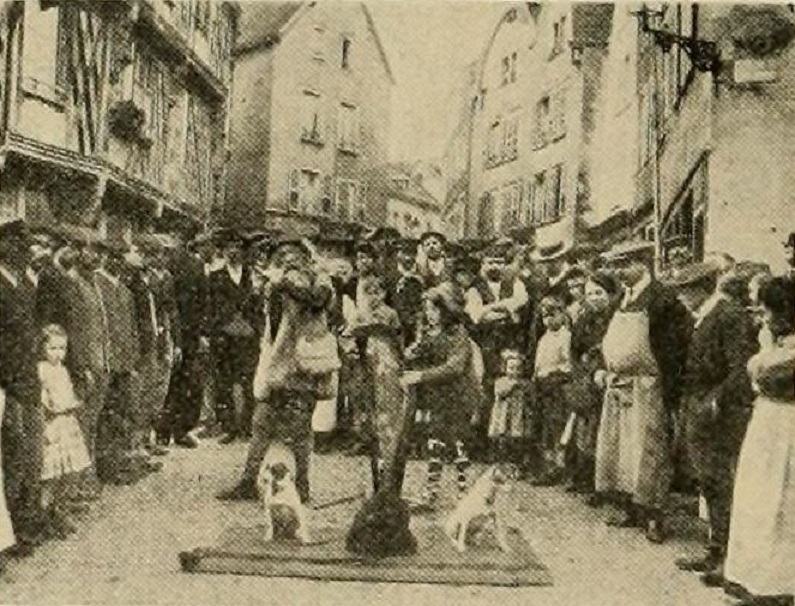
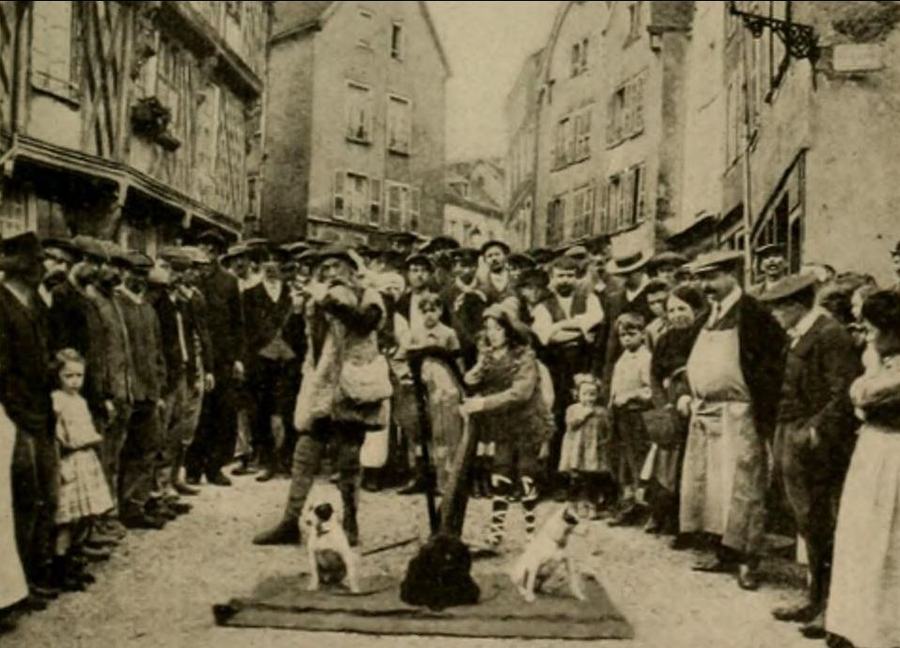
Enter Vitali—sprightly, goat-bearded, a fiddle tucked beneath his chin like a secret. He purchases Remi’s labor for a handful of sous and a promise: the world will be your nursery. Together with a capuchin named Joli-Cœur and a triad of briques-red setters, they busk from Nantes to Lyon, living inside a painted caravan that smells of tallow and wet dog. Carré films their act in actual fairgrounds: the camera is handheld, almost reckless, chasing dogs that leap through hoops of fire. The grain of the 35mm flares sea-blue against the straw, giving every frame the texture of a faded storybook.
Disaster arrives wearing bureaucracy’s face: gendarmes demand performance licenses; Vitali is dragged away; Remi wakes to find iron bars replaced by the vast indifference of a riverbank. One dog dies of hunger; another follows, its ribs a xylophone played by wind. The monkey, ever the Shakespearean clown, outlives both, only to perish later inside a snow-draped forest—a tiny Crusoe buried beneath a cairn of ice. Each death is lingered on: Carré refuses the sentimental close-up, opting instead for long shots where grief is measured by how small a body looks against the horizon.
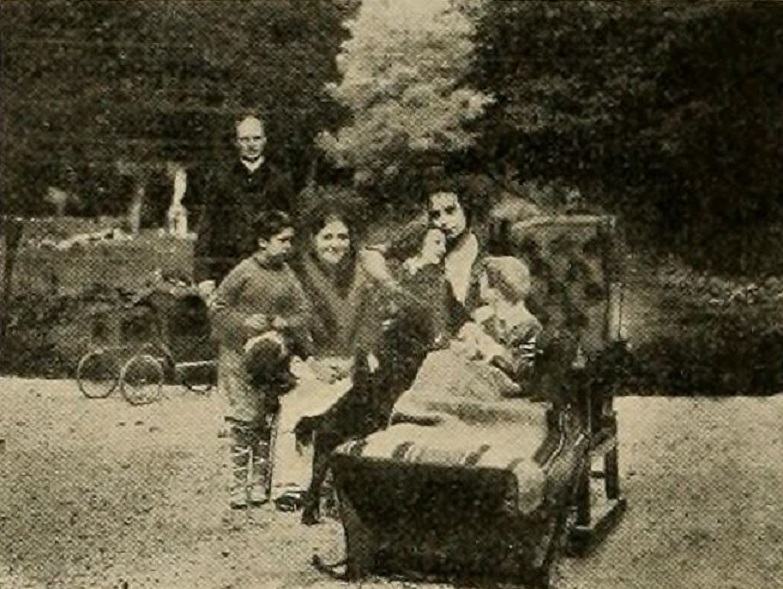
Salvation seems to sail in on a pleasure steamer: Arthur, wan heir to the contested fortune, spies Remi’s street show and implores his mother—played with porcelain fragility by Maria Fromet—to invite the urchin aboard. The yacht’s interiors are all gilded stucco and flocked velvet; Carré floods them with white magnesium light so that every gold leaf becomes a taunt. For one brief act, the film converts into Madame Butterfly’s visual grammar: East and West, privilege and penury, separated by nothing more than a balustrade.
Yet reunion is a revolving door. Vitali, freed through Fromet’s intercession, reclaims Remi, and the caravan creaks back onto rutted roads. Carré now pivots toward Dickensian squalor: Garafoli, a Fagin-esque puppet-master, runs a thieves’ kitchen where boys pick pockets to the metronome of a battered piano. The camera adopts Remi’s low vantage—table legs become colonnades, adult mouths gape like caves. When Vitali collapses—his final breath crystallizing in winter air—Carré cuts to an extreme close-up of snowflakes dissolving on the old man’s eyelids, a visual haiku about the heat of dying.
The climax is pure Jacobean melodrama: Daubrais, cornered by his own deceit, stages Remi’s death to cauterize loose ends. He informs Remi that Moretti—the ogre who once stuffed him in a basket—is his father, hoping filial shame will shackle the boy. But Matteo, street-smart urchin with soot-smudged cheeks, eavesdrops and spills truth like marbles. Nighttime rooftops become a labyrinth; chimney stacks stand like sentinels; the boys sprint toward a mansion blazing with chandeliers. Their arrival—mud-caked, dog-bitten, luminous—unmasks Daubrais in front of a mother who has worn black for eight years. Fromet’s scream is intercut with a flashback superimposition: the infant blanket, the chestnut tree, the empty basket—an origami of memory folding into present wrath.
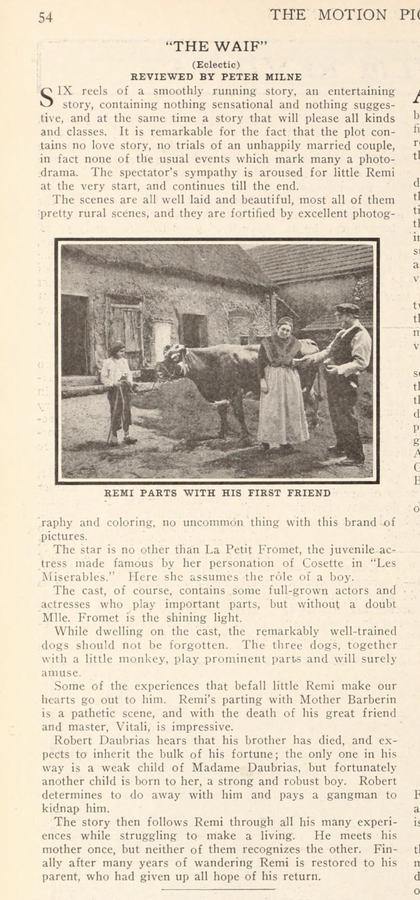
Carré’s final tableau is savage in its restraint: Daubrais expelled through a doorway whose rectangle of light swallows him like a guillotine. Mother and son embrace, yet the camera retreats upward, ascending a staircase until the pair shrink into a knot of shadows. The film refuses the comfort of closure; instead it posits that every inheritance—of money, of trauma—must be torn open again by the next generation.
Restored by Gaumont in 2019, the nitrate’s silver has cooled into pewter, yet Carré’s tinting strategy survives: Parisian interiors drip with amber, suggesting both opulence and infection; exteriors alternate between nocturnal sea-blue and dawn’s bruised mauve. The approach anticipates The Book of Nature, where chromatic shifts mirror moral temperature.
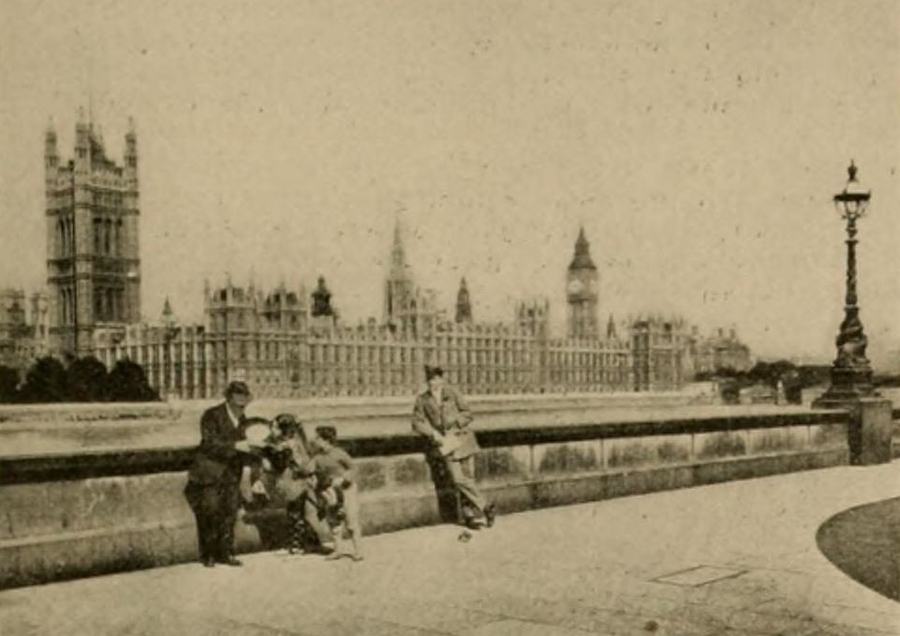
Maria Fromet communicates maternal anguish through micro-gestures: a tremor at the corner of her mouth when she clasps the boy she believes dead, a blink that lasts half a second too long—as if she fears closing her eyes will erase him again. Her acting style bridges the tableau’s statuesque pose and the nascent psychological realism that would bloom in Prestuplenie i nakazanie.
Scholars often liken The Waif to Dick Whittington and his Cat, yet Carré’s universe lacks the earlier film’s mercantile optimism. Here, London and Paris are twin purgatories where charity is transactional. The film also rhymes with Half Breed in its obsession with bloodlines tainted by illegitimacy, and with The Keys to Happiness for its belief that joy is a loan shark exacting compound interest in sorrow.
Carré employs axial cuts to jump from extreme long shot to close-up without intermediary coverage—a strategy that would influence later Soviet montage. When Remi discovers his foster parents’ true feelings, the camera lunges forward, transforming eavesdropping into assault. The device resurfaces in The Steel King’s Last Wish, where industrial capitalism is indicted with similar visual violence.
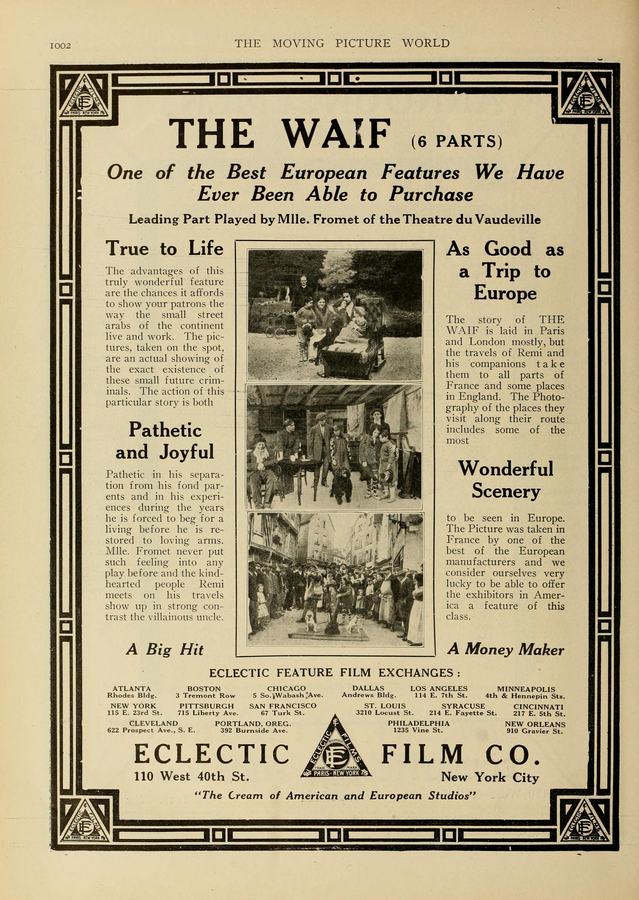
Currently streaming on Filmotek and Retro Cinématèque, the restored 2K transfer preserves the original 1.33 aspect ratio, allowing those sea-blue tints to swirl like bruises. Seek out the “Making of the Rescue” featurette: archivists reveal how a single surviving dupe negative—scorched at the edges—was coaxed back to life using liquid-gate printing and AI-assisted flicker removal.
Watching The Waif today is to witness the moment when melodrama mutates into modern cinema. Carré refuses to coddle: children perish, parents lie, inheritance is a roulette wheel greased by bastardy. Yet the film is not nihilistic; it insists that every act of abandonment germinates an equal and opposite act of reclamation—whether by street dogs, by strangers, or by the camera itself which, in that final ascension, refuses to let the audience settle into complacent catharsis.
So dim the lights, silence your phone, and let the city’s chestnut trees rustle again. You may exit grateful for modern safety nets, but you will also carry a chill that no hearth can fully thaw—a reminder that the past, like Daubrais, is always waiting on the next riverbend, ready to snatch what we assume is ours.
IMDb —
1917
Community
Log in to comment.