DbcultAccessing Vault...
6.6/10
Senior Film Conservator
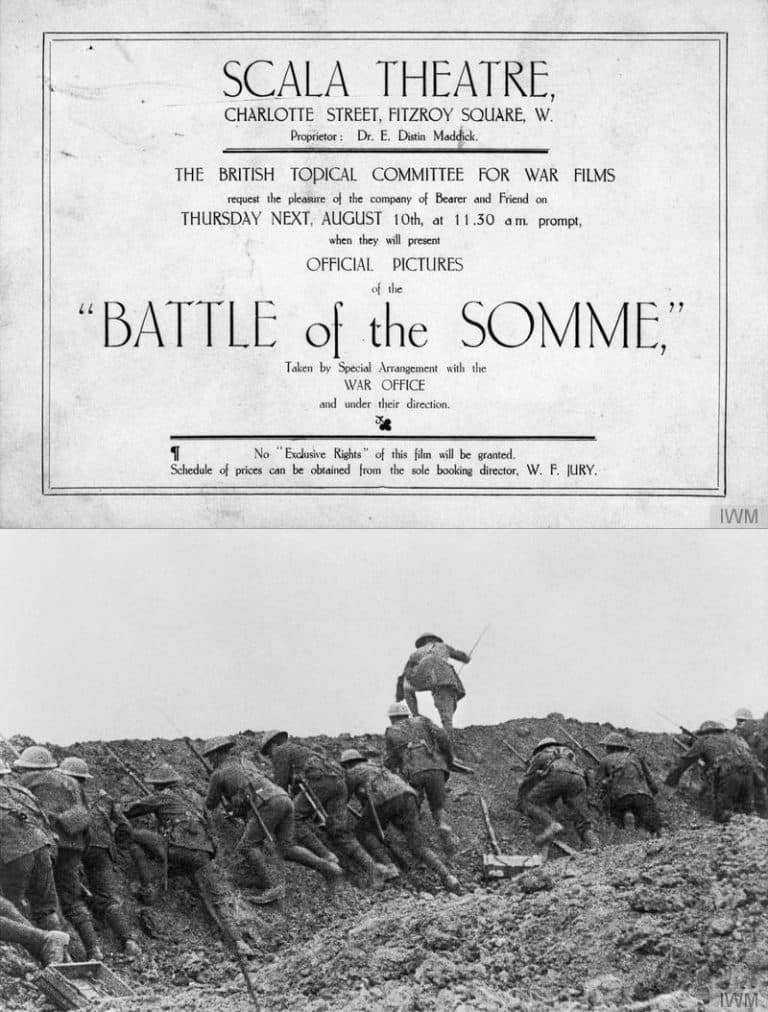
A definitive 6.6/10 rating for a film that redefined the boundaries of cult cinema. Kitchener's Great Army in the Battle of the Somme remains a cornerstone of transgressive art.
To watch Kitchener's Great Army in the Battle of the Somme is to engage in a form of cinematic seance. Released in an era when the moving image was still grappling with its own potency, this documentary stands as a monolithic testament to a generation's collective trauma. Unlike the curated fictions of The Kid, which would later find pathos in the individual, this 1916 record finds its power in the aggregate—the mass of humanity distilled into a singular, khaki-clad entity. The film does not merely document a battle; it documents the end of Victorian innocence and the birth of the modern, mechanized world.
The cinematography by Geoffrey Malins is nothing short of miraculous given the technical constraints of the period. Working with hand-cranked cameras amidst the literal upheaval of the earth, Malins captured a reality that no stage-play could ever replicate. While contemporary audiences might find the pacing deliberate, there is a mounting dread in the mundane. We see the arrival of reinforcements, the stacking of shells, and the grooming of horses. These are the logistical precursors to slaughter, presented with a matter-of-factness that feels more chilling than any modern horror film. It lacks the stylized melancholy of The Isle of the Dead, replacing gothic atmosphere with the cold, hard reality of chalky trenches and mud.
The film’s structure follows a teleological progression toward the inevitable explosion of violence. We are introduced to the various arms of the service—the artillery, the engineers, and the infantry—each presented as a vital cog in Lord Kitchener's grand machine. There is a palpable sense of pride in these sequences, a celebration of British industry and volunteerism. Yet, for the modern viewer, this pride is tempered by the knowledge of what followed. The high-lexical diversity of the visual language here—the contrast between the gleaming heavy guns and the weary faces of the men—creates a tension that the original editors might not have fully intended.
In one particularly striking segment, we see the men of the 'Pals' battalions resting before the attack. They wave at the camera, some smiling, others wearing expressions of profound introspection. It is a moment of human connection that transcends a century. Unlike the melodrama found in Souls Enchained, where emotion is heightened through performance, the emotion here is raw and unscripted. These are not actors playing at war; these are men living it, and in many cases, dying for it. The film captures a fleeting vitality that would be extinguished within hours of the footage being captured.
Technically, the film utilizes a series of long shots and medium shots that emphasize the scale of the operation. The sheer volume of materiel on display is staggering. We see mountains of shells, each one destined to tear through the landscape of France. The editing, though primitive by modern standards, creates a rhythmic pulse. The juxtaposition of the massive howitzers recoiling with the silent, plumes of smoke on the horizon provides a visual representation of the distance between cause and effect in modern warfare. This isn't the intimate struggle of The Reckoning; it is an impersonal, industrial process.
A point of frequent debate among film historians is the inclusion of staged or re-enacted footage within the documentary. The most famous sequence—the men going 'over the top'—was actually filmed at a training school behind the lines. In the context of 1916, this wasn't seen as a deception but as a necessary bridge to convey the experience of the front where a cameraman could not safely stand. This blend of documentary and reconstruction creates a fascinating ontological layer. It reminds us that cinema, even in its most observational form, is always a construction. It shares this DNA with works like Das Modell, which interrogates the nature of the image and the subject.
However, the real power lies in the unstaged moments. The footage of the Hawthorn Ridge mine explosion is one of the most iconic images of the 20th century. The slow, colossal upheaval of the earth is captured with a terrifying clarity. It is a moment where the film transcends propaganda and becomes a witness to the sublime—the terrifying, overwhelming power of human destruction. This is not the controlled narrative of Alias Jimmy Valentine; it is the chaotic intrusion of the real into the frame.
When the film was released in August 1916, it was a cultural phenomenon. Millions of British citizens flocked to cinemas to see their sons, brothers, and husbands. The reaction was one of profound shock. For the first time, the home front was confronted with the physical reality of the war—the mud, the exhaustion, and the dead. The film did not shy away from showing German and British casualties, though the latter were handled with more discretion. This transparency was a radical departure from the sanitized reports found in newspapers. It offered a communal experience of grief and pride that was unprecedented.
The film’s influence can be seen in the way we perceive historical conflict even today. It established the visual vocabulary of the Great War. When we think of the Somme, we think in the sepia tones and jerky movements of Malins' footage. It lacks the pastoral beauty of A Welsh Singer, opting instead for a gritty, tactile realism that would define the documentary genre for decades. The film also serves as a poignant counterpoint to the escapist narratives of the time, such as Playing Dead or Cross Currents, by forcing the audience to look directly at the cost of empire.
One cannot discuss this film without acknowledging the faces. The 'Great Army' was an army of individuals, and the camera frequently lingers on them. We see the 'thousand-yard stare' before the term was even coined. We see men sharing a cigarette, a brief moment of levity amidst the impending doom. These vignettes provide a necessary human scale to the vast military maneuvers. It evokes a sense of existential fragility similar to the themes in Through the Valley of Shadows, where the individual is dwarfed by forces beyond their control.
The depiction of the wounded is particularly moving. There is no Hollywood glamour here; there are only blood-soaked bandages and the hollow eyes of the shell-shocked. The film’s willingness to include these scenes suggests a respect for the audience’s ability to handle the truth, or perhaps a desperate need to justify the sacrifice through visual evidence of its magnitude. It stands in stark contrast to the royal pageantry of The Kineto Coronation Series: Royal Progress Through London, replacing the gold and ermine of the state with the blood and iron of the front line.
Ultimately, Kitchener's Great Army in the Battle of the Somme is more than a film; it is a piece of historical evidence that continues to breathe. It captures the paradox of war—the incredible ingenuity and organizational brilliance of humanity harnessed for the purpose of mutual destruction. While it may have been conceived as a tool for the state, it survived as a monument to the soldier. It lacks the narrative resolution of The Curse of Greed or the exoticism of Manya, die Türkin, offering instead the unresolved, haunting silence of the Western Front.
As we move further away from the events of 1916, the film’s importance only grows. It is a primary source that speaks with an eloquence that words often fail to capture. It is a reminder of the power of the image to shape our understanding of the world, and the heavy responsibility that comes with pointing a camera at the truth. Like the nocturnal meditations in Les heures - Épisode 4: Le soir, la nuit, the film leaves us in a state of reflection, contemplating the shadows of the past that still loom over our present. It is essential viewing for anyone seeking to understand not just the First World War, but the very nature of modern existence.
In the end, the film's greatest achievement is its refusal to let these men be forgotten. Though the 'Great Army' has long since passed into history, their presence remains etched into the silver nitrate, a flickering, eternal reminder of a summer in France where the world changed forever. It is a masterpiece of the visceral, a triumph of the observational, and a somber, necessary journey into the heart of the 20th century's defining conflict.
Community
Log in to comment.