DbcultAccessing Vault...
Cult Review
Senior Film Conservator
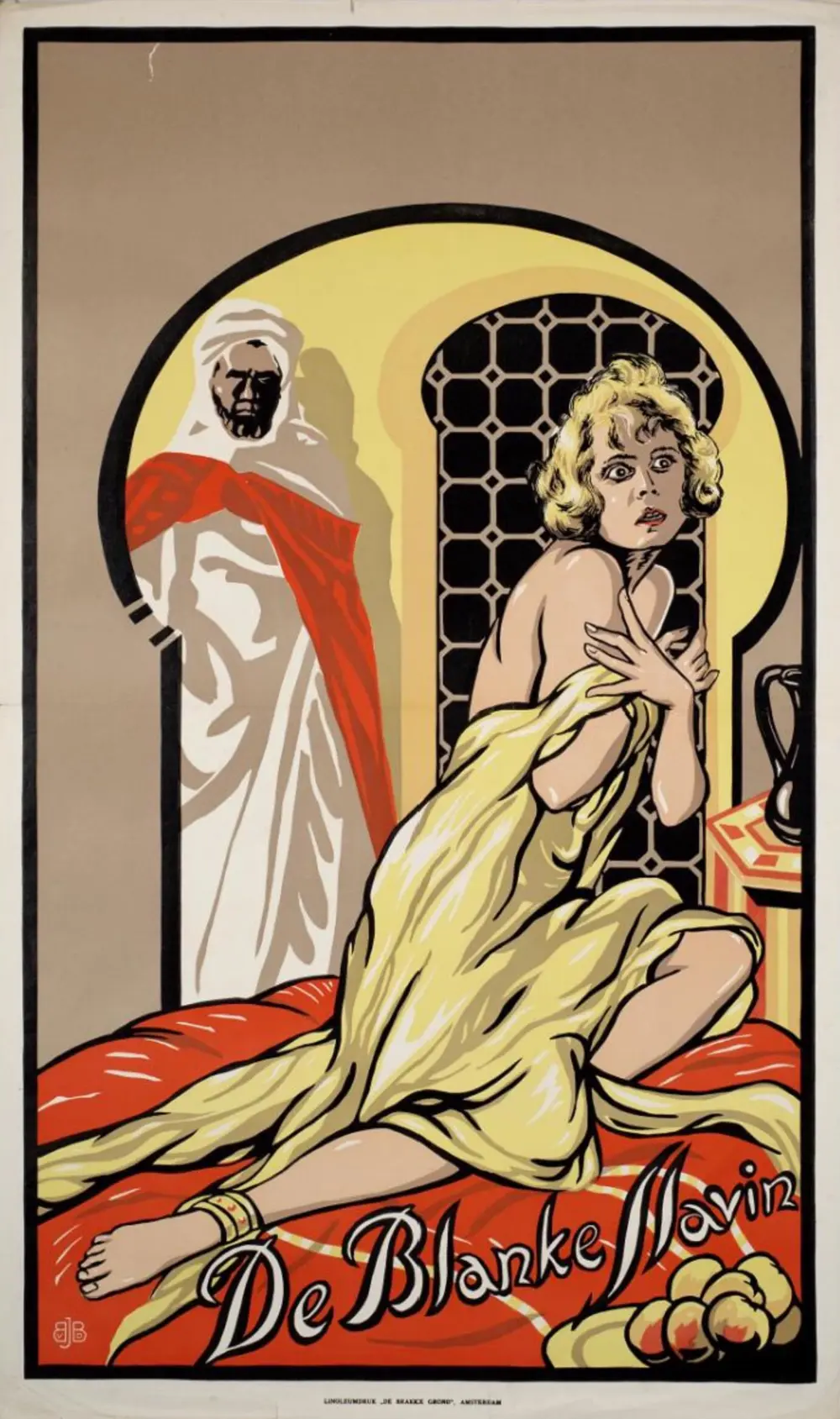
Is The White Slave (1927) a film worth dedicating your time to in the modern era? Short answer: yes, but with significant caveats. This silent-era drama is a fascinating, if deeply flawed, artifact that demands a critical eye, offering a window into the cinematic sensibilities and problematic cultural attitudes of its time.
This film is unequivocally for cinephiles, historians, and those interested in the evolution of storytelling, particularly in the silent era and the representation of cultural clashes. It is decidedly NOT for viewers seeking a straightforward, unproblematic romantic drama or those easily alienated by outdated, orientalist tropes that permeate its narrative.
Early silent films often present a challenge to contemporary audiences, balancing artistic merit with historical context. The White Slave is a prime example of this.
From its opening frames, The White Slave, directed by Augusto Genina, positions itself as a cautionary tale of forbidden romance and cultural immersion gone awry. We are introduced to Olga, a French woman of discernible social standing, who, against the counsel of her European companions – including the somewhat foreboding Dr. Alex Werner – chooses to marry Ali Benvert Bey, an Arab dignitary. This initial premise immediately sets the stage for a clash of worlds, less a meeting of cultures and more a collision course orchestrated by narrative convenience.
The film swiftly transports Olga to Arabia, an exoticized landscape painted with broad strokes of European fantasy. Her initial happiness, depicted with a certain naive wonder, is predictably fleeting. The transition from blissful newlywed to increasingly isolated wife is handled with a silent film's characteristic reliance on visual cues and melodramatic gestures. The Bey's objections to her European friendships, particularly with Dr. Werner, aren't just cultural differences; they are presented as a descent into possessive tyranny.
The turning point, the discovery of Olga and Werner's clandestine meetings, escalates the drama into outright captivity. Olga's imprisonment in a dancing hall is a potent, if heavy-handed, symbol of her subjugation. It's here that the film leans most heavily into its titular 'white slave' conceit, framing her plight through a distinctly Western lens of victimhood in an 'othered' land. Werner's subsequent heroic rescue and the climactic pursuit and death of the Bey are the predictable, if violent, resolutions to a narrative that never intended to explore genuine cultural understanding.
Ultimately, Olga’s return to Europe and presumed happiness feels less like a triumph of love and more like a retreat to the familiar, a rejection of anything outside the comfortable confines of European society. The film’s plot, while engaging as a melodrama, functions as a powerful testament to the prevailing anxieties and prejudices of its time concerning cross-cultural relationships and the perceived dangers of the 'Orient'.
Augusto Genina’s direction of The White Slave is a fascinating study in silent film craftsmanship. He masterfully employs the visual language of the era, relying on elaborate sets, expressive lighting, and the exaggerated gestures of his actors to convey emotion and narrative progression. The 'exotic' Arabian settings, though clearly studio-bound, are rendered with an impressive attention to detail, designed to transport the audience to a land of perceived mystery and danger. One particular scene, depicting Olga's initial awe upon arriving in her new home, uses sweeping camera movements and intricate mise-en-scène to establish a sense of grandeur that quickly gives way to claustrophobia.
The film’s heart, however, lies in the performance of Liane Haid as Olga. Haid, a prominent star of Austrian cinema, delivers a remarkably nuanced performance within the constraints of silent acting. Her wide, expressive eyes and graceful physicality communicate Olga's initial joy, her growing unease, and ultimately, her terror and desperation. She manages to imbue Olga with a sense of agency, even when the script often reduces her to a passive object of male desire or rescue. Her silent screams and desperate pleas during her confinement are genuinely affecting, allowing the audience to connect with her plight despite the surrounding narrative issues.
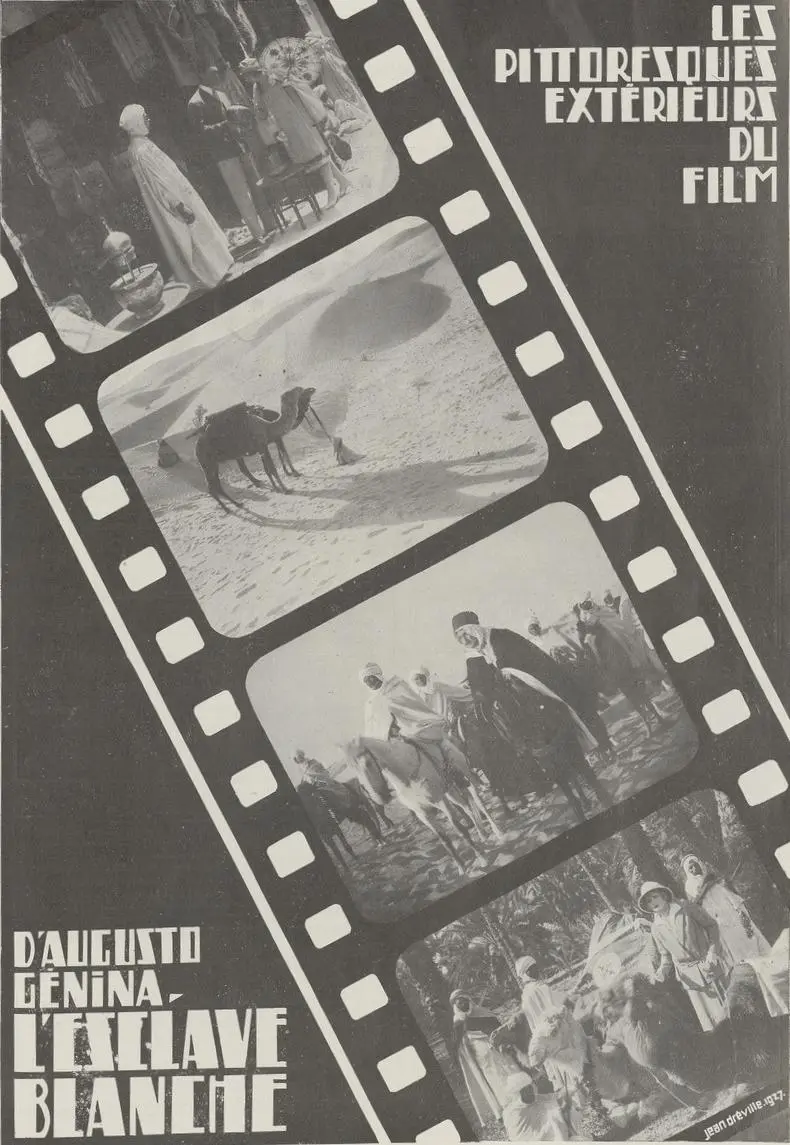
"Haid's portrayal transcends the script's limitations, yet it inadvertently strengthens the problematic core of the film, making Olga's victimhood all the more poignant and, therefore, the need for a 'white savior' all the more justified within the film's own logic."
Harry Hardt as Dr. Alex Werner embodies the stoic, heroic European figure. His performance is less about internal struggle and more about decisive action, a stark contrast to Haid's emotional vulnerability. He is the archetypal hero, unwavering in his determination to rescue the damsel in distress. Charles Vanel, as Ali Benvert Bey, is burdened by the film's most problematic characterization. He effectively portrays the Bey's transition from charming suitor to tyrannical captor, but his performance is largely defined by the stereotypical 'otherness' assigned to his character. His menacing glares and forceful gestures are designed to elicit fear, not understanding, reinforcing the film's simplistic portrayal of good versus evil.
The cinematography in The White Slave, while not revolutionary, is highly effective for its time. The use of dramatic lighting, particularly in interior scenes and during moments of tension, creates palpable atmosphere. Shadows play a crucial role in conveying Olga's growing sense of entrapment, often engulfing her as her husband's control tightens. The film utilizes a variety of camera angles and compositions to emphasize scale, power dynamics, and emotional states. For instance, low-angle shots of the Bey enhance his imposing presence, while high-angle shots of Olga often make her appear vulnerable and diminished.
Silent films relied heavily on visual metaphors, and Genina's film is no exception. The opulence of the Arabian palace, initially a symbol of Olga's new life, gradually transforms into a gilded cage. The traditional Arab attire Olga is forced to wear, at first perhaps a sign of assimilation, becomes a costume of her subjugation. The dancing hall, with its exotic dancers and confined space, serves as a stark visual representation of her objectification and loss of freedom. These visual cues, though subtle by today's standards, were powerful tools for conveying complex emotions and narrative shifts to a silent audience.
The action sequences, particularly the climactic pursuit, showcase the technical prowess of silent filmmaking. Dynamic editing, cross-cutting between the pursuers and the pursued, builds suspense effectively. While not on the scale of a Buster Keaton chase in Cops, the intensity is palpable. The film’s visual language, despite its dated cultural lens, remains compelling, demonstrating how much could be communicated without a single spoken word.
The pacing of The White Slave is a slow burn, characteristic of many silent melodramas. It takes its time establishing the initial romance and Olga's naive happiness, allowing the audience to invest in her character before her world crumbles. This deliberate build-up makes the subsequent descent into drama and suspense more impactful. The tone shifts from romantic exoticism to tense thriller, with moments of genuine fear and desperation for Olga. The melodrama is thick, as expected, but it never completely devolves into farce, largely thanks to Haid's grounded performance.
To fully appreciate (or critique) The White Slave, it's crucial to understand its historical context. Released in 1927, the film arrived at a time when European colonial powers still held significant sway, and 'orientalism' – the Western fascination with, and often misrepresentation of, Eastern cultures – was rampant in art and literature. Films like Three Weeks or The Pride of Palomar similarly leveraged exotic settings for dramatic romance, but The White Slave takes it a step further into overt cultural conflict and rescue narratives.
The film reflects deep-seated anxieties of the era: fears of cultural dilution, the perceived subjugation of Western women in non-Western societies, and the pervasive belief in Western superiority. The narrative, therefore, isn't just a story; it's a mirror reflecting the socio-political biases prevalent in Europe during the interwar period. This makes it a fascinating, if uncomfortable, subject for study, revealing how cinema was used to reinforce dominant ideologies.
Yes, The White Slave is worth watching for specific audiences. It is a valuable historical document. It showcases the artistry of silent film, particularly Liane Haid’s compelling acting. Viewers must be prepared to critically engage with its outdated and problematic cultural portrayals. It offers insight into early cinema’s narrative structures and societal biases. It is not for casual viewing seeking modern sensibilities. It is a film for students of cinema, history, and cultural studies.
The White Slave is not an easy film to recommend without significant qualification. It works. But it’s flawed. As a piece of silent cinema, it showcases the technical and performative artistry of its era, particularly in Liane Haid’s compelling lead performance and Augusto Genina’s visually articulate direction. The film’s ability to build suspense and convey emotion through purely visual means is genuinely impressive, a testament to the power of the medium before sound took hold.
However, its narrative, steeped in a deeply uncomfortable orientalist gaze and a heavy-handed 'white savior' complex, makes it a challenging watch. It’s a relic. A fascinating, uncomfortable relic. It offers little in the way of genuine cultural understanding, instead opting for sensationalism and the reinforcement of prevailing prejudices. To watch The White Slave today is not merely to watch a film, but to engage in a critical dialogue with a piece of history that reflects both the artistic achievements and the profound societal shortcomings of its time. It’s essential viewing for those who understand this distinction, but a skip for anyone seeking simple entertainment.
IMDb 5
1932
Community
Log in to comment.