DbcultAccessing Vault...
6.1/10
Senior Film Conservator
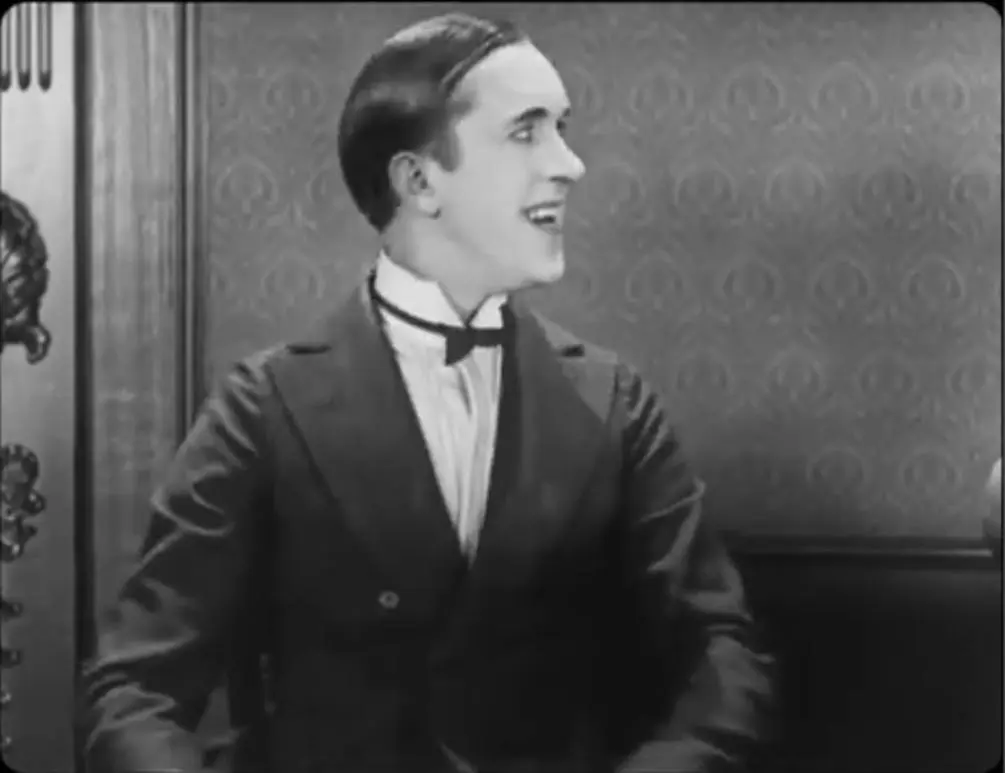
A definitive 6.1/10 rating for a film that redefined the boundaries of cult cinema. The Whole Truth remains a cornerstone of transgressive art.
When The Whole Truth opens, the viewer is thrust into a courtroom that feels less like a venue of justice and more like a theatrical set, its wooden benches and stern judge's bench bathed in stark chiaroscuro. The director, whose name has faded into the annals of silent-era anonymity, employs exaggerated angles that accentuate the claustrophobic atmosphere, a visual metaphor for the protagonist’s entrapment within his own fabrications. The choice of lighting—sharp contrasts of black and white—mirrors the binary of truth versus deception that underpins the narrative.
Stan Laurel, best known for his later partnership with Oliver Hardy, here demonstrates a solo virtuosity rarely celebrated. He oscillates between the wide-eyed naïf and the cunning raconteur, his physicality a study in kinetic irony. In moments when the truth serum begins to take effect, Laurel’s facial musculature tightens, his eyes flicker with a sudden lucidity that betrays the absurdity of his preceding tales. This transformation is not merely comic; it is a subtle commentary on the performative nature of courtroom testimony.
Helen Gilmore and Clara Guiol provide the stoic yet exasperated spouses whose silent glances convey volumes of marital fatigue. James Finlayson, ever the master of the raised eyebrow, embodies the skeptical judge, his occasional sighs punctuated by a barely perceptible smirk. The ensemble’s timing is impeccable, each reaction calibrated to heighten Laurel’s farcical confession. Their performances echo the ensemble dynamics seen in The Go-Getter, where secondary characters amplify the protagonist’s journey.
The truth serum, a contrivance that would feel out of place in a modern courtroom drama, functions here as a literal catalyst for narrative revelation. Its introduction is both a plot device and a meta‑commentary on the audience’s desire for unvarnished truth in an era dominated by melodramatic exaggeration. As the serum courses through Wallingford’s veins, the film’s pacing accelerates; the camera follows his jittery movements with quick cuts, echoing the frantic unraveling of his invented alibis.
Wallingford’s confessions begin with a ludicrous tale of an accidental encounter with a traveling circus—an allusion that subtly nods to Polly of the Circus. He claims to have been recruited as a tightrope walker, a claim that, while implausible, is delivered with such earnest conviction that the audience is compelled to suspend disbelief. As the serum takes hold, each successive anecdote peels away another veneer: a misadventure involving a stolen horse, an ill‑fated attempt at detective work reminiscent of the slapstick sleuthing in Everyman's Price, and a final, almost poetic confession that he never left home at all—he simply vanished into the labyrinth of his own imagination.
The late 1920s marked a pivotal shift from pure slapstick to more narrative‑driven comedy. The Whole Truth occupies a liminal space, retaining the physical exuberance of earlier shorts while experimenting with a more intricate plot structure. This hybridization can be observed in contemporaneous works such as Number 99, where the comedic premise is entwined with a subtle critique of bureaucratic absurdity.
Although the film is rendered in monochrome, the director employs a visual shorthand that suggests a palette of emotional tones. The courtroom’s shadows are deep and oppressive, evoking a sense of entrapment. In contrast, the moments when Laurel’s imagination takes flight are illuminated with a softer, almost ethereal lighting, hinting at the bright hues of hope and freedom that the audience can only infer. This interplay of light and dark anticipates the later use of color symbolism in sound films.
At its core, The Whole Truth interrogates the performative aspect of testimony. The courtroom, a stage where truth is expected to be absolute, becomes a theater of illusion. The truth serum, meant to strip away artifice, paradoxically reveals that the “truth” is a construct shaped by narrative necessity. This theme reverberates in modern legal dramas, yet the film’s comedic framing renders the critique both accessible and poignant.
The film’s meta‑commentary on truth finds a descendant in the Soviet documentary series Kino‑pravda no. 2, where the line between observation and manipulation is constantly examined. While the tonal registers differ dramatically—one being a silent comedy, the other a political documentary—the shared preoccupation with authenticity underscores a universal cinematic concern.
Although The Whole Truth has not achieved the iconic status of Laurel’s later duo films, its daring blend of courtroom satire and surreal confession paved the way for later genre‑bending works. The film’s willingness to subvert audience expectations anticipates the narrative tricks employed by modern comedians such as Charlie Chaplin in The Street, where humor becomes a vehicle for social commentary.
The editing, though constrained by the era’s technological limits, demonstrates a keen sense of rhythm. Cuts are timed to coincide with Laurel’s physical gags, creating a kinetic syncopation that heightens comedic impact. The intertitles, penned by H.M. Walker, are succinct yet witty, delivering punchlines that complement the visual humor. The accompanying musical score—reconstructed for modern screenings—utilizes a jaunty piano motif that underscores the film’s breezy yet incisive tone.
In sum, The Whole Truth stands as a testament to the versatility of silent cinema. It merges the physical exuberance of early slapstick with a sophisticated narrative architecture that interrogates the very notion of truth within institutional frameworks. Stan Laurel’s performance, layered with both comedic timing and subtle pathos, elevates the film beyond mere farce. For scholars of early film, enthusiasts of courtroom drama, and lovers of clever comedy alike, this work offers a richly textured experience that rewards repeated viewings.
If you are intrigued by the interplay of deception and revelation, consider exploring related titles such as Pets and Pests for a lighter comedic romp, or The Bird of Prey for a more dramatic take on moral ambiguity. Each film, in its own right, contributes to a broader conversation about the performative dimensions of truth in cinema.
IMDb —
1922
Community
Log in to comment.