DbcultAccessing Vault...
5/10
Senior Film Conservator
A definitive 5/10 rating for a film that redefined the boundaries of cult cinema. The Worldly Madonna remains a cornerstone of transgressive art.
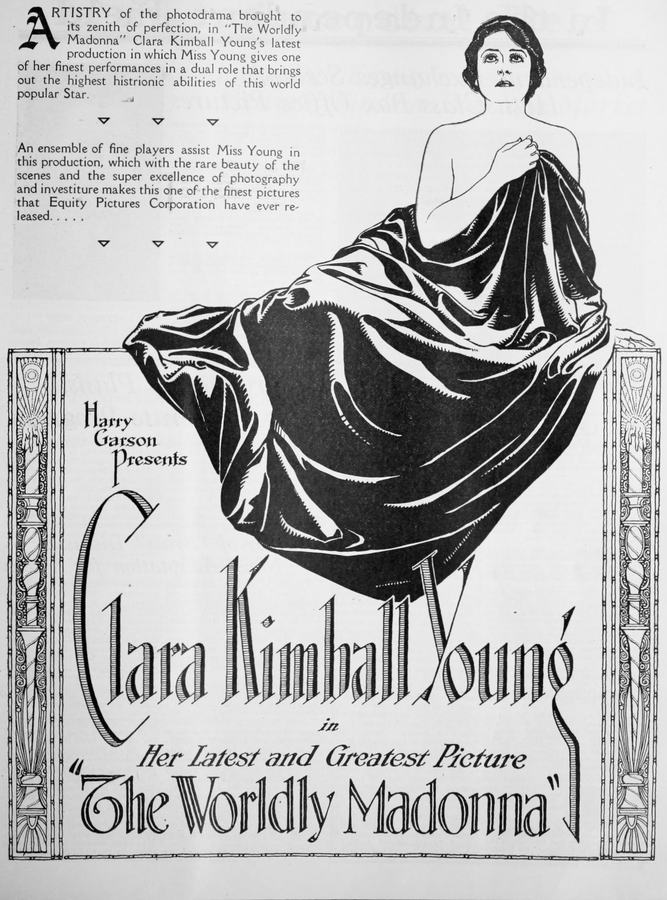
The year 1922 stood as a pivotal moment for the cinematic medium, a time when the visual grammar of storytelling was shedding its theatrical chrysalis to embrace a more nuanced, psychological depth. At the heart of this evolution was The Worldly Madonna, a film that doesn't merely present a story but orchestrates a complex dialogue between the spiritual and the carnal. Directed with a keen eye for atmospheric tension, the film serves as a magnificent showcase for Clara Kimball Young, an actress whose ability to command the frame was virtually unparalleled in the silent era.
In the landscape of early 20th-century cinema, the "fallen woman" and the "saintly maiden" were often depicted as distinct, irreconcilable entities. However, Sada Cowan’s screenplay for The Worldly Madonna dares to suggest that these archetypes are but two sides of the same coin. By casting Young as both Janet, the convent-bound novitiate, and Lucy, the cabaret siren, the film forces the audience to confront the arbitrary nature of social labels. This isn't just a gimmick of double exposure; it is a profound meditation on the performative nature of identity. When Janet steps into Lucy’s world, she doesn't just put on a costume; she adopts a survival mechanism, proving that the 'sacred' is capable of navigating the 'profane' without losing its essence. This thematic complexity mirrors the redemptive journeys seen in The Man Who Came Back, where the descent into the depths is a prerequisite for true enlightenment.
The technical execution of the dual roles is particularly impressive for its time. Unlike the somewhat stilted portrayals in earlier efforts like Shadows of the Past, Young’s performances are distinct not just in attire, but in posture, gaze, and the very rhythm of her movements. As Janet, her gestures are economical, imbued with a quietude that suggests an internal anchor. As Lucy, she is frantic, her physicality reflecting the jagged edges of a life lived under the neon lights and the constant threat of moral ruin. The scene where the swap occurs is a masterclass in tension, utilizing shadows and mirror play to emphasize the fracturing of their singular lineage into two disparate fates.
While we often associate the 1920s with the "flapper" exuberance of films like Youth's Endearing Charm or the light-hearted domesticity of Chickens, The Worldly Madonna leans into a darker, more cynical aesthetic. The cabaret scenes are bathed in a chiaroscuro that anticipates the film noir movement of the 1940s. The smoke-filled rooms and the predatory gazes of the patrons create a sense of claustrophobia that contrasts sharply with the airy, almost ethereal lighting of the convent. This visual dichotomy reinforces the film’s central thesis: that the world is a place of shadows where light must be fought for, not merely inherited.
"The Worldly Madonna is not merely a melodrama; it is a visual treatise on the plasticity of the human soul, where the habit of a nun and the sequins of a dancer are but masks for the same enduring spirit."
The supporting cast provides a sturdy framework for Young’s dual-engine performance. Richard Tucker brings a grounded, if somewhat traditional, masculinity to his role, serving as the audience's surrogate as he navigates the confusion of the sisters' switch. Jean de Limur and William P. Carleton inhabit their characters with a theatricality that was typical of the era but never slips into caricature. Even the smaller roles, such as Milla Davenport and George Hackathorne, contribute to the film’s rich, lived-in atmosphere, suggesting a world that exists beyond the immediate frame—a quality often missing in more localized dramas like The Jucklins.
At its core, the plot hinges on a perceived crime—a murder that Lucy believes she has committed. This legal peril drives the narrative, reminiscent of the high-stakes moral dilemmas found in The Final Judgment. However, where The Worldly Madonna differs is in its focus on the psychological toll of the deception. Janet’s time in the cabaret is not just a quest for justice; it is a test of her faith. Can she remain 'The Madonna' while navigating a world that sees her only as 'Worldly'? The film’s brilliance lies in its refusal to offer easy answers. The tension is palpable as the threat of discovery looms, a narrative device used effectively in other suspense-driven silents like The Rope's End.
Comparisons to Father John; or, The Ragpicker of Paris are also apt, as both films deal with characters operating on the fringes of society, forced to adopt disguises to achieve a higher moral purpose. Yet, The Worldly Madonna feels more intimate, more focused on the internal transformation than the external social critique. It lacks the pastoral simplicity of Shore Acres (1920), opting instead for a gritty, urban sophistication that feels remarkably modern even a century later.
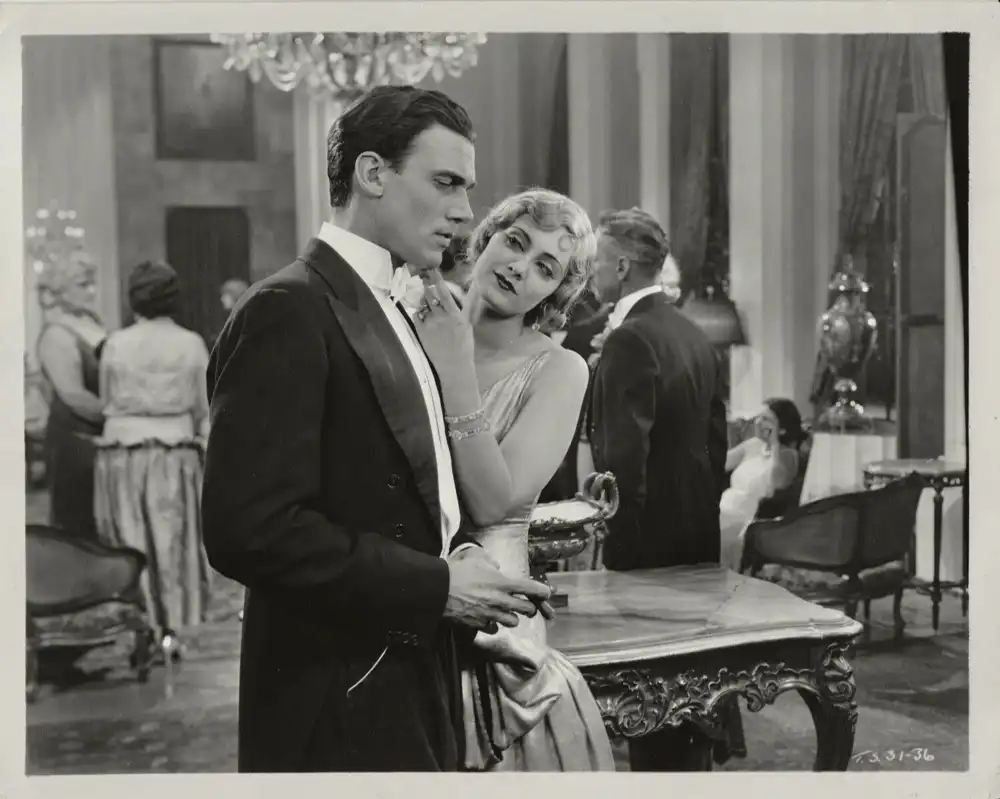
The production design, though constrained by the technology of 1922, manages to convey a sense of grandeur and squalor with equal efficacy. The convent sets are minimalist, emphasizing the spiritual void that Janet is leaving, while the cabaret sets are cluttered, reflecting the sensory overload of Lucy’s life. This visual storytelling is far more advanced than the somewhat flat presentations in At First Sight or the more conventional Putting It Over. It aligns more closely with the ambitious visual language of Fine Feathers (1921), where the environment is an active participant in the character’s psychological state.
One cannot discuss this film without acknowledging the contribution of Sada Cowan. Her writing avoids the pitfalls of over-sentimentalization that plagued many of her contemporaries. Instead, she crafts a narrative that is tight, logical, and emotionally resonant. The dialogue (conveyed through intertitles) is sharp and purposeful, lacking the flowery excesses of Susie Snowflake. It is a script that understands the power of the unspoken, allowing the actors' faces—and specifically Young’s expressive eyes—to carry the weight of the story.
In terms of its place in the broader cinematic canon, The Worldly Madonna is a precursor to the psychological thrillers that would dominate the later decades. It shares a certain DNA with Tiger Land in its exploration of dangerous environments, though it remains firmly rooted in the moral landscape of the early 20s. It also avoids the procedural dryness of films like Trooper 44, focusing instead on the emotional stakes of its protagonists.
To watch The Worldly Madonna today is to witness a star at the height of her powers. Clara Kimball Young’s dual turn is a masterclass in silent acting, providing a blueprint for how to portray internal conflict without the aid of spoken dialogue. The film challenges the viewer to look past the surface—to see the 'Madonna' in the dancer and the 'Worldly' woman in the nun. It is a reminder that cinema, even in its infancy, was capable of tackling the most complex aspects of the human psyche with grace, intelligence, and a touch of noir-ish darkness.
As the final reel fades, one is left with a profound sense of the transformative power of empathy. Janet’s journey into her sister’s darkness doesn't just save Lucy; it expands Janet’s own soul, giving her a perspective on the world that the cloistered walls of the convent could never provide. It is this synthesis of experiences—the sacred and the profane—that makes the film a lasting work of art. For anyone interested in the history of film as a medium of psychological exploration, The Worldly Madonna is an essential, if often overlooked, chapter that deserves to be celebrated alongside the greatest works of the silent era.
A shimmering example of 1920s ambition, The Worldly Madonna transcends its melodramatic roots to offer a sophisticated study of identity. Clara Kimball Young’s performance is a revelation, and the film’s visual style remains evocative even by modern standards. It is a haunting, beautiful, and deeply intelligent piece of cinema that remains as relevant today as it was a century ago.
IMDb —
1920
Community
Log in to comment.