DbcultAccessing Vault...
Cult Review
Senior Film Conservator
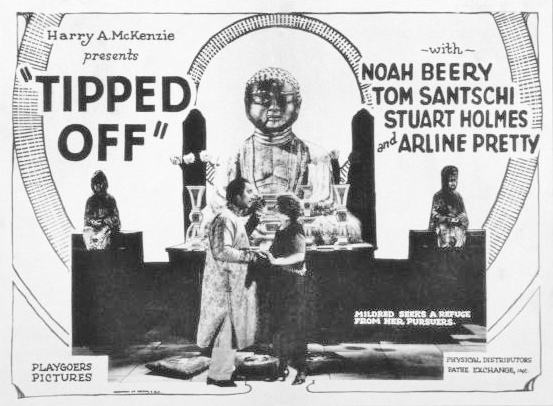
Step right up, film aficionados, and prepare for a journey back to an era where flickering shadows told tales of daring escapades and burgeoning romance! Today, we're unspooling the reel of Tipped Off (1920), a silent-era gem that deftly navigates the treacherous waters between theatrical ambition and stark, life-threatening reality. Penned by the imaginative Frederick Reel Jr., this feature presents a fascinating blend of melodrama, suspense, and a surprisingly nuanced character study, proving that the silent screen was anything but quiet in its emotional resonance.
At its heart, Tipped Off introduces us to Mildred Garson, played with a captivating blend of earnestness and burgeoning strength by Arline Pretty. Mildred is more than just a secretary; she's the fiancée of the esteemed playwright Anthony Moore, portrayed by Harold Miller, and harbors a burning desire to step into the limelight herself. Her ambition isn't merely for fame but for an opportunity to prove her mettle, particularly by securing the leading role in Moore's latest theatrical endeavor—a gritty, thrilling crook drama. This initial setup immediately establishes a compelling dynamic: the aspiring actress yearning for a stage, and the well-meaning but perhaps oblivious fiancé whose work inadvertently becomes the catalyst for real-world peril. It’s a classic narrative hook, reminiscent of the dramatic irony often explored in films like Camera obscura, where perception and reality constantly clash.
The plot thickens with the well-intentioned, albeit catastrophically misguided, intervention of Mildred's siblings, Jim and Rita. In an effort to help Mildred demonstrate her dramatic capabilities to Anthony, they hatch a scheme to stage a fake robbery at Moore's lavish home. This is where the film begins its delightful, yet ultimately chilling, dance on the precipice of genre convention. What starts as a farcical attempt at method acting quickly spirals into something far more sinister. The siblings' amateurish theatricality is brutally interrupted by the arrival of genuine criminals, led by the menacing Dan "The Fox" Grogan, brought to life with chilling effectiveness by Stuart Holmes. Holmes, known for his ability to portray sophisticated villains, imbues Grogan with a predatory cunning that instantly elevates the stakes. The scene transitions from a staged charade to a brutal reality with shocking suddenness: a shot butler, the palpable fear, and Mildred's violent abduction. This abrupt shift from lighthearted deception to grim danger is a masterstroke in pacing, echoing the sudden turns found in other thrillers of the period, such as Going Straight, where characters are thrust into unexpected moral quandaries.
Mildred's ordeal as a captive of Grogan and his gang, which includes the likes of James Alamo and Tom O'Brien, is where Tipped Off truly distinguishes itself. Far from being a damsel in distress, Mildred exhibits remarkable resourcefulness and courage. Her escape isn't a mere happenstance; it's an act of defiance, a testament to her innate strength that perhaps even she didn't realize she possessed. This transformation from an aspiring actress seeking a role to a resilient survivor fighting for her life is the film's beating heart. It’s a narrative arc that resonates deeply, showcasing the hidden depths of character, much like the unexpected heroism found in films such as Over the Top, where ordinary individuals rise to extraordinary challenges.
Her subsequent refuge with Chong Wo, a Chinese philosopher portrayed by James Wang (with perhaps a nod to the era’s often stereotypical, yet sometimes surprisingly insightful, representation of Eastern wisdom), introduces an intriguing cultural dimension. Chong Wo isn't merely a plot device; he represents a different kind of strength, one rooted in wisdom, strategy, and a calm demeanor amidst chaos. His character, along with Bessie Wong who also appears, adds a layer of depth and an unexpected alliance that broadens the film's scope. This unexpected mentorship and alliance are pivotal, moving the story beyond a simple chase sequence into a more cerebral confrontation. The dynamic between Mildred's Western determination and Wo's Eastern sagacity creates a compelling partnership, a testament to the idea that ingenuity knows no cultural bounds.
The climax, described as a "fight to the finish," orchestrated by Wo, is a thrilling culmination of the narrative threads. It’s not just a physical brawl but a battle of wits, where Grogan’s brute force and cunning are ultimately outmaneuvered by Wo’s strategic brilliance. This emphasis on intelligence over sheer power is a refreshing take on the crime drama genre, offering a more satisfying resolution than a simple shootout. The capture of Grogan by figures like Tom Santschi and Scotty MacGregor, facilitated by Wo’s plan, brings a sense of justice and closure. The film concludes with Anthony and Mildred poised for marriage, a symbolic union that solidifies not just their romantic bond, but also Mildred’s newfound confidence and a world where order is restored. The journey they’ve undertaken, particularly Mildred's growth, elevates the ending beyond a simple happy ever after, imbuing it with a sense of earned triumph.
The performances across the board are commendable for the era. Arline Pretty carries the emotional weight of Mildred with grace, transitioning believably from a sheltered fiancée to a woman of immense courage. Her silent expressions convey a wealth of emotion, a true skill in a medium reliant entirely on visual storytelling. Stuart Holmes, as the antagonist, is suitably menacing, a villain who genuinely feels like a threat rather than a caricature. His portrayal of Dan "The Fox" Grogan is a masterclass in silent film villainy, a performance that haunts the edges of the frame. The supporting cast, including S.D. Wilcox, Zella Gray, Noah Beery, and Jimmie Truax, each contribute to the rich tapestry of characters, adding layers to the unfolding drama. Their collective efforts ensure that even minor roles feel integral to the narrative's progression, a hallmark of well-crafted silent cinema.
Frederick Reel Jr.'s screenplay for Tipped Off is a testament to the power of narrative economy and escalating tension. He masterfully sets up a seemingly innocuous premise only to subvert it with brutal efficiency. The script’s ability to weave together elements of a domestic drama, a crime thriller, and an adventure story speaks volumes about the writer's versatility. The dialogue, conveyed through intertitles, is sharp and purposeful, driving the plot forward without unnecessary exposition. This narrative precision is crucial for silent films, where every word and gesture must count. Reel Jr.'s work here could be favorably compared to the intricate plotting seen in other contemporary thrillers, ensuring that audiences remained gripped to their seats, much like the suspenseful arcs in Beatrice Fairfax Episode 15: Wristwatches.
Visually, the film, while limited by the technological constraints of its time, makes effective use of its sets and cinematography to convey mood and atmosphere. The contrast between the opulent Moore residence and the grittier, shadowy locales of Grogan's hideout is stark and intentional. The visual storytelling, characteristic of the era, relies on exaggerated expressions, dramatic gestures, and carefully composed shots to communicate the emotional beats. While we don't have the benefit of sound, the film's visual language is rich enough to convey the terror of the abduction, the desperation of the escape, and the strategic brilliance of the final confrontation. The editing, too, plays a crucial role in building suspense, often employing quick cuts during moments of action and longer takes for emotional impact, a technique that was continually refined in films like Daring and Dynamite.
Thematic undercurrents run deep throughout Tipped Off. There's the obvious exploration of appearance versus reality, a central irony that underpins the entire plot. Mildred's initial desire to 'act' a role leads her into a situation where she must truly 'be' a hero. The film also touches upon themes of courage under duress, the unexpected sources of strength, and the enduring power of love and commitment. Anthony's concern for Mildred, despite his initial unwitting role in her predicament, grounds the narrative in a relatable human drama. It’s a story that, despite its thrilling exterior, is deeply concerned with the internal transformations of its characters. This blend of external adventure and internal growth is a recurring motif in cinema, seen in diverse films from Broadway Arizona to Buried Treasure, where characters embark on journeys that redefine them.
Comparing Tipped Off to its contemporaries further illuminates its unique strengths. While films like Strife might delve into more overt social commentary or Addio giovinezza! explores nuanced romantic entanglements, Tipped Off carves its niche as a robust, no-nonsense thriller with surprising depth. It avoids the broad comedic strokes of The General Store General or the overt melodrama of Ten Nights in a Barroom, instead opting for a more grounded, albeit heightened, sense of peril. The film's pacing and escalating tension could also be seen in contrast to the more episodic nature of serials, offering a self-contained, satisfying narrative arc. Even against the backdrop of Westerns like Tex of the Timberlands or lighthearted romps like Our Bone Relations, Tipped Off stands out for its focused crime drama elements and the compelling journey of its protagonist.
In conclusion, Tipped Off is far more than a historical curiosity; it’s a vibrant, engaging piece of early cinema that deserves renewed attention. It offers a thrilling plot, memorable characters, and a compelling exploration of human resilience when faced with overwhelming odds. Frederick Reel Jr. crafted a story that still resonates, and the cast, particularly Arline Pretty and Stuart Holmes, deliver performances that transcend the limitations of the silent medium. For those who appreciate the foundational works of the crime genre and enjoy a narrative that blends unexpected twists with genuine character development, Tipped Off is an absolute must-watch. It’s a testament to the enduring power of storytelling, proving that even without a single spoken word, a film can speak volumes about courage, deception, and the ultimate triumph of the human spirit. The film captures the essence of an era, while also delivering a timeless narrative of peril and redemption, cementing its place as a noteworthy entry in the annals of silent film history. It reminds us that sometimes, the greatest performances happen not on a stage, but in the crucible of real life.
IMDb 7.2
1929
Community
Log in to comment.