DbcultAccessing Vault...
Cult Review
Senior Film Conservator
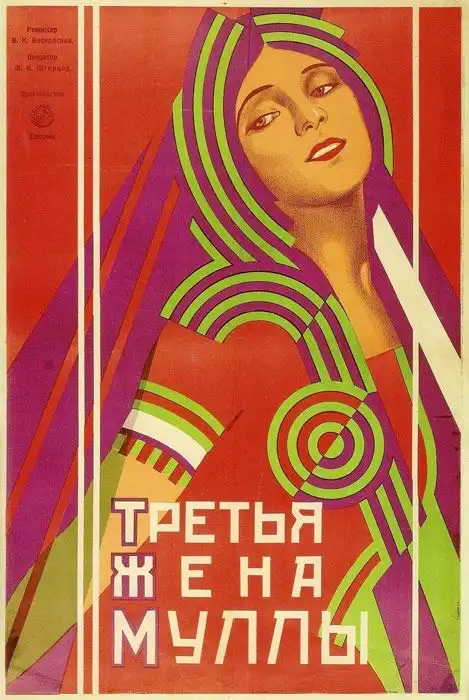
So, Tretya zhena mully isn't something you watch for a fun Friday night with a big bucket of popcorn. It’s for the people who want to see how movies looked when they were still figuring out how to tell a story about real people in the middle of nowhere.
If you hate black and white silents or anything that feels like a history lesson, you're going to hate this. But if you’re into weird, old stuff from the 1920s, it’s actually kinda cool.
The first thing I noticed was how dusty everything looks. Like, you can almost feel the grit on the screen when the Mullah walks into his house.
Alexei Bogdanovsky plays the Mullah and he has this face that looks like it’s carved out of a dry tree. He doesn't have to say anything because his eyebrows do all the heavy lifting for him.
There’s a scene where the wives are just sitting there in the dark, and the lighting is so weirdly dim. It feels like the camera guy was just hoping for the best with the sun that day.
The story is about this guy getting a third wife, which sounds like it could be a sitcom premise. But it’s actually pretty heavy and serious.
It’s trying to show how the old ways are dying out. It does this by being really, really slow, which I guess is how time felt back then.
I kept thinking about The Strong Man while watching this. Mostly because of how different the acting is compared to American stuff from the same time.
In those Hollywood movies, it's all about big movements. Here, it’s about these long, awkward stares that go on for way too long.
One of the wives has this look in her eyes that is just... scary. Like she’s planning something bad, but then she just goes back to cooking like nothing happened.
The title cards are a bit much sometimes. They explain things that you can clearly see happening on screen, which is always a bit annoying to me.
It reminded me a bit of My Lady o' the Pines in how it treats the outdoors. The desert or the dry hills become a character themselves, just a really quiet and boring one.
There’s this one part where a kid is playing in the background and you can tell he’s not supposed to be in the shot. He just stares at the camera for a second before someone probably grabbed him by the shirt.
The movie gets much better when it stops trying to be a sermon about politics. When it just lets the characters be miserable, it feels real and kinda sad.
The ending feels rushed, like they ran out of film or the sun finally went down for good. It just kind of... stops without saying goodbye.
If you liked The Kingdom Within, you might appreciate the religious stuff here. But this is way more cynical and dusty.
I found myself looking at the clothes more than the plot. The textures of the fabrics are so clear even in this old, beat-up print of the film.
It’s a weird one, for sure. Not 'good' in a normal way, but definitely interesting if you like watching the past through a dirty lens.
I think I fell asleep for about five minutes in the middle, but I didn't miss much. Just more walking and people looking upset at each other.
The Mullah’s house is so cramped. It makes you feel claustrophobic just watching them move around in those small rooms.
You can see the makeup on the actors' faces sometimes. It's thick and white, making them look like ghosts wandering around in the bright sun.
Wait, did I mention the goat? There’s a goat that shows up and it’s honestly the best actor in the whole thing because it doesn't try too hard.
I dunno, it’s probably not something I’d watch twice. But seeing how they lived and how they made movies in 1928 is still pretty neat.
It’s definitely not Jazz Mad, that's for sure. It’s much more grim and serious about everything.
Check it out if you’re bored and want to feel like a scholar for an hour. Or don't, I’m not the boss of your remote.
IMDb —
1935
Community
Log in to comment.