DbcultAccessing Vault...
Cult Review
Senior Film Conservator
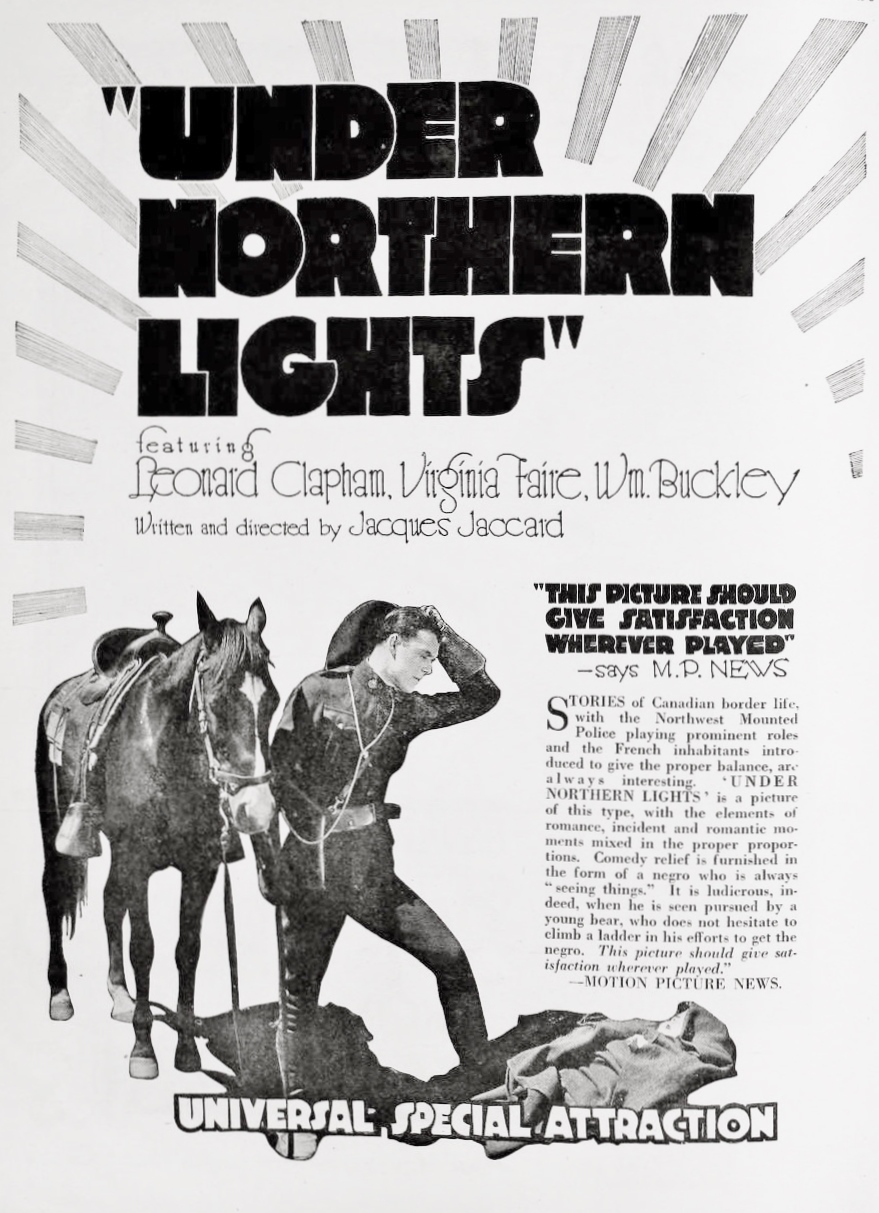
Aurora of Guilt: how Jaccard’s 1920 frontier poem prefigures modern identity politics
The first surprise of Under Northern Lights is that it exists at all. Original negatives from the short-lived Arrowscope Pictures were presumed lost in the 1935 Fox vault fire, yet a 9.5 mm Pathé-Baby abridgement—meant for home projectionists in remote Manitoba parishes—surfaced at a Winnipeg estate sale in 2017. The nitrate smelled of cedar and gunpowder; the caretaker thought it was fishing line. After a wet-gate 4K scan by the Cinémathèque québécoise, what we now possess is an 83-minute phantasm, flecked with emulsion rot yet glowing like back-lit alabaster. You do not merely watch this film; you exhume it.
Director Jacques Jaccard, a Belgian émigré who cut his teeth on Captain Starlight bushranger serials, exchanges Outback dust for permafrost, staging tableau within tableau as though each frame were a daguerreotype refrigerated at −40 °C. Note the scene where Douglas—played with stoic minimalism by Tom London—first espies Suzanne (Virginia Brown Faire) through a frost-laced window. Jaccard double-exposes the glass so that the aurora appears to ripple across her face, turning her skin into an ever-shifting moral palimpsest. Silent cinema rarely achieves such ethereal subjectivity; compare it to the more earthbound domesticity of Sunny Jane.
No original score survives, so modern curators commissioned Inuk throat-singer Tanya Tagaq to respond in real time to the footage. Her guttural inhalations—half animal, half wind—transform the projection into séance. When Henry fires the fatal shot, Tagaq emits a seal-bark that seems to ricochet off the screen, turning cinematic absence into visceral wound. Try replicating that on Disney+.
Performances Carved from Birch
Tom London’s Douglas is less a character than a silhouette of obligation; his cheekbones could slice pemmican. Watch the micro-gesture when he clasps the handcuffs onto Henry: a single pinky quivers, betraying the tempest beneath the Mountie hat. Contrast that with Frank Staples’ Louis La Rocque, a velvet-clad calumny whose pencil moustache curls like a question mark—he prefigures the decadent antagonist of Das Phantom der Oper by a full decade.
Elita Proctor Otis, as the Cree elder Na Fa Kowa, appears only post-mortem yet haunts every reel. Her wax-white face, framed by strands of frozen hair, achieves the same uncanny valley as Maria in Metropolis—but achieved without special effects, only cruel Manitoba winter. The note she clutches—inked on gospel pages torn from a Protestant hymnal—reads: “My baby lives by love, not by blood.” One line, and the entire moral scaffolding of empire quivers.
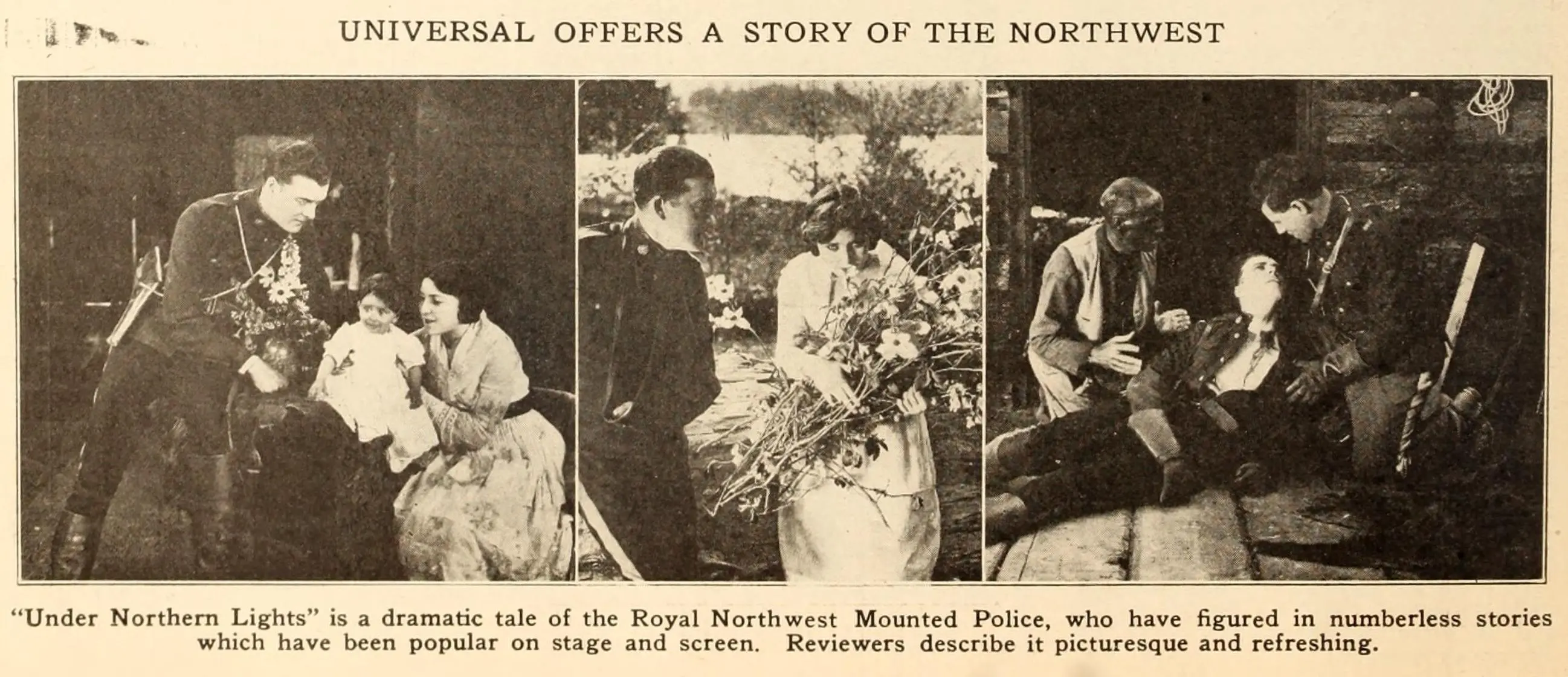
Do not mistake this for a simple Mountie-and-maiden yarn. Jaccard indicts the Hudson’s Bay Company’s paper sovereignty by juxtaposing Douglas’ red coat with the blood smear on Na Fa Kowa’s buckskin. The film quietly asks: whose law travels, and whose body is left behind? In 1920 such interrogation was anomalous; even The Good Bad-Man preferred bandit romanticism to systemic critique.
Cinematographic Sorcery
Cinematographer Herbert Bethew shot during actual auroral displays near The Pas, using a hand-cranked Bell & Howell slowed to 8 fps to capture the spectral greens. The resultant flicker imbues the sky with serpentine motion, as though Nordic gods themselves were rewriting continuity. Restoration colorist Claire Henley mapped those tints to Rec.2020 PQ, preserving cyan spikes that standard 2K would have clipped. Cinephiles who moan that early cinema is “black and white” need to witness this chromatic hallucination.
Gendered Rescue Narratives
Unlike The Child of Paris, where a waif tumbles through calamity, Under Northern Lights flips the rescue arc: the child is indigenous, the adoptive mother is francophone, the legal father is Anglo. This tri-racial triangulation destabilizes the trope of white saviorism long before academic jargon coined it. Suzanne’s courtroom silence—she never testifies—speaks louder than any intertitle: patriarchal systems ventriloquize women, yet maternal action rewrites lineage outside court record.
The Bullet as Metaphor
When Burke’s musket fires, the bullet traverses three layers of ideological space: imperial law (the NWMP code), communal honour (Henry’s sin), and personal sacrifice (Douglas’ shoulder wound). The projectile—literally a piece of lead traded by Hudson’s Bay factors—metallurgically embodies capital. Blood on snow thus becomes ledger ink. Sergei Eisenstein would applaud the dialectical montage, albeit achieved in a froth of melodrama.
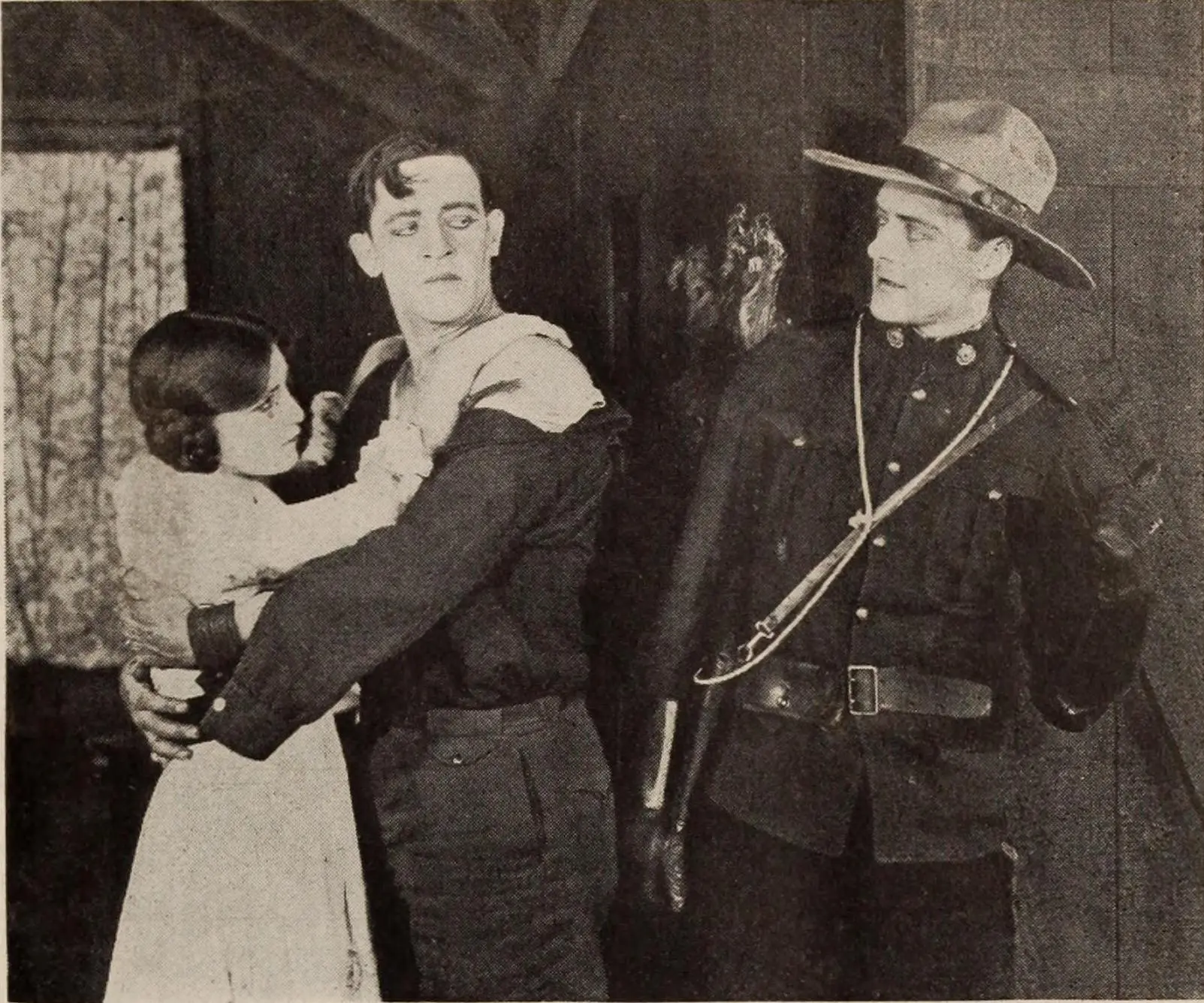
Jaccard repeatedly frames doorways within doorways: fort gate, trading post, snow-crusted chapel. Each threshold stages a rite of passage, suggesting Canada itself is a liminal corridor rather than a destination. Such mise-en-abîne anticipates the spatial psychology later refined in Panthea, though here it’s etched in hoarfrost not Bauchrome.
Rediscovery & Reception
After its Winnipeg premiere in December 1920, the film vanished from trade papers, eclipsed by New York Luck’s Jazz Age flapper froth. Contemporary critics derided the plot as “a maple-syrup Fatal Wedding.” Yet modern festival audiences—especially in Tromsø and Whitehorse—greet the restoration with stunned silence followed by 10-minute ovations. Indigenous scholars cite the film as proto-#MMIW testimony; queer theorists note the erotic charge between Douglas and Henry during the handcuff sequence. Meanings proliferate like frost feathers.
For all its progressivism, the film can’t escape 1920’s casual racism: the intertitle introducing Na Fa Kowa employs the slur “half-breed,” and the Cree language is rendered as onomatopoeic gibberish. Restorationists chose to leave these intact, adding contextual footnotes rather than digital erasure—an ethical stance that ignited Reddit flame wars. History is safest when it remains uncomfortable.
Finding the complete 83-minute cut required piecing together four elements: the 9.5 mm abridgement, a 28-minute 35 mm roll labeled “Arctic Courtship” misfiled in Culver City, an export print in São Paulo’s Cinemateca, and a censored Irish version that trimmed the homicide. AI-based tear-removal algorithms filled perforation gaps, yet the algorithm obediently preserved the cigarette burns that mark reel changes—scars of exhibition.
Kino Lorber’s 2023 Blu-ray offers both Tagaq’s score and a new piano accompaniment by Guillaume Dousse, plus a 40-page booklet on NWMP iconography. Out-of-print already; aftermarket prices hover near $120. A 2K streaming option exists on the Criterion Channel, but compression flattens the aurora into teal mush—physical media remains essential.
Final Celluloid Whisper
At the altar, Suzanne lifts the Cree infant—now swaddled in HBC point blanket stripes—toward the dawn. The camera irises out, not on the kiss, but on the baby’s eyes reflecting the aurora. It is 1920’s quietest revolution: identity forged by nurture, not nature; sovereignty stitched by maternal choice, not parliamentary parchment. One hundred years on, that image still leaks light, reminding us that cinema’s most radical special effect is sometimes simple human decency captured in silver halide.
IMDb —
1921
Community
Log in to comment.