DbcultAccessing Vault...
Cult Review
Senior Film Conservator
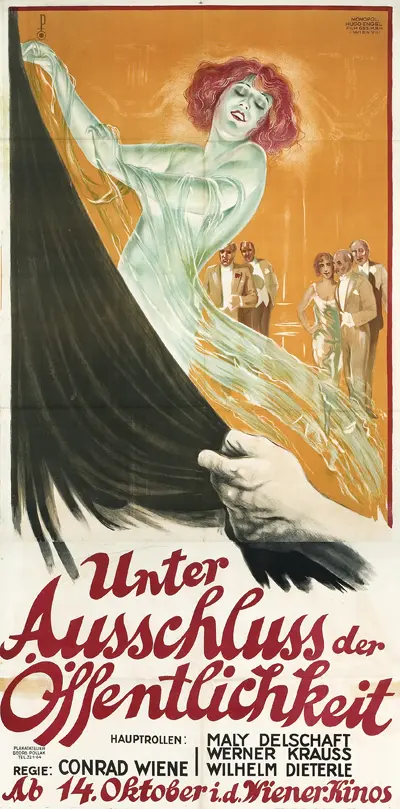
Is Unter Ausschluß der Öffentlichkeit worth your time in the modern era? Short answer: Yes, but only if you possess the patience for the deliberate, often suffocating pacing of late-period silent German melodrama. This film is a definitive artifact for those who study the intersection of social anxiety and cinematic expressionism, but it is certainly not for the casual viewer looking for a light-hearted evening. It is a film for the historian of the human condition and the lover of shadows.
Before we dive into the murky depths of this narrative, let us be clear about where this film stands in the pantheon of 1920s cinema.
1) This film works because it avoids the cartoonish villainy often found in silent crime films, opting instead for a terrifyingly grounded depiction of how financial ruin can be used as a weapon of sexual coercion.
2) This film fails because the middle section becomes excessively preoccupied with the mechanics of banking and bills of exchange, which lacks the visual dynamism found in the opening and closing acts.
3) You should watch it if you are fascinated by the 'Sittenfilm' (films of manners/morals) genre and want to see a powerhouse ensemble cast including Werner Krauss and William Dieterle before his Hollywood ascent.
The plot of Unter Ausschluß der Öffentlichkeit is a slow-motion car crash of social standing. Ibrahim Hulam is not merely a criminal; he is a predator who understands that the strongest cage is not made of iron, but of paper. By involving Eberhard von Schlenk in a shady financial scheme, Hulam creates a scenario where the father's survival depends on the daughter's submission. This is a recurring theme in films of this era, much like the structural tensions seen in Söhne der Nacht, 1. Teil: Die Verbrecher-GmbH.
The specific scene where Hulam first observes Anita at the Imperial Palace is a masterclass in voyeuristic tension. The camera doesn't just look at her; it consumes her. The contrast between her fluid, artistic movements as a dancer and Hulam's rigid, calculating presence in the shadows sets the tone for the entire film. It is the classic struggle between art and industry, between the soul and the ledger. Unlike the more adventurous spirit of Hands Up, this film remains rooted in the claustrophobia of city life.
The inclusion of Werner Krauss is, as always, a double-edged sword. Krauss has a way of occupying space that makes everyone else on screen seem fragile. His portrayal of Hulam is devoid of the grandiosity he brought to other roles; here, he is cold, precise, and utterly devoid of empathy. It is a performance that anticipates the bureaucratic evil that would later haunt the 20th century. In contrast, William Dieterle brings a grounded humanity that hints at the directorial sensitivity he would later display in his American career.
Ida Wüst and Maly Delschaft provide the necessary emotional core, though they are often trapped by the scripts' insistence on their victimhood. There is a specific moment when Anita realizes the extent of her father's debt where the lighting shifts from a soft, romantic glow to a harsh, high-contrast overhead light. It is a simple technique, but it effectively signals the end of her innocence. This level of visual storytelling is what separates high-tier Weimar cinema from the more standard fare like The Return of Mary.
The direction of the film utilizes the architecture of the Imperial Palace not just as a setting, but as a character. The high ceilings and vast halls emphasize the isolation of the characters. When Eberhard is in Hulam's office, the room feels small, cluttered, and oppressive. This use of space to mirror internal psychological states is a hallmark of the era. The film doesn't need to rely on the overt expressionism of jagged sets; the horror is found in the normalcy of a businessman's desk.
The pacing, however, is where modern audiences may struggle. The film takes its time to establish the financial stakes. While this adds to the realism, it occasionally drains the narrative of its momentum. Compared to the more briskly paced Not Built for Runnin', this is a grueling experience. But the payoff is a sense of inevitability that is truly haunting. It feels less like a movie and more like a trap closing.
Does Unter Ausschluß der Öffentlichkeit still offer value to a viewer in the 21st century? The answer is a definitive yes, provided you are looking for a historical document of social decay. It captures a specific moment in German history where the old aristocracy was being cannibalized by a new, ruthless class of opportunists. It is a film about the death of honor in the face of economic desperation.
If you are a fan of films like Bismarck or For the Freedom of the World, you will appreciate the heavy thematic weight and the serious tone. However, if you prefer the whimsical or the short-form storytelling of The Fox and the Crow, you will likely find this experience to be overly somber and perhaps even repetitive.
Pros:
Cons:
One thing that struck me was the film's obsession with paper. Bills, deeds, letters, and ledgers are everywhere. In a world before digital tracking, these physical objects held an almost magical power over people's lives. The film treats a signed piece of paper with the same dread that a horror movie treats a cursed artifact. It is a fascinating look at the 'magic' of capitalism before it became invisible. This isn't just a drama; it's a documentary on the terror of the contract.
Unter Ausschluß der Öffentlichkeit is a difficult, demanding, and ultimately rewarding piece of cinema. It doesn't offer easy answers or a comfortable resolution. Instead, it holds up a mirror to a society where everything—and everyone—is for sale. It is a brutal film. It works. But it’s flawed. If you can handle the weight of its themes and the deliberate nature of its craft, it is a journey worth taking. It stands tall alongside other dramas of the time like God's Country and the Law, providing a stark contrast to the lighter side of silent film history.
"A haunting examination of the price of survival in a world that has replaced morality with the ledger."
IMDb 5.3
1931
Community
Log in to comment.