DbcultAccessing Vault...
4.2/10
Senior Film Conservator
A definitive 4.2/10 rating for a film that redefined the boundaries of cult cinema. Walter the Prodigal remains a cornerstone of transgressive art.
Is this film worth watching today? Short answer: yes, but only if you have an appetite for the rhythmic, physical language of the silent era. This film is for those who find joy in the DNA of slapstick and the origins of British screen comedy; it is not for viewers who require the fast-paced, dialogue-heavy irony of contemporary cinema.
This film works because Walter Forde possesses a rare, elastic physicality that turns a simple costume mishap into a high-stakes survival game. This film fails because the narrative logic occasionally stretches past the point of believability, even for a farce. You should watch it if you want to see the missing link between the music hall stage and the sophisticated directing Forde would later display in his sound-era career.
Yes, Walter the Prodigal is a significant artifact of 1920s British entertainment that holds up surprisingly well. Unlike many of its contemporaries that relied on static gags, this film uses movement and spatial awareness to drive the plot. It provides a genuine sense of peril that elevates the comedy above mere pratfalls. For any student of film history, seeing Forde at this stage of his career is essential.
Walter Forde was often unfairly compared to Buster Keaton or Charlie Chaplin, but in Walter the Prodigal, he carves out a niche that is uniquely British. He doesn't have the stone-faced stoicism of Keaton or the sentimental pathos of Chaplin. Instead, Forde brings a nervous, caffeinated energy to the role of the dancer. When he is mistaken for a criminal, his reaction isn't just fear; it is a profound sense of social embarrassment. This is a very specific, very effective comedic engine.
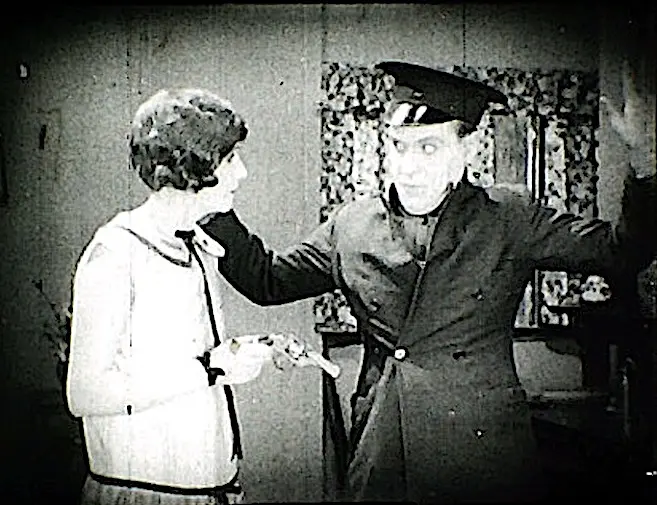
Take, for example, the scene where he first encounters the police while still in his ballroom attire. The way he attempts to maintain the grace of a professional dancer while simultaneously cowering in terror is a masterclass in physical counterpoint. His legs want to perform a foxtrot, but his torso is bracing for a blow. It is a visual representation of a man caught between two worlds: the elite social circle he belongs to and the criminal underworld he has been accidentally cast into.
The film’s reliance on this physical dichotomy is what keeps it from feeling like a one-note joke. Forde’s background in the music hall is evident here. He understands that a gag is not just about the punchline; it is about the setup and the recovery. In many ways, this film feels more energetic than some of the more static American comedies of the same year, such as Discontented Husbands, which lacked this specific brand of kinetic desperation.
As both the star and the writer-director, Forde has total control over the film’s internal logic. This is both a blessing and a slight curse. The pacing is relentless, which prevents the audience from questioning the absurdity of the situation. However, there are moments where the film could have benefited from a more objective eye to trim the redundant chase sequences in the middle act. It works. But it’s flawed.
One of the most striking aspects of the direction is how Forde uses the environment. The transition from the opulent, brightly lit ballroom to the shadowy, claustrophobic alleys where he is hunted creates a visual metaphor for his fall from grace. It’s a technique we see used more dramatically in films like A Girl at Bay, but here it serves the comedy. The shadows aren't meant to scare us; they are meant to hide the protagonist from a world that suddenly views him as a monster.
The cinematography, while limited by the technology of the early 20s, shows flashes of brilliance. There is a specific shot where Forde is framed through the bars of a fence, prefiguring his eventual (mistaken) incarceration. It’s a simple visual pun, but it’s executed with a precision that suggests Forde was thinking deeply about the language of the camera. He wasn't just filming a play; he was making a movie.
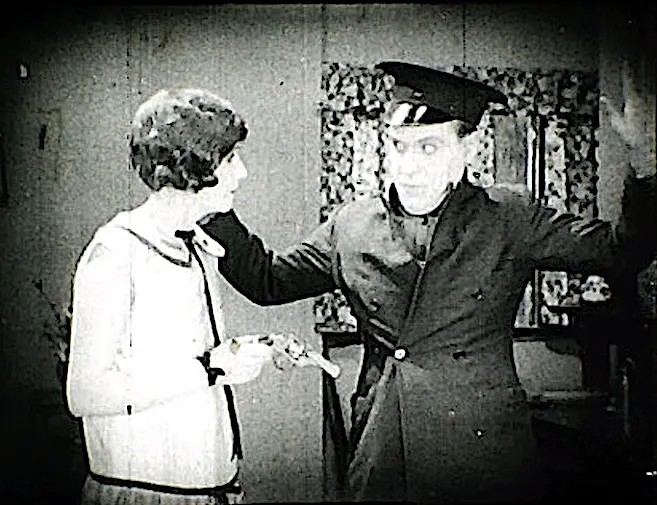
When looking at the landscape of 1926, Walter the Prodigal stands out for its lightheartedness. While other filmmakers were experimenting with heavy social commentary or documentary realism—think of the experimental nature of Kino Pravda No. 16—Forde was content to master the art of the gag. There is a purity in that mission that is often overlooked by critics who prefer 'serious' cinema.
However, the film does touch on themes of identity and class that were prevalent in other works of the era. For instance, the concept of being trapped by one's appearance is explored with far more gravity in The Isle of Lost Ships, but Forde manages to make the same point through a laugh. It’s a surprising observation, but the convict suit acts as a social leveler. Once he puts it on, his talent as a dancer no longer matters to the world; he is simply a number.
The supporting performance by Pauline Peters provides the necessary emotional anchor. Without her, the film might have devolved into a series of disconnected stunts. She plays the 'straight man' to Forde’s chaos, much like the dynamic seen in Wild Primrose, though with a much lighter touch. Her presence reminds the audience of what is at stake: not just Forde’s freedom, but his reputation and his love life.
The film’s greatest strength is its lead. Walter Forde is a magnetic presence, and his ability to convey complex emotions through facial expressions alone is a joy to watch. The costume design is also surprisingly effective; the striped suit becomes a character in its own right, constantly getting caught on things or making him stand out in the worst possible moments. Additionally, the film avoids the overly melodramatic tone found in many 1920s dramas like Hypocrites, opting instead for a consistent, breezy charm.
The primary drawback is the predictability of the plot. From the moment the convict costume is introduced, any seasoned film watcher can map out exactly where the story is going. There are no real subversions of the genre here. Furthermore, some of the secondary characters are thinly sketched, serving only as props for Forde to bounce off of. Compared to the ensemble depth of a film like The National Rash, Walter the Prodigal feels a bit like a one-man show.
One must appreciate the editing in Walter the Prodigal. Comedy is entirely dependent on timing, and in the silent era, that timing was created in the cutting room. The way the film cuts between the pursuing officers and Forde’s increasingly desperate attempts to blend in is rhythmic and almost musical. It shares a certain DNA with the newsreel energy of Life in the Sudan, though obviously applied to a fictional narrative.
There is also the matter of the set design. The ballroom is a sprawling, ornate space that provides the perfect playground for the initial gags. The contrast between this 'civilized' space and the gritty exterior locations is sharp. It highlights the absurdity of a man in a costume being taken seriously as a threat. This juxtaposition is a recurring theme in Forde's work, also visible in After the Ball.
Is the film a masterpiece? No. But it is a highly efficient piece of entertainment. It knows exactly what it wants to be and achieves it with a minimum of fuss. In an era where films were often overlong and bloated with title cards, Walter the Prodigal is lean and focused. It doesn't overstay its welcome.
Walter the Prodigal is a delightful, if somewhat slight, entry in the canon of British silent film. It showcases a performer at the peak of his physical powers and a director who understood the mechanics of visual humor better than almost anyone else in the UK at the time. While it may not have the philosophical depth of Prima Vera or the suspenseful grit of The Carter Case, it offers something arguably more valuable: pure, unadulterated escapism.
"Forde doesn't just play the part; he dances through the peril, making the striped suit of a convict look like the most uncomfortable tuxedo in history."
If you are looking for a gateway into silent cinema, or if you simply want to see a master of the craft at work, this film is a fantastic choice. It reminds us that comedy doesn't need sound to be heard; it just needs a performer who knows how to move. Despite its flaws and its predictable ending, Walter the Prodigal remains a testament to the power of the visual gag. It is a film that deserves to be pulled out of the archives and celebrated for the joyous, chaotic romp that it is.
IMDb —
1917
Community
Log in to comment.