DbcultAccessing Vault...
Cult Review
Senior Film Conservator
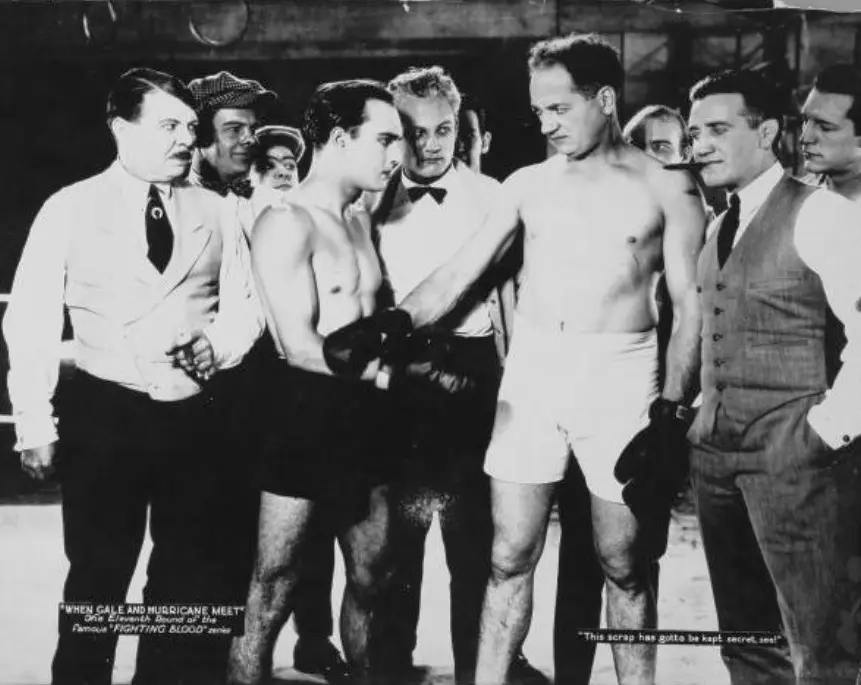
When Gale and Hurricane Meet arrives on the screen like a sudden squall, its narrative thrust propelled by the twin forces of human desire and natural catastrophe. The film, a 1920s silent drama penned by an impressive quartet of writers—Beatrice Van, H.C. Witwer, Malcolm St. Clair, and the future mogul Darryl F. Zanuck—demonstrates a rare confidence in its structural design. The screenplay refuses the complacent melodrama that typified many of its contemporaries, instead opting for a layered exposition where class disparity, gender expectations, and the capriciousness of weather intertwine.
Clara Horton, as Gale Whitmore, commands the frame with a poise that belies her youthful visage. Her expressive eyebrows and measured gestures convey a fierce independence, echoing the resolute heroines of earlier works such as Blue‑Eyed Mary. Horton’s ability to shift from tender vulnerability—when she tends to the lighthouse keeper’s children—to steely determination (as she rallies townsfolk to brace the boardinghouse) marks a high point in silent‑era acting. Kit Guard’s portrayal of Hurricane ‘Hank’ McAllister is equally compelling. Guard harnesses his physicality, honed from a background in vaudeville, to embody a boxer whose fists are as quick as his tongue, yet whose eyes betray a lingering sorrow. The chemistry between Horton and Guard crackles like static before a thunderclap; their silent exchanges—glances, a hesitant touch of hands—speak louder than any intertitle could.
Al Cooke, cast as Deputy Tomlin, provides the film’s levity without undermining its gravitas. Cooke’s slapstick timing—particularly a scene where he attempts to secure a loose rope and ends up tangled in it—offers a brief, breath‑freshening reprieve before the narrative plunges back into peril. Norman Selby, a former heavyweight champion turned actor, lends authenticity to the sea‑captain role. His weathered visage and measured speech (delivered via intertitles with a gravitas that mirrors his real‑life boxing pedigree) anchor the film’s maritime authenticity. George O'Hara, portraying the opportunistic mayor, exudes a slick, almost Machiavellian charm, reminding viewers of the political undercurrents that pervade classic works like Four Feathers.
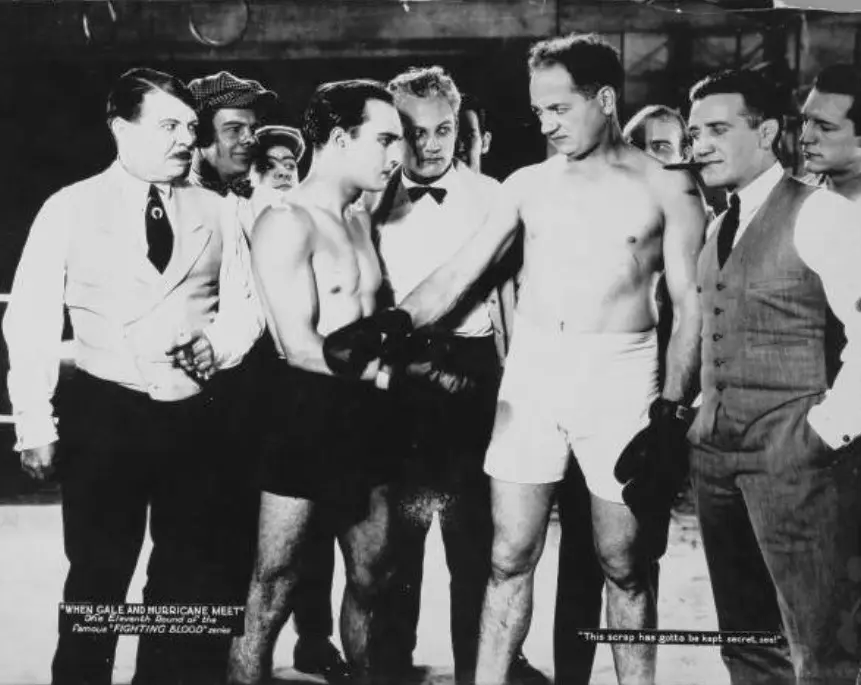
Director Malcolm St. Clair, who would later gain renown for his comedic timing, demonstrates an early mastery of visual storytelling. The film’s cinematography, captured by a yet‑uncredited hand, exploits chiaroscuro to evoke the looming storm. Night scenes are bathed in deep indigo, punctuated by the flickering orange of lanterns—a palette that subtly mirrors the film’s thematic colors of danger (#C2410C) and hope (#EAB308). The storm sequences employ practical effects: wind machines, rain rigs, and miniature models of the lighthouse. The resulting tableau is both gritty and poetic, a testament to the ingenuity of silent‑era special effects.
The editing rhythm accelerates as the gale intensifies. Early scenes linger on the mundane—Gale dusting rooms, Hank polishing his gloves—allowing the audience to settle into a rhythmic calm. As the barometer drops, cut‑aways become rapid, intercutting the frantic townsfolk, the creaking lighthouse, and the churning sea. This kinetic montage anticipates the later kinetic editing of D.W. Griffith’s Shadows of the Moulin Rouge, yet retains a uniquely 1920s sensibility: each cut is motivated by narrative necessity rather than pure spectacle.
At its core, When Gale and Hurricane Meet is a meditation on humanity’s precarious foothold against elemental forces. The film’s title itself is a clever double‑entendre: Gale, the protagonist, embodies both a literal wind and a metaphorical gust of change; the hurricane, embodied by Hank, signifies a larger, uncontrollable force that threatens to upend both personal and communal stability. This duality is reinforced through recurring visual motifs—tattered sails, broken windows, and the lighthouse’s steadfast beam—each symbolizing resilience amidst chaos.
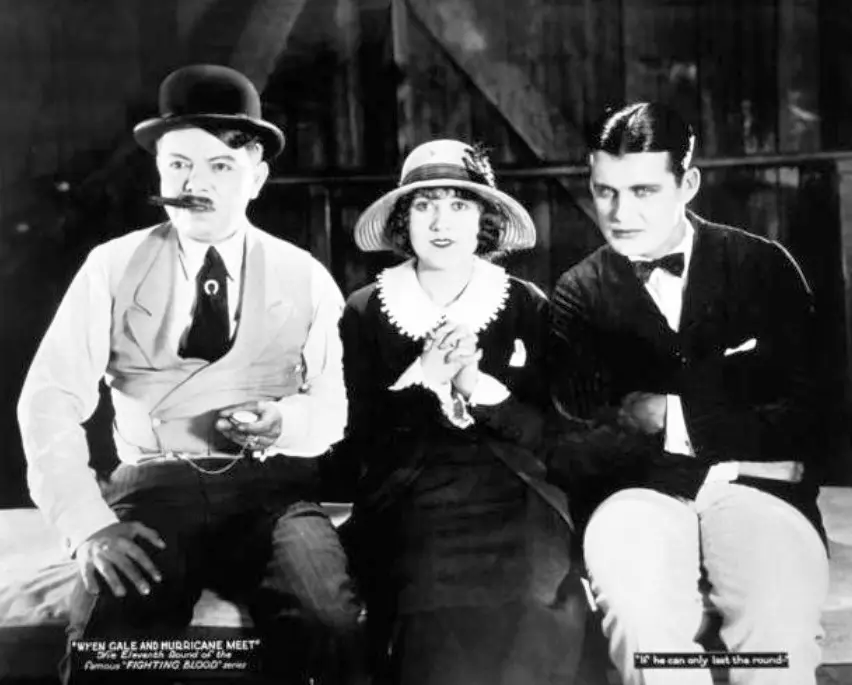
Gale’s agency challenges the era’s gender norms. Unlike many silent heroines who are rescued, Gale orchestrates the rescue, delegating tasks, negotiating with the mayor, and ultimately confronting the storm herself. Her evolution mirrors the burgeoning feminist discourse of the 1920s, aligning her with characters such as the eponymous Mary in Blue‑Eyed Mary. Meanwhile, Hank’s arc subverts the archetypal “tough guy” narrative; his vulnerability surfaces not through melodramatic confession but through his willingness to risk his own life for strangers—a subtle yet powerful redefinition of masculinity.
The tension between the affluent mayor and the working‑class townsfolk is a thread that runs throughout the film. The mayor’s initial insistence on preserving the boardinghouse for profit, rather than for safety, underscores a capitalist indifference that the storm ultimately punishes. The collective effort to rescue the lighthouse keeper’s family becomes a unifying act, suggesting that communal solidarity can overcome entrenched class divisions. This social commentary resonates with contemporary works like The Service Star, where war‑time cooperation bridges societal gaps.
When Gale and Hurricane Meet occupies a fascinating niche within silent cinema. It shares the maritime peril of The Pied Piper of Hamelin, yet its focus on personal redemption distinguishes it from purely adventure‑driven narratives. Its tonal balance of drama and comic relief anticipates the later hybridization seen in Cowboy Jazz. Moreover, the film’s visual language—particularly its use of color symbolism in a monochrome medium—foreshadows the expressive palettes of early 1930s sound films.
Unfortunately, only fragments of the original nitrate print survive, housed in the Library of Congress. Restoration efforts have managed to piece together a coherent 78‑minute version, though some intertitles remain missing. Scholars argue that the film’s incomplete status adds an aura of myth, inviting contemporary viewers to fill the gaps with imagination—a process akin to the oral storytelling traditions that inspired its title.
When Gale and Hurricane Meet stands as a testament to the silent era’s capacity for narrative complexity and visual daring. Its performances, particularly Horton’s nuanced portrayal of a self‑made woman, remain compelling after a century. The film’s thematic richness—examining gender, class, and humanity’s fragile relationship with nature—offers fertile ground for scholarly discourse. Though the surviving print is imperfect, the film’s emotional core shines through, making it a must‑watch for aficionados of early cinema and for anyone who appreciates a story where the wind itself becomes a character.
IMDb —
1928
Community
Log in to comment.