DbcultAccessing Vault...
Cult Review
Senior Film Conservator
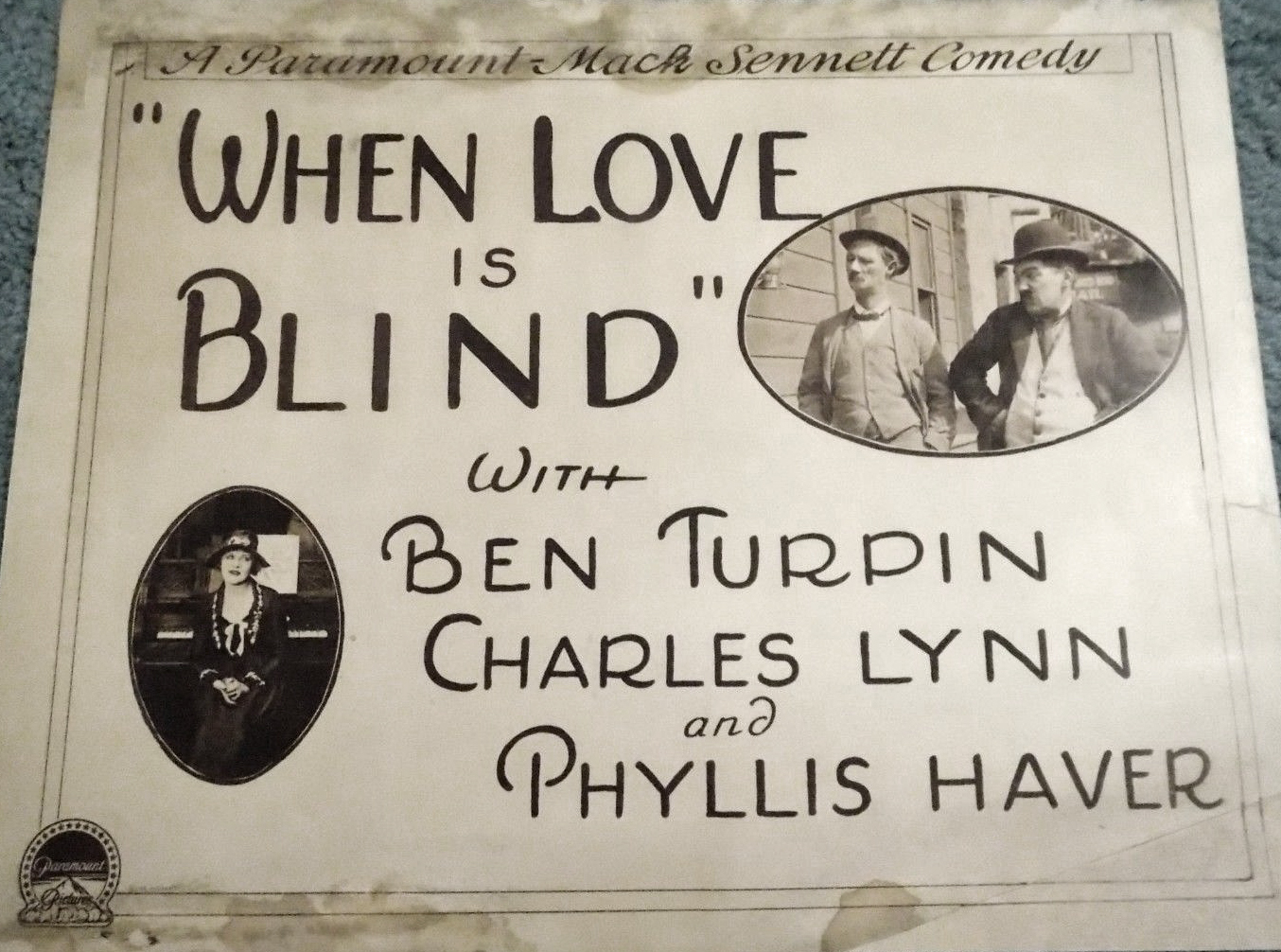
The year 1919 stood as a monumental pivot point in the evolution of cinema, a period where the primitive flickers of the nickelodeon era were being transmuted into the sophisticated visual language of the Roaring Twenties. Amidst this transition, Mack Sennett’s factory of fun remained the epicenter of comedic innovation. When Love Is Blind is not merely a relic of this era; it is a vibrant, albeit chaotic, testament to the sheer physicality of early screen performance. While other contemporary works like The Blue Bird sought to elevate the medium through metaphysical allegory and opulent stagecraft, Sennett’s troupe remained grounded in the visceral, the scatological, and the rhythmic beauty of the pratfall.
To discuss this film without centering on the singular physiognomy of Ben Turpin would be an exercise in futility. Turpin, whose cross-eyed visage was famously insured with Lloyd's of London, represents a form of comedy that is entirely dependent on the subversion of the gaze. In When Love Is Blind, his inability to look directly at the object of his desire—or the obstacles in his path—creates a delightful tension between the character's intent and his physical reality. Unlike the more grounded romantic pursuits found in The Love Route, Turpin’s journey is one of constant, accidental redirection. His performance here is a masterclass in kinetic timing, proving that silent comedy was never just about the fall, but about the anticipation of the impact.
The supporting cast reads like a 'who’s who' of the Sennett lot. Marie Prevost, before her transition to the sophisticated 'jazz baby' roles of the 1920s, radiates a charm that is both innocent and knowing. Her presence provides the necessary gravitational pull for the surrounding madness. Phyllis Haver, another luminary of the Bathing Beauty stable, complements Prevost with a comedic sensibility that is often overlooked in historical retrospectives. Together, they navigate the film's sparse narrative framework with a dexterity that rivals the more dramatic turns seen in The Heart of the Hills.
The direction by Erle C. Kenton and the cinematography by George Gray deserve significant scrutiny. In 1919, the grammar of the chase was being perfected. The camera in When Love Is Blind is not a passive observer; it is an active participant in the gag. The framing is tight, often utilizing the edges of the screen to hide impending doom—be it a bucket of water, a collapsing chair, or the legendary Pepper the Cat. This use of off-screen space creates a sense of spatial instability that perfectly mirrors the internal logic of the characters. We see echoes of this visual playfulness in Peggy Does Her Darndest, yet Sennett’s production feels more uninhibited, less tethered to the constraints of polite society.
“The brilliance of 1919 slapstick lies in its refusal to apologize for its own absurdity. It is a cinema of the moment, where the only consequence is the next laugh.”
The inclusion of Pepper the Cat is not merely a whimsical footnote. In the Sennett universe, animals often possessed more agency and situational awareness than their human counterparts. Pepper’s interactions with Turpin and Kalla Pasha add a layer of unpredictable naturalism to the choreographed chaos. This juxtaposition of trained animal behavior and human buffoonery creates a surrealist texture that is rarely found in the more somber offerings of the time, such as the harrowing Auction of Souls. While the latter dealt with the grim realities of history, When Love Is Blind offers a respite into a world where the only tragedy is a missed romantic opportunity or a ruined suit.
One might be tempted to dismiss this film as mere fluff, but beneath the surface of the custard pies and the frantic running lies a subtle subversion of 1910s social mores. The title itself suggests a critique of the idealized Victorian romance. In films like Lady Audley's Secret, love is a source of dark secrets and moral decay. In Sennett’s hands, love is simply a catalyst for physical exertion. The characters are not burdened by the existential weight found in Should a Wife Forgive?; instead, they are liberated by their own incompetence. There is a democratic quality to the humor—everyone, regardless of their social standing or perceived beauty, is subject to the same laws of gravity.
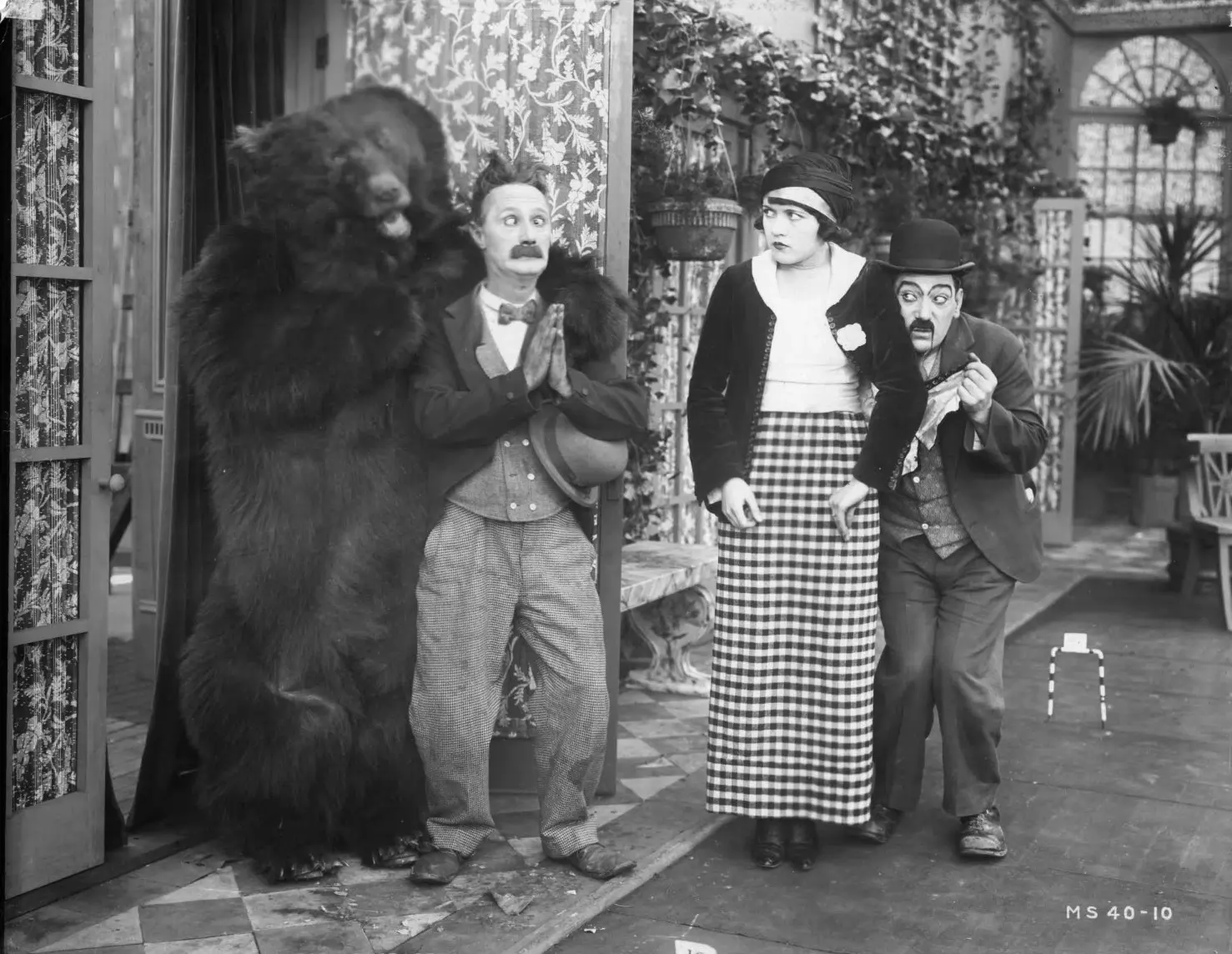
The cast's diversity—from the towering Kalla Pasha to the diminutive Gene Rogers—creates a visual tapestry of human variety. Each actor brings a specific 'type' to the screen, yet they all coalesce into a singular comedic machine. Billy Armstrong and Heinie Conklin, veterans of the slapstick craft, provide the necessary friction to keep the plot moving. The film doesn't rely on the intricate plotting of The Pretender, but rather on the cumulative effect of its gags. It is a rhythmic experience, closer to a musical composition than a traditional literary narrative.
From a technical perspective, the restoration of such films allows us to appreciate the nuances of 1919 lighting and set design. Despite the outdoor, sun-drenched aesthetic typical of California filming, there is a deliberate use of shadow and depth in the interior scenes. The sets are designed for maximum destruction, yet they possess a lived-in quality that grounds the fantasy. This attention to detail is what separated Sennett from his less successful imitators. Even in a film as ostensibly light as When Love Is Blind, there is a commitment to the craft of filmmaking that rivals the epic scope of Ramona.
The pacing is relentless. In an era where many films were still finding their footing with editing, the Sennett editors were already masters of the 'invisible cut' that maintained the momentum of a chase. The transition from a static wide shot to a frantic medium shot of Turpin’s eyes is executed with a precision that would influence generations of comedians, from Lucille Ball to Jackie Chan. The film’s brevity is its strength; it distills the essence of comedy into a concentrated burst of energy, avoiding the narrative bloat that occasionally plagued longer features like The Gypsy Trail.
When we place When Love Is Blind alongside the satirical bite of To Hell with the Kaiser! or the melodramatic intensity of Playthings of Passion, we see the full spectrum of 1919 cinema. Sennett’s work occupies a vital space in this hierarchy—the space of pure, unadulterated joy. It lacks the cynicism of modern comedy, replacing it with a genuine wonder at the capabilities of the human body. The 'blindness' mentioned in the title is perhaps not just about romance, but about the audience’s willingness to suspend their disbelief and enter a world where logic is secondary to the laugh.
The film also serves as a fascinating precursor to the more structured comedies of the 1920s, such as Riquette et le nouveau riche. One can see the DNA of the great silent features being spliced together here in the short-form experiments of the Sennett lot. The interplay between Charles Murray and the rest of the ensemble hints at a maturity of performance that would soon dominate the industry. Even the minor roles, played by the likes of Elsie Ware and Margaret Cloud, contribute to the feeling of a fully realized, albeit insane, community.
Ultimately, When Love Is Blind is a celebration of the ephemeral. It was designed to be consumed in a crowded theater, accompanied by a live pianist and the collective roar of an audience. While we now view it through the sterile lens of digital preservation, the film’s vitality remains undiminished. It stands as a reminder that before cinema was an 'art form' with a capital A, it was a visceral, communal experience. It shares a certain DNA with the adventurous spirit of The Tiger's Trail, trading serial cliffhangers for comedic payoffs.
To watch Marie Prevost and Ben Turpin today is to witness the birth of modern stardom. They possessed a 'screen presence' that transcended the limitations of their era’s technology. In the pantheon of silent comedy, this film may not have the intellectual weight of a Keaton feature or the pathos of a Chaplin short, but it has something equally valuable: an unbridled, infectious spirit of play. For anyone seeking to understand the roots of visual humor, or for those who simply wish to see a cross-eyed man attempt to navigate a world of Bathing Beauties and mischievous cats, When Love Is Blind is an essential, delightful voyage into the heart of the Sennett machine.
Reviewer Note: This analysis considers the 1919 release context and the specific contributions of the Mack Sennett production model. For further reading on the evolution of 1910s cinema, please see our reviews of The Beloved Blackmailer and other contemporary works.
IMDb 6.3
1934
Community
Log in to comment.