DbcultAccessing Vault...
Cult Review
Senior Film Conservator
A single reel of nitrate can hold galaxies; When Rome Ruled stuffs an empire and a soul inside its modest 18 minutes.
Picture, if you can, the year 1914: Europe is rehearsing trench-lit carnage while American cameras chase frontier myths and dime-novel piety. Out of this liminal dusk emerges When Rome Ruled, a one-reel fever dream shot in the scrubby hills of New Jersey pretending to be Carthaginian hinterlands. The film arrives like a shard of saffron pottery washed up on the Jersey shore—fragmentary yet fragrant with ancient myrrh.
Director Charles E. Bunnell and scenarist Walter R. Seymour condense into a breath what D. W. Griffith would need three marble-white hours to proclaim: that love, once alloyed with conscience, can outrun lions, legions, even celluloid itself. Their shorthand grammar—tableau compositions, iris in/out punctuation, intertitles laconic as epitaphs—creates a mythic compression so intense it threatens spontaneous combustion.
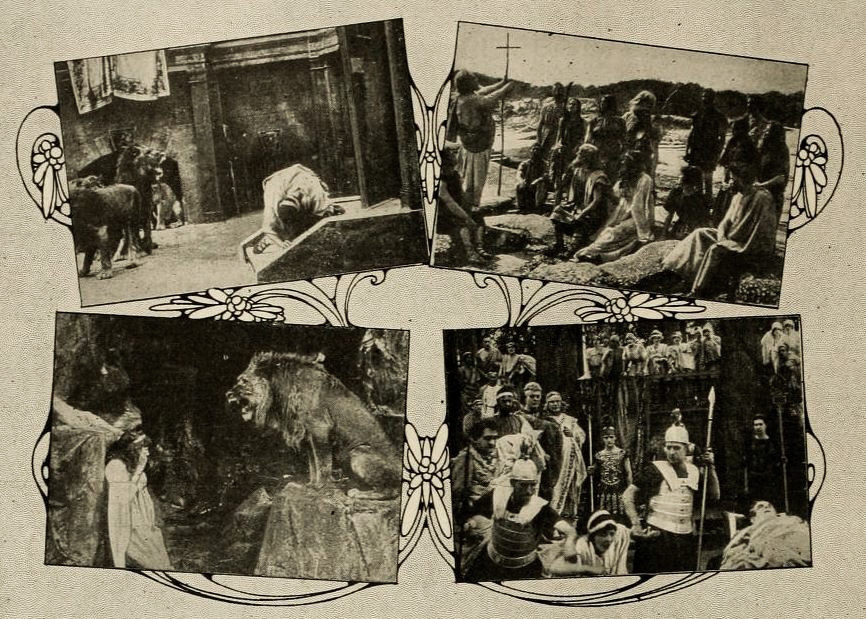
The film’s North-African desert is patently a sandpit behind Fort Lee studios, yet cinematographer Clifford Bruce side-lights every dune with magnesium flares so that grains scintillate like pulverized topaz. When Nydia (Nell Craig) flees across this ersatz Sahara, her linen tunic becomes a comet-tail of white against a void of obsidian nitrate. The effect is less location than locution—a visual whisper saying: believe and you shall see.
Compare this to the opulent but studio-bound pageants of Tess of the Storm Country or the moral scaffolding of Home, Sweet Home; When Rome Ruled opts for chiaroscuro minimalism, proving imagination can trump budget like David slinging a single smooth stone.
Rosita Marstini’s high priest moves with the sinuous arrogance of a cobra beneath temple incense; each gesture is hieratic, calibrated for the back row of a nickelodeon. Opposite him, Riley Hatch as Caius carries himself like a bronze statue discovering heartbeat—torso rigid, eyes suddenly liquid whenever Nydia enters the frame. Their clash is not mere melodrama; it is the collision of two cosmologies, Jupiter’s capricious thunder versus the nascent tremor of agape.
Nell Craig has the thankless task of conveying terror, ecstasy, and transfiguration without benefit of close-up or spoken word. She resorts to an economy of sinew: shoulders flaring like frightened wings, fingers knotting as though weaving invisible rosaries. In the cave sequence, she trembles beside the lion—a flea-bitten circus beast no less—yet through sheer conviction persuades us we are witnessing Daniel’s unwritten sequel.
Make no mistake: beneath its sand-swewt adventure skin, the film is a covert sermon. Nydia’s Christianity is never exposited via catechism; instead it glows in her refusal to accept vestal imprisonment, in her wordless benediction over her slain father, in the final desert conversion of Caius—a moment sketched only by the two fugitives kneeling as sunrise bleeds across the lens. The Empire, with its gilded cages and arena bookkeeping, becomes a stand-in for every modern bureaucracy that commodifies bodies and calls it order.
Thus When Rome Ruled converses across the century with contemporary resistance art: think of The Coming Power’s suffragette parables or the anarchic swagger of Trompe-la-Mort. Each film smuggles insurgency past the censors inside a candy shell of entertainment.
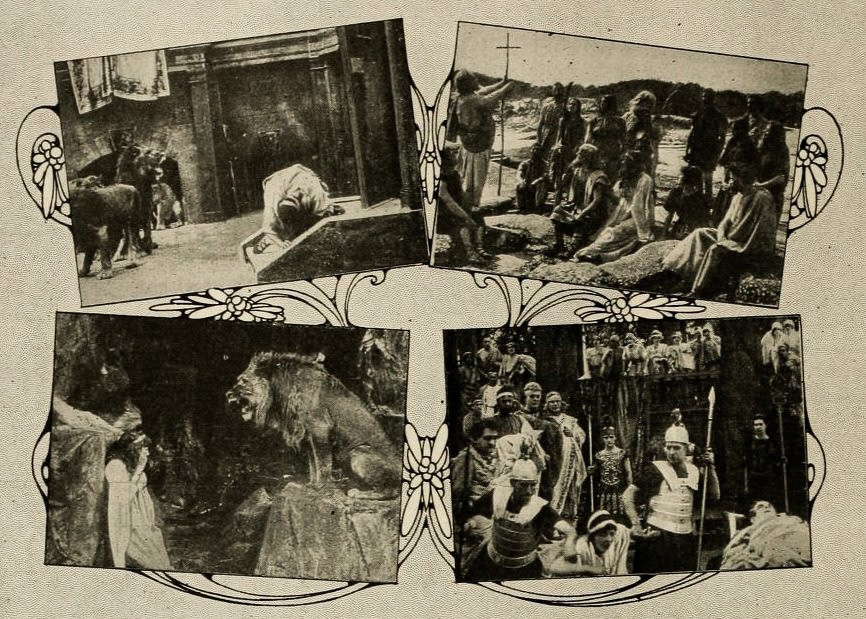
Editors in 1914 are still midwives of time, uncertain whether to cut on gesture or tableau. Here, the splice is merciless: a leap from banqueting harpists to Nydia’s hut in flames occurs mid-breath, as though God Himself has yanked the chronology. Later, cross-cut between arena and Caius’s prison cell tightens like a garrote until the two streams collide in a single frame—an early, primitive instance of what Soviet theorists will baptize intellectual montage.
The final escape is rendered in perhaps eight shots: gate yawns, lion arena gapes, sandstorm swallows lovers, sunrise resurrects them. The brevity is brutal, almost haiku-like, leaving the viewer dazed, as if survival itself were a mirage that dissolves on touch.
Of course, original exhibitors would have hired a single pianist to thunder out Il Trovatore or a parlour rendition of Ave Maria. Today, in most repertory screenings, the film unspools naked, its silence heavier than any score. Listen carefully and you can hear the sprocket holes clicking like castanets, the projector’s carbon arc humming like distant catapults. The absence of music becomes a negative space where contemporary audiences pour their own ancestral dread: pogroms, lynchings, border walls—persecution wearing new armor yet smelling of the same iron.
One cannot rewatch this parable without confronting its gender politics. The priest’s lust is institutional, sanctified by altar and senate; Caius’s desire, though romantic, still begins as ownership—he places her in a home like a misplaced statuette. Yet Nydia refuses both gilded cage and marital cage, choosing instead the perilous wilds where agency is measured in heartbeats. In that sense she foreshadows the proto-feminist ferocity of The Daughters of Men or the balletic rebellion in Balletdanserinden.
By the time the lovers kneel amid desert scrub, the film has transcended its propaganda shell. Conversion is not doctrinal but existential: to survive is to testify. The closing iris closes not on a kiss but on a shared breath—two silhouettes against a sky so overexposed it appears nuclear. In that white glare, Rome’s marble becomes dust, its Latin dissolves into wind, and only the trembling promise of caritas remains.
Historians of silent cinema treat When Rome Ruled as a minor footnote between the biblical blockbusters of Pathé and the looming colossus of Cabiria. Yet seeds are judged not by girth but by germination. The film’s DNA can be traced through Cecil B. DeMille’s sadistic circuses, through the lion-haunted theology of Ben-Hur, even to the contemporary YA dystopias where young women outrun authoritarian priests and predatory arenas.
Archival prints are spotty—some 16mm reductions struck for church basements, a few 35mm shards at the Library of Congress—yet each rediscovery feels like finding a torch still smoldering in a subterranean corridor. We are reminded that every epoch, no matter how swaggering, secretly fears the child who will not bow.
For the jaded cinephile who believes nothing pre-1920 can still detonate behind the sternum, When Rome Ruled arrives like a hidden blade: brief, bright, drawing blood across a century. Watch it for the chiaroscuro, for the gendered tug-of-war, for the sobering reminder that yesterday’s lions wear today’s tailored suits. Most of all, watch it to hear the silence after the last frame—an echo chamber where your own pulse becomes the foley of empire’s collapse.
Empires fall, films flicker, love—improbably, incurably—escapes to tell the tale.
IMDb —
1925
Community
Log in to comment.