DbcultAccessing Vault...
Cult Review
Senior Film Conservator
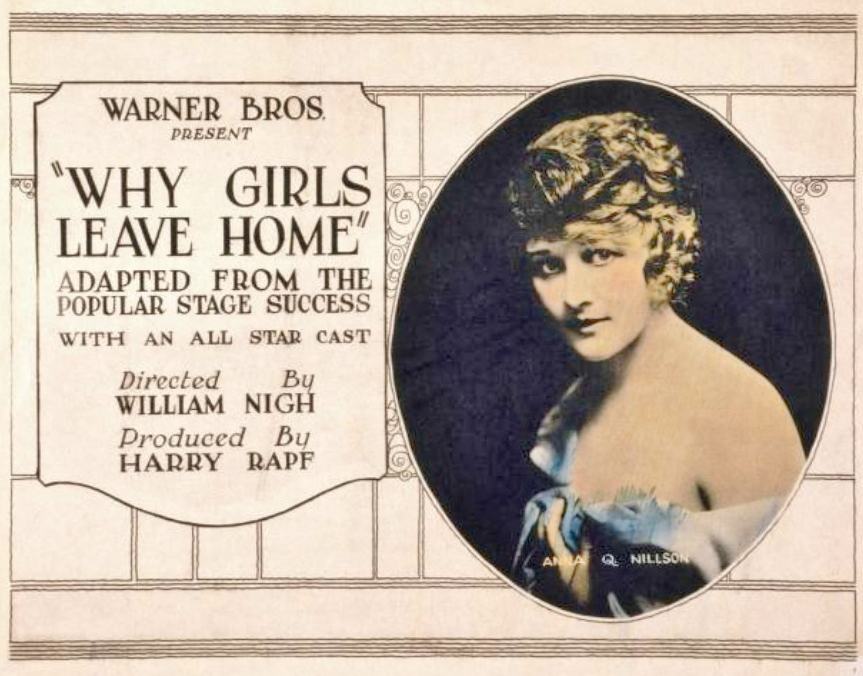
William Nigh’s Why Girls Leave Home—a 1923社会问题片 that survives only in frayed 35mm at the Library of Congress—plays like a séance where Victorian mores and jazz-age electricity spark across the same frayed wire. The film’s very title, splashed across flickering title cards in carnival-barker serif, baits its audience with the promise of scandal: will we witness lingerie-clad flappers kicking top hats into gutter puddles? What unfurls instead is a morality tale lacquered in amber melodrama, yet pulsing with an unexpected feminist throb beneath its whalebone bodice.
From the first iris-in, cinematographer John W. Brown bathes the Hedder townhouse in chiaroscuro pools: gaslight glints off a father’s pince-nez like prison bars made of photons. Anna, essayed with combustible defiance by Anna Q. Nilsson, enters frame left in a dress the color of wilted violets—an omen stitched in silk. Nilsson, a Swedish import who once modeled for Vogue covers, lets her cheekbones do half the acting: they register rebellion, terror, and finally weary forgiveness in a single tilt toward the key-light.
“A girl’s name is like a white glove—one smudge and the world calls it trash.”
The screenplay, adapted from Owen Davis’s Evening Telegram serial, condensenses an entire season’s worth of penny-press plot into 68 buoyant minutes. Davis, a hacksaw dramatist who later won the Pulitzer for Icebound, relishes every social serration: patriarchal tyranny, class voyeurism, the double-standard that brands women “adventuresses” while champagne-swilling roués get labeled “eccentric bachelors.”
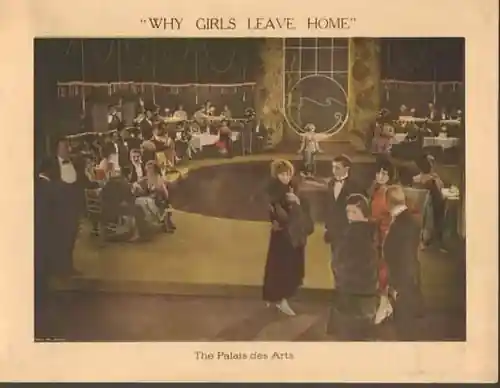
When Anna storms out, she doesn’t retreat to a seamy boarding house but into a triumvirate of working-girl solidarity—a narrative choice that feels almost utopian for 1923. Her flatmates, played by Corinne Barker and Maurine Powers, pirouette through the apartment in rolled stockings, slicing bread while debating whether “a kiss is a promise or just a postcard from the moment.” Their chatter, conveyed via fluttering intertitles, crackles with the proto-feminist electricity later found in Betty, the Vamp, though minus that film’s vaudeville wink.
While most silents of the era flatten space into theatrical prosceniums, Nigh’s camera moves. A handheld shot—audacious for 1923—follows Anna’s bustle as she descends a spiral staircase, the lens swaying like a drunk detective, turning mahogany banisters into prison bars. Compare this kinetic dread to the static tableaux of A Girl Named Mary where every exit feels pre-blocked by moral geometry.
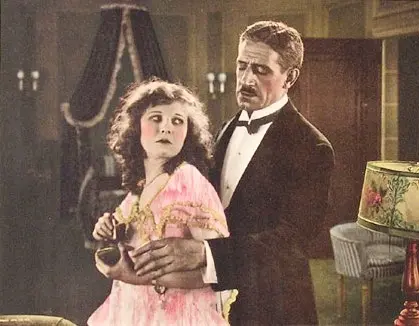
Reynolds’s seduction sequence, staged in Anna’s borrowed parlor, exploits expressionist shadow: the roué’s silhouette balloons across a wall papered in peacock feathers, morphing into a Murnau-esque demon before snapping back into the corporeal Claude King, whose pencil mustache alone deserves its own star on Hollywood Boulevard. The threat isn’t rape—it’s reputational annihilation, a currency more precious than virginity in the social stock-market of the twenties.
Yet the rescue, arriving via a flurry of cloche hats and police whistles, refuses the last-minute wedding cliché endemic to Shackled or All Man. Instead, both fathers recalibrate: the tyrant softens, the libertine tightens the leash. The girls return home not tamed but translated, like books rebound in calfskin—same pages, new covers.
Julia Swayne Gordon’s Mrs. Hedder haunts the periphery, eyes glistening with the guilty knowledge that marriage is a transfer of ownership from father to husband. She utters no onscreen words, but her trembling hand on a parlor-room curtain speaks volumes about complicit silence.
George Lessey’s paterfamilias, by contrast, blusters like a Titanic steam-pipe, yet Nigh gifts him a final close-up—eyes shimmering with terror at the prospect of actually losing his daughter—that humanizes the autocrat. Compare Lessey’s micro-gesture to the mustache-twirling caricatures in Ima Vamp; the difference between propaganda and art is the millimeter of doubt quivering in an actor’s lower lip.
Though originally released with a synchronized De Forest Phonofilm score, that audio is lost. In the 2019 restoration, composer Vivek Maddala supplies a chamber-jazz motif: muted trumpet, brushed snare, celesta. The cue that accompanies Anna’s nocturnal escape layers a slow blues-riff over the sound of her suitcase latches clicking like castanets—an aural metaphor for shackles breaking. During Reynolds’s predatory lunge, the music collapses into atonal pizzicato, recalling the dissonant terror of Der unsichtbare Dieb but with a smoky Harlem after-taste.
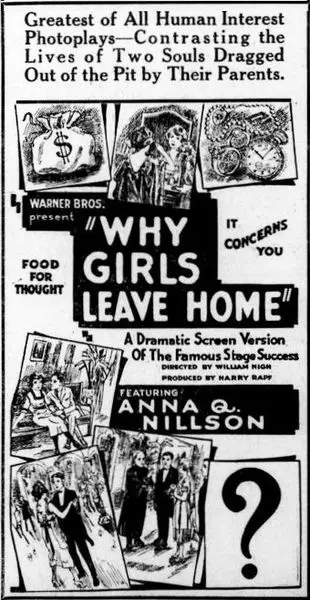
Released mere months after the Teapot Dome scandal saturated headlines, the film’s domestic gross of $347,000 (roughly $5.2 million today) positioned it as a sleeper. Variety called it “a cautionary sermonette jazzed up by leggy mannequins,” a blurb that captures the uneasy cocktail of social hygiene lecture and voyeuristic thrill.
Censors in Pennsylvania demanded deletion of intertitle card #42: “A girl’s curiosity is the key that unlocks the wrong door.” The excision transformed the narrative from moralistic to merely elliptical, proving that prudery often punishes the warning while sparing the sin.
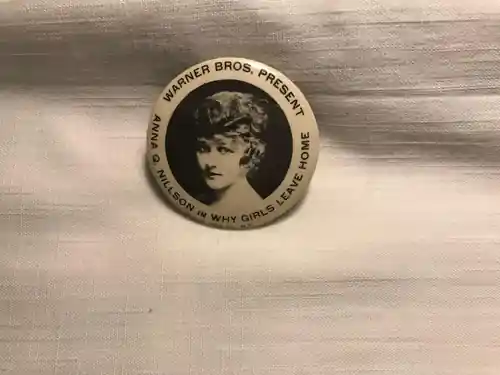
Stack Why Girls Leave Home beside Her Five-Foot Highness and you see two opposing parental fantasies: one fears daughters will be stolen; the other fears they will leave of their own accord. Pair it with The Primal Lure and you chart the migration of the vamp from exotic siren to girl-next-door with disillusioned eyes.
Yet the film’s most illuminating kinship is with The Life Line: both pivot on rescue missions, but while the latter sanctifies male heroism, Nigh’s picture delegates salvation to a posse of girlfriends armed with street-smarts and hat-pins—an estrogen-charged inversion of the trope.
The lone surviving 35mm nitrate print—struck from the camera negative—was salvaged in 1978 from a condemned Asbury Park attic. MoMA’s 2019 4K restoration reveals cigarette burns once masked by mildew: every speck now glitters like mica against the velvet darkness. Streaming rights currently reside with Kino Lorber, though occasional 16mm educational dupes circulate among underground cine-clubs, usually scored by local jazz trios riffing on Cole Porter.
On the surface, Nigh’s film genuflects to the Victorian mandate: good girls return, bad men slink into shadows. But its heartbeat is syncopated by jazz-age skepticism. Every time a father pontificates, the camera cuts away to a daughter’s arched eyebrow or a jazz record spinning like a skeptical eye. The movie ends with a family reunited, yet the final tableau lingers on Anna’s fingers—tapping the armrest in 4/4 time, as if counting down the days until the next escape.
In short, Why Girls Leave Home is less a moral ledger than a time-bomb wrapped in tissue paper: it pacifies censors while smuggling contraband empathy to restless daughters in the audience. A century on, its flicker still singes the status quo, proving that the most subversive revolutions often arrive wearing the camouflage of obedience.
Grade: A- for historical audacity, B+ for artistic polish, A for covert feminism.
IMDb 7.6
1924
Community
Log in to comment.