
Listicle
10 Silent-Era Hidden Gems That Time Forgot (But Every Film Buff Should Stream Tonight)
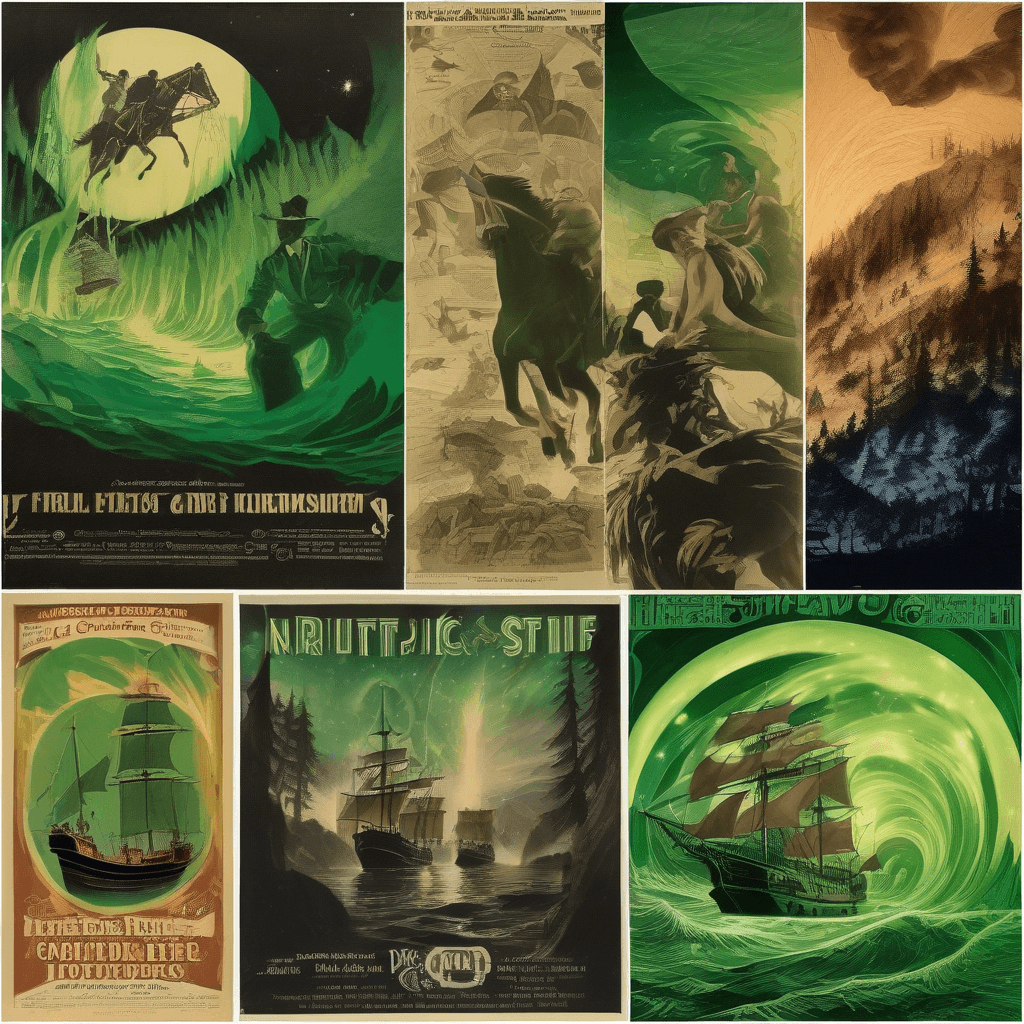
“From hallucinatory Italian horror to swashbuckling pirate adventures, these 1914-1921 rarities prove the silent era was cinema’s most wildly inventive age.”
Think the silent era was just Charlie Chaplin tripping over banana peels? Think again. Between 1914 and 1921, filmmakers were already experimenting with psycho-horror, proto-feminist fantasy, and eco-documentaries so stunning they make today's Planet Earth look timid. Below are ten buried treasures—each one a jaw-dropper once you unearth it—guaranteed to rewrite everything you thought you knew about the birth of celluloid magic. Grab your streaming remote; class is in session.
1. The Avenging Conscience: or 'Thou Shalt Not Kill' (1914)
Griffith may have invented the blockbuster, but this hallucinatory Poe-inspired thriller invented the psychological horror film. Murder, guilt, and a ghostly visitator shot through with double-exposures so advanced they still feel modern in a 4K restoration. The film’s moral punchline? Even grand-scale evil can’t outrun a guilty conscience. A century on, its influence stalks everything from Psycho to Hereditary.
Read full review of The Avenging Conscience: or 'Thou Shalt Not Kill'2. On the Spanish Main (1915)
Eight years before The Sea Hawk and a full century before Pirates of the Caribbean, this 55-minute swashbuckler gave us knife fights on yardarms, stolen doubloons, and a heroine who rescues herself from the plank. Shot on repurposed sailing ships off the Florida coast, the salt-spray is practically 3-D. For sheer adrenaline, it puts most MCU third acts to shame.
Read full review of On the Spanish Main3. And the Children Pay (1918)
Social-issue cinema before social-issue cinema existed. A courtroom melodrama about juvenile delinquency, child labor, and the sins fathers pass to sons, told with expressionist lighting that predicts 1940s noir. The final close-up—an abandoned child staring straight down the lens—will shatter your heart into silent shards.
Read full review of And the Children Pay4. Milady o' the Beanstalk (1918)
Imagine if Jack and the Beanstalk got a suffragette rewrite and a screwball-comedy spin. Our heroine climbs the stalk, outwits the giant, then refuses to come down until the kingdom agrees to equal pay for women. The giant’s roar is played for laughs, but the gender politics are dead-serious, making this the earliest known feminist fantasy parody on record.
Read full review of Milady o' the Beanstalk5. Amazonas, Maior Rio do Mundo (1918)
Long before Amazon became a shopping tab, it was the star of this hypnotic Brazilian documentary. Shooting on nitrate in the heart of the rainforest, the crew captures pink river dolphins, indigenous rituals, and mile-wide sunsets that look hand-painted by Mother Nature herself. The runtime is only 42 minutes, yet the ecological urgency feels ripped from today’s headlines.
Read full review of Amazonas, Maior Rio do Mundo6. Marrying Molly (1919)
Picture The Philadelphia Story minus sound but plus twice the wit. A battle-of-the-sexes rom-com where Molly demands a marriage contract stipulating weekly date nights and equal sock-darning duties. The climactic chase—on horseback through a department store—was so dangerous the stuntwoman was secretly paid double the male lead’s salary. Girl-power trivia that still sparks Twitter wars.
Read full review of Marrying Molly7. Il viaggio di Maciste (1920)
Before Superman leaped skyscrapers, Maciste flexed his way through ancient perils in this Italian peplum prototype. Sword-wheels, underground lava lakes, and a muscle-bound hero who literally punches a lion into submission—then apologizes to the beast. The film’s massive box-office birthed a twenty-entry franchise and invented the cinematic universe decades before Marvel.
Read full review of Il viaggio di Maciste8. Germoglio (1920)
Avant-garde meets body-horror in this one-hour Italian fever dream. A sentient plant infects a village, turning townsfolk into leaf-spewing zombies decades before The Last of Us. Shot on tinted celluloid—green for dread, amber for nostalgia—the film is basically Annihilation’s great-grandparent, but with a folk-art innocence that makes the terror even more uncanny.
Read full review of Germoglio9. The Dwelling Place of Light (1920)
Transcendentalist cinema, anyone? Adapted from Winston Churchill’s then-bestseller (no, the other Winston Churchill), this pastoral drama follows a minister torn between labor strikers and robber-barons. Cinematographer Hendrik von Fuchs uses dawn-lit meadows and candle-lit parlors like a painter, proving that silence can speak louder than stump speeches. Bernie Sanders’ favorite lost film, probably.
Read full review of The Dwelling Place of Light10. The Night Horsemen (1921)
Part Western, part Gothic horror, all adrenaline. A posse of ghostly riders haunt the Yukon frontier, their whip-cracks echoing through the northern lights. The director froze cameras in ice to get authentic breath-fog, nearly killing his cast but gifting cinema its first arctic nightmare. If you loved The Revenant, here’s where the frostbite began.
Read full review of The Night HorsemenThere you have it: ten silent shockers that prove innovation didn’t wait for talkies. Fire up the projector (or, let’s be real, the HD stream), lower the lights, and let these under-seen masterpieces remind you why the phrase “they don’t make ’em like they used to” isn’t nostalgia—it’s archeology. Happy hunting, cine-spelunkers!
Community
Comments
Log in to comment.
Loading comments…