
Cult Cinema
The Arsenic Aperture: Unearthing the Primal Weirdness and Genre Defiance of the Silent Era’s Original Underground
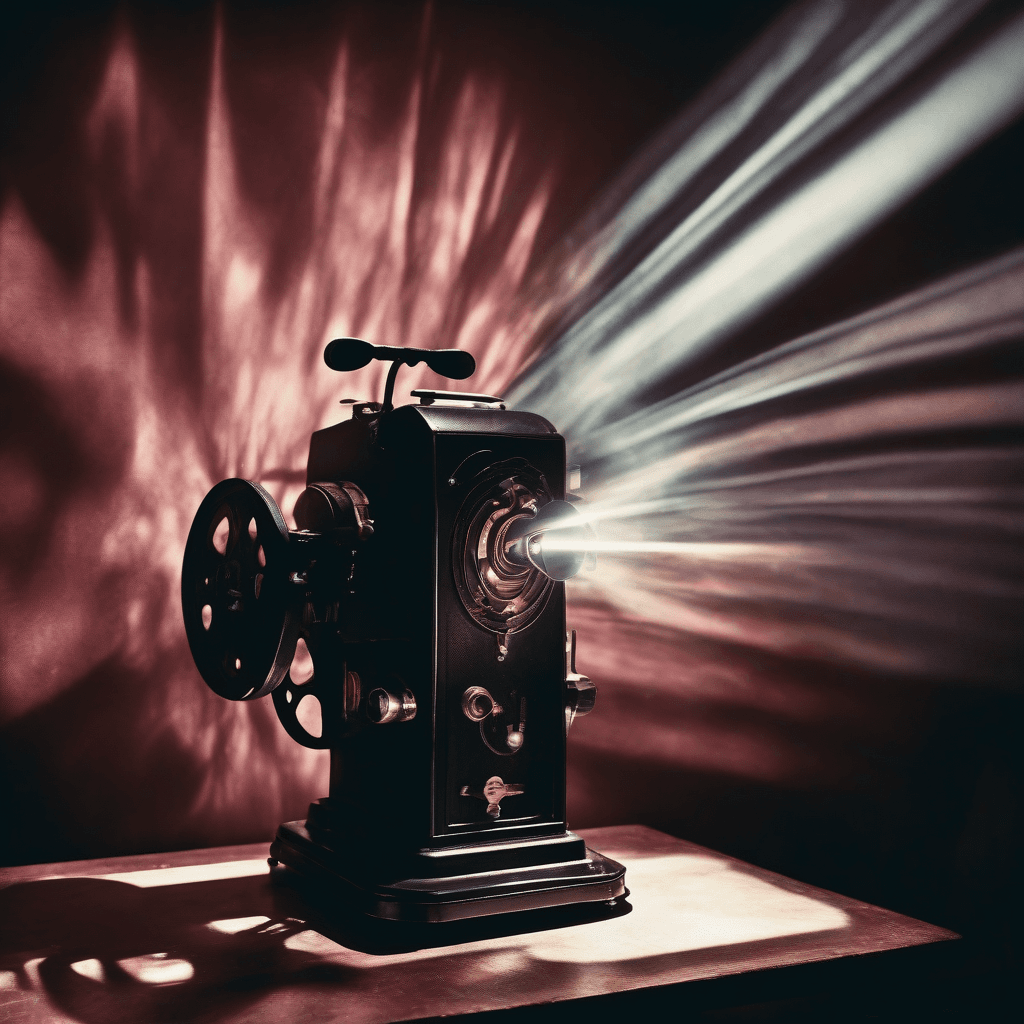
“Journey into the flickering shadows of the early 20th century to discover how forgotten silent masterpieces forged the DNA of modern cult cinema.”
To understand the modern obsession with cult cinema, one must look beyond the neon-soaked midnight screenings of the 1970s and dive deep into the nitrate shadows of the early 20th century. Long before the term 'cult film' was coined, a series of cinematic anomalies were quietly rewriting the rules of visual storytelling. These were the fringe rebels—films that refused to conform to the burgeoning Hollywood system, opting instead for narratives of social deviance, surrealism, and genre mutation. This era, roughly spanning from 1914 to the early 1920s, represents the Arsenic Aperture: a window into a world where cinema was raw, dangerous, and deeply transgressive.
The Architecture of the Moral Outcast
At the heart of every cult classic lies the figure of the outsider, and the silent era provided the perfect breeding ground for this archetype. Consider The Deemster (1917), an early exploration of exile and redemption on the Isle of Man. In this film, Daniel Mylrea, the son of a Bishop, finds himself cast out of society, his temporal power stripped away by the very governor his family serves. This narrative of the 'exiled soul' resonates with the modern cult fan, who often feels like an outsider in their own cultural landscape. The film's preoccupation with rigid moral structures and the consequences of their collapse is a thematic precursor to the transgressive cinema of the later century.
Similarly, A Man's Fight (1919) tackles the burden of false accusation and the sacrificial nature of the hero. When Roger Carr takes the blame for a murder to protect his sister, he isn't just performing a noble act; he is entering a state of social death. This trope of the 'misunderstood martyr' is a cornerstone of cult narratives, where the protagonist must navigate a world that is fundamentally at odds with their inner truth. These early films weren't just dramas; they were blueprints for the existential rebellion that would later define the works of Jodorowsky or Lynch.
Genre Mutations and the Birth of the Weird
Cult cinema thrives on the 'weird'—the moments where reality bends and the subconscious takes the wheel. In 1914, the Chinese film Zhuangzi shi qi (The Ghost of Chuang Tzu) introduced audiences to a brand of philosophical eccentricity that remains jarring even today. Centered on a philosopher who fakes his own death to test his wife's fidelity, the film utilizes surreal logic and dark humor to explore the human condition. It is a proto-cult masterpiece, showcasing how early filmmakers were already experimenting with the boundaries of the 'real' and the 'imaginary.'
We see a different kind of genre mutation in Madame Jealousy (1918), an allegorical piece where abstract concepts like 'Charm,' 'Valor,' and 'Jealousy' are personified. By stripping away the pretense of naturalism, the film enters a realm of pure symbolic theater. This technique is a direct ancestor to the stylized, hyper-real worlds of modern cult favorites. When Madame Jealousy schemes to ruin a happy marriage through the use of a simple photograph, the film transforms a domestic drama into a cosmic battle between archetypes—a hallmark of the cult sensibility.
The Serialized Shadows of the Underground
One cannot discuss the roots of the midnight movie without mentioning the influence of the early crime serials. The Vampires: The Terrible Wedding (1916) is a prime example of the 'pulp' energy that fuels cult devotion. Part of Louis Feuillade's legendary series, this film follows the exploits of a secret criminal organization. The atmosphere of constant peril, combined with the bizarre, almost dreamlike logic of the villains' plots, creates a sense of 'sacred weirdness.' The 'Vampires' are not supernatural beings, but their influence is so pervasive and their methods so unconventional that they inhabit the same space in the cultural imagination as the monsters of later horror cinema.
The Radical Subversion of Social Norms
While many early films sought to reinforce Victorian values, the fringe was busy tearing them down. A Virtuous Vamp (1919) is a fascinating study in social disruption. By portraying a woman whose sheer presence causes chaos in a corporate environment, the film subverts the traditional power dynamics of the era. It’s not just a comedy; it’s an early exploration of the 'femme fatale' archetype, albeit through a satirical lens. The 'vamp' is a figure of power because she refuses to play by the rules, much like the cult icons of the 1960s underground.
In the realm of the Western, films like The Scarlet Drop (1918) and Beyond the Law (1918) began to complicate the myth of the American frontier. The Scarlet Drop features a protagonist who, after being rejected from the army, joins a gang of marauders. This descent into banditry reflects a growing disillusionment with institutional authority—a theme that would become central to the counter-culture films of the 1970s. Meanwhile, Beyond the Law, featuring the real-life Dalton brothers, blurs the line between historical fact and outlaw myth, creating a space where the criminal is celebrated as a folk hero.
The Technological Frontier of the Cult Gaze
Cult cinema is often defined by its relationship with technology—specifically, the use of unconventional techniques to create a unique visual language. The Power of Love (1922) holds a special place in this history as the first 3D feature film. Although the technology was primitive, the desire to break the 'fourth wall' and immerse the audience in a multi-dimensional experience is a quintessentially cult impulse. The film, a melodrama about a woman turning in a criminal to save her mother, is almost secondary to the spectacle of its presentation. This prioritization of the sensory experience over the narrative is what separates a standard film from a cult phenomenon.
The Animalistic and the Absurd
The cult mindset has always had a soft spot for the 'misunderstood beast,' a theme beautifully captured in The Silent Call (1921). Starring Flash, a part-wolf dog, the film tells the story of an animal falsely accused of 'sheepicide' and sentenced to death. Flash's flight into the mountains and his eventual vindication is a powerful metaphor for the marginalized individual. The use of an animal protagonist to explore human themes of injustice and survival adds a layer of 'otherness' that is deeply appealing to the cult viewer.
On the other end of the spectrum, we have the birth of the comedic duo in The Lucky Dog (1921). This film marks the first time Stan Laurel and Oliver Hardy appeared on screen together. While they hadn't yet formed their iconic partnership, the chemistry is palpable. For the cult historian, watching The Lucky Dog is like finding the 'missing link' in the evolution of comedy. It is a moment of pure cinematic alchemy, where two disparate elements combine to create something entirely new and enduringly influential.
Mapping the Fringe: A Legacy of Rebellion
As we trace the lineage of these films—from the identity-swapping antics of His Royal Slyness (1920) to the high-stakes espionage of Inside the Lines (1918)—a clear pattern emerges. These were films that dared to be different. They were the renegade reels that refused to be forgotten, even as the industry moved toward a more standardized, 'safe' form of storytelling. The Arsenic Aperture was a time of immense creative freedom, where the only limit was the filmmaker's imagination.
Films like The Winning of Sally Temple (1917) and The Spindle of Life (1917) showed that even within the framework of traditional drama, there was room for social critique and character-driven eccentricity. Sally Temple, an actress who becomes the champion of the oppressed people of Pump Lane, is a proto-revolutionary figure. Her battle against the Duke of Chatto is not just a personal struggle; it is a class war played out on the silver screen. This spirit of resistance is what gives cult cinema its enduring power.
Conclusion: The Eternal Midnight
The 1910s and early 20s were not just the 'infancy' of film; they were a sophisticated era of artistic experimentation. The films we have discussed—The Midnight Girl (1919), Revenge (1918), Action (1921), and so many others—are the silent ancestors of every midnight movie that has ever graced a screen. They taught us that cinema could be more than just entertainment; it could be a ritual, a rebellion, and a window into the darkest corners of the human psyche.
When we watch a modern cult classic, we are seeing the echoes of the Arsenic Aperture. We are seeing the ghost of Zhuangzi shi qi in the surrealist's lens; we are seeing the spirit of Flash in the misunderstood monsters of today; and we are seeing the rebellious heart of The Deemster in every character who chooses exile over conformity. The silent era's original misfits didn't just make movies; they engineered a mindset that continues to define the very soul of cinema. As long as there are those who seek the strange, the transgressive, and the beautiful, the light from the Arsenic Aperture will never truly fade.
Community
Comments
Log in to comment.
Loading comments…