
DbcultAccessing Vault...
Recommendations
Senior Film Conservator
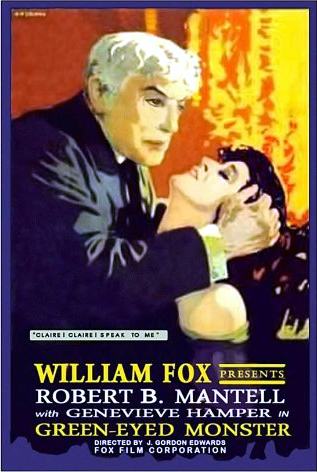
Ever since The Green-Eyed Monster hit screens in 1916, fans have sought that same cult status, it's essential to look at the contemporaries that shared this cult status. Prepare to discover your next favorite movie in our hand-picked collection.
Whether it's the cult status or the thematic depth, this film to leave an indelible mark on the history of United States film.
The story opens at a chateau where gay French life is depicted, introducing Raimond de Mornay, the elder of two sons who secretly loves his cousin Claire. He makes no open declaration of his affection, though, and his brother Louis woos and wins her. Unable to stand the jealousy their marriage arouses, Raimond goes to Vienna, where he engages in riotous living. His father's death calls him home, but he is unable to watch the intimacy of the woman he loves with his brother, and he leaves for India where he stays for several years, becoming versed in the ways of the Hindu. A letter from his nephew Paul asks him to come back. Believing he has stifled the jealousy that sent him away, he returns. The green-eyed monster attacks him with irresistible force and calling into play a curious box, that somewhere in its mechanism contains a drop of cobra poison, he gives it to his brother whose inquisitiveness over its mysterious nature releases a hidden spring and the virus is injected into his blood. He secretes the body in a casket, another of his possessions obtained in India. The casket guards his secret until Claire becomes suspicious and accuses him of the deed. His mind, brooding over his crime, becomes deranged and although pleading innocence, leads Claire to the casket and throws open the lid. The shock of unexpectedly seeing her dead husband kills her. Again Raimond escapes suspicion, but as time elapses he forms a dislike for his nephew, until, becoming obsessed with the idea of showing Paul what is inside of the chest, he drags the frightened child to the heavy box and shows him all that is left of what was once his father. Later, after becoming a raving maniac. Raimond falls dead at the sight of his brother's skeleton.
Critics widely regard The Green-Eyed Monster as a cult-favorite piece of cult cinema. Its cult status is frequently cited as its strongest asset, solidifying its place in United States's film legacy.
Based on the unique cult status of The Green-Eyed Monster, our vault has identified these titles as the most compelling follow-up experiences for fans of cult cinema:
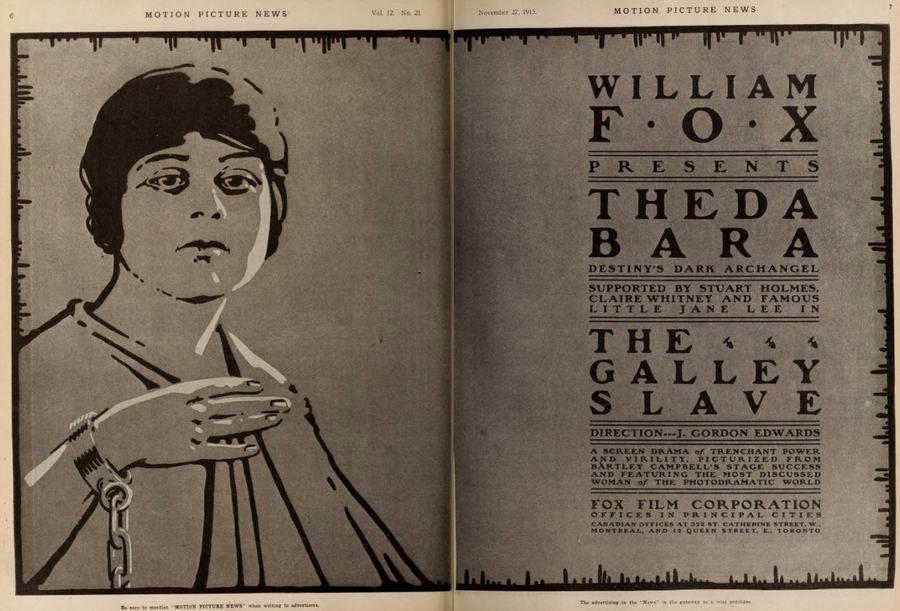
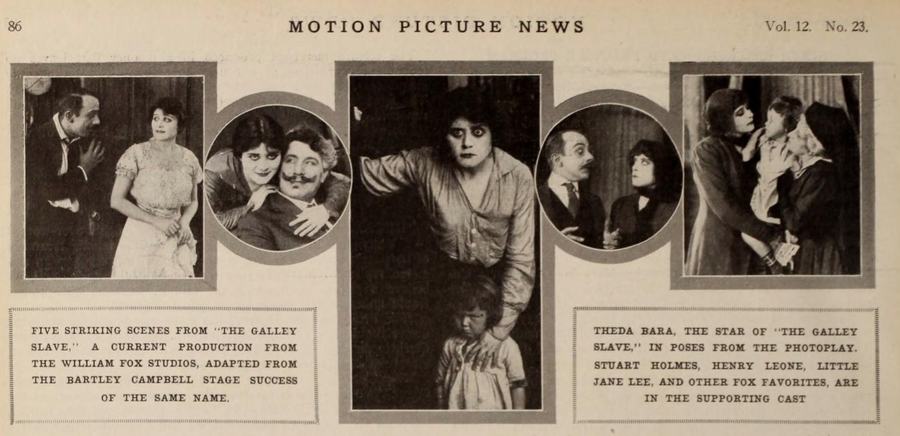
Dir: J. Gordon Edwards
Francesca Brabaut, who married an artist against her father's advice, regrets her decision when her husband Antoine, in debt, sends her to his misanthropic uncle to plead for money. After Francesca refuses the uncle's offer to change his will if she will have sex with him, the uncle, declaring that he has misjudged women, decides to leave money to provide for Francesca and her child but dies of heart failure first. Antoine inherits a castle and title and deserts Francesca. Later, while posing in Florence for an American artist, Francesca meets the artist's sweetheart, American heiress Cecily Blaine, whose mother wants her to marry someone with a title. When Francesca learns that Antoine plans to marry Cecily, she threatens to expose him, but he convinces Cecily that Francesca and the artist are married. Cecily then consents to marry Antoine. After Francesca and the artist are sent to the galleys unjustly for theft, Antoine is exposed. When he tries to kidnap their child, Francesca shoots him, whereupon Cecily marries the artist.
View Details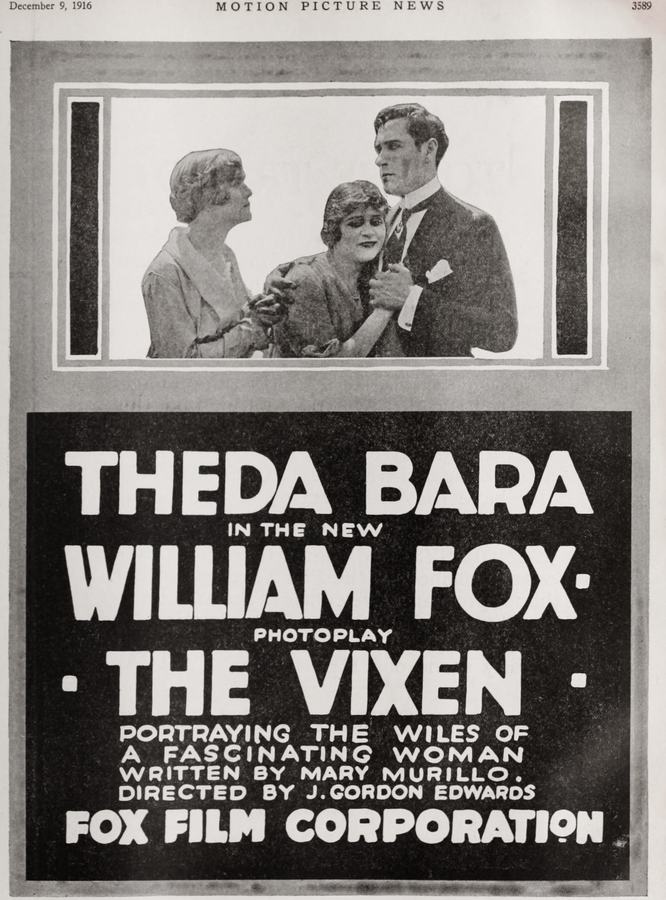
Dir: J. Gordon Edwards
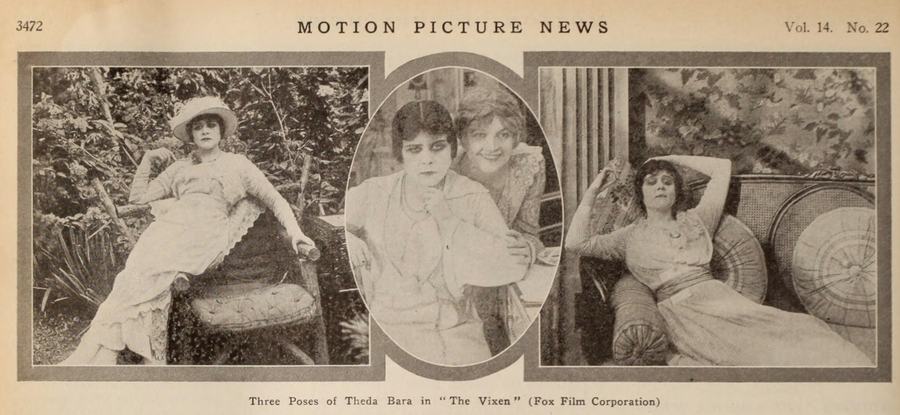
Elsie Drummond, the "Vixen," a spoiled nymphomaniac, takes pleasure in wreaking havoc on her sweet sister Helen. When Helen becomes enamored of Martin Stevens, a Wall Street businessman, Elsie turns on her considerable charms and woos him away. After Charlie Drummond, Elsie's shiftless brother, steals from Stevens and causes a scandal, Stevens is ruined financially and Elsie promptly leaves him. Through deliberate manipulation, Elsie then steals Knowles Murray, a young statesman, from Helen and succeeds in marrying him. Elsie and Murray move to Paris, forcing Helen to care for their alcoholic father. Six years later, Murray is called to Washington, D.C. and Elsie, now the mother of two children, renews her acquaintance with Martin Stevens, who has regained his wealth and position. As Murray is about to catch Elsie in Stevens' arms, Helen, to protect the children, supplies Elsie with an escape and an alibi. While Elsie continues in her deceptive ways, Stevens, finally wise to the Vixen, marries Helen.
View Details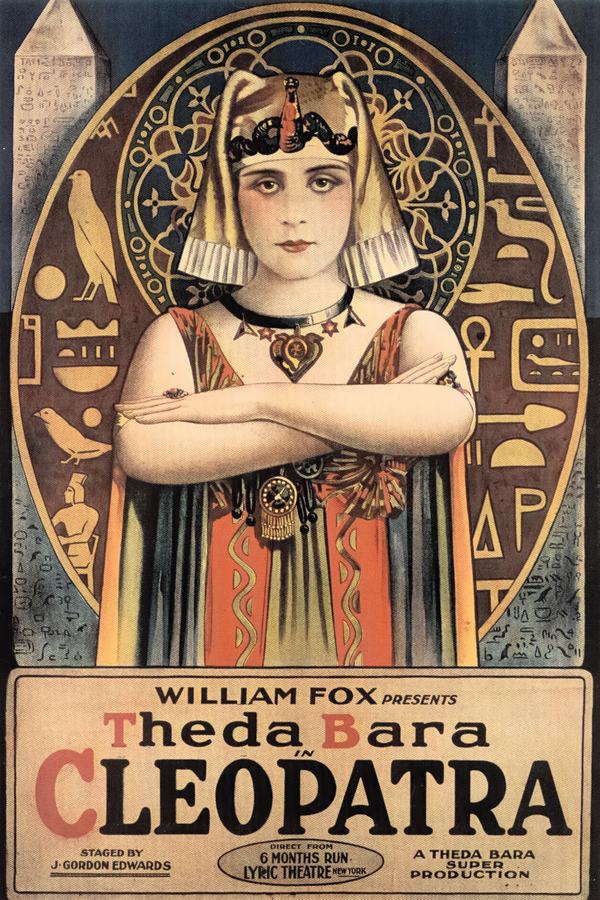
Dir: J. Gordon Edwards
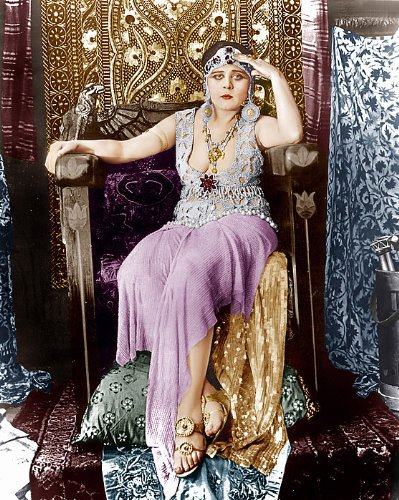
The story of Cleopatra, the fabulous queen of Egypt, and the epic romances between her and the greatest men of Rome, Julius Caesar and Antony.
View Details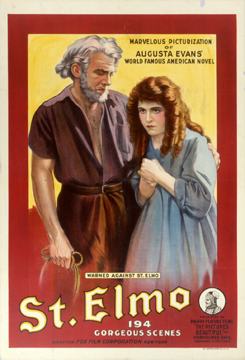
Dir: J. Gordon Edwards
After a love triangle results death, St. Elmo falls from grace and is eventually redeemed in this now lost silent film based on the best selling novel by Augusta Jane Wilson.
View Details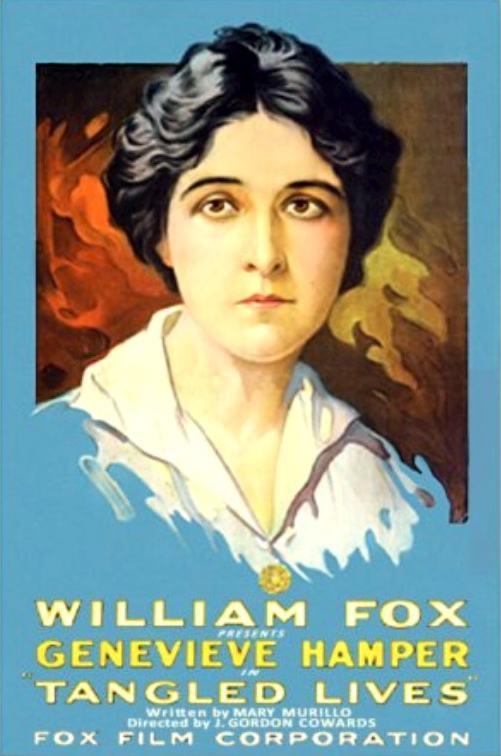
Dir: J. Gordon Edwards
After squandering his entire estate, Roy Schuyler is forced by his creditors to marry wealthy Laura Reid. Her half-sister Ann tries to warn her of Roy's motives, but is kidnapped by Roy and incarcerated in an asylum before she can. Roy then tries to force Laura to sign a document which would accord him control of her estate. When she refuses, Roy, with the aid of Dassori, a traitor from Italy, brings Ann and Laura together. Ann dies and Laura, who closely resembles her, is placed in the asylum in her stead. Laura is finally saved when her cousin Marion bribes a nurse to allow her to escape and Dassori, with moments to live, confesses his part in the crime, thus establishing Laura's true identity. Justice is then served when Roy is driven to his death by his tortured conscience.
View Details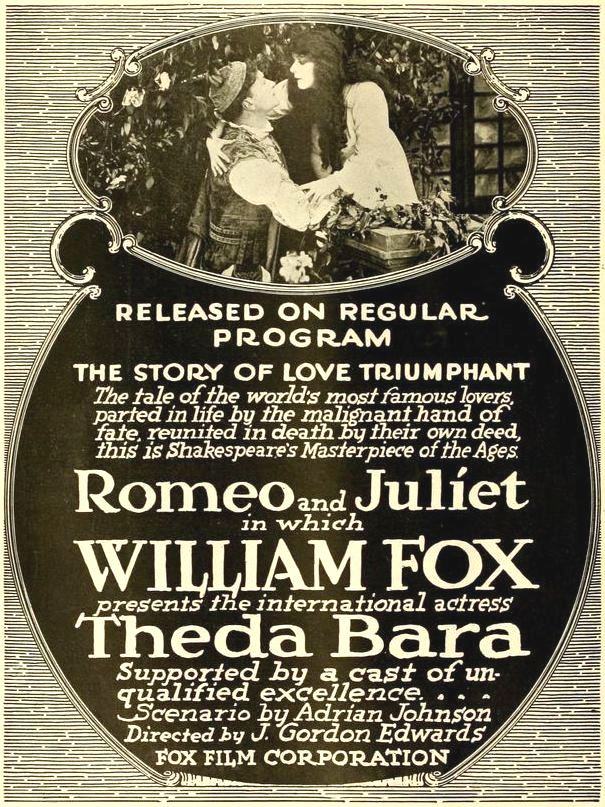
Dir: J. Gordon Edwards
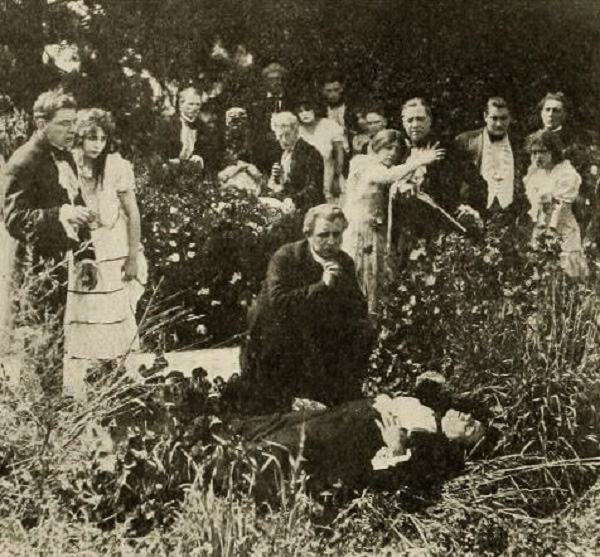
Shakespeare's classic tale of ill-fated lovers whose deaths bring peace to their warring families.
View Details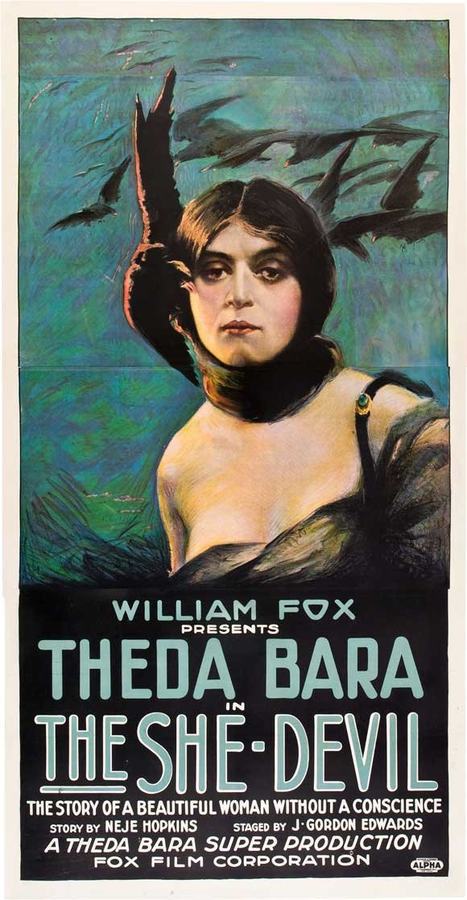
Dir: J. Gordon Edwards
Lolette (Theda Bara), an exotic and spirited peasant girl lives In the small Spanish village of Juanguera. Although ardently courted by the native swains, and particularly a bandit called The Tiger, Lolette prefers Maurice Tabor, a French artist who has come to Juanguera to paint. Because he refuses to take her to Paris, Lolette accepts a gift of stolen jewels from The Tiger and follows Maurice to France. With Lolette as his model, Maurice paints brilliantly, and soon she becomes a Paris sensation. One evening, Lolette performs a Spanish dance on stage, and the next day, she signs contracts with a number of impresarios, accepting advance payment from all of them. Fearing her arrest, Maurice urges her to accompany him back to Spain, but The Tiger attacks their coach and imprisons them. At a feast held in her honor, however, Lolette urges The Tiger to drink, and when he is unconscious, she and Maurice escape.
View Details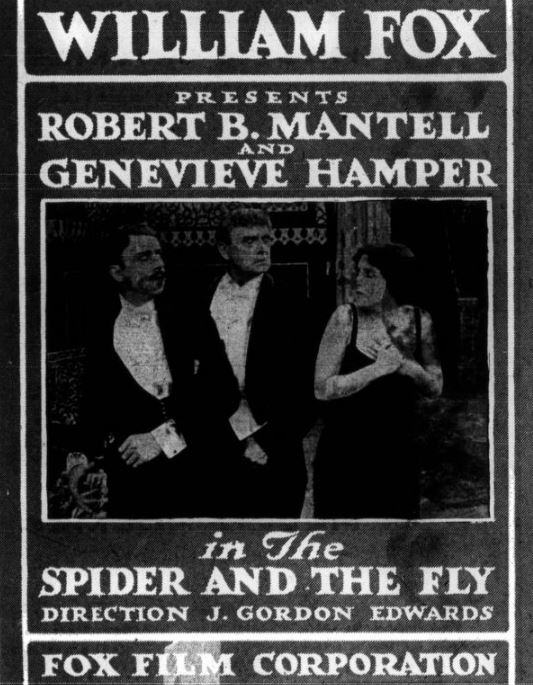
Dir: J. Gordon Edwards
A young Frenchman kills his best friend in a drunken fight. He vows to never touch another drop of liquor, but he goes back to the bottle when he hooks up with seductive Blanche Le Noir, and is soon an alcoholic. Blanche, however, prefers the sinister Lantier, and tries to use Lantier's daughter to get to him. However, the daughter is saved by the efforts of young American RIchard Lee, who marries her. Unfortunately, Lee's sister is seduced by Lantier. Complications ensue.
View Details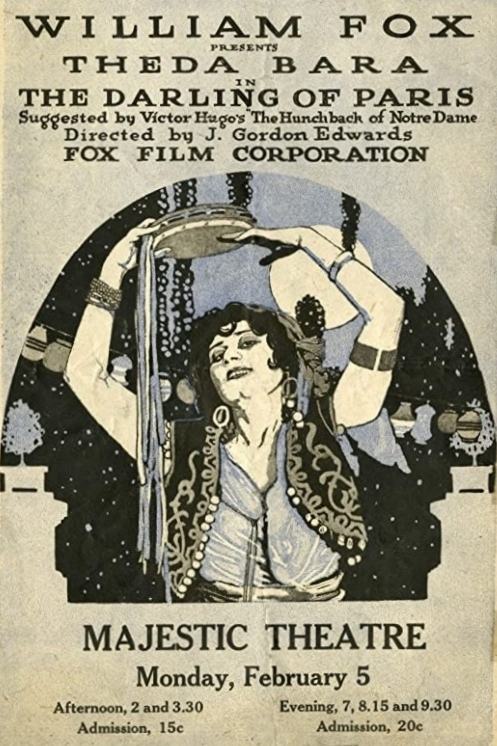
Dir: J. Gordon Edwards
A gypsy girl with her foster-mother arrive in the French Capital where her beauty attracts the attention of the Apaches, and she becomes a member of their band. Her beauty attracts Claude Frallo, a scientist of note. She repulses him, as she has already fallen in love with Captain Phoebus. During a visit of the gypsy girl in the apartment of the handsome captain, Frallo kills the captain and makes his escape. Upon the arrival of the Gendarmes, Esmaralda is placed under arrest charged with the murder. Esmaralda is subjected to torture to make her confess, but is defiant, knowing that she is innocent. The bell ringer of the cathedral, Quasimodo, who secretly worships the Gypsy girl, becomes her protector. When Frallo visits the prisoner the bell ringer interferes. There is a struggle and the former is hurled from a parapet and killed. Again the girl appears before the tribunal. Put on the rack, she admits the murder of the captain. Just as Esmaralda is to be guillotined, the bell ringer gives the true version of the murder, implicating Frallo whom he killed. Quasimodo, the plucky bell ringer, who was Esmaralda's protector, and her liberator, becomes her husband.
View Details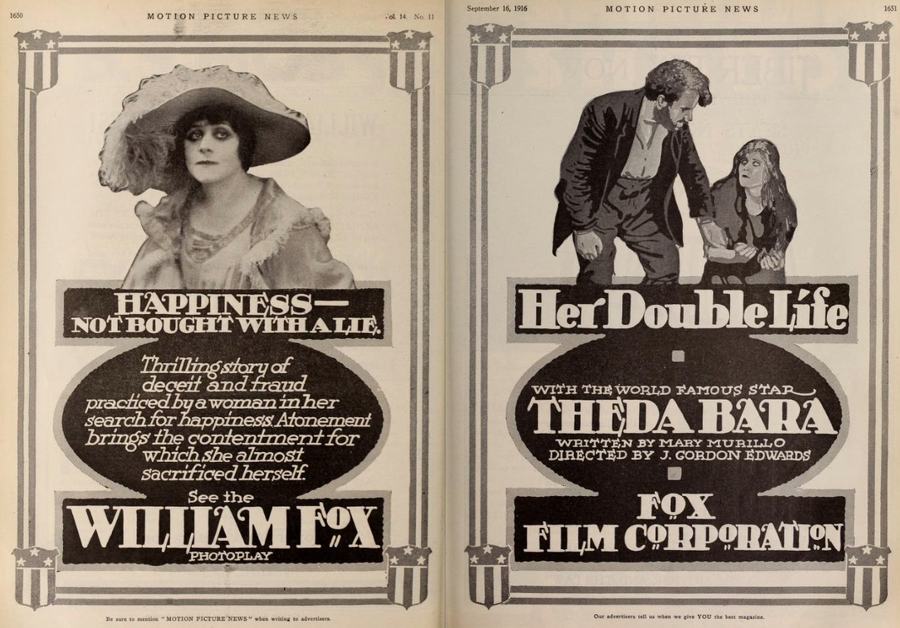
Dir: J. Gordon Edwards
Mary Doone (Theda Bara) lives in a tenement parish house run by Pastor Elliott Clifford (A. H. Van Buren). Mary joints the front as a nurse, and meets war correspondent Lloyd Stanley (Stuart Holmes), whom she had known from London. Stanley is about to take advantage of her when their hospital tent is bombed. Mary finds the body of a young girl in the tent. The young girl is Ethel Wardley (Madeleine Lee Nard), who is the niece of Lady Clifford (Lucia Moore), mother of Elliott Clifford. Mary assumes Ethel's identity and is received by Lady Clifford as her niece. Elliott falls in love with Mary. Stanley returns to London with Ethel, who has recovered from her wounds. Mary confesses what she has done, and despite Lady Clifford's pleas for her to stay, she returns to the parish house to work with children.
View DetailsAnalysis relative to The Green-Eyed Monster
| Film Title | Atmosphere | Complexity | Similarity |
|---|---|---|---|
| The Galley Slave | Surreal | Layered | 86% Match |
| The Vixen | Surreal | Layered | 96% Match |
| Cleopatra | Gritty | Dense | 86% Match |
| St. Elmo | Ethereal | High | 87% Match |
| Tangled Lives | Gothic | Linear | 97% Match |
This guide was algorithmically generated using the cinematic metadata of J. Gordon Edwards's archive. Last updated: 6/23/2026.
Back to The Green-Eyed Monster Details →