
Cult Cinema Deep Dive
The Celluloid Crypt: Unearthing the Primal Weirdness of Cinema’s First Fringe Revolution
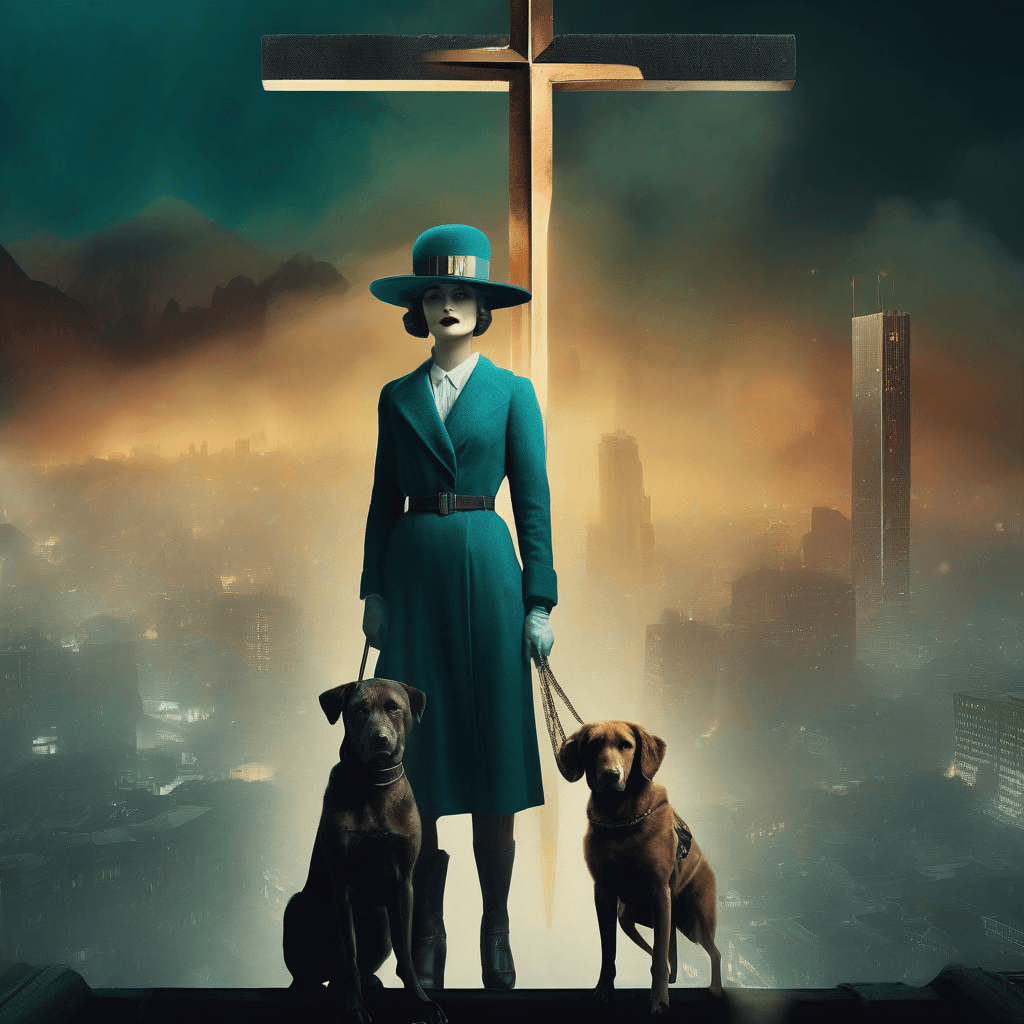
“Explore the forgotten roots of cult cinema through the lens of silent-era anomalies and transgressive narratives that defied the mainstream long before the midnight movie was born.”
Long before the term "cult cinema" was coined in the haze of 1970s midnight screenings, a shadow world of transgressive, bizarre, and fiercely independent filmmaking was already thriving in the nitrate-soaked gutters of the early 20th century. While history books often focus on the polish of the studio system, the true DNA of cult obsession lies in the fringes—in the films that dared to be too weird, too moralistic, or too anarchic for the polite society of the 1910s and 20s. These are the stories of reincarnated husbands, cocaine-smuggling queens, and death-defying skyscraper stunts that laid the groundwork for the rebel spirit we worship today.
The Genesis of the Weird: Reincarnation and Occult Obsessions
One of the most potent hallmarks of cult cinema is its fascination with the metaphysical and the unexplained. In the early era, this often manifested as a bizarre intersection of comedy and theosophy. Take, for instance, the 1917 short Brownie, the Peacemaker. On the surface, it’s a simple comedy, but its core premise is pure cult eccentricity: a widow who lavishes her affection on a dog, firmly believing the canine is the reincarnation of her deceased husband. This leap into the absurd—treating the mundane with a localized, fanatical devotion—is the very essence of what makes a film a cult object.
Similarly, His Majesty, Bunker Bean (1918) explores the psychological fringes of identity. When a bashful stenographer is convinced by a theosophist that he is the reincarnation of Napoleon and an Egyptian king, the film moves beyond simple slapstick into a territory of delusional grandeur that resonates with modern cult classics about social outcasts. These films weren't just entertainment; they were explorations of the inner landscape, often using the supernatural as a mirror for the protagonist's fractured psyche.
Urban Nightmares and the Underworld Gaze
The cult aesthetic has always found a home in the dark alleys and neon-lit shadows of the city. In the silent era, this was represented by the 'Tong' wars and the drug-infested districts of New York. Queen X (1917) presents us with a proto-femme fatale in the heart of Chinatown—a woman marked by a cross-shaped birthmark who rules a drug-smuggling empire. This fascination with the 'other,' the dangerous, and the illicit is a thread that runs directly through the history of exploitation cinema.
The urban environment itself became a character of terror and awe. In Look Out Below (1919), the spectacle of youth riding steel beams to the top of a skyscraper isn't just a stunt; it’s a precursor to the high-octane, visceral thrills of the grindhouse era. It captures a sense of vertiginous rebellion, where the city is a playground for those brave or foolish enough to defy gravity. This visceral connection between the viewer and the screen—the physical reaction to danger—is a key component of the cult experience.
The Transgressive Body: Melodrama as Rebellion
Cult cinema often deals with the 'unacceptable' body or the 'unacceptable' social position. The silent era was rife with narratives of moral decay and social ostracization that felt dangerously close to the bone. Das Laster (1917), a German exploration of hereditary alcoholism, treats addiction as a gothic curse, a family tradition that consumes the protagonist. It is dark, heavy, and unapologetic—elements that would later define the 'transgressive' cinema of the late 20th century.
Even the seemingly innocent The Immigrant (1917)—not the Chaplin classic, but the drama featuring Masha and David Harding—delves into the systemic corruption and the 'political boss' system. It portrays the American Dream as a gauntlet of sexual harassment and political manipulation. When a film chooses to show the rot beneath the surface of society, it naturally attracts a devoted following of those who feel alienated by mainstream narratives.
The Surrealist Animal and the Human Mirror
Perhaps the strangest corner of this early fringe is the use of animals to mirror human folly. I my kak liudi (1917) is a melodrama performed entirely by 'four-legged and feathered artists.' This subversion of the human form—displacing our emotions onto animals—creates a surrealist disconnect that is hauntingly beautiful and deeply weird. It’s the kind of cinematic anomaly that, if discovered in a dusty attic today, would immediately become a sensation at a niche film festival. It challenges our perception of performance and narrative, a hallmark of the avant-garde cult tradition.
This surrealism extends to the way characters are portrayed as masks or doubles. In Putting One Over (1919), the resemblance between a millionaire heir and a stranger on a train leads to a descent into a mental sanatorium. The theme of the 'double' or the 'stolen life' is a recurring nightmare in cult cinema, tapping into primal fears of identity theft and the loss of self. It’s a narrative device that forces the audience to question the reality of the screen, creating a participatory paranoia that fans of the genre thrive on.
Genre Mutation: From Westerns to Horror
The early cult pioneers didn't just follow genres; they mutated them. Flaming Hearts (1917) takes a 'society lap-dog' and thrusts him into a Western box-car setting to 'make a man of himself.' It’s a genre-bending exercise that feels like a prototype for the 'fish out of water' cult tropes. Meanwhile, The Sea Wolf (1917) brings a level of psychological cruelty and dominance to the high seas that borders on the horror of the soul. The cruel captain who dominates shipwreck victims is a precursor to the 'mad scientist' or 'cult leader' figures that would later dominate the midnight circuit.
Even the 'adventure' films of the time, like Ultus 5: The Secret of the Night, played with tropes of disguise and haunted manors. Ultus, hiding in a quiet village while being pursued by detectives, is the ultimate outlaw hero. He is a figure of the night, a man of a thousand faces who exists outside the law. This celebration of the fugitive—the man who refuses to be caught by the structures of society—is a foundational myth for the cult audience.
The People vs. The System: Social Justice in the Fringe
The cult spirit is often one of protest. The People vs. John Doe (1916) is a searing indictment of the legal system, showing how an innocent man can be sentenced to death on speculative evidence. By fictionalizing real-life cases of injustice, these films acted as a counter-culture manifesto. They weren't just stories; they were calls to awareness, often screened in smaller venues or outside the major theater circuits, much like the underground films of the 1960s.
This sense of 'otherness' is also found in the portrayal of marginalized communities. The War of the Tongs (1917) and Gold and the Woman (1916) explore the intersections of love, revolution, and ethnic identity. While they often operated within the tropes of their time, their focus on the outsider experience—whether it be a Mexican aristocrat in revolution or a poor tea-shop employee in a Tong war—provided a template for the diverse, often radical perspectives that cult cinema would eventually champion.
Conclusion: The Eternal Flicker of the Outlaw Reel
As we look back at these flickering nitrate ghosts, from the comedic reincarnation of Brownie, the Peacemaker to the grim social realism of The People vs. John Doe, we see the blueprint of our modern obsession. Cult cinema is not a modern invention; it is a perennial state of mind. It is the choice to look away from the polished center and toward the jagged edges of the frame. These films, with their 'frozen thrills' and 'sealed lips,' remind us that the most enduring stories are often the ones that were never meant to be told to the masses.
The legacy of the 1910s fringe is a testament to the power of the unconventional. Whether it's the vivacious daughter of a railroad president in Shirley Kaye (1917) or the 'cave-man' transformation in Mamma's Boy (1917), these characters represent a break from the status quo. They are the mavericks, the misfits, and the dreamers who built the altar of the midnight movie. In the end, the cult gaze is about finding the divine in the deviant, and as long as there are filmmakers willing to ride the steel beams of the imagination, the spirit of the early fringe will never truly die.
Community
Comments
Log in to comment.
Loading comments…