
Cult Cinema Deep Dive
The Midnight Blueprint: How Silent Era Transgressions and Genre Mutations Birthed the Cult Cinema Soul
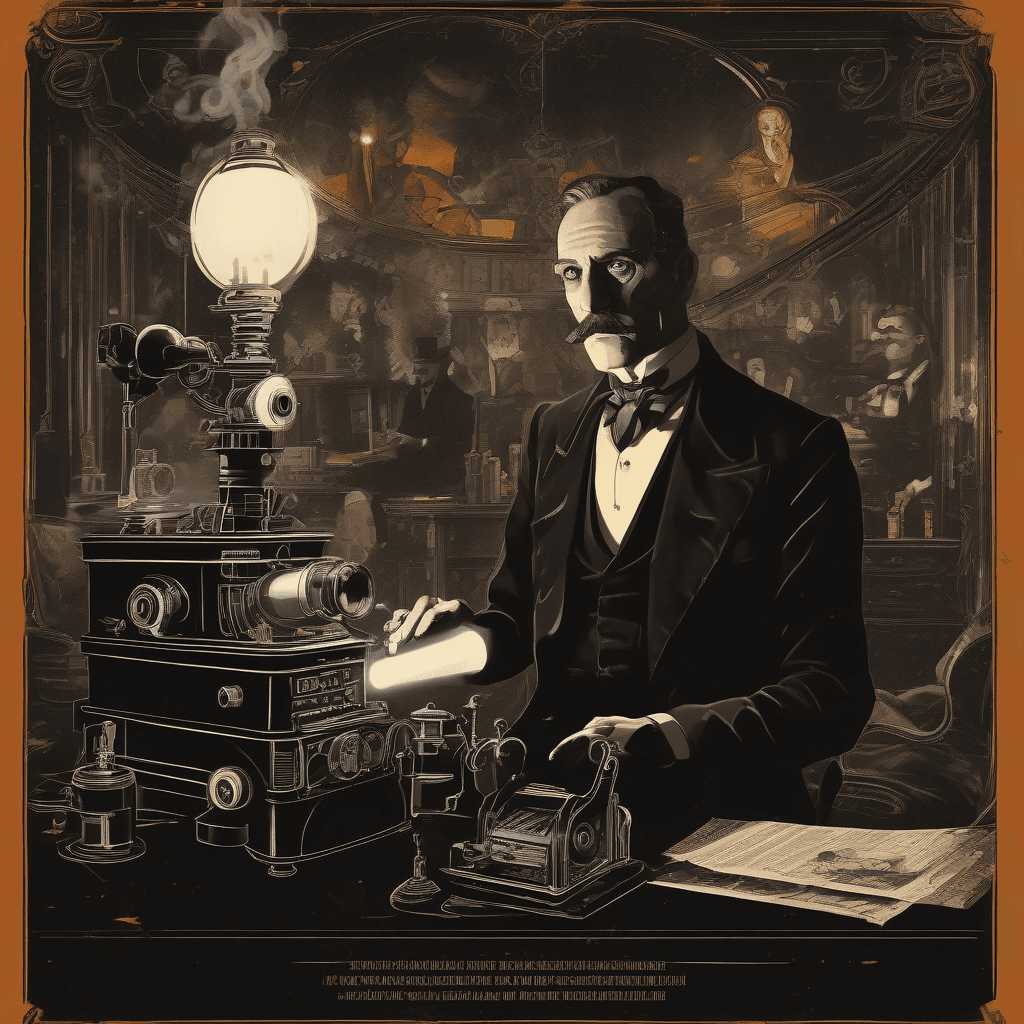
“Explore the shadowy roots of cult obsession, from the decadent salon dramas of the 1910s to the bizarre genre-bending experiments that defined the original cinematic fringe.”
When we speak of cult cinema, the mind often drifts to the neon-soaked midnight screenings of the 1970s or the transgressive VHS tapes of the 1980s. However, the true genetic blueprint of the cult film aesthetic was etched into celluloid decades earlier, during a period of radical experimentation and social upheaval. Long before the 'Midnight Movie' was a formalized marketing term, the silent era was producing works of such profound strangeness and moral ambiguity that they effectively engineered the modern cult psyche. From the sprawling crime syndicates of 1919 to the surrealist depictions of lunar exploration, the silent fringe was the original laboratory of the unconventional narrative.
The Syndicate of Shadows: Crime as a Cult Foundation
One of the foundational pillars of cult devotion is the obsession with the underworld—a rejection of polite society in favor of the complex, often brutal logic of the criminal element. In 1919, the film Barrabas (slug: barrabas) offered a masterclass in this fascination. Directed with a keen eye for the systemic corruption of the era, the film follows lawyer Jacques Varese and journalist Raoul de Nerac as they attempt to dismantle a shadowy criminal organization led by the sadistic banker Rudolph Strelitz. This isn't just a crime procedural; it is a prototype for the 'shadow organization' trope that would later dominate cult thrillers. The presence of a sadistic banker as the mastermind reflects an early cinematic distrust of institutional power, a theme that remains a cornerstone of the cult ethos.
Similarly, Dice of Destiny (slug: dice-of-destiny) explores the grit of the ex-convict’s life. Jimmy Doyle, an innocent man who served time, finds himself in a perpetual battle with Detective Brand, the man who framed him. This narrative of the persecuted outsider seeking redemption against a corrupt lawman is the very essence of the 'anti-hero' archetype. Cult audiences have always gravitated toward characters who exist on the margins of legality, finding a strange solace in the struggle of the 'guilty man' who is, in fact, the only moral actor in a broken system.
Decadence and Madness: The Salon Drama as Transgression
If crime provided the structure, the 'decadent salon drama' provided the atmosphere. The 1910s and early 1920s saw a rise in films that explored the psychological rot of the aristocracy. Serdtse dyavola (slug: serdtse-dyavola), or 'The Heart of the Devil,' is a prime example of this proto-cult weirdness. Told from the perspective of a wife committed to an insane asylum, it recounts the story of a 'devil man' who systematically murdered his relatives. This use of an unreliable, traumatized narrator predates the psychological complexity of modern cult horror by nearly half a century. It invites the viewer into a space of subjective madness, a hallmark of the transgressive cinematic experience.
The moral decay of the upper classes was a recurring motif that resonated with the burgeoning underground. In The Foolish Matrons (slug: the-foolish-matrons), we see a tripartite exploration of marriage in New York, where the failure of social institutions is laid bare. These films didn't just entertain; they acted as a mirror to the anxieties of a world recovering from war and staring down the barrel of modernity. The fascination with the 'devil at his elbow'—the internal impulse toward destruction—is what separates these films from standard melodrama and elevates them to the status of cult artifacts.
The Technological Uncanny: Proto-Sci-Fi and the Alien Other
Cult cinema has always been a sanctuary for the 'weird science' genre. In 1919, The First Men in the Moon (slug: the-first-men-in-the-moon) brought H.G. Wells’ vision to the screen, featuring an inventor in a space sphere marooned by a crooked financier. This blend of scientific optimism and human greed created a narrative friction that is quintessentially cult. It’s not just about the journey to the moon; it’s about the alienation of the visionary. The inventor is an outcast on Earth and a stranger on the moon, a double-displacement that mirrors the feeling of many cult film fans.
We see a similar obsession with invention and its perils in The Devil at His Elbow (slug: the-devil-at-his-elbow), where a mechanical engineer’s submarine plans become the catalyst for a moral and professional crisis. The 'mad scientist' or 'obsessed engineer' is a recurring figure in the silent fringe, representing the era’s fear that our creations might eventually outpace our morality. These early forays into the technological uncanny laid the groundwork for everything from 'Metropolis' to the cyberpunk obsessions of the late 20th century.
The Absurd and the Fetishistic: Early Cinema’s Comic Fringe
Perhaps the most overlooked aspect of cult cinema's ancestry is its roots in the absurd. Cult films often celebrate the ridiculous, the campy, and the oddly specific. Consider My Lady's Ankle (slug: my-ladys-ankle), a comedy where a young artist paints his wife's legs because they cannot afford fine stockings. The film’s focus on a singular, almost fetishistic detail—the painted ankle—and the subsequent social attention it attracts, is a precursor to the 'high-concept' absurdity of the midnight movie. It takes a mundane problem and solves it with a visually striking, slightly scandalous solution.
Even the animation of the era, such as The Sour Violin (slug: the-sour-violin), featuring the iconic Mutt and Jeff, displayed a penchant for the surreal. The chaotic energy of these shorts, often featuring non-sequitur humor and physical impossibility, fed into the kinetic anarchy that would later define cult comedies. There is a direct line from the 'wriggle finger' protocols of silent slapstick to the subversive humor of John Waters or the Zucker brothers. They all share a fundamental belief that the world is inherently ridiculous and that the only sane response is to lean into the madness.
Global Gothic and the Folklore of Fear
The silent era was also a time of deep exploration into national folklore and the 'Gothic' imagination. Alraune und der Golem (slug: alraune-und-der-golem) combined two of the most potent myths of the German-speaking world: the mandrake-born femme fatale and the clay automaton. This intersection of biological horror and ancient magic created a dark, atmospheric tapestry that continues to influence the horror-cult subgenre today. These films were not merely scary; they were existential, questioning the nature of life and the hubris of man.
In the East, The Vermilion Pencil (slug: the-vermilion-pencil) offered a different kind of horror—the horror of tradition and absolute power. When a Chinese viceroy sentences his wife to death based on a false belief of infidelity, only to realize his mistake too late, the film enters a realm of tragic transgression. The viceroy’s subsequent seclusion and the exile of his son create a narrative of generational trauma that is hauntingly beautiful. This 'exoticized' Gothicism (from a Western perspective at the time) allowed audiences to explore themes of guilt and fate through a lens that felt both ancient and refreshingly alien.
The Social Outcast and the Politics of the Fringe
Cult cinema is, at its heart, political. It is the cinema of the disenfranchised. A Fight for Freedom; or, Exiled to Siberia (slug: a-fight-for-freedom-or-exiled-to-siberia) provides a visceral look at the suffering of political prisoners. The image of prisoners being driven through the blinding snow to a barren waste is a powerful symbol of state oppression. This rebel spirit is a recurring theme in the films of the silent fringe. Whether it’s a political exile or a woman fighting for her reputation in Two Weeks (slug: two-weeks), these stories celebrate the resilience of the individual against the crushing weight of the collective.
Even the 'melodrama' of The Guilty Man (slug: the-guilty-man) carries a heavy social critique. When a young lawyer abandons a woman before the birth of their child, the film exposes the hypocrisy of the legal and social systems of the time. The daughter’s quest to legitimize her existence is a narrative of identity and survival that resonates with anyone who has ever felt like an 'other.' This empathy for the outcast is the glue that holds the cult film community together.
Conclusion: The Eternal Flicker of the Fringe
The 50 films discussed here represent more than just a historical curiosity; they are the ancestral echoes of every cult classic that has followed. They taught us how to find beauty in the grotesque, humor in the absurd, and heroics in the criminal. The silent era was not a period of cinematic infancy, but a period of unbridled narrative anarchy. Before the Hays Code and the homogenization of the studio system, directors were free to explore the 'devil at the elbow' and the 'man in the moonlight.'
As we look back at these nitrate anomalies, we see a reflection of our own enduring obsession with the fringe. The cult cinema soul is not a modern invention; it is a primal urge, a desire to see the world as it truly is—messy, transgressive, and infinitely strange. From the 'torpedoing of the Oceania' to the 'dice of destiny,' these films remind us that the most powerful stories are often found in the shadows, waiting for a midnight audience to bring them back to life.
Community
Comments
Log in to comment.
Loading comments…