
DbcultAccessing Vault...
Deep Dive
Senior Film Conservator
The history of cult cinema is often written in the neon ink of the 1970s, back-dated to the era of the midnight movie and the rise of the counter-culture. We speak of the grindhouse and the avant-garde as if they were mid-century inventions, yet the transgressive pulse of niche cinema began beating much earlier. To understand the DNA of the modern cult film, one must look back to the nitrate-scented shadows of the 1910s and 1920s—a period of cinematic infancy where the rules were unwritten, and the fringe was a lawless frontier. These early reels were not merely precursors; they were the blueprints for the weird, the wild, and the wonderful narratives that would eventually define the cult gaze.
In the early 20th century, cinema served as a mirror to the anxieties of a rapidly industrializing world. Films like Sins of Great Cities (1914) offered a glimpse into the dark heart of the metropolis. The story of Dorothy Reynolds, thrust into the clutches of the adventurer Monty Sullivan and his ill-famed establishment, the "Red Mouse," prefigures the gritty urban noir that would later captivate cult audiences. The "Red Mouse" acts as a proto-cinematic space of deviance, a site where the boundaries of polite society are dissolved. This fascination with the seedy underbelly of city life is a foundational pillar of cult obsession—the desire to see what lies behind the velvet curtain of respectability.
Similarly, Scandal (1917) explores the voyeuristic nature of the urban gaze, opening with male gossips peering from a club window at the world passing by. This self-reflexive look at how we judge and consume the lives of others is a recurring theme in cult cinema, which often thrives on the tension between the observer and the observed. The silent era didn't just portray sin; it engineered a way of looking at it that was both judgmental and hopelessly enamored. This duality is what makes films like Remorse, a Story of the Red Plague (1917) so compelling to the modern cult historian. It tackles the "red plague" of social disease with a moralizing fervor that inadvertently creates a spectacle of the very things it seeks to condemn.
If the city was the body of early cult cinema, morality was its soul—and that soul was often in a state of violent conflict. The Warfare of the Flesh (1917) serves as a seminal example of the "metaphysical grindhouse." It presents the eternal struggle between the spirit and the desires of the material world, not as a dry sermon, but as a vivid, visceral battle. This thematic obsession with the corruption of the soul and the fragility of the flesh is a direct ancestor to the transgressive horror of the 1970s. When we watch a silent-era priest administer last rites to a victim of a criminal assault in The Victim (1920), we are seeing the birth of the "cinematic sacrament," a moment where the sacred and the profane collide with devastating force.

Niche devotion often finds its roots in films that treat the image as a relic. The Cross Bearer (1918) depicts Cardinal Mercier protecting the altar of his church from desecration during the German invasion of Louvain. The film’s focus on the desecration of the sacred and the endurance of faith amidst atrocities creates a powerful, almost liturgical viewing experience. This is the same energy that fuels the cult following of later religious-themed transgressive films—a sense that the act of watching is, in itself, a form of witness. The docu-style exploration of prayer in Fides (1919) further bridges the gap between scientific inquiry and spiritual testimonial, a hybrid genre that continues to fascinate those who seek the "unseen" in cinema.
Cult cinema is defined by its refusal to stay within the lines of a single genre. The silent era was inherently genre-fluid, blending melodrama, action, and social commentary with reckless abandon. Bill Apperson's Boy (1919) takes the mountaineer drama and infuses it with a raw, motherless longing, while Skyfire (1920) transports the viewer to the lawless trading posts of the Canadian wilderness. These films were not just stories; they were immersions into specific, often isolated subcultures. The Canadian Mountie Barr Conroy’s pursuit of a comrade’s killer in Skyfire is a precursor to the lone-hero archetype that would dominate later cult Westerns and action films.
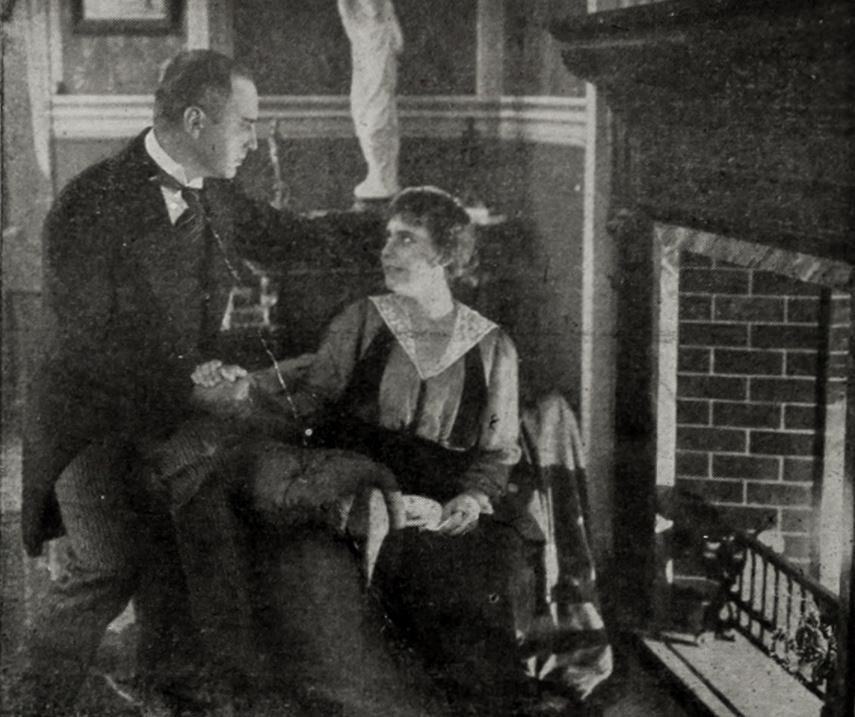
The sense of geographic isolation is also present in The Quitter (1916), where the bored miners of Paradise Gulch represent a society on the verge of collapse simply because it lacks the civilizing influence of the feminine. The saloon, the "Three Cheers," becomes a stage for a desperate, hyper-masculine drama that feels like a precursor to the existential Westerns of the 1960s. These early films understood that the "fringe" was not just a location, but a psychological state. Whether it is the gold-seekers in Lightning Bryce (1919) or the explorers in The Pageant of San Francisco (1916), the drive toward the unknown is the primary engine of the cult narrative.
No discussion of cult cinema is complete without the "weird science" and the fantastical. Les gaz mortels (1916) is a stunning example of proto-horror and science fiction. Dr. Hobson, a scientist who studies snakes, finds his humanist pursuits interrupted by the onset of World War I. The imagery of snakes, gas, and the perversion of science for warfare creates a haunting atmosphere that predates the "mad scientist" tropes of the 1930s. Similarly, the short film Moongold (1921) offers a touch of the ethereal, a fantasy that breaks the realism of the era and invites the audience into a dreamscape.

The Danish mystery Manden med de ni Fingre V (1917) and the sprawling German epic Die Herrin der Welt (1919) show that this thirst for the extraordinary was a global phenomenon. These films often featured master criminals, ancient secrets, and technological marvels that pushed the limits of what was possible on screen. Even a documentary short like Speed (1921), with its focus on racing automobiles, captured the kinetic, mechanical fever of the age—a fascination with the machine that would later manifest in the "car cult" films of the 70s.
Cult cinema isn't always dark; it is often hilariously, defiantly subversive. The silent era excelled at the comedy of the "other," where social norms were upended through disguise and misadventure. The Merry Jail (1917) features a neglected wife who disguises herself to trap her wastrel husband, a plot that plays with gender roles and social expectations in a way that feels surprisingly modern. A Flivver Wedding (1920) and Energetic Eva (1916) use physical comedy and the chaos of early technology (the eponymous Model T) to highlight the absurdity of modern romance.
These comedies often featured characters who were social outliers. In Chickens (1921), a society man is forced to live in the country and raise poultry, a fish-out-of-water story that mocks the rigidity of class structures. The Under Dog (1918) and Going Some (1920) further explore the theme of the misfit trying to find their place in a world that values athletic prowess or social standing above all else. This celebration of the underdog and the eccentric is the very heart of cult devotion—a love for the characters who don't quite fit the mold.
The tension between the classes provided a fertile ground for the silent era's most transgressive narratives. Passers-by (1920) and The Triflers (1920) both deal with the consequences of crossing class lines. In Passers-by, a romance is sabotaged by a stepsister who cannot abide a class differential, while in The Triflers, a department store clerk’s desire for high society leads her into a world of superficiality and heartbreak. These films functioned as early social critiques, exposing the cruelty of the elite and the desperation of the poor.
The most striking of these moral anomalies is perhaps The Primitive Call (1917), where a society girl’s contempt for an Indian boy is weaponized for a land deal. The film explores the intersection of race, class, and gender with a complexity that is often missing from mainstream history. By portraying the "primitive" not as a caricature but as a catalyst for a rich girl's moral awakening (or corruption), the film enters the realm of the cult—a space where the uncomfortable truths of society are laid bare. Torgus (1921) follows a similar path, depicting a young man torn between his love for a servant girl and the demands of his stern aunt, a domestic tragedy that highlights the oppressive nature of the family unit.
The 50 films referenced here are more than just historical artifacts; they are the living ancestors of every cult film we cherish today. From the detective blackmailing a Lord in The Fall of a Saint (1920) to the escaped prisoner in Outwitted (1917), the themes of rebellion, transgression, and niche identity have remained constant. The silent era taught us how to worship the image, how to find beauty in the bizarre, and how to value the narrative that refuses to conform. As we look back at the transgressive pulse of the 1910s, we see that the "midnight movie" was never a time of day—it was a state of mind that has been with us since the very first flicker of light on a darkened screen.