
DbcultAccessing Vault...
Film History
Senior Film Conservator
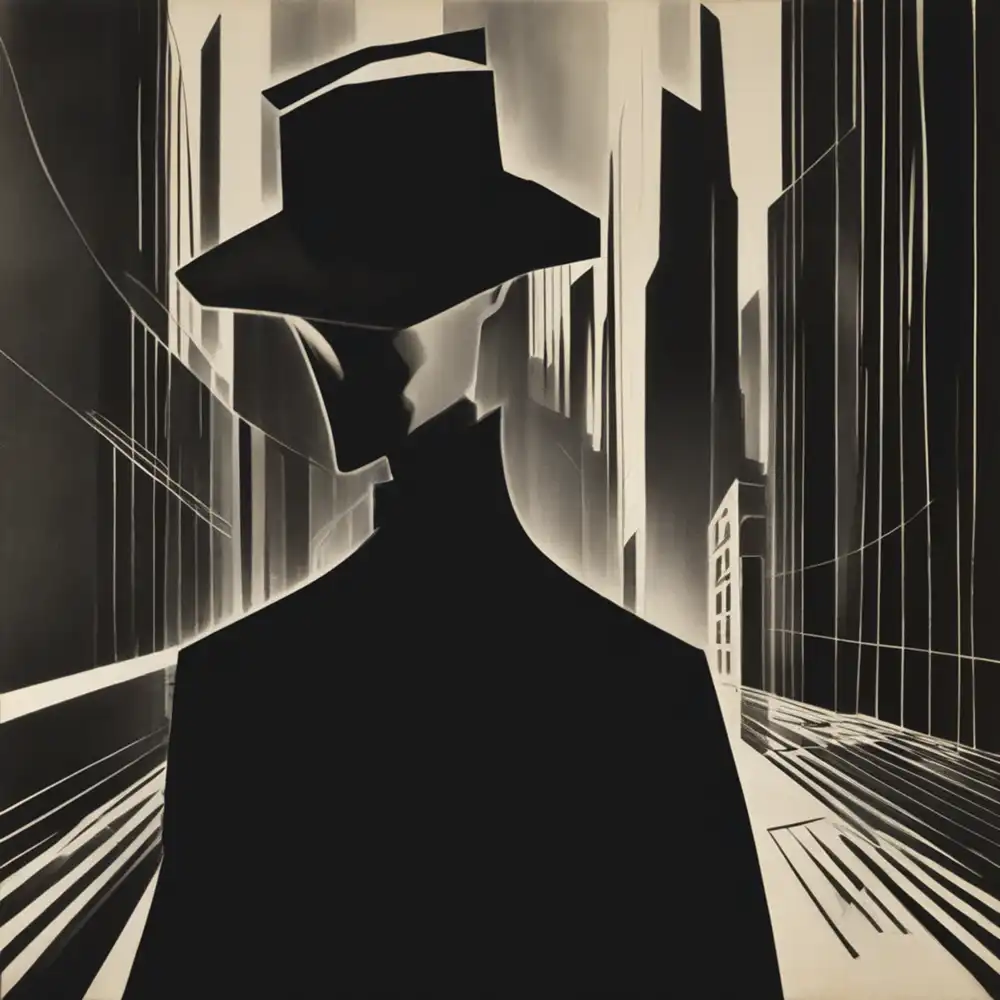
We talk a lot about the transgressive spirit of cult cinema, the rule-breaking, the taboo-smashing. But what about its deep-seated psychological roots? To truly understand why certain films burrow into our collective consciousness and refuse to leave, we must look further back than the midnight movie circuit of the 70s or the grindhouse grit of the 80s. We need to peer into the disquieting shadows of Weimar Germany, a crucible of artistic innovation and profound societal anxiety. It was here, amidst the economic turmoil and the lingering trauma of the Great War, that German silent cinema, particularly its Expressionist arm, developed an almost obsessive fascination with the doppelgänger—the uncanny double. This wasn't merely a fleeting plot device; it was a fundamental thematic and visual language for expressing internal turmoil, a core tenet of what we now call 'cult.' These films didn't just entertain; they interrogated identity, mirrored societal unease, and laid a foundational psychological dread that continues to resonate in the darkest corners of cinematic fandom.
The 1920s in Germany, the Weimar Republic era, was a period of stark contradictions. On one hand, an explosion of artistic freedom; on the other, crippling hyperinflation, political extremism, and a populace grappling with the psychological scars of a lost war. This volatile environment fostered a collective neurosis, a sense of disassociation and a questioning of individual and national identity. The concept of the doppelgänger, deeply ingrained in German folklore from E.T.A. Hoffmann to Heine, found fertile ground in this era's cinema. It wasn't just about a literal twin; it was about the fragmented self, the hidden desires, the suppressed fears, and the terrifying possibility that one's own identity could be usurped or corrupted. This profound cultural anxiety, projected onto the screen, created films that were less about external monsters and more about the monstrous within, or the monster that looks exactly like you. This is a critical distinction that many modern genre films miss, opting for external threats when the most potent horror often lies in recognition of self.

German Expressionism wasn't just a style; it was a scream. Its distorted sets, chiaroscuro lighting, and exaggerated performances were deliberate choices to externalize internal states. The doppelgänger, in this context, became a visual as much as a narrative element. Consider The Cabinet of Dr. Caligari (1920). Cesare, the somnambulist, is the ultimate controlled double, an automaton of Dr. Caligari's will. He moves through angular, painted sets that are themselves fractured, reflecting a world where reality is unreliable. His gaunt, almost skeletal figure, draped in shadow, is a stark, silent echo of Caligari's twisted psyche. The film's famous twist ending further blurs the lines of sanity and perception, forcing the audience to question whose reality they are witnessing. It's a masterclass in psychological destabilization, making the viewer an accomplice in the madness. This isn't just a monster movie; it's a profound questioning of agency, a theme that cult cinema would repeatedly return to.
Then there's F.W. Murnau's Nosferatu (1922), a film that, for all its supernatural trappings, is deeply rooted in the doppelgänger motif. Count Orlok isn't just a vampire; he's a grotesque, parasitic double of humanity, a shadow-self that preys on life. His long, skeletal fingers and rat-like features are a perversion of the human form, an extreme reflection of hidden disease and decay. Murnau's use of shadows, particularly Orlok's elongated silhouette crawling up the staircase, is iconic not just for its horror, but for its visual representation of a creeping, inescapable 'other' that is simultaneously alien and eerily familiar. I'd argue that the true horror of Nosferatu isn't the vampire himself, but the subtle, creeping implication that humanity, left unchecked, can become its own most effective parasite, a monstrous double of its own potential. The film's power comes from its ability to make the unseen presence as terrifying as the visible one, a trick cult filmmakers still struggle to master.
Fritz Lang, another titan of the era, pushed the doppelgänger concept into the realm of technology and societal control. In Metropolis (1927), the creation of the Maschinenmensch—the robot Maria—is the ultimate literalization of the uncanny double. This metallic automaton, built to mimic the charismatic worker advocate Maria, is used by the capitalist overlord Joh Fredersen and the mad scientist Rotwang to sow discord and control the masses. The scenes where the robot Maria incites chaos among the workers are chilling, not just for the destruction, but for the perversion of an ideal. The robot's uncanny movements, a deliberate counterpoint to the human Maria's grace, highlight the terrifying potential of technology to replicate and corrupt identity. This film asks: what happens when your savior is replaced by a cynical, soulless imitation? The answer, as cult cinema so often explores, is societal breakdown and existential terror.
While Caligari and Nosferatu externalized the doppelgänger in various forms, the earlier The Student of Prague (1913, and its more famous 1926 remake) tackled it head-on as a literal, supernatural entity that becomes a psychological tormentor. The story of Balduin, who sells his reflection to a sorcerer for wealth, is a Faustian bargain that unleashes his own shadow-self to wreak havoc on his life. The visual effect of the double appearing simultaneously with Balduin, mimicking his actions, was revolutionary for its time. But it's the psychological unraveling that truly grips. Balduin isn't just fighting an external foe; he's fighting himself, his own choices, his own dark impulses personified. The later Student of Prague (1926) is, in my estimation, the superior film, not just technically, but in its profound psychological penetration, its lead actor Conrad Veidt (who also played Cesare) conveying a palpable sense of internal torment that few could match. This evolution from physical manifestation to internal psychological battle is a direct lineage to the mind-bending narratives revered by cult audiences.
The brilliance of these films lies not just in their visual innovation, but in their courage to confront the most unsettling questions about who we are, and who we might become if our darker halves were given free rein. They force us to look inward, and that's a truly disturbing experience.
Fritz Lang returned to the theme of fractured identity with a vengeance in Dr. Mabuse, der Spieler (1922). Dr. Mabuse isn't just a criminal mastermind; he's a shapeshifter, a master of disguise, a man with a thousand faces. His power isn't derived from brute force but from his ability to manipulate perceptions, to become a different person at will, blurring the lines between identity and performance. He uses hypnosis to control his victims, turning them into unwitting extensions of his will, essentially creating living doubles of his own malevolent intent. Mabuse's multiple identities are a chilling reflection of a society where trust is eroded, and no one is quite who they seem. This fluid identity, this terrifying capacity for self-reinvention for nefarious purposes, is a cornerstone of many cult villains. Think of how many contemporary cult films feature antagonists whose true identities are shrouded in mystery, whose power comes from their ability to appear as one thing and be another. Lang mapped out that territory first, with Mabuse as the ultimate chameleon, the embodiment of a world without fixed points of reference.
The impact of Weimar cinema's doppelgänger obsession is undeniable and far-reaching. It laid the groundwork for a particular brand of psychological horror and identity-driven thrillers that would become cult classics decades later. Without the visual vocabulary and thematic courage of these early German films, would we have the same understanding of the uncanny in cinema?
The fascination with the doppelgänger in German silent cinema was more than a passing trend. It was a profound cultural response to a tumultuous era, a cinematic exploration of identity, control, and the inherent instability of the human psyche. These films, with their stark visuals and unsettling narratives, didn't just scare audiences; they made them question their own reflections. This deep psychological penetration, this willingness to confront the most unsettling aspects of self, is precisely why these early works continue to captivate and disturb. They are the true ancestors of cult cinema, whispering from the shadows that the most terrifying monster often wears a familiar face—perhaps even your own. The cult film, at its core, often asks us to embrace or confront an aspect of ourselves we'd rather deny, and that journey began in the haunted halls of Weimar.