Summary
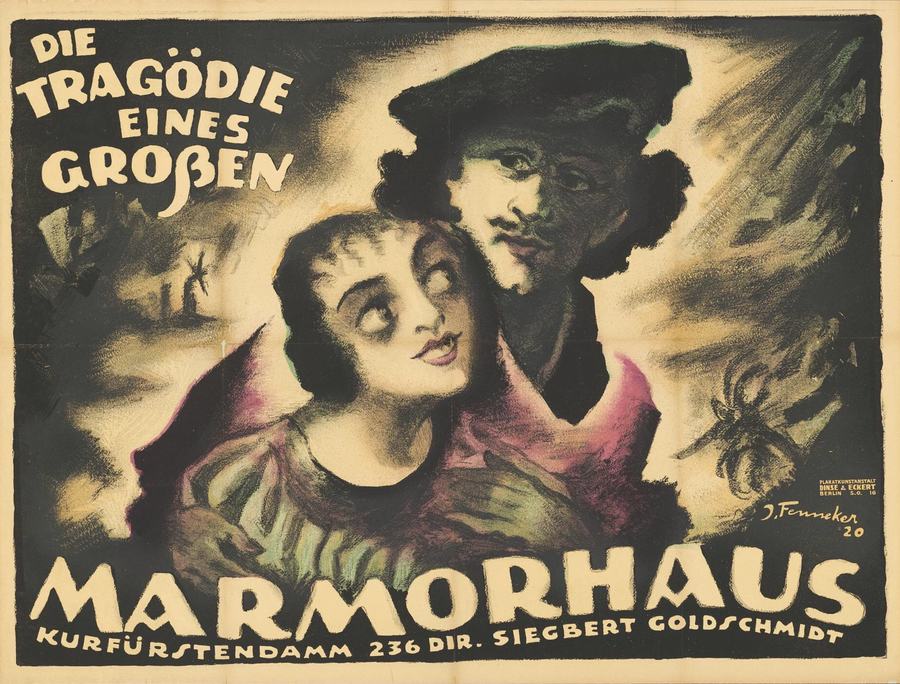
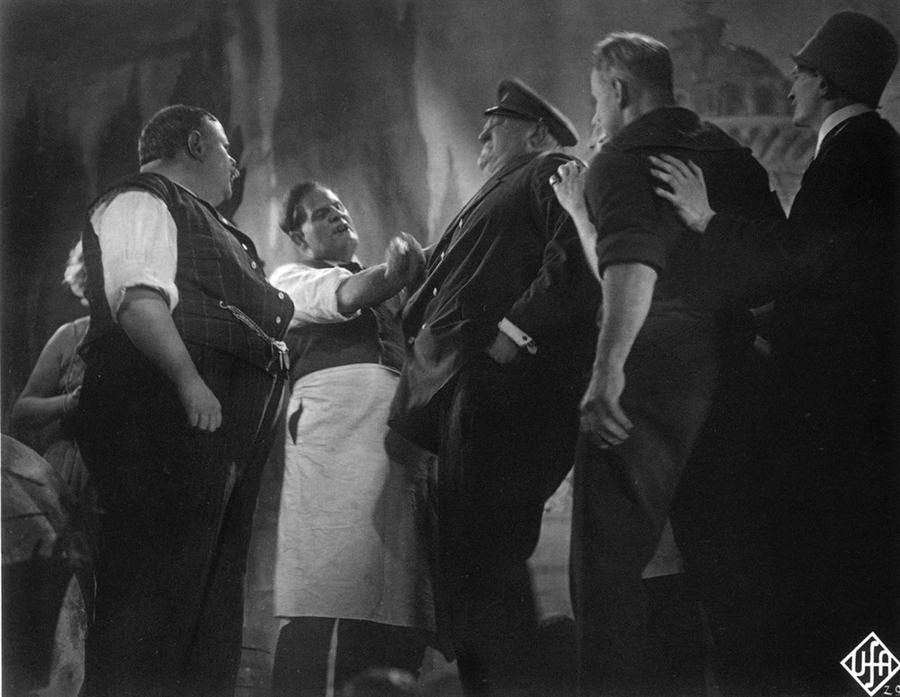
A titan of industry—his name whispered like incantation in boardrooms—ascends on rails of steel and hubris, only to discover that every rung of the ladder is greased with the marrow of those he crushed. Helmuth Orthmann and Paul Gruner’s scenario stalks Beckmann’s magnate through chandeliered ballrooms and soot-choked factories where gaslight carves his profile into a death-mask of capital. Around him, Clementine Plessner’s tubercular wife exhales lace-veined despair; Willy Kaiser-Heyl’s younger brother, a poet turned strike-leader, bleeds idealism onto cobblestones; Georg H. Schnell’s financier, a gargoyle in silk, whispers mergers like psalms. Sybill Morel’s anarchist seamstress threads bombs into waistcoats while Julius Frucht’s journalist licks the ink of every exposé like absinthe. Children—Eberth, Bergner, Diegelmann—appear as ghost-cherubs, chalk-sketched on alley walls, casualties of a progress that devours its own offspring. The narrative fractures into prismatic flashbacks: a childhood frozen beside a father’s coffin, a wedding night where the marital bed becomes auction block, a final banquet where chandeliers crash like crystal guillotines. The camera—stillness pierced by stroboscopic montage—turns every close-up into an autopsy: pores become moon-cratered landscapes, eyes calcify into stock-ticker tape. When the inevitable pistol shot echoes through the marble atrium, the film denies catharsis; the bullet merely perforates the screen, leaving the audience staring into its own abyssal reflection.
Review Excerpt
"
p,blockquote,ul,ol{margin:0 0 1em 0;line-height:1.7;font-size:1.05em}
a{color:#0E7490;text-decoration:none;border-bottom:1px dotted}
a:hover{color:#EAB308}
strong{color:#C2410C}
h2{color:#EAB308;margin:2em 0 .5em;font-size:1.8em;letter-spacing:.5px}
h3{color:#0E7490;margin:1.5em 0 .4em;font-size:1.4em}
hr{border:0;height:1px;background:#333;margin:3em 0}
There is a moment—halfway through Die Tragödie eines Großen—when the camera forgets to breathe. Fritz Beckmann’s steel-baron stands alone i..."