Summary
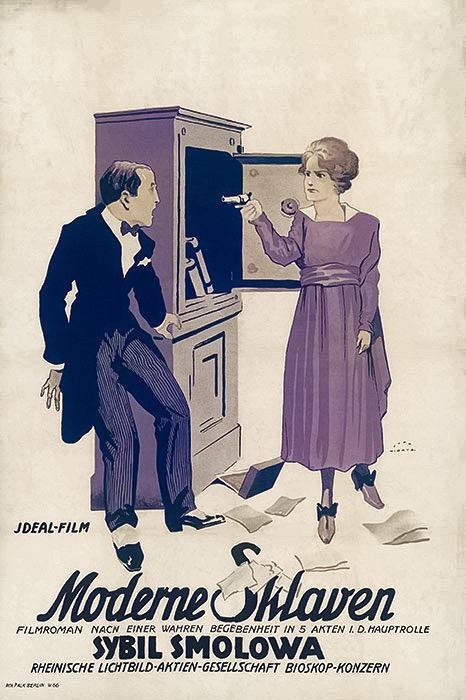
A Weimar-era fever dream unfurls inside Moderne Sklaven, where piston-loud factories chew human sinew and neon cabarets flicker like guilty consciences. Robert Werden’s dockworker, a man whose spine has memorized every crate, is lured off the quay by Sybil Smolova’s vaudeville siren; she promises Berlin’s glare, but delivers a choker of debt. Hans Werder plays the invalid brother whose lungs rattle a death-march tempo, tethering Robert to impossible medical bills. Reinhold Scholz materializes as a war-crippled fixer, hawking futures in sweatshops that smell of formaldehyde and cheap soap. Erich Klein-Rogge, eyes glowing like galvanic coils, is the factory baron who prints workers’ obituaries on the same press that mints his payroll. The film’s vertebra is a single night when Robert signs the infernal contract: daylight hours for wages, nocturnal hours—his very dreams—pawned to the company. Cinematographer Karl Freund’s camera slithers through catwalks, catching sparks that weld iron bars into a labyrinth without exit. Expressionist shadows bend the workers into lowercase letters, spelling out a manifesto nobody dares read aloud. Smolova’s torch song, half Marlene-half banshee, is piped through loudspeakers into the dormitory, ensuring even sleep remains on the clock. The climax arrives in a cathedral of machines: Robert, now branded with molten serial numbers, confronts Klein-Rogge amid rotating flywheels. The tycoon offers one last Faustian loophole—push his brother off the roof, inherit a supervisor’s badge. Robert instead embraces the gnashing gears, splitting the screen with a crimson iris that contracts into the film’s title card, now etched on celluloid like a scar.
Review Excerpt
"
Berlin, 1926: the year Weimar cinema detonated its first tactical nuke of social critique. While American screens flaunted flappers and Charlie Chaplin soft-shoed around factory cogs in Modern Times, Germany smelted something rawer—Moderne Sklaven, a film whose title alone feels like a tattoo seared onto the viewer’s cornea. Director Arno Kricke, a name scrubbed from film histories by a suspicious warehouse fire, fused expressionist horror with documentary sinew, producing an artifact that anti..."