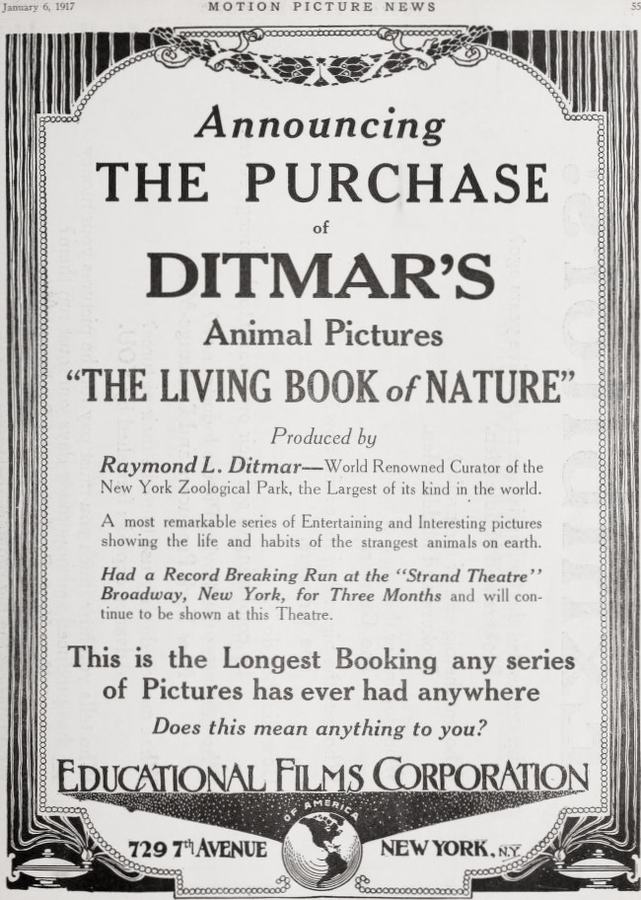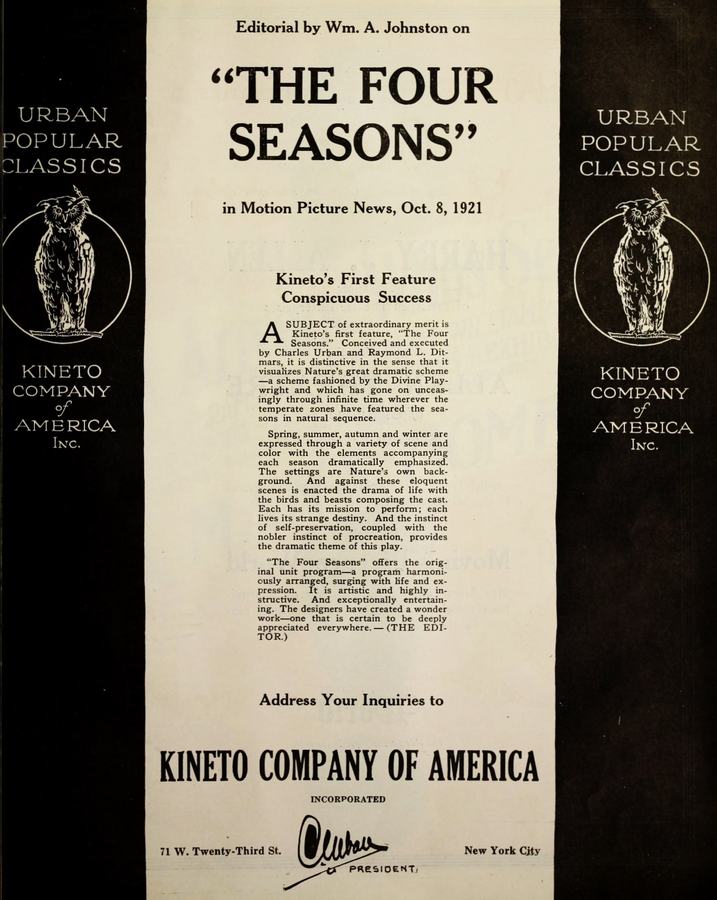
A nature documentary depicting the variety of changes undergone by plants and animals as the seasons of the year change. A deer is shown shedding his antlers, then growing new ones, while other examples of flora and fauna go through corollary changes.
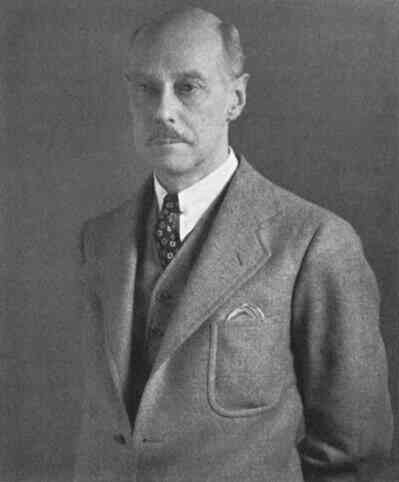
United States
In the nascent years of the twentieth century, the cinematic medium was largely preoccupied with the theatricality of human melodrama or the slapstick antics of the vaudevillian tradition. However, Raymond L. Ditmars, a man whose sensibilities were as much rooted in the herpetological archives of the Bronx Zoo as the...

Comparing the cinematic DNA and archive impact of two defining moments in cult history.
Raymond L. Ditmars
C.L. Chester
Community
Log in to comment.
" In the nascent years of the twentieth century, the cinematic medium was largely preoccupied with the theatricality of human melodrama or the slapstick antics of the vaudevillian tradition. However, Raymond L. Ditmars, a man whose sensibilities were as much rooted in the herpetological archives of the Bronx Zoo as they were in the burgeoning possibilities of the silver screen, offered a radical departure with The Four Seasons. This 1921 documentary is not merely a record of environmental shifts..."
Raymond L. Ditmars


Deep dive into the cult classic
Discover similar cinematic experiences
A Directorial Spotlight on Raymond L. Ditmars