DbcultAccessing Vault...
5.8/10
Senior Film Conservator
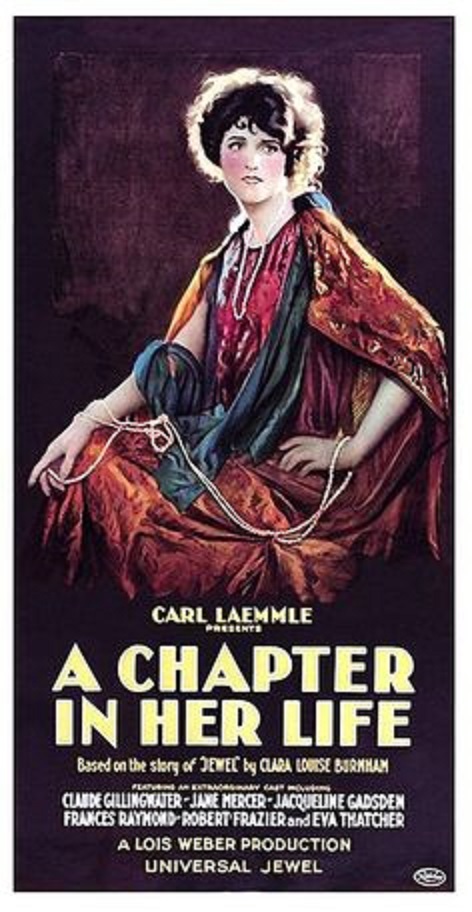
A definitive 5.8/10 rating for a film that redefined the boundaries of cult cinema. A Chapter in Her Life remains a cornerstone of transgressive art.
In the pantheon of silent cinema, few figures command the same intellectual respect and historical intrigue as Lois Weber. By 1923, Weber had already established herself as a provocateur of the domestic sphere, a filmmaker who utilized the burgeoning medium not merely for spectacle, but as a pulpit for social and spiritual inquiry. A Chapter in Her Life represents a fascinating juncture in her career, where the didacticism of her earlier works—such as the visually arresting The Dumb Girl of Portici—matures into a more nuanced, intimate exploration of psychological interiority. This film is less a traditional narrative and more a spiritual exercise, a celluloid manifestation of the 'New Thought' movement that permeated early 20th-century American consciousness.
The film’s opening movements are a masterclass in establishing atmosphere through architectural coldness. The grandfather’s estate is rendered not as a home, but as a mausoleum of repressed emotions. Claude Gillingwater, whose face seems carved from the very granite of his character’s disposition, provides a performance of immense gravitational pull. Unlike the more flamboyant villainy seen in contemporary works like Kean, Gillingwater’s antagonism is internal, a slow-burning rot of the soul. He is a man who has forgotten how to perceive beauty, seeing only the transactional and the disappointing in his fellow humans. This setting provides the perfect foil for Jewel’s arrival, creating a chiaroscuro effect between the dark, heavy Victorian decor and the ethereal, light-drenched presence of the young protagonist.
Weber’s camera work here is deliberate, eschewing the frantic editing of the era’s burgeoning action films for a more contemplative pacing. The frames are often crowded with objects—heavy drapes, ornate clocks, stifling furniture—symbolizing the material weight that the grandfather prizes over spiritual lightness. This visual density serves to emphasize the suffocating nature of the household’s status quo, a stark contrast to the fluid, almost airborne quality that Jewel brings into the space. It is a cinematic representation of the struggle between the temporal and the eternal, a theme Weber would revisit with varying degrees of intensity throughout her filmography.
Jane Mercer’s portrayal of Jewel is a revelation of restraint. In an era where child acting often veered into the hyper-emotive or the grotesquely precocious, Mercer maintains a stillness that is hauntingly effective. She is the embodiment of 'Divine Love,' a concept that Weber treats with profound sincerity. While some modern viewers might find the theological underpinnings of Clara Louise Burnham’s source novel to be overtly sentimental, Weber’s direction elevates the material. She focuses on the visceral impact of Jewel’s presence on those around her. We see the softening of hard lines in the servants' faces and the gradual thaw of the grandfather’s icy exterior, not through grand speeches, but through small, luminous moments of interaction.
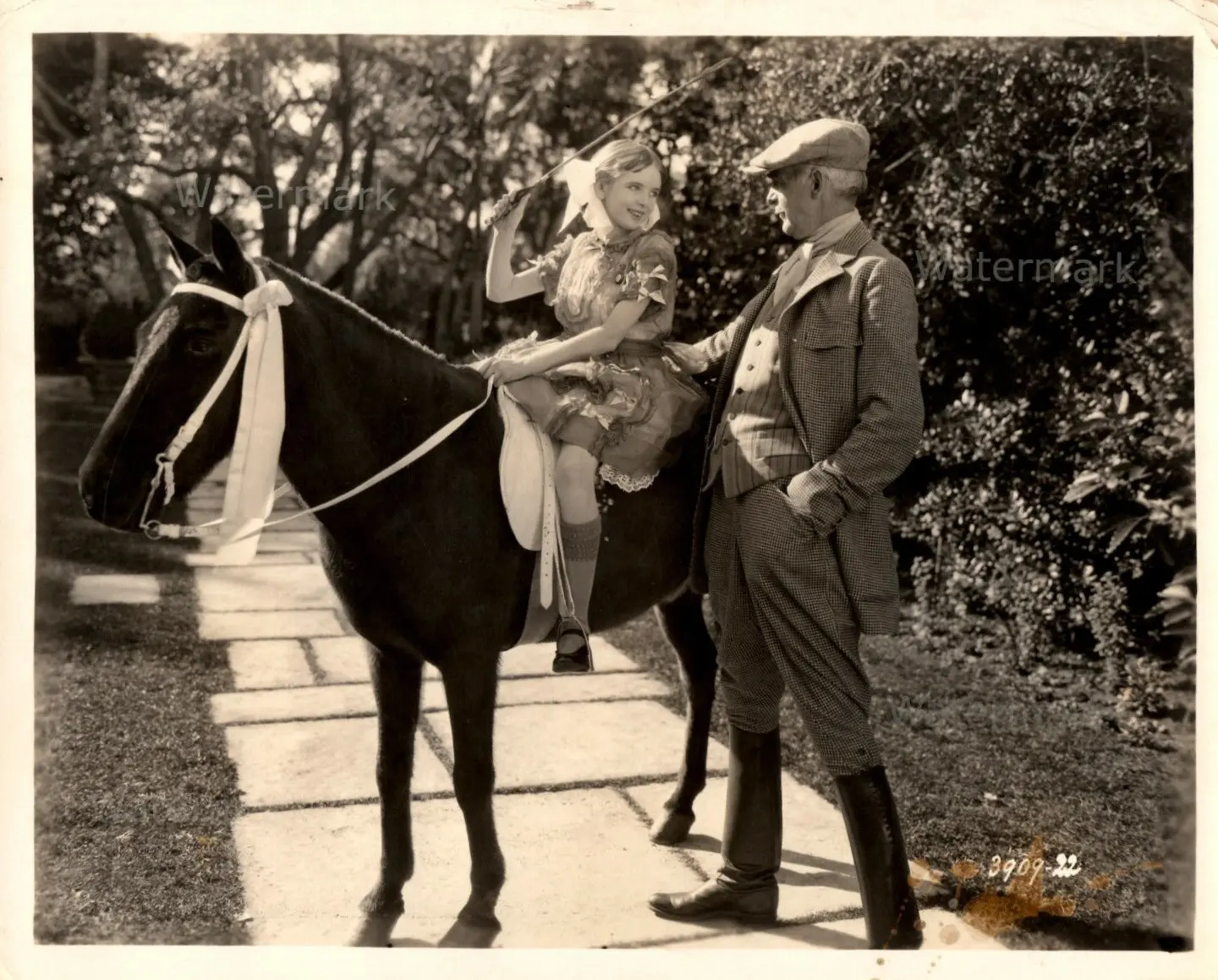
Consider the scene where Jewel first encounters her grandfather’s wrath. Instead of shrinking in fear—the expected reaction in a melodrama like Lydia Gilmore—she meets his gaze with a terrifyingly pure compassion. This subversion of the power dynamic is where the film’s true strength lies. Jewel’s 'trust' is not a passive weakness but an active, disruptive force. She refuses to participate in the shared reality of the household’s misery, effectively forcing the other characters to either adapt to her frequency or remain in their self-imposed exile of the spirit.
When placed alongside other films of the period, A Chapter in Her Life stands out for its psychological depth. While The Crossroads of New York relied on the external chaos of the city to drive its drama, Weber finds a more profound turbulence in the quietude of the parlor. The film shares a certain moral DNA with The Failure, yet it avoids the nihilism that often haunts tales of broken families. Instead, it offers a blueprint for reconciliation that feels earned rather than forced. Even when compared to the social critiques of The Double Standard, Weber’s work here feels more universal, transcending specific social ills to address the fundamental human condition of loneliness and the redemptive power of empathy.
The supporting cast, including the robust Fred Thomson and the elegant Jacqueline Gadsdon, provide a necessary grounding to the film’s more ethereal ambitions. They represent the 'average' human, caught between the extremes of the grandfather’s cynicism and Jewel’s idealism. Their transformations are perhaps the most relatable, as they navigate the messy realities of family squabbles and business pressures. Unlike the heightened theatricality found in Leon Drey or the stark morality play of Grekh, the characters in Weber’s world feel lived-in, their flaws presented with a gentle, observational touch rather than a wagging finger.
Technically, the film is a testament to the sophistication of the Universal-Jewel productions. The use of natural light in the garden sequences—where Jewel is often found—contrasts sharply with the controlled, artificial lighting of the interior scenes. This creates a visual metaphor for the 'natural' state of love versus the 'artificial' state of resentment. Weber, working with writers Doris Schroeder and Clara Louise Burnham, ensures that the intertitles are not merely expository but poetic, reflecting the high-minded ideals of the narrative. The cinematography avoids the staginess that plagued many early features, utilizing close-ups to capture the micro-expressions of transformation that are so vital to a story about internal change.
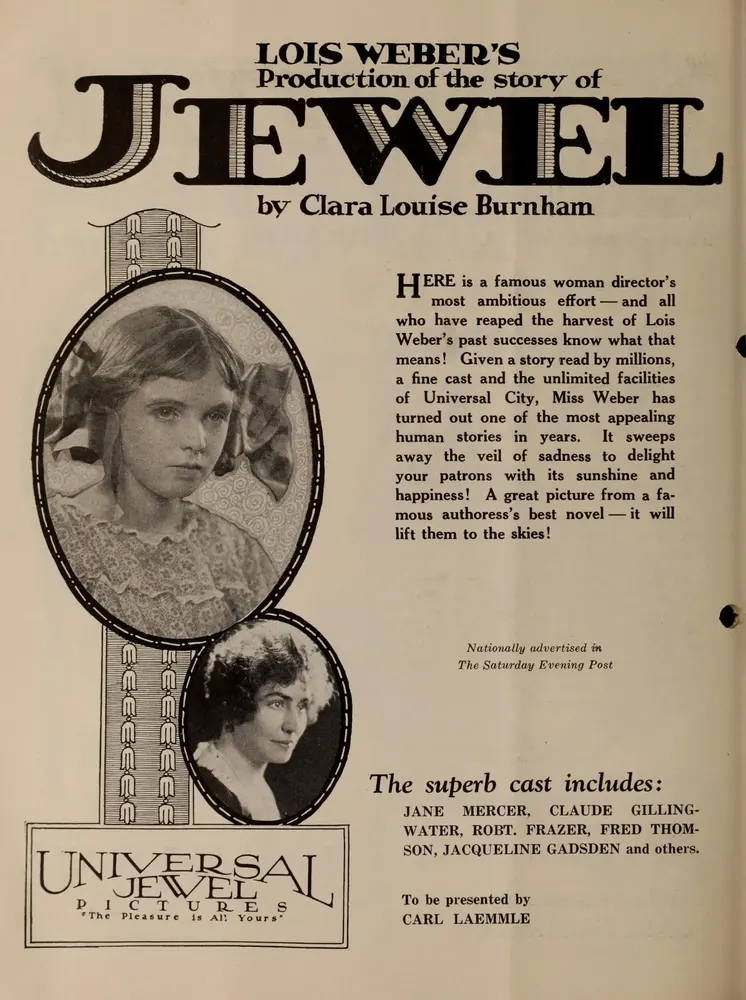
One cannot discuss the film without acknowledging its place in the lineage of 'social problem' films, though it approaches the 'problem' from a spiritual angle. Where A Broadway Scandal might look at the surface-level conflicts of class and reputation, Weber looks at the soul. This is a film that demands a certain level of patience from the viewer, a willingness to sit with the discomfort of the grandfather’s anger and the radicality of Jewel’s kindness. It is a precursor to the modern 'slow cinema,' where the significance of a scene is found in the duration of a look or the silence between actions.
As the narrative reaches its crescendo, the resolution does not come through a deus ex machina or a sudden reversal of fortune, but through a logical culmination of the emotional work Jewel has performed. The family’s heel-turning is not a surrender, but an awakening. In this regard, A Chapter in Her Life is a remarkably optimistic film, standing in contrast to the rugged masculinity of Big Dan or the historical grit of The Fighting Roosevelts. It posits that the most profound battles are those fought within the human heart, and the most enduring victories are those won through the quiet persistence of love.
Weber’s legacy is often tied to her more controversial works, yet this film showcases her ability to handle delicate, intimate material with the same rigor she applied to social crusades. It is a film that rewards multiple viewings, as the layers of its visual symbolism and the subtlety of its performances reveal themselves over time. Whether one views it as a religious artifact or a psychological drama, its craftsmanship is undeniable. It remains a vital chapter in the history of cinema, reminding us that even in the silent era, the screen could speak volumes about the complexities of the human spirit.
In the final analysis, A Chapter in Her Life is a luminous example of how film can serve as a bridge between the material and the metaphysical. It avoids the simplistic pitfalls of its contemporaries—such as the broad comedy of Dead Eye Jeff or the overt melodrama of The Stranger—by maintaining a steadfast focus on the transformative power of a single, pure perspective. It is a masterwork of restraint, a poem of the parlor, and a testament to the enduring genius of Lois Weber. For those seeking a cinema that challenges the intellect while soothing the soul, this chapter is essential reading.
Reflecting on the domestic tapestries of With Neatness and Dispatch or the visceral passion of Maria Rosa, one finds that Weber’s contribution remains uniquely poised at the intersection of art and ethics.

IMDb —
1923
Community
Log in to comment.