DbcultAccessing Vault...
5.9/10
Senior Film Conservator
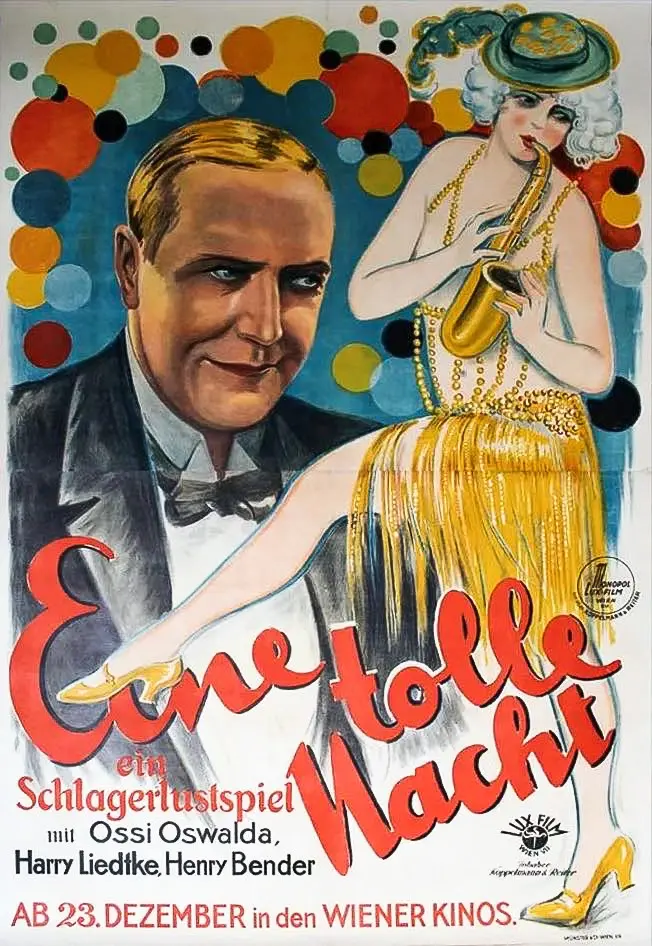
A definitive 5.9/10 rating for a film that redefined the boundaries of cult cinema. A Crazy Night remains a cornerstone of transgressive art.
Is A Crazy Night worth the investment of your time today? Short answer: yes, but only if you are a dedicated student of the Weimar Republic's cultural history or a fan of unhinged, physical comedy.
This film is specifically for those who enjoy the chaotic architecture of silent farce and want to see how 1920s Berlin projected its own anxieties onto the screen. It is definitely not for viewers who require a linear, grounded plot or those who find the exaggerated gestures of silent-era acting to be more exhausting than entertaining.
1) This film works because it captures the genuine, frantic electricity of 1927 Berlin, using the city not just as a backdrop but as a primary antagonist that confuses and consumes the characters.
2) This film fails because its reliance on stage-bound theatricality often stifles the kinetic potential of the camera, making some sequences feel like filmed plays rather than pure cinema.
3) You should watch it if you want to see Ossi Oswalda at the height of her powers, embodying the 'flapper' spirit with an intensity that rivals the best of Hollywood’s silent comediennes.
Richard Oswald was a director who understood that the audience of 1927 was living in a world that felt like it was spinning too fast. In A Crazy Night, he leans into this sensation. Unlike the more structured narratives found in films like Thirty a Week, Oswald’s approach here is one of deliberate disorientation.
The film begins with a deceptive simplicity. We see a man from the provinces, played with a delightful, wide-eyed terror by Kurt Lilien. He is the audience surrogate, a representative of the 'old way' of living. When he enters the cabaret scene—a sequence that stands as the film’s centerpiece—the lighting shifts. The shadows become longer, the movements more jagged.
Consider the moment when Lilien’s character first encounters the jazz band. The editing picks up speed, mimicking the syncopated rhythms of the music we cannot hear. It’s a sensory experience that attempts to bridge the gap between the silent screen and the auditory explosion of the Jazz Age. It works. But it’s flawed.
If Kurt Lilien provides the heart of the film, Ossi Oswalda provides its nervous system. Often called the 'German Mary Pickford,' Oswalda’s performance here is anything but sweet. She is a whirlwind of movement, her eyes darting with a mischievous intent that keeps the plot from ever settling into a rut.
In one specific scene, Oswalda engages in a frantic dance that feels less like a performance and more like a rebellion. She moves with a lack of inhibition that would have been scandalous in more conservative circles, much like the characters in When a Woman Sins. Her chemistry with the ensemble, particularly with the veteran Paul Westermeier, creates a friction that drives the comedy forward.
However, the film’s reliance on her energy sometimes masks a lack of narrative depth. While a film like Anna Karenina uses its lead to explore deep psychological states, A Crazy Night is content to let Oswalda simply be a force of nature. This isn't necessarily a bad thing, but it does limit the film's lasting emotional impact.
When we look at A Crazy Night alongside its contemporaries, we see a fascinating divide in silent cinema. On one hand, you have the high-stakes drama of Love's Blindness or the epic scale of North of 36. On the other, you have this specific brand of German farce that feels almost claustrophobic in its intensity.
The film shares a certain DNA with As Aventuras de Gregório in its portrayal of a 'fish out of water' protagonist. Yet, where Gregório finds a certain charm in his misadventures, Lilien’s protagonist seems genuinely traumatized by the experience. This gives the film an underlying darkness that is common in Weimar cinema, even in its comedies.
The technical execution is competent but lacks the experimental flair of something like The Mysteries of Myra. Oswald is more interested in the actors' faces and their physical comedy than in groundbreaking camera movements. He uses the frame as a cage, trapping the characters in their own misunderstandings.
The pacing of A Crazy Night is relentless. From the moment the sun sets, the film refuses to breathe. This creates a sense of genuine excitement, but by the sixty-minute mark, the repetition of the 'mistaken identity' tropes starts to wear thin. Every door opened leads to another person who shouldn't be there.
It lacks the refined comedic timing of A Close Shave. Instead, it opts for a 'more is more' philosophy. There are too many characters, too many subplots, and too many title cards. Yet, in this excess, there is a strange honesty. Berlin in 1927 *was* too much. The film reflects the sensory overload of its era perfectly.
"The film doesn't just depict a crazy night; it becomes one, forcing the viewer into a state of manic observation that is both exhausting and exhilarating."
Yes, if you want to understand the roots of modern situational comedy. It provides a raw, unpolished look at the humor that defined a generation between two world wars. It is a loud film that never makes a sound, relying entirely on the visual language of panic and joy.
If you are looking for a relaxing evening, look elsewhere. If you want to see the blueprint of the 'hangover' genre, this is a vital piece of the puzzle. It is a cinematic time capsule that smells of stale beer and expensive perfume.
The pros are centered around the film's historical value and its lead performances. The ensemble cast, including Kurt Gerron and Maria Forescu, brings a richness to the background that keeps the world feeling inhabited. The set design of the cabaret is also a major plus, offering a glimpse into the aesthetic of 1920s nightlife.
The cons involve the film's structural integrity. Much like Who Is Number One?, the film sometimes feels like a series of vignettes rather than a cohesive whole. The transition between scenes can be jarring, and some characters disappear for long stretches without explanation.
A Crazy Night is a fascinating, if somewhat messy, relic of a bygone era. It lacks the polish of contemporary Hollywood hits like His Father's Son, but it makes up for it with a raw, European sensibility that is entirely its own. It is a film that celebrates the messiness of life. It is loud. It is chaotic. It is flawed. But most importantly, it is alive. If you can handle the frantic pace, you will find a film that offers more than just laughs—it offers a window into the soul of a city that was about to change forever.
IMDb —
1924
Community
Log in to comment.